242 results for "Discoveries"

Livewired: the inside story of the ever-changing brain

Eagleman, David
"The magic of the brain is not found in the parts it's made of but in the way those parts unceasingly reweave themselves in an electric living fabric. And there is no more accomplished and accessible guide than renowned neuroscientist David Eagleman to help us understand the nature and changing texture of that fabric. With his hallmark clarity and enthusiasm he reveals the myriad ways that the brain absorbs experience: developing, redeploying, organizing, and arranging the data it receives from the body's own absorption of external stimuli, which enables us to gain the skills, the facilities, and the practices that make us who we are. Eagleman covers decades of the most important research into the functioning of the brain and presents new discoveries from his own research as well: about the nature of synesthesia, about dreaming, and about wearable devices that are revolutionizing how we think about the five human senses. Finally, Livewired is as deeply informative as it is accessible and brilliantly engaging"--
Pantheon Books 2020 310 pages

Peace of mind

Liebman, Joshua Loth
In "Peace of Mind," Rabbi Liebman tries to present some answers that have proved helpful to him about the universal human dilemmas of conscience, love, fear, grief, and God - crucial problems that present themselves in every kind of society, and, he believes, will present themselves as long as man is man. Whether under capitalism, socialism, or communism, men and women will still face the purely personal and profoundly individual issues of life and death as well as the tangled interpersonal relations of parent and child, brother and sister, husband and wife. Personal experience plus rich and varied contacts in the author's ministry led him to believe that a book written by a religionist explaining just what modern psychology has discovered about human beings, why we sometimes hate ourselves and hate others, why we grow afraid, why we lose faith in life and in God, might be of real help to perplexed moderns. This science also tells us what we can do to change ourselves and our mental attitudes in relation to our own personalities and in interrelations with other human beings. "Peace of Mind" attempts to distill the helpful insights about human nature that psychology has discovered and the encouraging news from the scientific clinic about man's infinite capacity to change and improve himself, as well as to correlate these latest scientific discoveries with the truest religious insights and goals of the ages.
Simon and Schuster 1946 203 pages

One renegade cell: how cancer begins

Weinberg, Robert A.
Cancer research has reached a major turning point. The quality and quantity of information gathered about this disease in the past twenty years has revolutionized our understanding of its origins and behavior. No one is better qualified to comment on these dramatic leaps forward than molecular biologist Robert A. Weinberg, director of one of the leading cancer research centers in the world. In One Renegade Cell , Weinberg presents an accessible and state-of-the-art account of how the disease begins and how, one day, it will be cured.Weinberg tells how the roots of cancer were uncovered in 1909 and when the first cancer-causing virus was discovered. He then moves forward to the discovery of the role of chemical carcinogens and radiation in triggering cancer, and relates the remarkable story of the discoveries of oncogenes and tumor suppressor genes, the master controllers of normal and malignant cell proliferation.This book, which presumes little prior knowledge of biology, describes the revolution in biomedical research that has finally uncovered the forces driving malignant growth. Drawing on insights that simply were not available until recently, the discoveries presented in One Renegade Cell have already begun to profoundly alter the way that we diagnose and treat human cancers.
Basic Books 1998-10-08 170 pages

Heart An American Medical Odyssey

Dick Cheney,Richard B. Cheney,Jonathan Reiner,Liz Cheney
"For as long as he has served at the highest levels of business and government, Vice President Dick Cheney has also been one of the world's most prominent heart patients. Now, for the first time ever, Cheney, together with his longtime cardiologist Jonathan Reiner, MD, shares the very personal story of his courageous thirty-five-year battle with heart disease, from his first heart attack in 1978 to the heart transplant he received in 2012. In 1978, when Cheney suffered his first heart attack, he receivedessentially the same treatment as President Eisenhower had in 1955. Since then, cardiac medicine has evolved in extraordinary ways, and Cheney has benefited from nearly every medical and technological breakthrough along the way. At each juncture, when Cheney faced a new health challenge, the technology was one step ahead of his disease. In many ways, Cheney's story is the story of the evolution of modern cardiac care. Heart is the riveting, singular memoir of both doctor and patient, tracking their relationship as it unfolds over many years and crises. Like no US politician has before him, Cheney opens up about his health struggles, sharing harrowing, never-before-told stories about the challenges he faced during a perilous time in our nation's history. Dr. Reiner provides his perspective on Cheney's case and also gives readers a fascinating glimpse into his own education as a doctor. He masterfully chronicles the important discoveries, radical innovations, and cutting-edge science that have changed the face of medicine and saved countless lives. Powerfully braiding science with story and the personal with the political, Heart is a sweeping, inspiring, and ultimately optimistic book that will give hope to the millions of Americans affected by heart disease"--
Thorndike Press, A part of Gale, Cengage Learning 2014 583 pages

Time, love, memory: a great biologist and his quest for the origins of behaviour

Weiner, Jonathan
The story of Nobel Prize–winning discoveries regarding the molecular mechanisms controlling the body’s circadian rhythm. How much of our fate is decided before we are born? Which of our characteristics is inscribed in our DNA? Weiner brings us into Benzer's Fly Rooms at the California Institute of Technology, where Benzer, and his asssociates are in the process of finding answers, often astonishing ones, to these questions. Part biography, part thrilling scientific detective story, Time, Love, Memory forcefully demonstrates how Benzer's studies are changing our world view--and even our lives. Jonathan Weiner, winner of the Pulitzer Prize for The Beak of the Finch , brings his brilliant reporting skills to the story of Seymour Benzer, the Brooklyn-born maverick scientist whose study of genetics and experiments with fruit fly genes has helped revolutionize or knowledge of the connections between DNA and behavior both animal and human.
Vintage Books 1999 300 pages

Einstein on Einstein: autobiographical and scientific reflections

Gutfreund, Hanoch,Renn, Jürgen
"Einstein begins his Autobiographical Notes with one problem he never quite solved: "What, precisely, is thinking?" To answer, he turns inward to the very shape of his thoughts, the ongoing struggle to connect local observation, or what he calls the "momentary and personal," to the larger "mental grasp of things." Einstein situates his greatest discoveries amongst the other twentieth-century breakthroughs in the field and closely examines how these discoveries punctuated and propelled his own intellectual development. The autobiography expands what we know about Einstein's childhood education, readings in philosophy, and journey to the theory of general relativity. In this book, Autobiographical Notes is accompanied by introductions, essays, and commentary by Hanoch Gutfreud and Jürgen Renn, who draw on biographical information, written correspondence, and their knowledge of Einstein scholarship to render these difficult texts accessible to readers. They have also collected critical writings by Einstein's contemporaries alongside Einstein's own responses to these interlocutors, as well as Einstein's Autobiographical Sketch, composed just before his death in 1955, which is published for the first time in English"--
Princeton University Press 2020-05-12 197 pages

Biblical archaeology: a very short introduction

Cline, Eric H.
From the Publisher: Public interest in biblical archaeology is at an all-time high, as television documentaries pull in millions of viewers to watch shows on the Exodus, the Ark of the Covenant, and the so-called Lost Tomb of Jesus. Important discoveries with relevance to the Bible are made virtually every year-during 2007 and 2008 alone researchers announced at least seven major discoveries in Israel, five of them in or near Jerusalem. Biblical Archaeology offers a passport into this fascinating realm, where ancient religion and modern science meet, and where tomorrow's discovery may answer a riddle that has lasted a thousand years. Archaeologist Eric H. Cline here offers a complete overview of this exciting field. He discusses the early pioneers, such as Sir William Matthew Flinders Petrie and William Foxwell Albright, the origins of biblical archaeology as a discipline, and the major controversies that first prompted explorers to go in search of objects and sites that would "prove" the Bible. He then surveys some of the most well-known biblical archaeologists, including Kathleen Kenyon and Yigael Yadin, the sites that are essential sources of knowledge for biblical archaeology, such as Hazor, Megiddo, Gezer, Lachish, Masada, and Jerusalem, and some of the most important discoveries that have been made, including the Dead Sea Scrolls, the Mesha Inscription, and the Tel Dan Stele. Subsequent chapters examine additional archaeological finds that shed further light on the Hebrew Bible and New Testament, the issue of potential frauds and forgeries, including the James Ossuary and the Jehoash Tablet, and future prospects of the field. Biblical Archaeology: A Very Short Introduction captures the sense of excitement and importance that surrounds not only the past history of the field but also the present and the future, with fascinating new discoveries made each and every season.
Oxford University Press 2009 156 pages

The tangled bank: an introduction to evolution

Zimmer, Carl
"The Tangled Bank is the first textbook about evolution intended for the general reader. Zimmer, an award-winning science writer, takes readers on a fascinating journey into the latest discoveries about evolution. In the Canadian Arctic, paleontologists unearth fossils documenting the move of our ancestors from sea to land. In the outback of Australia, a zoologist tracks some of the world's deadliest snakes to decipher the 100-million-year evolution of venom molecules. In Africa, geneticists are gathering DNA to probe the origin of our species. In clear, non-technical language, Zimmer explains the central concepts essential for understanding new advances in evolution, including natural selection, genetic drift, and sexual selection. He demonstrates how vital evolution is to all branches of modern biology-from the fight against deadly antibiotic-resistant bacteria to the analysis of the human genome. Richly illustrated with 285 illustrations and photographs, The Tangled Bank is essential reading for anyone who wants to understand the history of life on Earth."-- Publisher's description.
Roberts and Co. Publishers 2010 385 pages

Frank A Life in Politics from the Great Society to Same-Sex Marriage

Barney Frank
NEW YORK TIMES BESTSELLER WINNER OF THE RANDY SHILTS AWARD “I [once] said [to Frank] I was sorry I would never be able to vote for him as the first gay president of the United States. After reading this book, I am sorrier than ever.”—Garry Wills, The New York Review of Books Growing up in Bayonne, New Jersey, Barney Frank made two vital discoveries about himself: he was attracted to government, and to men. He resolved to make a career out of the first and to keep the second a secret. Now, his sexual orientation is widely accepted, while his belief in government is embattled. Frank: A Life in Politics from the Great Society to Same-Sex Marriage is his account of America’s transformation—and the tale of a truly momentous career. From the battle over AIDS funding in the 1980s to the 2008 financial crisis, Barney Frank played a key role, and in this feisty and often moving memoir, he candidly discusses the satisfactions, fears, and grudges that come with elected office. He recalls the emotional toll of living in the closet while publicly crusading against homophobia. He discusses painful quarrels with allies; friendships with public figures, from Tip O’Neill to Sonny Bono; and how he found love with his husband, Jim Ready, becoming the first sitting member of Congress to enter a same-sex marriage. The result is the story of an extraordinary political life, an original argument for rebuilding trust in government, and a guide to how change really happens—composed by a master of the art.
Picador 2016-03-01 416 pages

The Planets by Professor Brian Cox & Andrew Cohen

Andrew Cohen,Brian Cox
Please Note That The Following Individual Books As Per Original ISBN and Cover Image In this Listing shall be Dispatched The Planets by Professor Brian Cox & Andrew Mercury, a lifeless victim of the Sun’s expanding power. Venus, once thought to be lush and fertile, now known to be trapped within a toxic and boiling atmosphere. Mars, the red planet, doomed by the loss of its atmosphere. Jupiter, twice the size of all the other planets combined, but insubstantial. Saturn, a stunning celestial beauty, the jewel of our Solar System. Uranus, the sideways planet and the first ice giant. Neptune, dark, cold and whipped by supersonic winds. Pluto, the dwarf planet, a frozen rock. Andrew Cohen and Professor Brian Cox take readers on a voyage of discovery, from the fiery heart of our Solar System, to its mysterious outer reaches. They touch on the latest discoveries that have expanded our knowledge of the planets, their moons and how they come to be.
William Collins Ltd 2021-01-01 304 pages

King David

Kirsch, Jonathan
David, King of the Jews, possessed every flaw and failing of which a mortal is capable, yet men and women adored him, and God showered him with many blessings. A charismatic leader, exalted as “a man after God’s own heart,” he was also capable of deep cunning and bloodthirsty violence. Weaving together biblical texts with centuries of interpretation and commentary, as well as the startling discoveries of modern biblical archaeology and scholarship, bestselling author Jonathan Kirsch brings King David to life with extraordinary freshness, intimacy, and vividness of detail, revealing him in all his glory and fallibility. At the center of this taut, dramatic narrative stands a hero of flesh and blood–a man as vibrant and compelling today as he has been for millennia.
Random House International 2001-08-28 368 pages

From X-Rays to Quarks: Modern Physicists and Their Discoveries

Segre, Emilio
A Nobel Laureate offers impressions and recollections of the development of modern physics. Rather than a chronological approach, Segrè emphasizes interesting, complex personalities who often appear only in footnotes. Readers will find that this book adds considerably to their understanding of science and includes compelling topics of current interest. 1980 edition.
W.H. Freeman & Company 1984-10

Dinosaurs at the Dinner Party How an Eccentric Group of Victorians Discovered Prehistoric Creatures and Accidentally Upended the World

Edward Dolnick
From the bestselling author of The Clockwork Universe and The Writing of the Gods , an “utterly delightful…hugely entertaining” ( Air Mail ) book about the eccentric Victorians who discovered dinosaur bones, leading to a whole new understanding of human history. In the early 1800s the natural world was a safe and cozy place, or so people believed. But then a twelve-year-old farm boy in Massachusetts stumbled on a row of fossilized three-toed footprints the size of dinner plates—the first dinosaur tracks ever found. Soon, in England, scientists unearthed enormous bones that reached as high as a man’s head. Outside of myths and fairy tales, no one had even imagined that creatures like three-toed giants had once lumbered across the land—nor dreamed that they could all have vanished, hundreds of millions years ago. In Dinosaurs at the Dinner Party , celebrated storyteller and historian Edward Dolnick leads us through a compelling true adventure as the paleontologists of the early 19th century puzzled their way through the fossil record to create the story of dinosaurs we know today. The tale begins with Mary Anning, a poor, uneducated woman who had a sixth sense for finding fossils buried deep inside cliffs; moves to William Buckland, an eccentric geologist who filled his home with specimens and famously pieced together a prehistoric scene from the fossil record inside a cave; and then on to the controversial Richard Owen, the era’s best-known scientist, and the one who coined the term “dinosaur.” “Exuberant” ( Kirkus Reviews ), entertaining, erudite, and featuring an unconventional cast of characters, Dinosaurs at the Dinner Party tells the story of how the accidental discovery of prehistoric creatures upended humanity’s understanding of the world and its own place within it.
Simon and Schuster 2025-08-12 352 pages

Body and Mature Behavior A Study of Anxiety, Sex, Gravitation and Learning

Moshé Feldenkrais
A victim of debilitating injuries, Moshe Feldenkrais was intimately aware of the link between bodily suffering and mental health. Through healing himself, he made revolutionary discoveries, culminating in the development of the method that now bears his name. In an intellectually rich and eloquent style, Feldenkrais delves into neurology, prehistory, child development, gravity and anti-gravity, reflexive versus learned behavior, the effects of emotion, especially anxiety, on posture, and most importantly, the inseparability of body and mind.
International Universities Press, Incorporated 1970-12 167 pages

Children of God: a novel

Russell, Mary Doria
In Children of God, Mary Doria Russell further establishes herself as one of the most innovative, entertaining and philosophically provocative novelists writing today. The only member of the original mission to the planet Rakhat to return to Earth, Father Emilio Sandoz has barely begun to recover from his ordeal when the So-ciety of Jesus calls upon him for help in preparing for another mission to Alpha Centauri. Despite his objections and fear, he cannot escape his past or the future. Old friends, new discoveries and difficult questions await Emilio as he struggles for inner peace and understanding in a moral universe whose boundaries now extend beyond the solar system and whose future lies with children born in a faraway place. Strikingly original, richly plotted, replete with memorable characters and filled with humanity and humor, Children of God is an unforgettable and uplifting novel that is a potent successor to The Sparrow and a startlingly imaginative adventure for newcomers to Mary Doria Russell’s special literary magic.
Fawcett Books 1999-02-02 451 pages

Galileo and the Science Deniers

Mario Livio
Although Galileo Galilei lived and died centuries ago, his story is more relevant to our lives than we might realize. Today we face enormous challenges such as climate change that are disregarded or questioned by those who fear that their implications will damage business profitability. Others posit a false dichotomy between religion and science in order to reject scientific evidence whose implications they fear. Galileo confronted this problem 400 years ago. His discoveries were based on observation and experiment. His telescopes revealed previously unknown planets, moons orbiting other planets, and other discoveries that essentially confirmed the Copernican universe that the Church had rejected as heretical because Church theologians insisted on a literal reading of the Bible. Even St. Augustine in the fifth century maintained that the Bible pertained to the realm of faith, not reason. But when Galileo argued essentially the same position before an ecclesiastical court in Rome, he was forbidden from publishing any more books. Livio's life of Galileo shows us how the great thinker made his discoveries about the heavens and also formulated fundamental laws of physics. As an astrophysicist, Livio brings insight into how Galileo reasoned his way to his conclusions, which we know today were accurate. Along with Newton, Galileo remains one of the two great figures at the dawn of the scientific revolution. He insisted on reaching the widest audience possible, publishing his work in Italian rather than Latin as had been the case until his time, when vernacular languages were rapidly replacing Latin throughout Europe. Galileo believed that every educated person should know science as well as literature. Did Galileo actually say at the end of his trial when he was forced to recant his discoveries, as legend has it, And still it moves, referring to the motion of the earth around the sun? Not likely, says Livio, but Galileo nonetheless remains an inspiration to scientists and those who value open-minded inquiry, which as Livio reminds us, remains threatened even today.
Simon & Schuster Paperbacks 2020 304 pages

If Stones Could Speak: Unlocking the Secrets of Stonehenge

Aronson, Marc
What are the secrets of the ancient stone circle? Were the carefully placed stones a burial site, an ancient calendar, a place of Druid worship...or even a site of sacrifice? World-renowned archaeologist Mike Parker-Pearson has spent the last seven years on a quest to answer these and many other questions. In If Stones Could Speak, award-winning author Marc Aronson joins the research crew and records their efforts to crack Stonehenge's secrets. National Geographic helped sponsor the Riverside archeological team's mission, and now young readers can journey behind the scenes to experience this groundbreaking story first-hand, through the eyes of the experts. Mike and his team have revolutionized our understanding of Stonehenge by exploring the surrounding landscape for clues about the stones -- an idea first suggested by a visitor from Madagascar. The results have been breathtaking: The team recently unearthed the largest Neolithic village ever found in England. Marc Aronson had total access to the site, the team, and their work over two seasons of digging and brings the inspirational story of the discoveries taking place at this World Historical Site to young readers. The informative and drama-driven text includes tales of dead bodies, cremations, feasting, and ancient rituals, as well as insights into the science of uncovering the ancien t past. The expert text, stunning photography, and explanatory maps and illustrations will all help young readers see this ancient monument in totally new ways, and inspire future generations of archaeological explorers.
National Geographic Kids 2010-03-09 64 pages

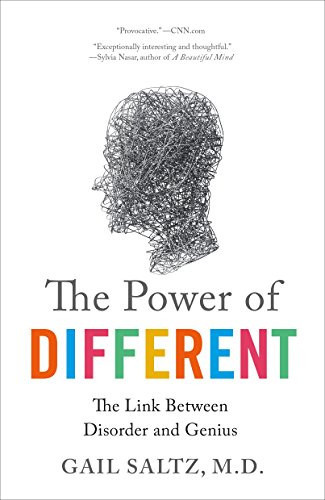
The power of different: the link between disorder and genius

Saltz, Gail
A powerful and inspiring examination of the connection between the potential for great talent and conditions commonly thought to be “disabilities,” revealing how the source of our struggles can be the origin of our greatest strengths. In The Power of Different , psychiatrist and bestselling author Gail Saltz examines the latest scientific discoveries, profiles famous geniuses who have been diagnosed with all manner of brain “problems”—including learning disabilities, ADD, anxiety, Depression, Bipolar disorder, schizophrenia, and Autism—and tells the stories of lay individuals to demonstrate how specific deficits in certain areas of the brain are directly associated with the potential for great talent. Saltz shows how the very conditions that cause people to experience difficulty at school, in social situations, at home, or at work, are inextricably bound to creative, disciplinary, artistic, empathetic, and cognitive abilities. In this pioneering work, readers will find engaging scientific research and stories from historical geniuses and everyday individuals who have not only made the most of their conditions, but who have flourished because of them. They are leaning into their brain differences to: *Identify areas of interest and expertise *Develop work arounds *Create the environments that best foster their talents *Forge rewarding interpersonal relationships Enlightening and inspiring, The Power of Different proves that the unique wiring of every brain can be a source of strength and productivity, and contributes to the richness of our world.
Flatrion Books 2018-03-06 247 pages