349 results for "History"

The death of the banker: the decline and fall of the great financial dynasties and the triumph of the small investor

Chernow, Ron
National Book Award winner Ron Chernow expertly traces the decline of the big bankers and the rise of small investors. The reader is taken on a fascinating tour of Anglo-American high finance over the past two centuries, with detours into Canadian, German and Japanese finance. As the point of departure for his colourful, panoramic survey, Mr. Chernow poses a historic riddle: Why did the great financial dynasties - the Rothschilds, Barings, Morgans and Warburgs - flare so brilliantly in the 19th and 20th centuries and then enter into a precipitous decline? Why did such heavyweights give way to more anonymous financial conglomerates? And, most curious of all, why have small investors, banded together in mutual funds, suddenly inherited the financial earth? The Death of the Banker shows how American reformers mounted a spirited campaign to pry captive companies loose from their traditional bankers and restored competition to financial markets. In a world criss-crossed by capital flows, the banker will never again exercise such spectacular but arbitrary rule over clients.
Vintage Canada 1997 147 pages

The girl with the make-believe husband

Quinn, Julia
"While you were sleeping ... With her brother Thomas injured on the battlefront in the Colonies, orphaned Cecilia Harcourt has two unbearable choices: move in with a maiden aunt or marry a scheming cousin. Instead, she chooses option three and travels across the Atlantic, determined to nurse her brother back to health. But after a week of searching, she finds not her brother but his best friend, the handsome officer Edward Rokesby. He's unconscious and in desperate need of her care, and Cecilia vows that she will save this soldier's life, even if staying by his side means telling one little lie ... I told everyone I was your wife When Edward comes to, he's more than a little confused. The blow to his head knocked out three months of his memory, but surely he would recall getting married. He knows who Cecilia Harcourt is--even if he does not recall her face--and with everyone calling her his wife, he decides it must be true, even though he'd always assumed he'd marry his neighbor back in England. If only it were true ... Cecilia risks her entire future by giving herself--completely--to the man she loves. But when the truth comes out, Edward may have a few surprises of his own for the new Mrs. Rokesby."--Provided by publisher.
Avon Books, an imprint of HarperCollins Publishers 2017-05-30 291 pages

Ten things I love about you

Quinn, Julia
The third book in the Bevelstoke series: witty, irresistibly romantic and by the bestselling author of the global phenomenon Bridgerton Sebastian Grey is in limbo. He is the heir presumptive to the Earl of Newbury, unless the current earl, a widower, can find a bride who will bear him a son. Newbury is in his sixties and somewhat portly, but as an earl he's considered quite a catch. Sebastian, on the other hand, is twenty-nine and devilishly handsome, but in no hurry to find a wife. Annabel Winslow , a country girl through and through, has received an offer to go to London for the season. The eldest of a family of eight, she knows that a good marriage might be the only thing that will save her family from ruin. After a few weeks in town, Annabel attracts the attention of the Earl of Newbury. The thought of submitting to him makes her skin crawl, but she is practical and determined to do her duty. But when Sebastian meets Annabel, sparks fly, and best laid plans look set to combust . . . 'A veritable treat' Daily Mail 'Quinn is a master of Historical romance' Entertainment Weekly
Piatkus 2021-05-27 384 pages

The pope who would be king: the exile of Pius IX and the emergence of modern Europe

Kertzer, David I.
Documents the story of the violent revolution that signaled the end of the political power of the popes and resulted in the emergence of modern Europe ; Days after his prime minister was assassinated in the middle of Rome in November 1848, Pope Pius IX found himself a virtual prisoner in his own palace. Only two years earlier Pius's election had triggered a wave of optimism across Italy: he was seen as a youthful, benevolent new pope who would at last bring the Papal States into modern times and help create a new, unified Italian nation. Kertzer documents the story of the violent revolution that signaled the end of the political power of the popes and resulted in the emergence of modern Europe
Random House 2018 474 pages

The impossible presidency: the rise and fall of America's highest office

Suri, Jeremi
Why have recent presidents failed to create the change they promised? Should we blame the individual men, all flawed in their own ways? Or are there fundamental reasons why modern presidents fail to deliver, time and time again? In The Impossible Presidency, historian Jeremi Suri charts the long rise and quick fall of the world's most important job, from the 1790s to the present day. As he shows, early presidents greatly expanded the power of the office beyond the limited role envisioned by the founders. Suri argues that the immense accomplishments of Washington, Jackson, Lincoln and FDR left their successors with outsized and unrealistic expectations. John F. Kennedy, Lyndon B. Johnson and Ronald Reagan lost control of their agendas as they were buffeted by the onrush of events and threats their predecessors never had to face. Clinton and Obama were propelled to the presidency by their personal stories but hamstrung by prurient, partisan, and prejudiced criticisms of their leadership. Contemporary presidents must react to a truly globalized world and a rapid twenty-four-our news cycle. There is little room left for bold, strategic thinking. Suri traces our disenchantment with recent presidents to the current mismatch between presidential promises and the limitations of the office.
Basic Books 2017-09-12 343 pages

Wolverine/Gambit

Loeb, Jeph
The titanic team of Jeph Loeb and Tim Sale (Spider-Man: Blue, Captain America: White, Hulk: Gray) take on the X-Men's two most dangerous mutants in this international thriller that brings Wolverine and Gambit to the shores of England! There's a serial killer tearing through London, leaving beautiful young women as his victims. Do these brutal slayings mark the return of the 19th-century serial killer known as Jack the Ripper? Or could one of the X-Men be the real killer?! Wolverine is the prime suspect - and Gambit is out to prove him guilty! Now they're grudgingly forced to work together in order to find the truth - without killing each other! It's a fast-paced murder mystery that will keep you guessing right up until the last page. COLLECTING: Wol verine /Gambit: Victims 1-4
Marvel 2013-03-19 112 pages

The romantic generation

Rosen, Charles
What Charles Rosen's celebrated book The Classical Style did for music of the Classical period, this new, much-awaited volume brilliantly does for the Romantic era. An exhilarating exploration of the musical language, forms, and styles of the Romantic period, it captures the spirit that enlivened a generation of composers and musicians, and in doing so it conveys the very sense of Romantic music. In readings uniquely informed by his performing experience, Rosen offers consistently acute and thoroughly engaging analyses of works by Schubert, Schumann, Mendelssohn, Bellini, Liszt, and Berlioz, and he presents a new view of Chopin as a master of polyphony and large-scale form. He adeptly integrates his observations on the music with reflections on the art, literature, drama, and philosophy of the time, and thus shows us the major figures of Romantic music within their intellectual and cultural context. Rosen covers a remarkably broad range of music history and considers the importance to nineteenth-century music of other cultural developments: the art of landscape, a changed approach to the sacred, the literary fragment as a Romantic art form. He sheds new light on the musical sensibilities of each composer, studies the important genres from nocturnes and songs to symphonies and operas, explains musical principles such as the relation between a musical idea and its realization in sound and the interplay between music and text, and traces the origins of musical ideas prevalent in the Romantic period. Rich with striking descriptions and telling analogies, Rosen's overview of Romantic music is an accomplishment without parallel in the literature, a consummate performance by a master pianist and music historian.
Harvard University Press 1995 723 pages

Stagecoach Wells Fargo and the American West

Philip L. Fradkin
Sweeping in scope, as revealing of an era as it is of a company, Stagecoach is the epic story of Wells Fargo and the American West, by award-winning writer Philip L. Fradkin. The trail of Wells Fargo runs through nearly every imaginable landscape and icon of frontier folklore: the California Gold Rush, the Pony Express, the transcontinental railroad, the Civil and Indian Wars. From the Great Plains to the Rockies to the Pacific Ocean, the company's operations embraced almost all social, cultural, and economic activities west of the Mississippi, following one of the greatest migrations in American history. Fortune seekers arriving in California after the discovery of gold in 1849 couldn't bring the necessities of home with them. So Wells Fargo express offices began providing basic services such as the exchange of gold dust for coin, short-term deposits and loans, and reliable delivery and receipt of letters, money, and goods to and from distant places. As its reputation for speed and dependability grew, the sight of a red-and-yellow Wells Fargo stagecoach racing across the prairie came to symbolize not only safe passage but faith in a nation's progress. In fact, for a time Wells Fargo was the most powerful and widespread institution in the American West, even surpassing the presence of the federal government. Stagecoach is a fascinating and rare combination of Western and business history. Along with its colorful association with the frontier -- Wyatt Earp, Black Bart, Buffalo Bill -- readers will discover that swiftness, security, and connectivity have been constants in Wells Fargo's history, and that these themes remain just as important today, 150 years later.
Thorndike Press 2002 469 pages

The Europeans Three Lives and the Making of a Cosmopolitan Culture

Orlando Figes
From the “master of historical narrative” ( Financial Times ), a dazzling, richly detailed, panoramic work—the first to document the genesis of a continent-wide European culture. The nineteenth century in Europe was a time of unprecedented artistic achievement. It was also the first age of cultural globalization—an epoch when mass communications and high-speed rail travel brought Europe together, overcoming the barriers of nationalism and facilitating the development of a truly European canon of artistic, musical, and literary works. By 1900, the same books were being read across the continent, the same paintings reproduced, the same music played in homes and heard in concert halls, the same operas performed in all the major theatres. Drawing from a wealth of documents, letters, and other archival materials, acclaimed historian Orlando Figes examines the interplay of money and art that made this unification possible. At the center of the book is a poignant love triangle: the Russian writer Ivan Turgenev; the Spanish prima donna Pauline Viardot, with whom Turgenev had a long and intimate relationship; and her husband Louis Viardot, an art critic, theater manager, and republican activist. Together, Turgenev and the Viardots acted as a kind of European cultural exchange—they either knew or crossed paths with Delacroix, Berlioz, Chopin, Brahms, Liszt, the Schumanns, Hugo, Flaubert, Dickens, and Dostoyevsky, among many other towering figures. As Figes observes, nearly all of civilization’s great advances have come during periods of heightened cosmopolitanism—when people, ideas, and artistic creations circulate freely between nations. Vivid and insightful, The Europeans shows how such cosmopolitan ferment shaped artistic traditions that came to dominate world culture.
Picador 2020-11-10 592 pages

Our Lincoln: new perspectives on Lincoln and his world

Eric Foner
"These eloquent, compelling essays show why Lincoln was a man of his time and a man for all time. There is no better introduction to the complexities of his life and to why he still holds a spell over America and the world."-Library Journal Among these original essays by prize-winning historians, James M. McPherson examines Lincoln's deft navigation of the crosscurrents of politics and wartime strategy. Sean Wilentz elegantly explores Lincoln's debt to the democratic political tradition of Jefferson and Jackson. Eric Foner examines Lincoln's controversial position on the movement to colonize emancipated slaves outside the United States. James Oakes explores Lincoln's views on the rights of African Americans. There are also brilliant essays on Lincoln and civil liberties, and on his literary style, religious beliefs, and family life.
W. W. Norton 2009 336 pages

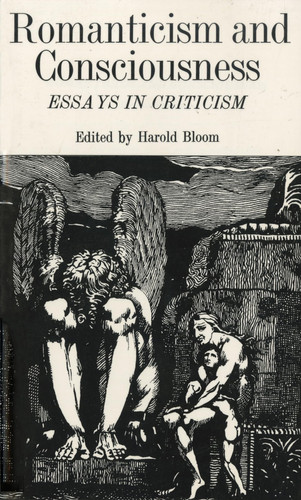
Romanticism and consciousness: essays in criticism

Bloom, Harold
'Romanticism and Consciousness' is a comprehensive collection of essays on Romanticism-its intellectual and political backgrounds, its place in literary history, its continued relevance to the present age, its relation to psychoanalysis and other modern trends of thought-and on the major English Romantic poets. The topics covered include the relations between nature and consciousness, nature and revolution, and nature and literary form; the principal poets studied are Blake, Wordsworth, Coleridge, Byron, Shelley, and Keats.
Norton 1970 405 pages

Conquered Into Liberty Two Centuries of Battles Along the Great Warpath that Made the American Way of War

Eliot A. Cohen
“A brilliant history of our least-known wars on our most-ignored frontier—our northern border with Canada” ( Los Angeles Times ). R edirecting our attention from the Civil War to the real conflict that consolidated the United States, Cohen describes how five groups— the British, French, Americans, Canadians, and Indians—fought over the key to the North American continent: the corridor running from Albany to Montreal, known to Native Americans as the “Great Warpath.” He explores how a distinctly American approach to war developed along these 200 miles, reintroducing characters we thought we knew—an admirable Benedict Arnold, a traitorous Ethan Allen, and a devious George Washington. A gripping read grounded in serious scholarship, Conquered into Liberty will enchant readers for decades to come.
Simon and Schuster 2012-11-13 432 pages

Pioneers of modern design: from William Morris to Walter Gropius

Pevsner, Nikolaus
One of the most widely read books on modern design, Nikolaus Pevsner’s landmark work today remains as stimulating as it was when first published in 1936. This expanded edition of Pioneers of Modern Design provides Pevsner’s original text along with significant new and updated information, enhancing Pevsner’s illuminating account of the roots of Modernism. The book now offers many beautiful color illustrations; biographies and bibliographies of all major figures; illustrated short essays on key themes, movements, and individuals; a critique of Pevsner’s analysis from today’s perspective; examples of works after 1914 (where the original study ended); a biography detailing Pevsner’s life and achievements; and much more. Pevsner saw Modernism as a synthesis of three main sources: William Morris and his followers, the work of nineteenth-century engineers, and Art Nouveau. The author considers the role of these sources in the work of early Modernists and looks at such masters of the movement as C.F.A. Voysey and Charles Rennie Mackintosh in Britain, Louis Sullivan and Frank Lloyd Wright in America, and Adolf Loos and Otto Wagner in Vienna. The account concludes with a discussion of the radical break with the past represented by the design work of Walter Gropius and his future Bauhaus colleagues.
Yale University Press 2005-01-01 192 pages

Capitol men: the epic story of Reconstruction through the lives of the first Black congressmen

Dray, Philip
Pulitzer Prize finalist Philip Dray shines a light on a little known group of men: the nation's first black members of Congress. These men played a critical role in pushing for much-needed reforms in the wake of a traumatic civil war, including public education for all children, equal rights, and protection from Klan violence. But they have been either neglected or maligned by most historians--their "glorious failure" chalked up to corruption and "ill-preparedness."--From publisher description.
Houghton Mifflin Co 2008 463 pages