43 results for "History"

Dead Wrong Straight Facts on the Country's Most Controversial Cover-ups

Richard Belzer
Have you ever heard the story on the news of a politician being "found dead" or "committing suicide," and it seemed a little strange to you? Well, after you read this book, you'll realize that your instincts were correct. For years the government has put out hits on people that it finds "expendable" or who it felt were "talking too much." David Wayne is here to show you that not only were these people murdered, but that it was done by our own government! Find out how Marilyn Monroe was murdered, who really shot Martin Luther King Jr., and many other cover-ups throughout our country's history. The extensive research and fact-checking done show how our government has taken matters into its own hands and has acted however they saw fit. If you thought "big brother" was watching you, now realize that yes, you are being watched--and through the scope of a sniper rifle, at that.--From publisher description.
MJF Books 2012 306 pages

The genocide studies reader

Totten, Samuel,Bartrop, Paul R.
This thorough overview of all aspects of the field of genocide studies brings together for the first time classic and contemporary writings from some of the most noted scholars writing on genocide in the fields of genocide studies, political science, history, and sociology. The Reader covers key aspects of a host of complex and thorny issues, such as the definition of genocide, theories of genocide, prevention and intervention, and its denial. This collection of writings is essential reading for anyone who wants to understand this most atrocious form of political violence that has plagued human history.
Routledge 2009 552 pages

Foreign Policy Breakthroughs: Cases in Successful Diplomacy

Robert L. Hutchings,Jeremi Suri
"Diplomacy is essential to the conduct of foreign policy and international business in the twenty-first century. Yet, few international actors are trained to understand or practice effective diplomacy. Poor diplomacy has contributed to repeated setbacks for the United States and other major powers in the last decade. Drawing on deep historical research, this book aims to 'reinvent' diplomacy for our current era. The original and comparative research provides a foundation for thinking about what successful outreach, negotiation, and relationship-building with foreign actors should look like. Instead of focusing only on failures, as most studies do, this one interrogates success. The book provides a framework for defining successful diplomacy and implementing it in diverse contexts. Chapters analyze the activities of diverse diplomats (including state and non-state actors) in enduring cases, including: post-WWII relief, the rise of the non-aligned movement, the Nuclear Non-Proliferation Treaty, the U.S. opening to China, the Camp David Accords, the reunification of Germany, the creation of the European Union, the completion of the North American Free Trade Agreement, and relief aid to pre-2001 Afghanistan. The cases are diverse and historical, but they are written with an eye toward contemporary challenges and opportunities. The book closes with systematic reflections on how current diplomats can improve their activities abroad. Foreign Policy Breakthroughs offers rigorous historical insights for present policy"--
Oxford University Press 2015 284 pages

The circle of guilt

Wertham, Fredric
In 1955 a New York City court sentenced Puerto Rican immigrant and teenage gang member Frank Santana to twenty-five years to life for second-degree murder. Fredric Wertham (1895-1981), one of the most influential authorities on child psychology in the twentieth century, was outraged and felt compelled to write The Circle of Guilt . He had conducted multiple interviews with Santana and created an extensive psychological profile on him. Wertham saw unsettling patterns in the ways in which the case was reported, investigated, and deliberated. Media portrayed the victim, a white teenager named Bill Blankenship, as a "model boy" and reported the killing as "unprovoked." In the furor surrounding the case, Santana was often called a "hoodlum." Wertham suspected otherwise. In The Circle of Guilt , the psychiatrist uncovers a paradigm of fear, racism, distrust, and prejudice. He argues that the press's presentation of the case reflected extreme cultural bigotry. Wertham also reveals Blankenship's activity within teen gangs and asserts that Santana's actions were shaped in part by his unmediated exposure to mass media. This reprinted edition includes a new introduction by history professor William Bush that places both the crime and Wertham's work into cultural and historical context. Bush argues that much of what Wertham decries in mass media and its impact on justice and race applies equally today. Longtime chief of psychiatry at Bellevue Hospital, Fredric Wertham authored Seduction of the Innocent . William Bush is visiting assistant professor of history at University of Nevada, Las Vegas.
University Press of Mississippi 2007 211 pages

The teleology of the modern nation-state: Japan and China

Fogel, Joshua A.
Japan and China did not begin to emerge as unified political entities until the nineteenth century. Yet scholars and politicians persistently refer to "Japan" and "China" in discussions of earlier periods, as if the modern nation-state had long been established in these regions. Joshua Fogel here brings together essays by eight renowned East Asian scholars to demonstrate why this oversight distorts our historical analysis and understanding of both countries. The nation-states of Japan and China developed much later and, indeed, far less uniformly than usually conveyed in popular myth and political culture. Moreover, the false depiction of an earlier national identity not only alters the factual record; it serves the contemporary engines of nationalist mythology and propaganda. This interdisciplinary volume asks deceptively simple questions: When did "Japan" and "China" become Japan and China? When and why do inhabitants begin to define their identity and interests nationally rather than locally? Identifying the role of mitigating factors from disease and travel abroad to the subtleties of political language and aesthetic sensibility, the answers provided in these diverse and insightful essays are appropriately complex. By setting aside Western notions of the nation-state, the contributors approach each region on its own terms, while the thematic organization of the book provides a unique lens through which to view the challenges common to understanding both Japan and China. This highly readable collection will be important to scholars both inside and beyond the field of East Asian studies.
University of Pennsylvania Press 2005 243 pages

A legacy of liberation: Thabo Mbeki and the future of the South African dream

Gevisser, Mark
In this gripping social history of South Africa, award-winning journalist Mark Gevisser follows the family of former South African President Thabo Mbeki to make sense of his legacy and understand the future of the country under new President Jacob Zuma. With unparalleled access to Mbeki and Zuma, as well as other key players in the ANC, Gevisser presents an intimate yet accessible account of South Africa's past, present and future. With his stunning account of the Mbeki family's history as a backdrop, Gevisser fleshes out a monumental period in world history that will continue to shape African politics for years to come.
Palgrave Macmillan 2010-06-08 376 pages

Nationalism and sexuality: respectability and abnormal sexuality in modern Europe

Mosse, George L.
Traces the relationship between nationalist ideology and the normative manners, morals, and sexuality of modern Europe which emerged at the end of the 18th century. Discusses the view that "outsiders" - homosexual, insane, criminal, or Jewish - were abnormal, and the equation of racial degeneracy with sexual degeneracy. Some homosexuals, wishing to prove their masculinity, attacked Jews and embraced racism. In Weimar Germany, sexual decadence was blamed on the Jews. Ch. 7 (pp. 133-152) deals with the relationship between sexuality and antisemitism in Germany and in Nazi thought.
H. Fertig 1985 232 pages

George Kennan: a study of character

Lukacs, John
A profoundly moving biographical study of George Kennan by the fine historian John Lukacs A man of impressive mental powers, of extraordinary intellectual range, and--last but not least--of exceptional integrity, George Frost Kennan (1904-2005) was an adviser to presidents and secretaries of state, with a decisive role in the history of this country (and of the entire world) for a few crucial years in the 1940s, after which he was made to retire; but then he became a scholar who wrote seventeen books, scores of essays and articles, and a Pulitzer Prize-winning memoir. He also wrote remarkable public lectures and many thousands of incisive letters, laying down his pen only in the hundredth year of his life. Having risen within the American Foreign Service and been posted to various European capitals, and twice to Moscow, Kennan was called back to Washington in 1946, where he helped to inspire the Truman Doctrine and draft the Marshall Plan. Among other things, he wrote the "X" or "Containment" article for which he became, and still is, world famous (an article which he regarded as not very important and liable to misreading). John Lukacs describes the development and the essence of Kennan's thinking; the--perhaps unavoidable--misinterpretations of his advocacies; his self-imposed task as a leading realist critic during the Cold War; and the importance of his work as a historian during the second half of his long life.
Yale University Press 2009 207 pages

Linked labor histories: New England, Colombia, and the making of a global working class

Chomsky, Aviva
Exploring globalization from a labor history perspective, Aviva Chomsky provides historically grounded analyses of migration, labor-management collaboration, and the mobility of capital. She illuminates the dynamics of these movements through case studies set mostly in New England and Colombia. Taken together, the case studies offer an intricate portrait of two regions, their industries and workers, and the myriad links between them over the long twentieth century, as well as a new way to conceptualize globalization as a long-term process. Chomsky examines labor and management at two early-twentieth-century Massachusetts factories: one that transformed the global textile industry by exporting looms around the world, and another that was the site of a model program of labor-management collaboration in the 1920s. She follows the path of the textile industry from New England, first to the U.S. South, and then to Puerto Rico, Japan, Mexico, Central America, the Caribbean, and Colombia. She considers how towns in Rhode Island and Massachusetts began to import Colombian workers as they struggled to keep their remaining textile factories going. Most of the workers eventually landed in service jobs: cleaning houses, caring for elders, washing dishes. Focusing on Colombia between the 1960s and the present, Chomsky looks at the Urabá banana export region, where violence against organized labor has been particularly acute, and, through a discussion of the AFL-CIO’s activities in Colombia, she explores the thorny question of U.S. union involvement in foreign policy. In the 1980s, two U.S. coal mining companies began to shift their operations to Colombia, where they opened two of the largest open-pit coal mines in the world. Chomsky assesses how different groups, especially labor unions in both countries, were affected. Linked Labor Histories suggests that economic integration among regions often exacerbates regional inequalities rather than ameliorating them.
Duke University Press 2008-04 397 pages

Stranger and friend: the way of an anthropologist

Powdermaker, Hortense
"Her book is all about people. . . . The publishers say of it that 'field work in its personal and objective dimension is placed under a kind of microscope. The book is a must for all field workers in the social sciences.' That claim does not seem to me excessive." -Edmund Leach, New York Review of Books "There are few books which are as informative of what it means to be a field-worker in social science as Hortense Powdermaker's Stranger and Friend. This book should be must reading both for scholars and students." -Seymour M. Lipset, Harvard University "Stranger and Friend is a passionate plea for anthropology as a human discipline as well as a science, as an all-engrossing life experience as well as a profession, and increasingly as a subject in the curriculum of graduate and undergraduate studies." -Margaret Mead, American Museum of Natural History "This is just the kind of book needed in anthropology today. It tells objectively, but in warm and human terms, how important research was done. It contributes to methodology and to the history of the science of anthropology." -Charles Wagley, Columbia University "This is an essential book for anyone interested in the problems of an anthropologist at work." -Cornelius Osgood, Peabody Museum of Natural History
W. W. Norton 1966 315 pages

Love in black and white: a memoir of race, religion, and romance

Cohen, William S.
Streaming Video on Love In Black & White now available at Expandedbooks.com Most Americans regard the World War II period as belonging to the "greatest generation," but it was also a time when religious intolerance and racial violence flourished. Shamefully, it was commonplace to see signs that read "Whites Only" or "Jews Not Allowed." It is within this world that this compelling memoir is set. William Cohen, born in Bangor, Maine, was the eldest son of a Jewish father and a Protestant Irish mother. Janet Langhart, an African-American, was raised in Indianapolis, Indiana by her single parent mother, a Southern Baptist. The book draws fascinating parallels between the histories of two people from different regions, races, and religions, as both are witnesses to and targets of the social tensions of the day. Throughout Love in Black and White, readers accompany Bill and Janet in their struggle to overcome to the barriers of ethnic and racial bigotry and hatred. The stories are rich and profound. At times they are amusing. Other times, harrowing. Against impossible odds, Bill would be elected to serve his country as a U.S. Congressman and Senator, and Janet would become a prominent television personality, activist, and highly respected businesswoman and author. Opposites in so many ways―in color, faith and culture―seemingly a bundle of contradictions, they meet in 1974, become friends, and eventually fall in love. They decide to marry on Valentine's Day 1996 in the very place that once harbored some of the nation's most prominent racists-the U.S. Capitol. They receive the surprise of a lifetime when Bill is asked by President Bill Clinton to serve as the nation's 20th Secretary of Defense. It is a calling that proves to be life transforming for both him and Janet, as they lead, inspire and bring comfort to the men and women who defend our nation. It is at the Pentagon where they witness just how powerful our nation ca
Rowman & Littlefield Publishers 2007 373 pages

Historians in trouble: plagiarism, fraud and politics in the ivory tower

Wiener, Jon
Available for the first time in paperback after being widely reviewed and discussed upon its hardcover publication, Historians in Trouble is investigative journalist and historian Jon Wiener's "incisive and entertaining" ( New Statesman ) account of several of the most notorious history scandals of the last few years. Focusing on a dozen key controversies ranging across the political spectrum and representing a wide array of charges, Wiener seeks to understand why some cases make the headlines and end careers, while others do not. He looks at the well publicized cases of Michael Bellesiles, the historian of gun culture accused of research fraud; accused plagiarists and "celebrity historians" Stephen Ambrose and Doris Kearns Goodwin; Pulitzer Prize winner Joseph J. Ellis, who lied in his classroom at Mount Holyoke about having fought in Vietnam; and the allegations of misconduct by Harvard's Stephan Thernstrom and Emory's Elizabeth Fox-Genovese, who nevertheless were appointed by George W. Bush to the National Council on the Humanities. As the Bancroft Prize-winning historian Linda Gordon wrote in Dissent, Wiener's "very readable book . . . reveal[s] not only scholarly misdeeds but also recent increases in threats to free debate and intellectual integrity."
New Press 2007-04-01 260 pages

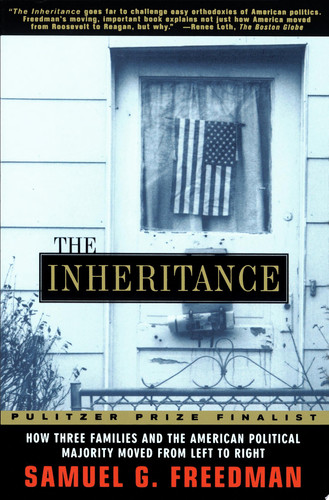
The inheritance: how three families and America moved from Roosevelt to Reagan and beyond

Freedman, Samuel G.
Orphan in the new world (Silvio Burigo) -- Liverpool on the Hudson (Lizzie Sanford Garrett) -- The dreamer and his son (Joseph Obrycki) -- The sewing room (Lizzie Garrett) -- The physics of cynicism (Joseph Obrycki) -- Worth two (Silvio Burigo) -- Voices from downstairs (Richie Garrett) -- Recessive genes (Silvio Burigo/Lorraine and Frank Trotta) -- Address as destiny (Vilma and Jack Maeby) -- Fence and basement (Silvio Burigo/Lorraine and Frank Trotta) -- Senator Clearwater (Richie Garrett) -- Uncle Paulie's Porch (Frank Trotta Jr.) -- The State Street Gang (Leslie Maeby) -- Poor snob (Tim Carey) -- Enchantment and its opposite (Frank Trotta Jr.) -- Incumbent protection (Leslie Maeby) -- Red suspenders (Tim Carey).
Simon & Schuster 1996 464 pages

The imperial moment

Kimberly Kagan
In a provocative study on comparative empire, noted historians identify periods of transition across history that reveal how and why empires emerge. Loren J. Samons on Athens and Arthur Eckstein on Rome examine classical Western empires. Nicholas Canny discusses the British experience, Paul Bushkovitch analyzes the case of imperial Russia, and Pamela Kyle Crossley studies Qing China’s beginnings. Frank Ninkovich tackles the actions of the United States at the turn of the twentieth century, which many view as imperial behavior. What were the critical characteristics that distinguished the imperial period of the state from its pre-imperial period? When did the state develop those characteristics sufficiently to be called an empire? The authors indicate the domestic political, social, economic, or military institutions that made empire formation possible and address how intentional the transition to empire was. They investigate the actions that drove imperial consolidation and consider the international environment in which the empire formed. Kimberly Kagan provides a concluding essay that probes the historical cases for insights into policymaking and the nature of imperial power.
Harvard University Press 2010-05-05 250 pages

After the event: the transmission of grievous loss in Germany, China and Taiwan

Feuchtwang, Stephan
Two of the most destructive moments of state violence in the twentieth century occurred in Europe between 1933 and 1945 and in China between 1959 and 1961 (the Great Leap famine). This is the first book to bring the two histories together in order to examine their differences and to understand if there are any similar processes of transmission at work. The author expertly ties in the Taiwanese civil war between Nationalists and Communists, which included the White Terror from 1947 to 1987, a less well-known but equally revealing part of twentieth-century history. Personal and family stories are told, often in the individual's own words, and then compared with the public accounts of the same events as found in official histories, commemorations, school textbooks and other forms of public memory. The author presents innovative and constructive criticisms of social memory theories in order to make sense both of what happened and how what happened is transmitted.--From publisher description
Berghahn Books 2011 240 pages

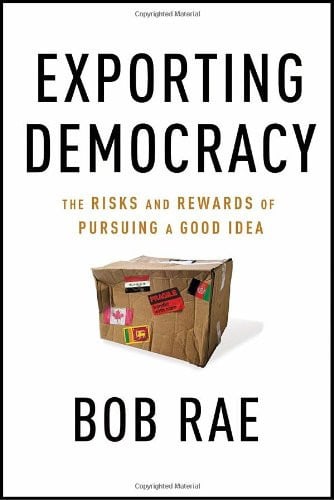
Exporting democracy: the risks and rewards of pursuing a good idea

Rae, Bob
The way most Western politicians talk, democracy is the pinnacle of civilization, the best political system there is. Many think it's the system the rest of the world ought to adopt. Bob Rae is not one of them. He is too well informed about the difficulties and dangers of implanting democracy in foreign lands. Exporting Democracy is an eloquently argued book in which Rae brings his lively, nuanced understanding to bear on the history and current fortunes of this powerful idea. He shows how it and the related ideas of freedom, human rights, and federalism have been pushed to centre stage by the collapse of Soviet communism and by ongoing wars to topple secular and religious dictatorships in the Middle East. He's also witnessed attempts to implant democracy in three countries riven by tribal and ethnic divisions, Iraq, Afghanistan, and Sri Lanka, and offers readers a cool appraisal of the effort.
McClelland & Stewart 2010 275 pages

Insulin murders: true life cases

Marks, Vincent
The first book ever to describe real life cases of murder, and purported murder, using insulin as a weapon. Covers cases from the USA, UK, Europe, Japan and New Zealand, including the well known Claus von Bulow case, the first criminal trial to be broadcast in its entirety on US TV (later the subject of a Hollywood movie, Reversal of Fortune). Written by Vincent Marks, coauthor of the critically acclaimed book Panic Nation: Exposing the Lies We're Told About Food and Health (John Blake Publishing) and a world authority on insulin, and Caroline Richmond, a medical journalist and writer, this gripping account is intended for doctors and laypeople alike, especially those with an interest in forensic medicine or true life crime.
Royal Socety of Medicine Press 2007 189 pages