810 results for "History"

Take arms against a sea of troubles: the power of the reader's mind over a universe of death

Bloom, Harold
"The great poems, plays, novels, stories teach us how to go on living. . . . Your own mistakes, accidents, failures at otherness beat you down. Rise up at dawn and read something that matters as soon as you can." So Harold Bloom, the most famous literary critic of his generation, exhorts readers of his last book: one that praises the sustaining power of poetry. "Passionate. . . . Perhaps Bloom's most personal work, this is a fitting last testament to one of America's leading twentieth-century literary minds." -- Publishers Weekly "An extraordinary testimony to a long life spent in the company of poetry and an affecting last declaration of [Bloom's] passionate and deeply unfashionable faith in the capacity of the imagination to make the world feel habitable"--Seamus Perry, Literary Review "Reading, this stirring collection testifies, 'helps in staying alive.'"-- Kirkus Reviews , starred review This dazzling celebration of the power of poetry to sublimate death--completed weeks before Harold Bloom died--shows how literature renews life amid what Milton called "a universe of death." Bloom reads as a way of taking arms against the sea of life's troubles, taking readers on a grand tour of the poetic voices that have haunted him through a lifetime of reading. "High literature," he writes, "is a saving lie against time, loss of individuality, premature death." In passages of breathtaking intimacy, we see him awake late at night, reciting lines from Dante, Shakespeare, Milton, Montaigne, Blake, Wordsworth, Hart Crane, Jay Wright, and many others. He feels himself "edged by nothingness," uncomprehending, but still sustained by reading. Generous and clear‑eyed, this is among Harold Bloom's most ambitious and most moving books.
Yale University Press 2021-10-12 672 pages

Folk music: a Bob Dylan biography in seven songs

Marcus, Greil
"Across seven decades, Bob Dylan has been the first singer of American song. As a writer and performer, he has rewritten the national songbook in a way that comes from his own vision and yet can feel as if it belongs to anyone who might listen. In Folk Music, Greil Marcus tells Dylan's story through seven of his most transformative songs. Marcus's point of departure is Dylan's ability to "see myself in others." Like Dylan's songs, this book is a work of implicit patriotism and creative skepticism. It illuminates Dylan's continuing presence and relevance through his empathy-his imaginative identification with other people. This is not only a deeply felt telling of the life and times of Bob Dylan, but a rich history of American folk songs and the new life they were given as Dylan sat down to write his own."--
Yale University Press 2022 273 pages

The Cambridge companion to science fiction

Edward James,Farah Mendlesohn
Science fiction is at the intersection of numerous fields. It is literature which draws on popular culture, and engages in speculation about science, history, and all varieties of social relations. This volume brings together essays by scholars and practitioners of science fiction, which look at the genre from different angles. It examines science fiction from Thomas More to the present day; and introduces important critical approaches (including Marxism, postmodernism, feminism and queer theory).
Cambridge University Press 2003-11-20 295 pages

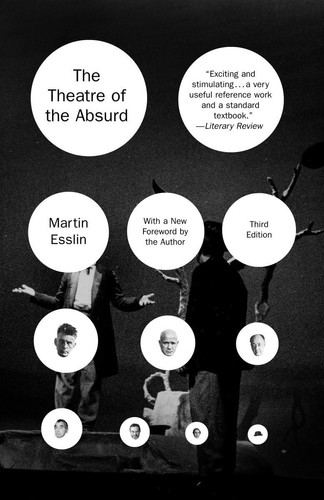
The theatre of the absurd

Esslin, Martin
In 1953, Samuel Beckett’s Waiting for Godot premiered at a tiny avant-garde theatre in Paris; within five years, it had been translated into more than twenty languages and seen by more than a million spectators. Its startling popularity marked the emergence of a new type of theatre whose proponents—Beckett, Ionesco, Genet, Pinter, and others—shattered dramatic conventions and paid scant attention to psychological realism, while highlighting their characters’ inability to understand one another. In 1961, Martin Esslin gave a name to the phenomenon in his groundbreaking study of these playwrights who dramatized the absurdity at the core of the human condition. Over four decades after its initial publication, Esslin’s landmark book has lost none of its freshness. The questions these dramatists raise about the struggle for meaning in a purposeless world are still as incisive and necessary today as they were when Beckett’s tramps first waited beneath a dying tree on a lonely country road for a mysterious benefactor who would never show. Authoritative, engaging, and eminently readable, The Theatre of the Absurd is nothing short of a classic: vital reading for anyone with an interest in the theatre.
Vintage Books 2004-01-06 480 pages

You don't know me but you don't like me: Phish, Insane Clown Posse, and my misadventures with two of music's most maligned tribes

Rabin, Nathan
One of Rolling Stone ’s 20 Best Music Books of 2013 When memoirist and head writer for The A.V. Club Nathan Rabin first set out to write about obsessed music fans, he had no idea the journey would take him to the deepest recesses of both the pop culture universe and his own mind. For two very curious years, Rabin, who Mindy Kaling called “smart and funny” in The New Yorker , hit the road with two of music’s most well-established fanbases: Phish’s hippie fans and Insane Clown Posse’s notorious “Juggalos.” Musically or style-wise, these two groups could not be more different from each other, and Rabin, admittedly, was a cynic about both bands. But once he gets deep below the surface, past the caricatures and into the essence of their collective cultures, he discovers that both groups have tapped into the human need for community. Rabin also grapples with his own mental well-being—he discovers that he is bipolar—and his journey is both a prism for cultural analysis and a deeply personal exploration, equal parts humor and heart.
Scribner 2013-06-11 261 pages

Agon: towards a theory of revisionism

Bloom, Harold
"In the culmination of a series that began with "The Anxiety of Influence" and "A Map of Misreading," Harold Bloom expands upon his controversial theory of revisionism, which he views as a contest of opposing artistic and moral drives. From this theoretical perspective, Bloom re-examines Freud, religious sources of literature, literary modes such as fantasy, and the sequence of American writers that includes Emerson, Whitman, Wallace Stevens, Hart Crane, and John Ashbery. A 1982 National Book Critics Circle nominee."--Back cover
Oxford University Press 1982 336 pages

Rust in peace: the inside story of the Megadeth masterpiece

Mustaine, Dave,Selvin, Joel
"Rust in Peace details the making of Megadeth's iconic record, which was released in 1990, at an incredible time of flux and creativity in the rock world. Relayed by the lead vocalist and guitarist of Megadeth himself, Dave Mustaine, the book covers the process of hiring the band and supporting cast, of trying to handle the ensuing success, and ultimately the pressure of fame and fortune -- which caused the band to finally break-up. In short, it's a true story of groundbreaking anti-pop that was moving toward the mainstream (or the mainstream that was moving toward the band), at a time of great cultural change, power, ego, drugs, and other vices that went hand-in-hand with Rock N' Roll, circa the late eighties-early nineties. Little did Mustaine know that the birth pangs of the record were nothing compared to the oncoming pain and torment that would surround it. Alcohol, drugs, sex, money, power, property, prestige, the lies the band was told by the industry -- and the lies they told each other -- were just beginning, and much like rust in real life, these factors would ultimately eat away at the band's bond until only the music survived."--Amazon.com
Hachette Books 2020 191 pages

Appetite for destruction: the days of Guns n' Roses

Sugerman, Daniel
If rock 'n' roll is an altered state of intoxicated consciousness between creation and destruction, violence and romance, beauty and ugliness, 'N' Roses, one of the most successful bands on the popular music scene. Author Danny Sugarman is no stranger to this scene, and his biography of Jim Morrison, No One Here Gets Out, reveals his immense experience with the L.A. music scene. 16 pages of photographs; 35 illustrations.
St. Martin's Press 1991 246 pages

The classical style: Haydn, Mozart, Beethoven

Rosen, Charles
"The word 'masterpiece' should be used rarely if at all. But it applies to Charles Rosen's The Classical Style. This is more than a superbly penetrating, closely argued analysis of Haydn, Mozart, and Beethoven. It is a piece of 'active criticism' which only a very distinguished performer could have achieved. Rosen carries over into English prose those strengths of clarity, scruple, and excitement which he brings to his playing. Simply by itself, this book sets new standards for the application of language to music."-George Steiner. "A book for which both musicians and music-lovers should be grateful."- Edward T. Cone. "[Rosen] never loses sight of the organic nature of the music he discusses; in other words he seems nearly always to find the dynamic function of each element, whether it be thematic, rhythmic, harmonic, or tonal. Such writing is rare, and to be cheered to the echo when it is found...Rosen's [ears] are very acute indeed, and he is able to savor the essential concentration of thought in a mature Haydn quartet or the subtleties of exquisitely timed disguised recapitulations in Mozart's operas, and express himself about them in language of fine clarity....One of the best books of its kind to have appeared since Tovey." - Robert Simpson.
W. W. Norton 1972 467 pages

The old, weird America: the world of Bob Dylan's basement tapes

Marcus, Greil
Previously published as Invisible Republic and already considered a classic of modern American cultural criticism , The Old, Weird America is Greil Marcus's widely acclaimed book on the secret music (the so-called "Basement Tapes") made by Bob Dylan and the Band while in seclusion in Woodstock, New York, in 1967--a folksy yet funky, furious yet hilarious music that remains as seductive and baffling today as it was more than thirty years ago. As Mark Sinker observed in The Wire : "Marcus's contention is that there can be found in American folk a community as deep, as electric, as perverse, and as conflicted as all America, and that the songs Dylan recorded out of the public eye, in a basement in Woodstock, are where that community as a whole gets to speak." But the country mapped out in this book, as Bruce Shapiro wrote in The Nation , "is not Woody Guthrie's land for made for you and me . . . It's what Marcus calls 'the old, weird America.'" This odd terrain, this strange yet familiar backdrop to our common cultural history--which Luc Sante (in New York magazine) termed the "playground of God, Satan, tricksters, Puritans, confidence men, illuminati, braggarts, preachers, anonymous poets of all stripes"--is the territory that Marcus has discovered in Dylan's most mysterious music. And his analysis of that territory "reads like a thriller" (Ken Tucker, Entertainment Weekly ) and exhibits "a mad, sparkling brilliance" (David Remnick, The New Yorker ) throughout. This new edition of The Old, Weird America includes an updated discography.
Picador 2001-09-22 293 pages

A jury of her peers: American women writers from Anne Bradstreet to Annie Proulx

Showalter, Elaine
LITERARY STUDIES: GENERAL. Fascinating, incisive, intelligent and never afraid of being controversial, Elaine Showalter introduces us to more than 250 writers. Here are the famous and expected names, including Harriet Beecher Stowe, Willa Cather, Dorothy Parker, Flannery O'Connor, Gwendolyn Brooks, Grace Paley, Toni Morrison, and Jodi Picoult. And also many successful and acclaimed yet little-known writers, from the early American bestselling novelist Catherine Sedgwick to the Pulitzer Prize-winning playwright Susan Glaspell. A JURY OF HER PEERS is an irresistible invitation to discover great authors never before encountered and to return to familiar books with a deeper appreciation. It is a monumental work that enriches our understanding of American literary history and culture.
Virago 2010 679 pages

The romantic generation

Rosen, Charles
What Charles Rosen's celebrated book The Classical Style did for music of the Classical period, this new, much-awaited volume brilliantly does for the Romantic era. An exhilarating exploration of the musical language, forms, and styles of the Romantic period, it captures the spirit that enlivened a generation of composers and musicians, and in doing so it conveys the very sense of Romantic music. In readings uniquely informed by his performing experience, Rosen offers consistently acute and thoroughly engaging analyses of works by Schubert, Schumann, Mendelssohn, Bellini, Liszt, and Berlioz, and he presents a new view of Chopin as a master of polyphony and large-scale form. He adeptly integrates his observations on the music with reflections on the art, literature, drama, and philosophy of the time, and thus shows us the major figures of Romantic music within their intellectual and cultural context. Rosen covers a remarkably broad range of music history and considers the importance to nineteenth-century music of other cultural developments: the art of landscape, a changed approach to the sacred, the literary fragment as a Romantic art form. He sheds new light on the musical sensibilities of each composer, studies the important genres from nocturnes and songs to symphonies and operas, explains musical principles such as the relation between a musical idea and its realization in sound and the interplay between music and text, and traces the origins of musical ideas prevalent in the Romantic period. Rich with striking descriptions and telling analogies, Rosen's overview of Romantic music is an accomplishment without parallel in the literature, a consummate performance by a master pianist and music historian.
Harvard University Press 1995 723 pages