55 results for "History"

By faith alone: the medieval church and Martin Luther

Shestov, Lev
Lev Shestov's By Faith Alone confronts Eastern and Western European conceptions of faith through Russian literature, ancient and medieval philosophy, and Christian theology. Written from 1910-1914, this first English-language translation brings together important early writings on the medieval church and Martin Luther. Shestov reconciles the Greek notion of rational truth with Biblical revelation by drawing on a wide range of ancient, medieval, philosophical and theological sources from Plato to Hegel, Tertullian to Saint Augustine , and Saint Bernard of Clairvaux to William of Ockam. He argues that rational truth has skewed Christian belief by determining knowledge and truth in ways that prize the mind over the world. This approach marks a turning point in the evolution of Shestov's existential thought. It establishes a basic division that became central to Shestov's later work, between Athens as reason and Jerusalem as faith. By Faith Alone provides a crucial piece of the puzzle in the genesis of Shestov's later and better-known writings on medieval philosophy.
Bloomsbury Academic 2025-05-29 240 pages

Dilemmas in modern Jewish thought: the dialectics of revelation and history

Morgan, Michael L.
Chs. 7 and 8 (pp. 79-110) discuss how the Holocaust has changed Jewish thought, especially on ethics and theology. In keeping with the principle of historicism of Judaism, contends that the Holocaust generated a set of new imperatives, including the importance of Jewish existence as a response to the Holocaust. Regards Rabbi Ephraim Oshry from Kovno as the first halakhic authority who began to alter Jewish ethics in the period of the Holocaust. Divides contemporary Jewish thinkers between those who recognize that the Holocaust was a unique event, and hence justify amendments in Jewish ethics and theology (e.g. Emil Fackenheim), and those who do not recognize it (e.g. Eliezer Berkovits); an intermediate attitude is held by Irving Greenberg.
Indiana University Press 1992 181 pages

Gentile impurities and Jewish identities: intermarriage and conversion from the Bible to the Talmud

Hayes, Christine Elizabeth
In ancient Jewish culture the ideas of purity and impurity defined the socio-cultural boundaries between Jews and Gentiles. Hayes argues that different views of the possibility of conversion, based on varying ideas about Gentile impurity, were the key factor in the formation of Jewish sects in the second temple period, and in the separation of the early Christian Church from what later became rabbinic Judaism.
Oxford University Press 2002 309 pages

Beyond death: theological and philosophical reflections on life after death

Dan Cohn-Sherbok,Christopher Lewis
Throughout history human beings have been preoccupied with personal survival after death. As a consequence, most world religions proclaim that life continues beyond the grave, and they have depicted the Hereafter in a variety of forms. These various conceptions constitute answers to the most perplexing spiritual questions: Will we remember our former lives in the Hereafter? Will we have bodies? Can bodiless souls recognize each other? Will we continue to have personal identity? Will we be punished or rewarded, or absorbed into the Godhead? These issues serve as the basis of this collection of essays which provide a framework for understanding traditional conceptions of the Hereafter as well as new perspectives.
Macmillan 1995 219 pages

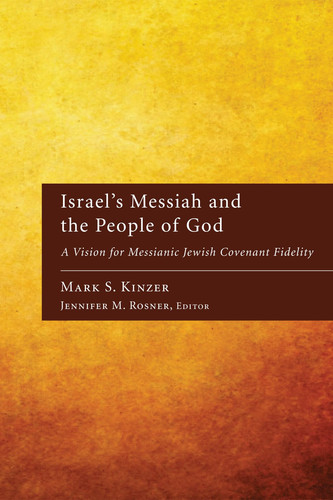
Israel's messiah and the people of God: a vision for Messianic Jewish covenant fidelity

Kinzer, Mark
Israel's Messiah and the People of God presents a rich and diverse selection of essays by theologian Mark Kinzer, whose work constitutes a pioneering step in Messianic Jewish theology. Including several pieces never before published, this collection illuminates Kinzer's thought on topics such as Oral Torah, Jewish prayer, eschatology, soteriology, and Messianic Jewish-Catholic dialogue. This volume offers the reader numerous portals into the vision of Messianic Judaism offered in Kinzer's Postmissionary Messianic Judaism (2005). An introductory essay by editor Jennifer M. Rosner sets Kinzer's thought and writings in context.
Cascade Books 2011-01-07 221 pages

Jews, Christians and religious pluralism

Cohn-Sherbok, Dan
Provides a basis for considering the claims of a wide variety of Jewish and Christian writers in the Judeo-Christian tradition, from biblical times to the present, who have wrestled with the issues of religious pluralism. In many cases these thinkers have reflected on the merits of one another's faith; alternatively, they have considered the truth-claims of their own faith in relation to the world's religions. Profiles on some 90 thinkers, such as Augustine, Helen Fry, and Baruch Spinoza, provide the type of information most commonly sought by students and general readers, including biographical details, theological position, and samples of work. The author is a professor of Judaism at the University of Wales, and visiting professor of interfaith dialog at Middlesex University. Annotation c. Book News, Inc., Portland, OR (booknews.com)
Edwin Mellen Press 1999 336 pages

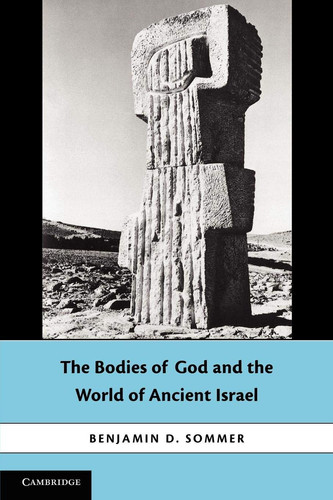
The bodies of God and the world of ancient Israel

Sommer, Benjamin D.
Sommer utilizes a lost ancient Near Eastern perception of divinity according to which a god has more than one body and fluid, unbounded selves. Though the dominant strains of biblical religion rejected it, a monotheistic version of this theological intuition is found in some biblical texts. Later Jewish and Christian thinkers inherited this ancient way of thinking; ideas such as the sefirot in Kabbalah and the trinity in Christianity represent a late version of this theology. This book forces us to rethink the distinction between monotheism and polytheism, as this notion of divine fluidity is found in both polytheistic cultures (Babylonia, Assyria, Canaan) and monotheistic ones (biblical religion, Jewish mysticism, Christianity), whereas it is absent in some polytheistic cultures (classical Greece). The Bodies of God and the World of Ancient Israel has important repercussions not only for biblical scholarship and comparative religion but for Jewish-Christian dialogue.
Cambridge University Press 2011-01-17 334 pages

Anything but straight: unmasking the scandals and lies behind the ex-gay myth

Besen, Wayne R.
The real story behind “ex-gay” ministries and reparative therapy! Nationally known activist Wayne Besen spent four years examining the phenomenon of “ex-gay” ministries and reparative therapies—interviewing leaders, attending conferences, and visiting ministries undercover as he accumulated hundreds of hours of research. The result is Anything but Straight: Unmasking the Scandals and Lies Behind the Ex-Gay Myth, a groundbreaking exposé of the controversial movement that's revered by independent religious groups and reviled by gay and lesbian organizations. The book presents a historical perspective on the dispute, examining “ex-gay” groups such as Love In Action, Exodus International, Homosexuals Anonymous, and profiling a cast of characters that includes Pat Robertson, the Rev. Jerry Falwell, “ex-gay” poster boy John Paulk, National Association of Research and Therapy of Homosexuality activist Richard Cohen, and psychiatrist Dr. Robert Spitzer. An in-depth, well-researched, and historically significant account, Anything but Straight is full of startling facts and alarming surprises. The original content and novel material in the book includes: a first-ever comprehensive history of the “ex-gay” ministries and “reparative therapy” the inside story of the night the author photographed “ex-gay” poster boy John Paulk inside a gay bar the author's discovery that Anne Paulk lied about being a lesbian and has admitted to having a strong attraction to men BEFORE she became “ex-gay” previously undisclosed bizarre techniques used by the “ex-gay” ministries and “reparative therapists” the author's exclusive in-depth interviews with leading “ex-gay” leaders—they disclose their deepest secrets, hidden desires, and true motivations an extraordinary new study that shows that most “ex-gay” leaders have suffered from substance abuse or severe emotional problems—while many “ex-gay” leaders claim they were “unhappy being gay,” this report helps prove that their dissatisfactions came not from their homosexuality, but from poor life choices and irresponsible behavior new revelations that one of the nation's leading “reparative therapists” hailed from a secretive cult that was scandalized for practicing nude therapy From the author: Through my extensive experience, I have learned that the extraordinary claims made by the “ex-gay” groups are without merit and the efficacy of their programs is dubious at best and harmful at worst . . . One frequent question I get is, “Why can't gay activists simply leave 'ex-gay' groups alone and let them go about their business?” This is exactly what happened for nearly three decades while “ex-gay” groups labored in near anonymity. But all this recently changed when the “ex-gay” groups intricately aligned themselves with the anti-gay political agenda of the Religious Right. With “ex-gays” added to their arsenal, the Right could disingenuously claim to love gay people and offer them “hope for change,” while simultaneously fighting for punitive legislation. Their insidious message: Since gays and lesbians can change, there is no need for laws that protect them against arbitrary prejudice. Anything but Straight: Unmasking the Scandals and Lies Behind the Ex-Gay Myth is an essential read for activists on both sides of the “ex-gay” fence, family members of gays and lesbians, Gay, Bisexual, Lesbian, and Transgender church members, psychiatric and social science professionals, and anyone who has dealt with “coming out” issues. An appendix of resources and a helpful bibliography make it easy to find additional information on this fascinating topic.
Harrington Park Press 2003 311 pages

The election of Israel: the idea of the chosen people

Novak, David
The view of themselves as the chosen people of God has been maintained by Jews from the beginnings of their history to the present. The author explores the development of this idea in Jewish theology and law, and essays a contemporary retrieval of the classical doctrine of election. Through an examination of the philosophical implications of the idea, he argues for the correlation of election and revelation, and shows both what the notion of election should mean for Jews today, and how non-Jews can better understand it.
Cambridge University Press 2007-11-05 304 pages

Jewish-Christian Dialogue: Jewish Justification

Novak, David
Many studies written about the Jewish-Christian relationship are primarily historical overviews that focus on the Jewish background of Christianity, the separation of Christianity from Judaism, or the medieval disputations between the two faiths. This book is one of the first studies to examine the relationship from a philosophical and theological viewpoint. Carefully drawing on Jewish classical sources, Novak argues that there is actual justification for the new relationship between Judaism and Christianity from within Jewish religious tradition. He demonstrates that this new relationship is possible between religiously committed Jews and Christians without the two major impediments to dialogue: triumphalism and relativism. One of the very few books on this topic written by a Jewish theologian who speaks specifically to modern Christian concerns, it will provide the groundwork for a more serious development of Jewish-Christian dialogue in our day.
Oxf. U. P. (N. Y.) 1992 194 pages

Noah's flood: the Genesis story in Western thought

Cohn, Norman
The biblical tale of Noah and the Flood has been interpreted in many different ways through the ages, mirroring the many changes in Western beliefs and values. In this masterly and beautifully illustrated book, Norman Cohn, the author of The Pursuit of the Millennium and Cosmos, Chaos and the World to Come, explores the origins, development, and varying interpretations of this ancient story and assesses its impact on the history of ideas. The roots of the Flood story, Cohn explains, lie in Mesopotamian mythology. But its meaning was totally transformed by the authors of Genesis so that it became a message of hope for Jews and later a prefiguring of salvation for Christians. Cohn then shows how, under the impact of the scientific revolution of the seventeenth century, the story came to be understood in a new way. Between the seventeenth and the nineteenth centuries it was closely associated with the development of scientific geology, which it both helped and hindered. From the late eighteenth century until the present day the story of Noah's Flood has been involved also in the conflict between traditional religious beliefs and science and the attempts to harmonize the two. Cohn describes how, while geological and palaeontological discoveries were calling the historicity of the Flood into question, fundamentalists have continued to champion it, even to the extent of searching for the landing site of the ark. Finally, he considers how, in the course of the present century, the story has been interpreted as a solar myth, a lunar myth, a fertility myth, and even (psychoanalytically) as an expression of male resentment against women. Wide ranging and compellingly narrated, the book includesintriguing accounts of the scholars and theologians who endorsed or rejected the Flood story and contributed to its powerful resonance over two thousand years.
Yale University Press 1996-01-01 154 pages

Studies in the Zohar

Liebes, Yehuda
This book deals with the Book of Splendor (Sefer ha-Zohar), the greatest achievement of Kabbalah and one of the most influential sources of Western mysticism. This book offers a new interpretation of the Zohar, analyzing both its theoretical content and its historical context; it also brings the theory and the history together by indicating the personal and autobiographical elements in the Zohar s teachings. The author delves into the issues of the messianic elements of the Zohar, the way it was written, and its relationship to Christianity, Gnosticism, and Talmudic literature.
State University of New York Press 1993-02-11 262 pages

Authority and asceticism from Augustine to Gregory the Great

Leyser, Conrad
Conrad Leyser examines the formation of the Christian ascetic tradition in the western Roman Empire during the period of the barbarian invasions, c.400-600. In an aggressively competitive political context, one of the most articulate claims to power was made, paradoxically, by men who had renounced 'the world', committing themselves to a life of spiritual discipline in the hope of gaining entry to an otherworldly kingdom. Often dismissed as mere fanaticism or open hypocrisy, the language of ascetic authority, Conrad Leyser shows, was both carefully honed and well understood in the late Roman and early medieval Mediterranean. Dr Leyser charts the development of this new moral rhetoric by abbots, teachers, and bishops from the time of Augustine of Hippo to that of St Benedict and Gregory the Great.
Clarendon Press 2000-01 221 pages

Contemporary Jewish philosophies

Kaufman, William E.
New forms of Jewish philosophic inquiry in response to the Holocaust, the American Jewish experience, and the establishment of the State of Israel, present a necessity for a clear and comprehensive framework in which contemporary Jewish thought may be studied. This is what William E. Kaufman has done in "Contemporary Jewish Philosophies". Examining the present parameters of Jewish thought – Existentialism, naturalism, supernaturalism, and transnaturalism – he formulates the criteria for dealing with modern Jewish thinking. He traces the effects of this new philosophic vocabulary through the writings of such established luminaries as Franz Rosenzweig, Martin Buber, Leo Baeck, and Mordecai Kaplan as well as seeking the sources of the thought of such contemporary figures as Emil Fackenheim, Jacob Agus, Arthur Cohen, Eugene Borowitz, Richard Rubenstein, and Abraham Joshua Heschel in the traditional roots of covenant, salvation, and transcendence. Dr. Kaufman deals in depth with the age-old questions: What conception of God can I accept? What is the relation of God to the universe? How shall we concieve the relation of man to God? But he goes further still. What is salvation in light of the Holocaust and the establishment of Israel? Can we find an analogue in the past to the situation of Jews today? Probing these questions, along with the primary concerns of Jewish philosophy, he illumines and enlivens the complex dialogues which from the basis of Jewish philosophic thought. Each philosopher is analyzed and critiqued, utilizing a a uniform criteria which focuses the key concerns and commentaries of each in relation to the entire realm of Jewish thought today. "Contemporary Jewish Philosophies" in essential not only to the student of philosophy but to the reader who is seriously concerned with confronting today's problems with today's sensibility. --
Reconstructionist Press 1976 276 pages