64 results for "History"

No Excuses Nine Ways Women Can Change How We Think About Power

Gloria Feldt
An invaluable guidebook, which contends that the most vexing problems facing women today isn't that doors of opportunity aren't open but that not enough women are walking through them Feminist icon Gloria Feldt pulls no punches in this new book, which argues that the most confounding problem facing women today isn't that doors of opportunity aren't open, but that not enough women are walking through them. From the boardroom to the bedroom, public office to personal relationships, she asserts that nobody is keeping women from parity-except themselves. Feldt puts women's power into an historical context, showing the ways in which women have made huge leaps forward in the past, only to pull back right when they were at the threshold. Feldt argues that there's no excuse-whether it's the way women are socialized, or pressure to conform, or work/life balance issues-for women today not to own their power. Women are still facing unequal pay, being passed over for promotions, entering public office at a much lesser rate than men, and oftentimes still struggling with traditional power dynamics in their interpersonal relationships. Feldt's solution to all these places where women face inequality is the same: we need to shift the way we think to achieve true parity with our male counterparts. No Excuses is divided into nine chapters that organized around how women can change the way they think, and therefore the way they act. These include: Know Your History and You Can Create the Future of Your Choice; Define the Terms-First; Embrace Controversy; Employ Every Medium; and other helpful ideas for using the tools and resources women already have to create the changes they want to see. No Excuses is a timely and invaluable book to help women equalize gender power in politics, work, and love.
Basic Books 2012-02-28 384 pages

A house of cards: baseball card collecting and popular culture

Bloom, John
Baseball card collecting carries with it images of idealized boyhoods in the sprawling American suburbs of the postwar era. Yet since the mid-1970s, it has grown from a pastime for children to a big money pursuit taken seriously by adults. This work employs interviews with collectors, dealers, and hobbyists to ask what this hobby tells us about nostalgia, work, play, masculinity, and race and gender relations among collectors. These interviews reveal the hobby's alienating, lonely and unfulfilling aspects, and demonstrate the nostalgia experienced among collectors for the ideal childhood world many middle class white males experienced in the postwar years, when baseball card collecting was a form of play, not a money-making enterprise. The work links this nostalgia to anxieties about de-industrialization and the rise of the civil rights, feminist, and gay rights movements. It examines the gendered nature of swap meets as well as the views of masculinity expressed by the collectors: is the purpose of baseball card collecting to form a community of adults to reminisce or to inculcate young men with traditional masculine values? Is it to establish "connectedness" or to make money? Are collectors striving to reinforce the dominant culture or question it through their attempts to create their own meaning out of what are, in fact, mass-produced commercial artifacts?
University of Minnesota Press 1997 142 pages

More real life rock: the wilderness years, 2014-2021

Marcus, Greil
This book, a sequel and companion volume to Marcus's Real Life Rock: The Complete Top Ten Columns, 1986-2014, is a collection of hundreds of items from the crisscrossing spectrum of culture and politics throughout the tumultuous past six years of American life. Tracking the evolution of national identity during the convulsive Trump administration, Marcus spotlights the most whip-smart cultural artifacts to compose a mosaic portrait of American society, replete with unexpected heroes and villains, absurdity and its consequences, humor and despair, terror and defiance--as seen through media, music, and more. Bursting with Marcus's effortless, no-nonsense, unapologetic verve, this book features seventy-three columns from 2014 through February 2021
Yale University Press 2022 331 pages

You're Too Kind A Brief History of Flattery

Richard Stengel
Okay, who was the first flatterer? If you guessed Satan, you'd be close, but according to You're Too Kind, flattery began with chimpanzees, who groom each other all day long. In fact, flattery is an adaptive behavior that has helped us survive since prehistoric times. Our flattery is strategic praise, and to illustrate its myriad forms, Richard Stengel takes us on a witty, idiosyncratic tour, from chimps to the God of the Old Testament to the troubadour poets of the Middle Ages, all the way through Dale Carnegie and Monica Lewinsky's adoring love letters to her "Big Creep." Flattery thrives in hierarchical settings like royal courts or Fortune 500 boardrooms, and it flows both upward and downward. Downward is usually easier, but studies show it works best on those who already have high opinions of themselves. Stengel sees public flattery as an epidemic in our society, and private praise as being all too scarce. Most often, though, flattery these days is just a harmless deception, a victimless crime that often ends up making both the giver and the receiver feel a little better. In short, flattery works.
Simon and Schuster 2002-02-05 315 pages

Who by Fire War, Atonement, and the Resurrection of Leonard Cohen

Matti Friedman
"An expedition into the troubled soul of one of the world's greatest songwriters."-- Haaretz "A fascinating and intense account of Leonard Cohen's time in Israel during the 19-day Yom Kippur War of 1973. A must for any Leonard Cohen completist."--Suzanne Vega A Vanity Fair Best Book of 2022 * Mosaic Magazine Best Book of 2022 The untold story of Leonard Cohen's concert tour to the front lines of the Yom Kippur War, including never-before-seen selections from an unfinished manuscript by Cohen and rare photographs In October 1973, the poet and singer Leonard Cohen--thirty-nine years old, famous, unhappy, and at a creative dead end--traveled to the chaos and bloodshed of the Sinai desert when Egypt attacked Israel on the Jewish high holiday of Yom Kippur. Moving around the front with a group of local musicians, Cohen sang for hundreds of young soldiers, men and women at the worst moment of their lives. Those who survived never forgot the experience. And the war transformed Cohen, reigniting his creativity and inspiring him to compose some of his most memorable songs. Who by Fire provides a riveting account of those weeks in the Sinai, drawing on Cohen's previously unpublished writing and original reporting to create a kaleidoscopic depiction of a harrowing, existential moment for both a young country at war and a singer at a crossroads.
Spiegel & Grau 2024-09-03 224 pages

The Devil's playground: a century of pleasure and profit in Times Square

Traub, James
As Times Square turns 100, New York Times Magazine contributing writer James Traub tells the story of how this mercurial district became one of the most famous and exciting places in the world. The Devil’s Playground is classic and colorful American history, from the first years of the twentieth century through the Runyonesque heyday of nightclubs and theaters in the 1920s and ’30s, to the district’s decline in the 1960s and its glittering corporate revival in the 1990s. First, Traub gives us the great impresarios, wits, tunesmiths, newspaper columnists, and nocturnal creatures who shaped Times Square over the century since the place first got its name: Oscar Hammerstein, Florenz Ziegfeld, George S. Kaufman, Damon Runyon, Walter Winchell, and “the Queen of the Nightclubs,” Texas Guinan; bards like A. J. Liebling, Joe Mitchell, and the Beats, who celebrated the drug dealers and pimps of 42nd Street. He describes Times Square’s notorious collapse into pathology and the fierce debates over how best to restore it to life. Traub then goes on to scrutinize today’s Times Square as no author has yet done. He writes about the new 42nd Street, the giant Toys “R” Us store with its flashing Ferris wheel, the new world of corporate theater, and the sex shops trying to leave their history behind. More than sixty years ago, Liebling called Times Square “the heart of the world”—not just the center of the world, though this crossroads in Midtown Manhattan was indeed that, but its heart. From the dawn of the twentieth century through the 1950s, Times Square was the whirling dynamo of American popular culture and, increasingly, an urban sanctuary for the eccentric and the untamed. The name itself became emblematic of the tremendous life force of cities everywhere. Today, Times Square is once again an awe-inspiring place, but the dark and strange corners have been filled with blazing light. The most famous street character on Broadway, “the Naked Cowboy,” has his own website, and Toys “R” Us calls its flagship store in Times Square “the toy center of the universe.” For the giant entertainment corporations that have moved to this safe, clean, and self-consciously gaudy spot, Times Square is still very much the center of the world. But is it still the heart?
Random House 2004-03-16 313 pages

Let's Do It The Birth of Pop Music: A History

Bob Stanley
The must-read music book of the year—and the first such history bringing together all musical genres to tell the definitive narrative of the birth of Pop from 1900 to the mid-1950s. Pop music didn't begin with the Beatles in 1963, or with Elvis in 1956, or even with the first seven-inch singles in 1949. There was a pre-history that went back to the first recorded music, right back to the turn of the century. Who were these earliest record stars—and were they in any meaningful way "pop stars"? Who was George Gershwin writing songs for? Why did swing, the hit sound for a decade or more, become almost invisible after World War II? The prequel to Bob Stanley’s celebrated Yeah! Yeah! Yeah! , this new volume is the first book to tell the definitive story of the birth of pop, from the invention of the 78 rpm record at the end of the nineteenth century to the beginnings of rock and the modern pop age. Covering superstars such as Louis Armstrong, Bessie Smith, Duke Ellington and Frank Sinatra, alongside the unheralded songwriters and arrangers behind some of our most enduring songs, Stanley paints an aural portrait of pop music's formative years in stunning clarity, uncovering the silver threads and golden needles that bind the form together. Bringing the eclectic, evolving world of early pop to life—from ragtime, blues, and jazz to Broadway, country, crooning, and beyond— Let's Do It is essential reading for all music lovers. "An encyclopaedic introduction to the fascinating and often forgotten creators of Anglo-American hit music in the first half of the twentieth century."—Neil Tennant (The Pet Shop Boys)
Pegasus Books 2023-07-11 656 pages

Culture crash: the killing of the creative class

Timberg, Scott
"Change is no stranger to us in the twenty-first century. All of us must constantly adjust to an evolving world, to transformation and innovation. But for many thousands of creative artists, a torrent of recent changes has made it all but impossible to earn a living. A persistent economic recession, social shifts, and technological change have combined to put our artists-from graphic designers to indie-rock musicians, from architects to booksellers-out of work. This important book looks deeply and broadly into the roots of the crisis of the creative class in America and tells us why it matters. Scott Timberg considers the human cost as well as the unintended consequences of shuttered record stores, decimated newspapers, music piracy, and a general attitude of indifference. He identifies social tensions and contradictions-most concerning the artist's place in society-that have plunged the creative class into a fight for survival. Timberg shows how America's now-collapsing middlebrow culture-a culture once derided by intellectuals like Dwight Macdonald-appears, from today's vantage point, to have been at least a Silver Age. Timberg's reporting is essential reading for anyone who works in the world of culture, knows someone who does, or cares about the work creative artists produce"--
Yale University Press 2015-01-01 310 pages

Pop culture and the dark side of the American dream: con men, gangsters, drug lords, and zombies

Cantor, Paul A.
The many con men, gangsters, and drug lords portrayed in popular culture are examples of the dark side of the American dream. Viewers are fascinated by these twisted versions of heroic American archetypes, like the self-made man and the entrepreneur. Applying the critical skills he developed as a Shakespeare scholar, Paul A. Cantor finds new depth in familiar landmarks of popular culture. He invokes Shakespearean models to show that the concept of the tragic hero can help us understand why we are both repelled by and drawn to figures such as Vito and Michael Corleone or Walter White. Beginning with Huckleberry Finn and ending with The Walking Dead , Cantor also uncovers the link between the American dream and frontier life. In imaginative variants of a Wild West setting, popular culture has served up disturbing--and yet strangely compelling--images of what happens when people move beyond the borders of law and order. Cantor demonstrates that, at its best, popular culture raises thoughtful questions about the validity and viability of the American dream, thus deepening our understanding of America itself.
University Press of Kentucky 2019 207 pages

Gossip The Untrivial Pursuit

Joseph Epstein
Gossip is no trivial matter; despite its reputation, Epstein argues, it is an eternal and necessary human enterprise. Proving that he himself is a master of the art, Epstein serves up delightful mini-biographies of the Great Gossips of the Western World, along with many choice bits from his own experience. He also makes a powerful case that gossip has morphed from its old-fashioned best--clever, mocking, a great private pleasure--to a corrosive new-school version, thanks to the reach of the mass media and the Internet. Written in his trademark erudite and witty style, Gossip captures the complexity of this immensely entertaining subject.
HarperCollins Publishers 2012-11 256 pages

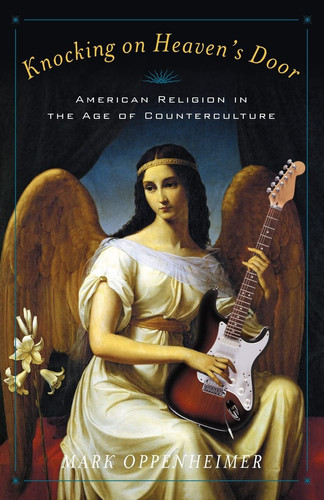
Knocking on Heaven's Door American Religion in the Age of Counterculture

Mark Oppenheimer
A witty and provocative reappraisal of the impact of the cultural upheavals of the sixties on American religious life What happened to American religion during the cultural revolution of the 1960s and early 1970s? The era has long been associated with the ascendancy of Eastern religions and fringe cults. But in this provocative book, Mark Oppenheimer demonstrates that contrary to conventional wisdom, most Americans did not turn on, tune in, and drop out of mainstream religious groups during the Age of Aquarius. Instead, many Americans brought the counterculture with them to their churches and temples, changing the face of American religion. Introducing us to America's first gay ministers and first female priests, to hippie Jews and folk-singing Catholics, Oppenheimer demonstrates that this was an era of extraordinary religious vitality. Drawing on a rich range of archival material as well as interviews with many of the protagonists, Knocking on Heaven's Door offersa wry and iconoclastic reappraisal of the ways in which the upheavals of the sixties changed America's relationship with God.
Yale University Press 2003 284 pages

Breathless Homicidal Slime Mutants The Art of the Paperback

Steven Brower
A visually dynamic homage to the paperback. In 1968, John Leonard, then editor of The New York Times Book Review , listed the many merits of mass-market paperbacks: "They can be stuffed in purses, left in buses, dropped in toilets, used as coasters, eaten and thrown away. Their covers can be ripped off! Their spines can be broken! To buy a paperback today is to buy the means of revenging oneself on Western culture." Fast-forward forty years. Leonard’s affectionately flippant assessment may need to be revised as the explosion of digital media threatens the livelihood of the printed word. More than an act of revenge on Western culture, to buy a paperback may be a means of preserving one of its more charismatic—and socially, politically, and aesthetically influential—species. Breathless Homicidal Slime Mutants celebrates the mass-market paperback and gives it its due. A vibrant tour that starts with books from the late nineteenth century up to today, examining the most popular genres—mystery, romance, Westerns, how-to, cooking, and diet, and highbrow literature packaged for the broader audience—it focuses on the history of the art and design of the format and how it is inseparable from the history of American literacy, tastes, and mores of the twentieth century.
National Geographic Books 2012-09-18 304 pages

Heaven can wait: Purgatory in Catholic devotional and popular culture

Pasulka, D. W.
After purgatory was officially defined by the Catholic Church in the thirteenth century, its location became a topic of heated debate and philosophical speculation: Was purgatory located on the earth, or within it? Were its fires real or figurative? Diana Walsh Pasulka offers a groundbreaking historical exploration of spatial and material concepts of purgatory, beginning with scholastic theologians William of Auvergne and Thomas Aquinas, who wrote about the location of purgatory and questioned whether its torments were physical or solely spiritual. In the same period, writers of devotional literature located purgatory within the earth, near hell, and even in Ireland. In the early modern era, a counter-movement of theologians downplayed purgatory's spatial dimensions, preferring to depict it in abstract terms--a view strengthened during the French Enlightenment, when references to purgatory as a terrestrial location or a place of real fire were ridiculed by anti-Catholic polemicists and discouraged by the Church. The debate surrounding purgatory's materiality has never ended: even today members of post-millennial ''purgatory apostolates'' maintain that purgatory is an actual, physical place. Heaven Can Wait provides crucial insight into the theological problem of purgatory's materiality (or lack thereof) over the past seven hundred years. --Provided by publisher
Oxford University Press 2015 207 pages

Vanity Fair's Hollywood

Christopher Hitchens
On the motion-picture front, no other publication of our age has achieved the stature, vitality, or magic of Vanity Fair. In its coverage of the film industry, the magazine prides itself on assigning the world's top photographers, writers, and illustrators to explore the brightest stars in the Hollywood firmament. Now, for the first time, the most memorable renderings of this illustrious pantheon have been assembled in one volume: Garbo and Swanson, Fairbanks and Pickford, Gable and Grant, Tracy and Hepburn, Taylor and Burton -- along with today's cinematic giants, including Cruise and Kidman, Nicholson and Streep, De Niro and DiCaprio, Tom Hanks and Julia Roberts, and scores more. As this sweeping, lavish book makes clear, Vanity Fair's stable of photographers (Cecil Beaton, Annie Leibovitz, Helmut Newton, Herb Ritts, Edward Steichen, Mario Testino, Bruce Weber, and many others represented here) have helped define modern portraiture. Likewise, Vanity Fair's Hollywood includes Vanity Fair contributors of the past (D.H. Lawrence, Clare Boothe Luce, Dorothy Parker, Carl Sandburg, Walter Winchell, and P.G. Wodehouse) and of the present.
Viking Studio 2001 318 pages

The popular arts

Hall, Stuart,Whannel, Paddy
When it first appeared in 1964, Stuart Hall and Paddy Whannel's The Popular Arts opened up an almost unprecedented field of analysis and inquiry into contemporary popular culture. Counter to the prevailing views of the time, Hall and Whannel recognized popular culture's social importance and considered it worthy of serious study. In their analysis of everything from Westerns and the novels of Mickey Spillane, Ian Fleming, and Raymond Chandler to jazz, advertising, and the television industry, they were guided by the belief that studying popular culture demanded an ethical evaluation of the text and full attention to its properties. In so doing, they raised questions about the relation of culture to society and the politics of taste and judgment in ways that continue to shape cultural studies. Long out of print, this landmark text highlights the development of Hall's theoretical and methodological approach while adding a greater understanding of his work. This edition also includes a new introduction by Richard Dyer, who contextualizes The Popular Arts within the history of cultural studies and outlines its impact and enduring legacy.
Duke University Press 2018-07-06 398 pages

Soviet and kosher: Jewish popular culture in the Soviet Union, 1923-1939

Shternshis, Anna
Kosher pork—an oxymoron? Anna Shternshis's fascinating study traces the creation of a Soviet Jewish identity that disassociated Jewishness from Judaism. The cultural transformation of Soviet Jews between 1917 and 1941 was one of the most ambitious experiments in social engineering of the past century. During this period, Russian Jews went from relative isolation to being highly integrated into the new Soviet culture and society, while retaining a strong ethnic and cultural identity. This identity took shape during the 1920s and 1930s, when the government attempted to create a new Jewish culture, "national in form" and "socialist in content." Soviet and Kosher is the first study of key Yiddish documents that brought these Soviet messages to Jews, notably the "Red Haggadah," a Soviet parody of the traditional Passover manual; songs about Lenin and Stalin; scripts from regional theaters; Socialist Realist fiction; and magazines for children and adults. More than 200 interviews conducted by the author in Russia, Germany, and the United States testify to the reception of these cultural products and provide a unique portrait of the cultural life of the average Soviet Jew.
Indiana University Press 2006 252 pages