33 results for "History"

Labor parties in postindustrial societies

Frances Fox Piven
The political landscape created by industrialization in the first half of the twentieth century has become increasingly unstable as the industrial labor force contracts, eroding support for labor parties on a global scale. This volume examines challenges faced by labor in the West over thelast decade, through a comparative study of labor-based political parties in the United States, England, France, West Germany, Sweden, Israel and Canada. The contributors, internationally-recognized sociologists and political scientists, examine factors contributing to the growth, maintenance ordecline of these parties, while Piven offers a comprehensive overview of labor politics and shows how the history of labor parties in other countries helps make sense of the postwar history of the Democratic party in the U.S.
Oxford University Press 1992 290 pages

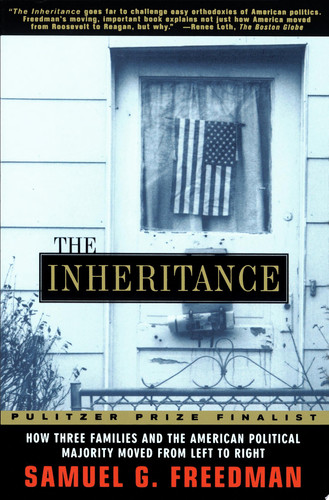
The inheritance: how three families and America moved from Roosevelt to Reagan and beyond

Freedman, Samuel G.
Orphan in the new world (Silvio Burigo) -- Liverpool on the Hudson (Lizzie Sanford Garrett) -- The dreamer and his son (Joseph Obrycki) -- The sewing room (Lizzie Garrett) -- The physics of cynicism (Joseph Obrycki) -- Worth two (Silvio Burigo) -- Voices from downstairs (Richie Garrett) -- Recessive genes (Silvio Burigo/Lorraine and Frank Trotta) -- Address as destiny (Vilma and Jack Maeby) -- Fence and basement (Silvio Burigo/Lorraine and Frank Trotta) -- Senator Clearwater (Richie Garrett) -- Uncle Paulie's Porch (Frank Trotta Jr.) -- The State Street Gang (Leslie Maeby) -- Poor snob (Tim Carey) -- Enchantment and its opposite (Frank Trotta Jr.) -- Incumbent protection (Leslie Maeby) -- Red suspenders (Tim Carey).
Simon & Schuster 1996 464 pages

American labor songs of the nineteenth century

Foner, Philip Sheldon
Hailed as a classic in music studies when it was first published in 1977, Early Downhome Blues is a detailed look at traditional country blues artists and their work. Combining musical analysis and cultural history approaches, Titon examines the origins of downhome blues in African American society. He also explores what happened to the art form when the blues were commercially recorded and became part of the larger American culture. From forty-seven musical transcriptions, Titon derives a grammar of early downhome blues melody. His book is enriched with the recollections of blues performers, audience members, and those working in the recording industry. In a new afterword, Titon reflects on the genesis of this book in the blues revival of the 1960s and the politics of tourism in the current revival under way.
University of Illinois Press 1975-06-01 356 pages

The Labor history reader

Daniel J. Leab
The Labor History Reader celebrates the first quarter century of the premier journal in its field and provides the richest available source of contemporary thought on American labor history. The result is not only a revealing look at the history of American labor but also a better understanding of our changing attitudes toward that history.''The list of authors in The Labor History Reader reads like an honor roll of the most distinguished labor historians in the United States. The volume itself is excellent in chronological scope, wide-ranging in subjects treated, and representative of the main currents of thought which stimulate the writing of American working class history today.'' -- Maurice F. Neufeld, professor of labor and industrial relations, Cornell University
University of Illinois Press 1985 470 pages

The African worker

Freund, Bill
The African Worker, first published in 1988, was intended as a synthesis considering issues and debates from the work of many writers on labour history and labour studies in Africa. The development of a particular critical literature, spanning a number of disciplines, is critically considered. In some respects, the concerns of past generations have been to align the understanding of labour issues in Africa with those more generally in the modern world. In others, the emphasis remains on the specific and African. Both directions clearly emerge here. The bibliographical essay, as well as the bibliography itself, is meant to point readers further who want a higher order of detail, a regional focus or a more thorough-going theoretical treatment of all or some of the relevant issues.
Cambridge University Press 1988-08-25 200 pages