351 results for "Internet"

This is not propaganda: adventures in the war against reality

Pomerantsev, Peter
When information is a weapon, everyone is at war. We live in a world of influence operations run amok, a world of dark ads, psychological operations, hacks, bots, soft facts, ISIS, Putin, trolls, Trump. We've lost not only our sense of peace and democracy - but our sense of what those words even mean. As Peter Pomerantsev seeks to make sense of the disinformation age, he meets Twitter evolutionaries and pop-up populists, 'behavioural change' salesmen, Jihadi fan-boys, Identitarians, truth cops, and much more. Forty years after his dissident parents were pursued by the KGB, he finds the Kremlin re-emerging as a great propaganda power. His research takes him back to Russia - but the answers he finds there are surprising. Part reportage, part intellectual adventure, This is Not Propaganda is a Pynchon-like exploration of how we can reimagine our politics and ourselves in a time where truth has been turned topsy-turvy
Faber & Faber 2020-10 270 pages

Enshittification: why everything suddenly got worse and what to do about it

Doctorow, Cory
"Enshittification: It's not just you -- the internet sucks now. It's been enshittified. That was no accident, and it's not gonna fix itself. Here's how we'll disenshittify it so we can have a new, good internet. We are all living through the Enshittocene -- the Great Enshittening -- a time in which the services that matter to us, that we rely on, are being turned into giant piles of shit. It's frustrating. Demoralizing. Even terrifying. The once-glorious internet has degenerated into "platforms" that rose to dominance because they delivered convenient and delightful services efficiently and reliably. But once we were locked in to those services, the tech bosses turned on us, relying on our dependency to keep us using the services even as they got worse and worse. The platform bosses did the same to the companies that had flocked to their services to sell stuff to us. Once we were all locked in -- businesses and users -- the tech companies stripped out all utility, save the bare minimum needed to stave off total collapse. In Enshittification, Cory Doctorow shows us where it comes from: not the iron laws of economics, or the great forces of history, but specific policy choices made by powerful people who ignored every warning about the consequences of those choices. These are choices that can be undone. Enshittification is a Big Tech disassembly manual, a road map for the seizure of the means of computation. It is a diagnosis, and it is a cure" --
Verso 2025-10-14 338 pages

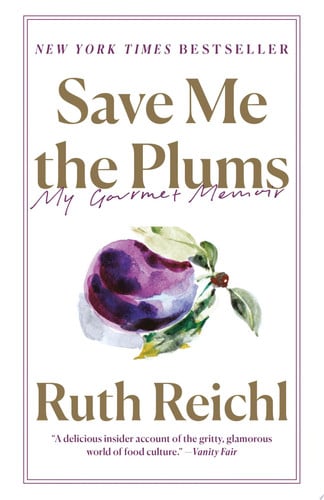
Save Me the Plums My Gourmet Memoir

Ruth Reichl
NEW YORK TIMES BESTSELLER • “A delicious insider account of the gritty, glamorous world of food culture.”— Vanity Fair In this “poignant and hilarious” ( The New York Times Book Review ) memoir, trailblazing food writer and beloved restaurant critic Ruth Reichl chronicles her groundbreaking tenure as editor in chief of Gourmet. A BEST BOOK OF THE YEAR: Real Simple, Good Housekeeping, Town & Country When Condé Nast offered Ruth Reichl the top position at America’s oldest epicurean magazine, she declined. She was a writer, not a manager, and had no inclination to be anyone’s boss. Yet Reichl had been reading Gourmet since she was eight; it had inspired her career. How could she say no? This is the story of a former Berkeley hippie entering the corporate world and worrying about losing her soul. It is the story of the moment restaurants became an important part of popular culture, a time when the rise of the farm-to-table movement changed, forever, the way we eat. Readers will meet legendary chefs like David Chang and Eric Ripert, idiosyncratic writers like David Foster Wallace, and a colorful group of editors and art directors who, under Reichl’s leadership, transformed stately Gourmet into a cutting-edge publication. This was the golden age of print media—the last spendthrift gasp before the Internet turned the magazine world upside down. Complete with recipes, Save Me the Plums is a personal journey of a woman coming to terms with being in charge and making a mark, following a passion and holding on to her dreams—even when she ends up in a place she never expected to be.
Random House Publishing Group 2020-05-05 304 pages

Programming in Lua

Ierusalimschy, Roberto
Lua is spreading more and more throughout different areas of software, from embedded systems and mobile devices to the Web and the Internet of Things. Besides, it has a major role in the game industry, where knowledge of Lua has become an indisputable asset. Lua is the language of choice for anyone who needs a scripting language that is simple, efficient, extensible, portable, and free. Programming in Lua is the official book about the language, providing a solid base to any programmer who wants to use Lua. Authored by Roberto Ierusalimschy, the chief architect of the language, it covers all aspects of Lua 5---from the basics to its API with C. The book is the main source of programming patterns for Lua, with numerous code examples that help the reader to make the most of Lua's flexibility and powerful mechanisms. Programming in Lua is targeted at people with some programming background, but does not assume any prior knowledge about Lua or other scripting languages. This Fourth Edition updates the book to Lua 5.3 and marks a complete reorganization of the text. Building on his many years of experience teaching Lua, Roberto has restructured the book to present the material in a growing order of complexity, allowing the reader to better absorb the character of the language.
Lua.org 2016 369 pages

That Will Never Work The Birth of Netflix and the Amazing Life of an Idea

Marc Randolph
"An engaging read that will engross any would-be entrepreneur" ( Wall Street Journal ), now updated with a new afterword by the author: In the tradition of Phil Knight's Shoe Dog comes the incredible untold story of how Netflix went from concept to company -- all revealed by co-founder and first CEO Marc Randolph. Once upon a time, brick-and-mortar video stores were king. Late fees were ubiquitous, video-streaming unheard was of, and widespread DVD adoption seemed about as imminent as flying cars. Indeed, these were the widely accepted laws of the land in 1997, when Marc Randolph had an idea. It was a simple thought--leveraging the internet to rent movies--and was just one of many more and far worse proposals, like personalized baseball bats and a shampoo delivery service, that Randolph would pitch to his business partner, Reed Hastings, on their commute to work each morning. But Hastings was intrigued, and the pair--with Hastings as the primary investor and Randolph as the CEO--founded a company. Now with over 150 million subscribers, Netflix's triumph feels inevitable, but the twenty first century's most disruptive start up began with few believers and calamity at every turn. From having to pitch his own mother on being an early investor, to the motel conference room that served as a first office, to server crashes on launch day, to the now-infamous meeting when Netflix brass pitched Blockbuster to acquire them, Marc Randolph's transformational journey exemplifies how anyone with grit, gut instincts, and determination can change the world--even with an idea that many think will never work. What emerges, though, isn't just the inside story of one of the world's most iconic companies. Full of counter-intuitive concepts and written in binge-worthy prose, it answers some of our most fundamental questions about taking that leap of faith in business or in life: How do you begin? How do you weather disappointment and failure? How do you deal with success? What even is success? From idea generation to team building to knowing when it's time to let go, That Will Never Work is not only the ultimate follow-your-dreams parable, but also one of the most dramatic and insightful entrepreneurial stories of our time.
Little Brown 2022-06-07 352 pages

Ban This Book

Alan Gratz
It all started the day Amy Anne Ollinger tried to check out her favourite book in the whole world, From the Mixed-Up Files of Mrs. Basil E. Frankweiler , from the school library. That's when Mrs. Jones, the librarian, told her the bad news: her favourite book was banned! All because a classmate's mum thought the book wasn't appropriate for kids to read.Amy Anne decides to fight back by starting a secret banned-books library out of her locker. The battle of the books escalates when she engineers a campaign to challenge every book in the school library. Because once you ban one book, you can challenge them all under the most ridiculous of pretexts: The Lorax portrays the timber industry in a negative light! The mouse in the room in Goodnight Moon is a health code violation! And let's not even start on the safety concerns raised by The Magic Treehouse . Soon, Amy Anne and her friends find themselves on the front line of an unexpected battle over book banning, censorship, and who has the right to decide what they can and can't read. Ban This Book is a love letter to the written word and its power to give kids a voice, for readers aged 8+. 'Readers, librarians, and all those books that have drawn a challenge have a brand new hero in Amy Ann Ollinger . . . Stand up and cheer, book lovers. This one's for you.' Kathi Appelt, Newbery Honor winning author of The Underneath ' Ban This Book is absolutely brilliant and belongs on the shelves of every library in the multiverse.' Lauren Myracle, author of the best-selling Internet Girls series, the most challenged books of 2009 and 2011
Hachette Australia 2021-01-27 240 pages

How to Watch TV News

Neil Postman,Steve Powers
A scathing and prescient look at television newsÂ-now updated for the new tech-savvy generation Television news : genuine information or entertainment fodder? Fifteen years ago, Neil Postman, a pioneer in media education and author of the bestselling Amusing Ourselves to Death, and Steve Powers, an award-winning broadcast journalist, concluded that anyone who relies exclusively on their television for accurate world news is making a big mistake. A cash cow laden with money from advertisers, so-called news shows glut viewers with celebrity coverage at the cost of things they really should know. Today, this message is still appallingly true but the problems have multipliedÂ- along with the power of the Internet and the abundance of cable channels. A must-read for anyone concerned with the way media is manipulating our worldview, this newly revised edition addresses the evolving technology and devolving quality of AmericaÂ's television news programming.
Penguin 2008 178 pages

Happy People Are Annoying

Josh Peck
A wonderfully candid memoir from one of the most recognizable faces of a generation, actor, writer, Youtuber, and television superstar, Josh Peck. In his warm and inspiring book, Josh reflects on the many stumbles and silver linings of his life and traces a zigzagging path to redemption. Written with such impressive detail and aching honesty, Happy People are Annoying is full of surprising life lessons for anyone seeking to accept their past and make peace with the complicated face in the mirror. Josh Peck rose to near-instant fame when he starred for four seasons as the comedic center of Nickelodeon's hit show Drake & Josh. However, while he tried to maintain his role as the funniest, happiest kid in every room, Josh struggled alone with the kind of rising anger and plummeting confidence that quietly took over his life. For the first time, Josh reflects on his late teens and early twenties. Raised by a single mother, and coming of age under a spotlight that could be both invigorating and cruel, Josh filled the cratering hole in his self-worth with copious amounts of food, television, drugs, and all of the other trappings of young stardom. Until he realized the only person standing in his way...was himself. Today, with a string of lead roles on hit television shows and movies, and one of the most enviable and dedicated fanbases on the internet, Josh Peck is more than happy, he's finally, enthusiastically content. Happy People are Annoying is the culmination of years of learning, growing, and finding bright spots in the scary parts of life. Written with the kind of humor, strength of character, and unwavering self-awareness only someone who has mastered their ego can muster, this memoir reminds us of the life-changing freedom on the other side of acceptance.
HarperCollins Publishers 2022-05-09 256 pages

100 things we've lost to the internet

Paul, Pamela
"The acclaimed editor of The New York Times Book Review takes readers on a nostalgic tour of the pre-Internet age, offering powerful insights into both the profound and the seemingly trivial things we've lost. Remember all those ingrained habits, cherished ideas, beloved objects, and stubborn preferences from the pre-Internet age? They're gone. To some of those things we can say good riddance. But many we miss terribly. Whatever our emotional response to this departed realm, we are faced with the fact that nearly every aspect of modern life now takes place in filtered, isolated corners of cyberspace-a space that has slowly subsumed our physical habitats, replacing or transforming the office, our local library, a favorite bar, the movie theater, and the coffee shop where people met one another's gaze from across the room. Even as we've gained the ability to gather without leaving our house, many of the fundamentally human experiences that have sustained us have disappeared. In one hundred glimpses of that pre-Internet world, Pamela Paul, editor of The New York Times Book Review, presents a captivating record, enlivened with illustrations, of the world before cyberspace-from voicemails to blind dates to punctuation to civility. There are the small losses: postcards, the blessings of an adolescence largely spared of documentation, the Rolodex, and the genuine surprises at high school reunions. But there are larger repercussions, too: weaker memories, the inability to entertain oneself, and the utter demolition of privacy. 100 Things We've Lost to the Internet is at once an evocative swan song for a disappearing era and, perhaps, a guide to reclaiming just a little bit more of the world IRL"--
Crown 2021-10-26 260 pages

Targeted: my inside story of Cambridge Analytica and how Trump, Brexit and Facebook broke democracy

Kaiser, Brittany
In this explosive memoir, a political consultant and technology whistleblower reveals the disturbing truth about the multi-billion-dollar data industry, revealing to the public how companies are getting richer using our personal information and exposing how Cambridge Analytica exploited weaknesses in privacy laws to help elect Donald Trump. When Brittany Kaiser joined Cambridge Analytica – the UK-based political consulting firm funded by conservative billionaire and Donald Trump patron Robert Mercer – she was an idealistic young professional working on her fourth degree in human rights law and international relations. A veteran of Barack Obama's 2008 campaign, Kaiser's goal was to utilize data for humanitarian purposes, most notably to prevent genocide and human rights abuses. But her experience inside Cambridge Analytica opened her eyes to the tremendous risks that this unregulated industry poses to privacy and democracy. Targeted is Kaiser's eyewitness chronicle of the dramatic and disturbing story of the rise and fall of Cambridge Analytica. She reveals to the public how Facebook's lax policies and lack of sufficient national laws allowed voters to be manipulated in both Britain and the United States, where personal data was weaponised to spread fake news and racist messaging during the Brexit vote and the 2016 election. But the damage isn't done Kaiser warns; the 2020 election can be compromised as well if we continue to do nothing. In the aftermath of the U.S. election, as she became aware of the horrifying reality of what Cambridge Analytica had done in support of Donald Trump, Kaiser made the difficult choice to expose the truth. Risking her career, relationships, and personal safety, she told authorities about the data industry's unethical business practices, eventually testifying before Parliament.
HarperCollinsPublishers 2019 392 pages

The wealth of networks: how social production transforms markets and freedom

Benkler, Yochai
With the radical changes in information production that the Internet has introduced, we stand at an important moment of transition, says Yochai Benkler in this thought-provoking book. The phenomenon he describes as social production is reshaping markets, while at the same time offering new opportunities to enhance individual freedom, cultural diversity, political discourse, and justice. But these results are by no means inevitable: a systematic campaign to protect the entrenched industrial information economy of the last century threatens the promise of today’s emerging networked information environment. In this comprehensive social theory of the Internet and the networked information economy, Benkler describes how patterns of information, knowledge, and cultural production are changing--and shows that the way information and knowledge are made available can either limit or enlarge the ways people can create and express themselves. He describes the range of legal and policy choices that confront us and maintains that there is much to be gained--or lost--by the decisions we make today.
Yale University Press 2006 515 pages

Saints and soldiers: inside internet-age terrorism, from Syria to the Capitol siege

Katz, Rita
"More than a decade ago, counterterrorism expert Rita Katz began browsing white supremacist and neo-Nazi forums. The hateful rhetoric and constant threats of violence immediately reminded her of the jihadist militants she spent her days monitoring, but law enforcement and policy makers barely paid attention to the Far Right. Now, years of attacks committed by extremists radicalized online-including mass murders at a synagogue in Pittsburgh and mosques in Christchurch, New Zealand, as well as the Capitol siege-have brought home the danger. How has the internet shaped today's threats, and what do the online origins of these movements reveal about how to stop them? In Saints and Soldiers, Katz reveals a new generation of terrorist movements that don't just use the internet, but exist almost entirely on it. She provides a vivid view from the trenches, spanning edgy video game chat groups to mainstream social media platforms to what ISIS and Far-Right mass-shooters in El Paso, Orlando and elsewhere unwittingly reveal between the lines of their manifestos. Katz shows how the online cultures of these movements-far more than their ideologies and leaders-create today's terrorists and shape how they commit "real world" violence. From ISIS to QAnon, Saints and Soldiers pinpoints the approaches needed for a new era in which arrests and military campaigns alone cannot stop these never-before-seen threats"--
Columbia University Press 2022 351 pages

Among The Truthers North America's Growing Conspiracist Undergro

Jonathan Kay
Millions of people around the world have convinced themselves that the perpetrators of 9/11 were not al-Qaeda terrorists but elements within the U.S. government seeking a pretext to launch wars abroad and enact draconian laws at home. These “9/11 Truthers” are not alone. They are part of a vast conspiracist subculture that is spreading like wildfire on the Internet, is deeply distrustful of mainstream media and is beginning to influence mainstream politics. For two years, Canadian journalist Jonathan Kay has been researching the underground world of conspiracy theorists by attending their conventions, infiltrating their Internet discussion boards and surfing their websites. While many individual conspiracy theories seem harmless, even amusing, the phenomenon is doing real damage to the unity and health of North American society. Since the assassination of JFK, conspiracy thinking has proliferated, and the Internet has fostered the growth of numerous alternate mental worlds in which traditional media and academia have no authority. 9/11 was a death blow to this older consensual view of reality, and as a result, North Americans no longer inhabit one cognitive universe. What this means for the future of politics, and our society at large, is the ultimate subject of this book.
HarperCollins 2012-05-08 368 pages

Sticks and stones: defeating the culture of bullying and rediscovering the power of character and empathy

Bazelon, Emily
NATIONAL BESTSELLER Being a teenager has never been easy, but in recent years, with the rise of the Internet and social media, it has become exponentially more challenging. Bullying, once thought of as the province of queen bees and goons, has taken on new, complex, and insidious forms, as parents and educators know all too well. No writer is better poised to explore this territory than Emily Bazelon, who has established herself as a leading voice on the social and legal aspects of teenage drama. In Sticks and Stones, she brings readers on a deeply researched, clear-eyed journey into the ever-shifting landscape of teenage meanness and its sometimes devastating consequences. The result is an indispensable book that takes us from school cafeterias to courtrooms to the offices of Facebook, the website where so much teenage life, good and bad, now unfolds. Along the way, Bazelon defines what bullying is and, just as important, what it is not . She explores when intervention is essential and when kids should be given the freedom to fend for themselves. She also dispels persistent myths: that girls bully more than boys, that online and in-person bullying are entirely distinct, that bullying is a common cause of suicide, and that harsh criminal penalties are an effective deterrent. Above all, she believes that to deal with the problem, we must first understand it. Blending keen journalistic and narrative skills, Bazelon explores different facets of bullying through the stories of three young people who found themselves caught in the thick of it. Thirteen-year-old Monique endured months of harassment and exclusion before her mother finally pulled her out of school. Jacob was threatened and physically attacked over his sexuality in eighth grade—and then sued to protect himself and change the culture of his school. Flannery was one of six teens who faced criminal charges after a fellow student’s suicide was blamed on bullying and made international headlines. With grace and authority, Bazelon chronicles how these kids’ predicaments escalated, to no one’s benefit, into community-wide wars. Cutting through the noise, misinformation, and sensationalism, she takes us into schools that have succeeded in reducing bullying and examines their successful strategies. The result is a groundbreaking book that will help parents, educators, and teens themselves better understand what kids are going through today and what can be done to help them through it. Praise for Sticks and Stones “A humane and closely reported exploration of the way that hurtful power relationships play out in the contemporary public-school setting . . . As a parent herself, [Emily Bazelon] brings clear, kind analysis to complex and upsetting circumstances.”— The Wall Street Journal “Intelligent, rigorous . . . [Bazelon] is a compassionate champion for justice in the domain of childhood’s essential unfairness.”—Andrew Solomon, The New York Times Book Review “Bullying is misunderstood. Not all conflict between kids is bullying. It isn’t always clear who is the bully and who is the victim. Not all—or even most—kids are involved in bullying. And bullying isn’t the only factor in a child’s suicide, ever. Emily Bazelon, who wrote about the subject for Slate in 2010, here expands her reporting in an important, provocative book about what we can—and can’t—do about the problem.”— The Boston Globe “Immersive storytelling with a sturdy base of science underneath, [ Sticks and Stones ] draws its authority and power from both.”— New York
Random House 2013 386 pages

The list: a week-by-week reckoning of Trump's first year

Siskind, Amy
"The shocking first-draft history of the Trump regime, and its clear authoritarian impulses, based on the viral Internet phenom "The Weekly List." In the immediate aftermath of Donald Trump's election as president, Amy Siskind, a former Wall Street executive and the founder of The New Agenda, began compiling a list of actions taken by the Trump regime that pose a threat to our democratic norms. Under the headline: "Experts in authoritarianism advise to keep a list of things subtly changing around you, so you'll remember" Siskind's "Weekly List" began as a project she shared with friends, but it soon went viral and now has more than half a million viewers every week. Compiled in one volume for the first time, The List is a first draft history and a comprehensive accounting of Donald Trump's first year. Beginning with Trump's acceptance of white supremacists the week after the election and concluding a year to the day later, we watch as Trump and his regime chips away at the rights and protections of marginalized communities, of women, of us all, via Twitter storms, unchecked executive action, and shifting rules and standards. The List chronicles not only the scandals that made headlines but just as important, the myriad smaller but still consequential unprecedented acts that otherwise fall through cracks. It is this granular detail that makes The List such a powerful and important book. For everyone hoping to #resistTrump, The List is a must-have guide to what we as a country have lost in the wake of Trump's election. #Thisisnotnormal"--
Bloomsbury Publishing 2018 509 pages

Summa technologiae

Lem, Stanisław
The Polish writer Stanislaw Lem is best known to English-speaking readers as the author of the 1961 science fiction novel Solaris , adapted into a meditative film by Andrei Tarkovsky in 1972 and remade in 2002 by Steven Soderbergh. Throughout his writings, comprising dozens of science fiction novels and short stories, Lem offered deeply philosophical and bitingly satirical reflections on the limitations of both science and humanity. In Summa Technologiae --his major work of nonfiction, first published in 1964 and now available in English for the first time--Lem produced an engaging and caustically logical philosophical treatise about human and nonhuman life in its past, present, and future forms. After five decades Summa Technologiae has lost none of its intellectual or critical significance. Indeed, many of Lem's conjectures about future technologies have now come true: from artificial intelligence, bionics, and nanotechnology to the dangers of information overload, the concept underlying Internet search engines, and the idea of virtual reality. More important for its continued relevance, however, is Lem's rigorous investigation into the parallel development of biological and technical evolution and his conclusion that technology will outlive humanity. Preceding Richard Dawkins's understanding of evolution as a blind watchmaker by more than two decades, Lem posits evolution as opportunistic, shortsighted, extravagant, and illogical. Strikingly original and still timely, Summa Technologiae resonates with a wide range of contemporary debates about information and new media, the life sciences, and the emerging relationship between technology and humanity.
University of Minnesota Press 2010 409 pages

Language and the Internet

Crystal, David
According to popular mythology, the Internet will be bad for the future of language--technospeak will rule, standards will be lost, and creativity diminished as globalization imposes sameness. David Crystal, one of the foremost authorities on language, argues the reverse in his new book: that the Internet is enabling a dramatic expansion of the range and variety of language and is providing unprecedented opportunities for personal creativity. In order to grow and be maintained as a linguistic medium, the principles and standards of the Internet must evolve--and they will be very different from other mediums. Is the Internet a revolution? Is it a linguistic revolution? Beyond the visual panache of the presentation on a screen, the Internet's "linguistic" character is immediately obvious to anyone online. As the Internet has become incorporated into our lives, it is becoming clearer how it is being shaped by and is adapting language and languages. Language and the Internet is the first book by a language expert on the linguistic aspects of the Internet. Opening up linguistic issues for a general readership, Crystal argues that "netspeak" is a radically new linguistic medium that we cannot ignore. David Crystal is one of the foremost authorities on language, and as editor of the Cambridge Encyclopedia he has used the Internet for research purposes from its earliest manifestations. His work for the technology company Classification Data Limited has involved him in the development of an information classification system with several Internet applications, and he has extensive professional experience of Web issues. Crystal is author of several books with Cambridge, including the Cambridge Encyclopedia of Language (1997), Cambridge Encyclopedia of the English Language (1995), English as a Global Language (1997), and Langugage Death (2000) and Words on Words (University of Chicago, 2000) . An internationally renowned writer, journal editor, lecturer and broadcaster, he received an OBE in 1995 for his services to the English language. His edited books include The Cambridge Encyclopedia (Fourth Edition, 2000) The Cambridge Paperback Encyclopedia (Third Edition, 1999), The Cambridge Biographical Encyclopedia (Second Edition, 1997) and The Cambridge Factfinder ( Fourth Edition, 2000).
Cambridge University Press 2001-09-20 272 pages