62 results for "Internet"

The boy who could change the world: the writings of Aaron Swartz

Swartz, Aaron
In his too-short life, Aaron Swartz reshaped the Internet, questioned our assumptions about intellectual property, and touched all of us in ways that we may not even realize. His tragic suicide in 2013 at the age of twenty-six after being aggressively prosecuted for copyright infringement shocked the nation and the world. Here for the first time in print is revealed the quintessential Aaron Swartz: besides being a technical genius and a passionate activist, he was also an insightful, compelling, and cutting essayist. With a technical understanding of the Internet and of intellectual property law surpassing that of many seasoned professionals, he wrote thoughtfully and humorously about intellectual property, copyright, and the architecture of the Internet. He wrote as well about unexpected topics such as pop culture, politics both electoral and idealistic, dieting, and lifehacking. Including three in-depth and previously unpublished essays about education, governance, and cities, The Boy Who Could Change the World contains the life's work of one of the most original minds of our time.
The New Press 2015 359 pages

Being Mr. Skin: 20 years of nip slips, cheek peeks, and fast-forwarding to the good parts

McBride, Jim (CEO of MrSkin.com),Klickstein, Mathew
Stripping Down, Laughing It Up, and Being Mr. Skin: The Naked Truth Behind a Hilarious and Unlikely Success Story You’ve heard Mr. Skin on The Howard Stern Show . You’ve seen his website in the blockbuster comedy Knocked Up . Maybe you’ve spent some time poking around on MrSkin.com, the world’s #1 resource for celebrity nudity. Now, Jim McBride—“Mr. Skin” himself—tells his story in uproarious, SKINtastic fashion…nip-slips, cheek-peeks, muff-scruffs and all! Being Mr. Skin details how Jim rose from being a suburban teen in the ‘80s with an impressively annotated videotape collection and an expert recall of the most sensational and sensuous scenes from every movie ever made, to his current status as Chief Sexecutive Officer of MrSkin.com—a naked-star-studded pop culture powerhouse. You’ll be riveted as Jim chronicles the unbelievable journey of juggling suburban family life while establishing his online sensation, quickly becoming the “World’s Foremost Authority on Celebrity Nudity.” Throughout this upward (and outward) saga of Tinseltown T&A triumphs, you’ll get the inside skinny on: • The first time Mr. Skin appeared on The Howard Stern Show and how he became a regular on the greatest radio program of all time! • How Judd Apatow turned Mr. Skin into the surprise breakout star of Knocked Up ! • The time, effort, and tissues it takes to track every nude rack and crack in every movie and TV show ever made! • How some of your favorite actresses feel about being featured on the website—including several Anatomy Award winners! • The truth about Mr. Skin, The Family Man—There is a real Mrs. Skin and there are three lovely “skinfants.” • Mr. Skin’s most stunning showcases and shout-outs in top-tier media, including Saturday Night Live , Family Guy , The People’s Choice Awards , American Idol , and The Adam Carolla Show! • How (and why) Mr. Skin.com became one of the first-ever commercially successful websites. Throughout it all, Jim’s story amuses and amazes on every page. Being Mr. Skin supplies one-of-a-kind insights into how he transformed an offbeat passion into a popular and profitable phenomenon against all manner of odds—only some of which involve unclothed body parts—all with the help of his dedicated staff, friends, and, yes…even his mom! Being Mr. Skin is what Jim McBride does, it’s who he is. And now—for the first time in book form—you can enjoy nothing but “the good parts” (no fast-forwarding necessary). Featuring brand-new comics from Eisner Award nominee Johnny Ryan!
Post Hill Press 2019-05-21 198 pages

Media madness: Donald Trump, the press, and the war over the truth

Kurtz, Howard
"According to the media, Donald Trump could never become president. Now many are on a mission to prove he shouldn't be president. The Trump administration and the press are at war -- and as in any war, the first casualty has been truth. Bestselling author Howard Kurtz, host of Fox News's Media Buzz and former Washington Post columnist, offers a stunning exposé of how supposedly objective journalists, alarmed by Trump's success, have moved into the opposing camp. Kurtz's exclusive, in-depth, behind-the-scenes interviews with reporters, anchors, and insiders within the Trump White House reveal the unprecedented hostility between the media and the president they cover."--Jacket.
Regnery Publishing, a division of Salem Media Group 2018-01-29 288 pages

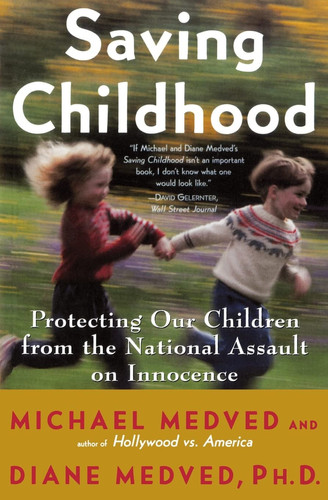
Saving childhood: how to protect your children from the national assault on innocence

Medved, Michael
Saving Childhood offers parents and grandparents practical strategies to cope with a society that seems perversely determined to frighten and corrupt its young. Cultural critic and popular radio host Michael Medved and his wife, psychologist Diane Medved, argue that in a mistaken effort to curb problems plaguing its youth, our culture has changed from protecting childhood as a precious time of growth to hammering even the smallest youngsters with a grim, harsh, and menacing view of the world. The Medveds systematically present unassailable scientific evidence, moving anecdotes, and personal experiences of raising their three young children to explain the attack from four primary directions--media, schools, peers, and even well-intentioned parents themselves. In a unique analysis the Medveds define innocence not as ignorance but as the result of three components--security, a sense of wonder and optimism. They empower parents and all who care about childhood with concrete, easily accomplished means to fend off the assault, as well as advice for handling hurdles such as the Internet, television, peer pressure, and the plague of pessimism. Saving Childhood enables us to restore and maintain for our children imagination, confidence, and hope for the future.
HarperCollinsPublishers 1998 324 pages

Straight flush

Mezrich, Ben
Straight Flush is the true story of a group of University of Montana frat brothers who turned a weekly poker game in the basement of a local bar into one of the largest online poker companies in the world. At its height, the group's online empire was bringing in revenues of over a million dollars a day. The industry they launched grew so huge so fast, and in such a grey area of US and international law, at first it was never really clear whether their actions were legal or criminal. From setting up their operations in Costa Rica, to their efforts at building a veil of legitimacy in Vancouver; from embracing a hedonistic lifestyle of girls, drugs and money to becoming some of the richest people in the world; from engaging in operations against their competitors that sometimes escalated into near all-out wars to the legal battles that finally resulted in one of them heading to prison and another living life on the run âe" Straight Flush is an exclusive look behind the headlines of one of the biggest stories of the past decade.
Arrow Books 2014-05-22 286 pages

Digital civil war: confronting the far-right menace

Daou, Peter
"Are rural white Christians the real Americans? Should teachers be armed or should the Second Amendment be repealed? Is abortion murder or an ethically sound choice for women? Should migrant babies be caged or should ICE be abolished? Should billionaires exist while children go hungry? These are some of the bitter ideological disputes that have turned social media into a political battlefield. In Digital Civil War, Peter Daou, a veteran digital-media adviser to presidential candidates, investigates the underlying value systems and moral arguments of the warring parties, arguing that democracy itself is under assault by an emboldened and empowered Far Right. Daou shows how the digital civil war is waged with words and images that are designed to inflict psychological harm, to injure through verbal violence, to wreak havoc with rhetoric. And he explains that the relentless toxicity of social media - often treated as an aberration - is a feature, not a bug, of digital warfare."--Amazon.com.
Melville House 2019 280 pages

I am not a slut: slut-shaming in the age of the Internet

Tanenbaum, Leora
The author of the groundbreaking work Slut! explores the phenomenon of slut-shaming in the age of sexting, tweeting, and "liking." She shows that the sexual double standard is more dangerous than ever before and offers wisdom and strategies for alleviating its destructive effects on young women's lives. Young women are encouraged to express themselves sexually. Yet when they do, they are derided as "sluts." Caught in a double bind of mixed sexual messages, young women are confused. To fulfill the contradictory roles of being sexy but not slutty, they create an "experienced" identity on social media-even if they are not sexually active - while ironically referring to themselves and their friends as "sluts." But this strategy can become a weapon used against young women in the hands of peers who circulate rumors and innuendo - elevating age-old slut-shaming to deadly levels, with suicide among bullied teenage girls becoming increasingly common. Now, Leora Tanenbaum revisits her influential work on sexual stereotyping to offer fresh insight into the digital and face-to-face worlds contemporary young women inhabit. She shares her new research, involving interviews with a wide range of teenage girls and young women from a variety of backgrounds as well as parents, educators, and academics. Tanenbaum analyzes the coping mechanisms young women currently use and points them in a new direction to eradicate slut-shaming for good.
Harper Perennial 2015-02-03 387 pages

Thirty-life crisis: navigating my thirties, one drunk baby shower at a time

Schwartz, Lisa
"Lisa Schwartz's stories and musings are all about watching her friends adult like pros, while she tries to understand why she doesn't want or can't seem to find all the things they have for herself. Like a big sister who's already seen it all, Lisa will take readers through her own life experiences to say that one thing we all need to hear: you are so not alone. Unabashed and unfiltered, Schwartz's voice and candor will appeal to anyone in their thirties who just can't deal with the never-ending Facebook feed of friends' engagement photos and baby pictures, the trials of figuring out where their passion meets their career, and everything in between"--
Grand Central Publishing 2019-08-27 231 pages

Waves of rancor: tuning in the radical right

Hilliard, Robert L.
The airwaves in America are being used by armed militias, conspiracy theorists, survivalists, the religious right, white supremacists, neo-Nazis, and other radical groups to reach millions with their messages of hate and fear. Waves of Rancor examines the origin, nature, and impact of right-wing electronic media, including radio, television, cable, the internet, and even music CDs.
M.E. Sharpe 1999 309 pages

Free agent nation: the future of working for yourself

Pink, Daniel H.
Widely acclaimed for its engaging style and provocative perspective, this book has helped thousands transform their working lives. Now including a 30-page resource guide that explains the basics of working for oneself. It's about fulfillment. A revolution is sweeping America. On its front lines are people fed up with unfulfilling jobs, dysfunctional workplaces, and dead-end careers. Meet today's new economic icon: the free agent-men and women who are working for themselves. And meet your future. It's about freedom. Free agents are the marketing consultant down the street, the home-based "mompreneur," the footloose technology contractor. Already 30 million strong, these 21st-century pioneers are creating lives with more meaning-and often more money. Free Agent Nation is your ticket to this world. It's about time. Now, you can discover: The kind of free agent you can be-"soloist," "temp," or "microbusiness"-and how to launch your new career. How to get the perks you once received from your boss: health insurance, office space, training, workplace togetherness, even water cooler gossip. Why the free agent economy is increasingly a woman's world-and how women are flourishing in it. The transformation of retirement-how older workers are creating successful new businesses (and whole new lives) through the Internet.
Warner Books 2002 386 pages

Antitrust law

Posner, Richard A.
When it was first published a quarter of a century ago, Richard Posner's exposition and defense of an economic approach to antitrust law was a jeremiad against the intellectual disarray that then characterized the field. As other perspectives on antitrust law have fallen away, Posner's book has played a major role in transforming the field of antitrust law into a body of economically rational principles largely in accord with the ideas set forth in the first edition. Today's antitrust professionals may disagree on specific practices and rules, but most litigators, prosecutors, judges, and scholars agree that the primary goal of antitrust laws should be to promote economic welfare, and that economic theory should be used to determine how well business practices conform to that goal. In this thoroughly revised edition, Posner explains the economic approach to new generations of lawyers and students. He updates and amplifies his approach as it applies to the developments, both legal and economic, in the antitrust field since 1976. The "new economy," for example, has presented a host of difficult antitrust questions, and in an entirely new chapter, Posner explains how the economic approach can be applied to new industries such as software manufacturers, Internet service providers, and those that provide communications equipment and services. "The antitrust laws are here to stay," Posner writes, "and the practical question is how to administer them better-more rationally, more accurately, more expeditiously, more efficiently." This fully revised classic will continue to be the standard work in the field.
University of Chicago Press 2001-12-01 316 pages

The deadliest lies: the Israel lobby and the myth of Jewish control

Foxman, Abraham H.
While the special relationship of all ethnic and religious minorities in the USA with their old countries and the existence of their pressure groups is regarded as normal, the support given by U.S. Jews to Israel and the pro-Israeli lobby causes some Americans to view the Jews as disloyal to the USA. Examines the "paper" by John J. Mearsheimer and Stephen M. Walt, "The Israeli Lobby and U.S. Foreign Policy" (first published in 2006 on the Internet and then in the "London Review of Books"; an expanded book appeared later, in 2007). The authors contend that U.S. support of Israel is harmful to American interests, and is due to pressure exerted by a mighty Israel Lobby which acts to the detriment of the state. They argue that the Israel Lobby had a crucial part in the decision to attack Iraq in 2003. Notes that despite the academic style of their paper, Mearsheimer and Walt have revived the myths of a Jewish conspiracy, of Jewish control of the mass media, and of a Jewish secret power. Dwells, also, on the Tony Judt affair. In 2006 Judt, who supported Mearsheimer and Walt, was to deliver a lecture on a binational alternative for Israel. His lecture was cancelled, which he ascribed to pressure by the Anti-Defamation League. Supporters of Mearsheimer and Walt used it as a demonstration of the Israel Lobby's intervention. Criticizes Jimmy Carter's book "Palestine: Peace Not Apartheid" (2006) for its clear anti-Israel bias.
Palgrave Macmillan 2007-09-04 256 pages

Newspaperman: inside the news business at the Wall Street journal

Phillips, Warren
An inside look at America’s largest newspaper— The Wall Street Journal ”Phillips offers fascinating insights about American business, politics, and journalism. He traveled in the circles of CEOs, U.S. presidents, prime ministers, and royalty; always at his core he was a reporter. That is the beauty of Newspaperman .” —Vernon E. Jordan Jr., civil rights leader; senior managing director, Lazard Freres & Company; adviser to President Bill Clinton “[Phillips] captures the fabulous stories of a scrawny, precocious boy from reporter to publisher and then CEO, participating in and then presiding over the Journal ’s years of greatest growth.” —Joan Konner, Dean Emerita, Columbia University Graduate School of Journalism “Phillips fell in love with newspapers when he was a boy. He’s still infatuated but he doesn’t skip over his tough times or mistakes. That’s what makes Newspaperman such a telling guide to the newsroom and to the top office in the executive suite.” —Lou Boccardi, former president and chief executive, Associated Press; former chairman, Pulitzer Prize Board “This lovely book recounts the life of a wise, thoughtful, and admired newspaper editor and publisher. The tiny Wall Street Journal Warren Phillips joined grew up to be a giant. Newspaperman tells that story.” —Donald E. Graham, chairman and chief executive, The Washington Post Company “[Phillips provides] perceptive commentaries on Germany, Greece, Turkey, England, Spain, China, Russia, and the Middle East. All is told with modest good humor, but repeatedly emphasizes the need for integrity and high standards.” —George B. Munroe, retired chairman and chief executive, Phelps Dodge Corporation “The story of a boy born in Brooklyn, a reporter, an editor, a publisher, a corporate executive, and now the author of a fascinating book.” —James Q. Riordan, former vice chairman, Mobil Corporation “In spite of a few hiccups, honestly related here, Dow Jones was rated by Fortune magazine as the second most-admired company in the United States, and so proved that an outstanding newspaperman can also achieve enormous success as a business builder and leader.” —Hamish Maxwell, former chairman and CEO, Philip Morris Companies Inc. “A memoir from a man who helped transform The Wall Street Journal from a local newspaper to a global operation.. . . Throughout the book, Phillips looks at his part in shaping the Journal ’s news and editorial coverage, and these sections provide insight into his highly successful methods. The author includes many anecdotes culled from his diaries, some very funny, which illustrate the variegated aspects of his life and the people who shared in it.. . . A well-rounded autobiography about the journalism industry and the people who shaped the news over the past 50 years.” —Kirkus Reviews “The sections about the rise of the Wall Street Journal 's quality and influence are fascinating - for journalists and non-journalists alike.” — Philadelphia Inquirer ”Phillips provides an arresting retrospective on modern world history that general readers will find informative and delightful.” — Star-Telegram About the Book When Warren Phillips was eleven years old, his father took him on a guided tour of the New York Daily News , where he got his first look at the frenzied yet surprisingly ordered and controlled world of newspaper publishing. He saw everything from the industrial printing presses churning out newspapers at astonishing speeds to reporters hunched over their typewriters, writing the very stories those presses would be producing within hours—or even minutes. Phillips was hooked. He knew exactly what he wanted to do with his life. Newspaperman tells the story of how an immigrant’s shy son from Queens, New York, rose to the top of his industry powered by little more than passion, brains, and hard work. Phillips began his career working as a copyboy for the New York Herald Tribune for sixteen dollars a week—and ended it as publisher of The Wall Street Journal and CEO of its parent corporation, Dow Jones & Company. The life story of Warren Phillips is the story of the American newspaper business. Here, the details of his vast experience come together to create a broad picture of the newspaper business— revealing how news is discovered, reported, edited, published, and disseminated. Sharing vivid tales of working as a reporter around the world and describing the many colorful characters he meets along the way, Phillips provides a level of insight that only a leading figure in the industry could offer. Newspaperman gives you an up-close look at one of the most influential people in the history of The Wall Street Journal —and an unprecedented view of the business, from its rapid modernization during the post–WWII , cold war era to the early years of digital publishing and the rise of the Internet, which may mark the decline of the printed page forever. Phillips’s entertaining, penetrating, and impressively detailed account is a must-read for both devotees of America’s most iconic business publication and anyone with an interest in how news is reported.
McGraw-Hill 2012 316 pages

Right here on our stage tonight! Ed Sullivan's America

Nachman, Gerald
Before the advent of cable and its hundreds of channels, before iPods and the Internet, three television networks ruled America's evenings. And for twenty-three years, Ed Sullivan, the Broadway gossip columnist turned awkward emcee, ruled Sunday nights. It was Sullivan's genius to take a worn-out stage genre-vaudeville-and transform it into the TV variety show, a format that was to dominate for decades. Right Here on Our Stage Tonight! tells the complete saga of The Ed Sullivan Show and, through the voices of some 60 stars interviewed for the book, brings to life the most beloved, diverse, multi-cultural, and influential variety hour ever to air. Gerald Nachman takes us through those years, from the earliest dog acts and jugglers to Elvis Presley, the Beatles, and beyond. Sullivan was the first TV impresario to feature black performers on a regular basis-including Nat King Cole, Pearl Bailey, James Brown, and Richard Pryor-challenging his conservative audience and his own traditional tastes, and changing the face of American popular culture along the way. No other TV show ever cut such a broad swath through our national life or cast such a long shadow, nor has there ever been another show like it. Nachman's compulsively readable history, illustrated with classic photographs and chocked with colorful anecdotes, reanimates The Ed Sullivan Show for a new generation.
University of California Press 2009 455 pages

From empire to community: a new approach to international relations

Etzioni, Amitai
Whether one favors the U.S. global projection of force or is horrified by it, the question stands - where do we go from here? What ought to be the new global architecture? Amitai Etzioni follows a third way, drawing on both neoconservative and liberal ideas, in this bold new look at international relations. He argues that a "clash of civilizations" can be avoided and that the new world order need not look like America. Eastern values, including spirituality and moderate Islam, have a legitimate place in the evolving global public philosophy.Nation-states, Etzioni argues, can no longer attend to rising transnational problems, from SARS to trade in sex slaves to cybercrime. Global civil society does help, but without some kind of global authority, transnational problems will overwhelm us. The building blocks of this new order can be found in the war against terrorism, multilateral attempts at deproliferation, humanitarian interventions and new supranational institutions (e.g., the governance of the Internet). Basic safety, human rights, and global social issues, such as environmental protection, are best solved cooperatively, and Etzioni explores ways of creating global authorities robust enough to handle these issues as he outlines the journey from "empire to community."
Palgrave Macmillan 2004-05-14 258 pages

Harmful to minors: the perils of protecting children from sex

Levine, Judith
Sex is a wonderful, crucial part of growing up, and children and teens can enjoy the pleasures of the body and be safe, too. In this book Judith Levine makes this argument and goes further, asserting that America's attempts to protect children from sex are worse than ineffectual. It is the assumption of danger and the exclusive focus on protection--what Levine terms "the sexual politics of fear"--That are themselves harmful to minors. Through interviews with young people and their parents, stories drawn from today's headlines, visits to classrooms and clinics, and a look back at the ways sex among children and teenagers has been viewed throughout history, Judith Levine debunks some of the dominant myths of our society. She examines and challenges widespread anxieties (pedophilia, stranger kidnapping, Internet pornography) and sacred cows (abstinence-based sex education, statutory rape laws). Levine investigates the policies and practices that affect kids' sex lives--censorship, psychology, sex and AIDS education, family, criminal, and reproductive law, and the journalism that begs for "solutions" while inciting more fear. Harmful to minors offers fresh alternatives to fear and silence, describing sex-positive approaches that are ethically based and focus on common sense. Levine provides optimistic, though realistic, prescriptions for how we might do better in guiding children toward loving well--that is, safely, pleasurably, and with respect for others and themselves.
University of Minnesota Press 2002 299 pages

Oscar fever: the history and politics of the Academy Awards

Levy, Emanuel
Oscar« Fever is both history and appreciation, filled with insider stories and little-known facts, such as who came up with the idea of the Academy Awards«; who the youngest and oldest winners are; which film garnered the most nominations; who has been nominated the most times without ever winning and more. Included are all the latest anecdotes and statistics, as well as a selection of film stills from the greatest winners, nostalgic and new, to tell the inside story of Oscar«. .The Academy Awards ceremony is the single most anticipated and widely viewed spectacle in the world. It has close to one billion viewers every year. How has this event grown, in some seventy-five years, from an intimate gathering of directors and actors to a global phenomenon that dominates magazines, newspapers, radio, TV and the internet.Oscar« Fever is a completely new and far more popular rewriting of And the Winner Is...(1987;1990). It is both history and appreciation, chockablock with inside stories and little-known facts. Included are all the latest facts and statistics, as well as film stills, nostalgic and new, to tell the inside story of Oscar and what the awards really say about our times.
Continuum 2001-01-30 370 pages

Information wars: how we lost the global battle against disinformation & what we can do about it

Stengel, Richard
"In February of 2013, Richard Stengel, the former editor-in-chief of Time, joined the Obama administration as Under Secretary of State for Public Diplomacy and Public Affairs. Within days, two shocking events made world-wide headlines: ISIS executed American journalist James Foley on a graphic video seen by tens of millions, and Vladimir Putin's "little green men"-Russian special forces-invaded Crimea, amid a blizzard of Russian denials and false flags. What these events had in common besides their violent law-lessness is that they were the opening salvos in a new era of global information war, where countries and non-state actors use social media and disinformation to create their own narratives and undermine anyone who opposes them. Stengel was thrust onto the front lines of this battle as he was tasked with responding to the relentless weaponizing of information and grievance by ISIS, Russia, China, and others. He saw the scale of what he was up against and found himself hopelessly outgunned. Then, in 2016, the wars Stengel was fighting abroad came home during the presidential election, as "fake news" became a rallying cry and the Russians used the techniques they learned in Ukraine to influence the election here. Rarely has an accomplished journalist been not only a close observer but also a principal participant in the debates and decisions of American foreign policy. Stengel takes you behind the scenes in the ritualized world of diplomacy, from the daily 8:30 morning huddle with a restless John Kerry to a midnight sit-down in Saudi Arabia with the prince of darkness Mohammed bin Salman. The result is a rich account of a losing battle against trolls and bots-who are every bit as insidious as their names imply."--
Atlantic Monthly Press 2019-10 357 pages