55 results for "Jewish History"

An introduction to Jewish-Christian relations

Kessler, Edward
"Relations between Christians and Jews over the past two thousand years have been characterised to a great extent by mutual distrust and by Christian discrimination and violence against Jews. In recent decades, however, a new spirit of dialogue has been emerging, beginning with an awakening among Christians of the Jewish origins of Christianity, and encouraging scholars of both traditions to work together. An Introduction to Jewish-Christian relations sheds fresh light on this ongoing interfaith encounter, exploring key writings and themes in Jewish-Christian history, from the Jewish context of the New Testament to major events of modern times, including the rise of ecumenism, the horrors of the Holocaust, and the creation of the state of Israel. This accessible theological and historical study also touches on numerous related areas such as Jewish and interfaith studies, philosophy, sociology, cultural studies, international relations and the political sciences"--Provided by publisher.
Cambridge University Press 2010-02-18 243 pages

The refutation of the Christian principles

Crescas, Ḥasdai
During the fourteenth century, there was a general demoralization in the Jewish community in Spain. Many Jews were on the brink of conversion. Rabbi Crescas met the Christian challenge by writing this pithy book refuting the principles of the Christian religion. He argued that the basic Christian doctrines, namely, original sin, salvation, trinity, incarnation, virgin birth, transubstantiation, baptism, the messiah, a new covenant, and demons, contradict human reason, thereby calling into question Christianity’s claim to be a true religion. The Refutation is an important document of the medieval Jewish-Christian debate and is also especially important for the history of Jewish philosophy in general.
State University of New York 1992-07-01 156 pages

Bound by the Bible: Jews, Christians, and the sacrifice of Isaac

Kessler, Edward
The Sacrifice of Isaac is one of the most well-known stories in the Bible. It is also a shocking account of how Abraham's faith in God was demonstrated by a willingness to sacrifice his long-awaited son at God's command. This story has been a source of fascination for Jews and Christians for many centuries and here, Edward Kessler offers an enthralling account of Jewish and Christian interpretations of this biblical story. For understandable reasons, it has been assumed that Judaism influenced Christian interpretation but relatively little attention has been given to the question of the influence of Christianity upon Judaism. Kessler provides an insight into this absorbing two-way encounter and argues that neither Jewish nor Christian interpretations can be understood properly without reference to the other. As Jews and Christians lived, and continue to live, in a biblically orientated culture, Kessler shows how both were 'bound by the bible'.
Cambridge University Press 2004-09-02 222 pages

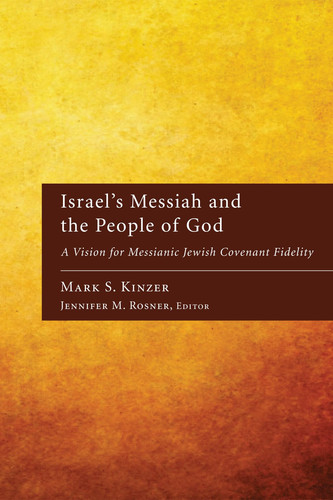
Israel's messiah and the people of God: a vision for Messianic Jewish covenant fidelity

Kinzer, Mark
Israel's Messiah and the People of God presents a rich and diverse selection of essays by theologian Mark Kinzer, whose work constitutes a pioneering step in Messianic Jewish theology. Including several pieces never before published, this collection illuminates Kinzer's thought on topics such as Oral Torah, Jewish prayer, eschatology, soteriology, and Messianic Jewish-Catholic dialogue. This volume offers the reader numerous portals into the vision of Messianic Judaism offered in Kinzer's Postmissionary Messianic Judaism (2005). An introductory essay by editor Jennifer M. Rosner sets Kinzer's thought and writings in context.
Cascade Books 2011-01-07 221 pages

Fatal Embrace Christians, Jews, and the Search for Peace in the Holy Land

Mark Braverman
Author Mark Braverman shows how the Jewish quest for safety and empowerment and the Christian endeavor to atone for centuries of anti-Semitism have combined to suppress the conversations needed to bring about a just and lasting peace in the Holy Land. Fatal Embrace charts Braverman's journey as an American Jew struggling with the difficult realities of modern Israel. The book vividly describes the spiritual and psychological forces driving the discourse and is a call to action to Americans of all faiths.
Beaufort Books, Incorporated 2012-04 400 pages

Judaism on trial: Jewish-Christian disputations in the Middle Ages

Hyam Maccoby
Hyam Maccoby's now classic study focuses on the major Jewish—Christian disputations of medieval Europe: those of Paris (1240), Barcelona (1263), and Tortosa (1413–14). It examines the content of these theological confrontations with a sense of present-day relevance, while also discussing the use made of scriptural proof-texts. Part I provides a general thematic consideration of the three disputations and their social and historical background. Part II is a complete translation of the account of the Barcelona Disputation written by Nahmanides, one of the greatest figures in the history of Jewish learning, and was Jewish spokesman at the disputation. Part III contains Jewish and Christian accounts of the Paris and Tortosa disputations.
Vallentine Mitchell 1993 245 pages

The Talmud in dispute during the High Middle Ages

Fidora, Alexander,Hasselhoff, Görge K.,Ragacs, Ursula
"The Christian discovery of the Babylonian Talmud is a significant landmark in the long and complex history of anti-Jewish polemic. While the Talmudic corpus developed in the same period as early Christianity, this post-biblical text was largely unknown to the Christians. Full awareness of the Talmud among Christian authors did not arise until the late 1230s, when the Jewish convert Nicholas Donin presented a Latin translation of Talmudic fragments to Pope Gregory IX. Though the Talmud was subsequently put on trial (1240) and burnt (1241/2) in Paris, the controversy surrounding it continued over the following years, as Pope Innocent IV called for a revision of its condemnation. The textual basis for this revision is the Extractiones de Talmud, that is, a Latin translation of 1.922 Talmudic fragments. The articles in this volume shed new light on this monumental translation and its historical context. They also offer critical editions of related texts, such as DoninÕs anti-Talmudic polemic. Authors of the contributions are: Wout van Bekkum, Piero Capelli, Ulisse Cecini, Enric Cort s, îscar de la Cruz Palma, Federico Dal Bo, Alexander Fidora, Gšrge K. Hasselhoff, MoisŽs Orfali, Ursula Ragacs and Eulˆlia Vernet i Pons."
Universitat Autònoma de Barcelona, Servei de Publicaciones 2019-12-17 281 pages

The Irrevocable Calling Israel's Role as a Light to the Nations

Daniel C. Juster,Don Finto
Referring to the chosen-ness of the Jewish people, Paul, the Apostle, ?For God's free gifts and his calling are irrevocable? (Rom. 11: 29). This messenger to the Gentiles understood the unique calling of his people, Israel. So does Daniel Juster. In The Irrevocable Calling, he expands Paul's words, showing how Israel was uniquely chosen to bless the world and how these blessings can be enjoyed today.
Messianic Jewish Publishers 2007 52 pages

Jews, Christians and religious pluralism

Cohn-Sherbok, Dan
Provides a basis for considering the claims of a wide variety of Jewish and Christian writers in the Judeo-Christian tradition, from biblical times to the present, who have wrestled with the issues of religious pluralism. In many cases these thinkers have reflected on the merits of one another's faith; alternatively, they have considered the truth-claims of their own faith in relation to the world's religions. Profiles on some 90 thinkers, such as Augustine, Helen Fry, and Baruch Spinoza, provide the type of information most commonly sought by students and general readers, including biographical details, theological position, and samples of work. The author is a professor of Judaism at the University of Wales, and visiting professor of interfaith dialog at Middlesex University. Annotation c. Book News, Inc., Portland, OR (booknews.com)
Edwin Mellen Press 1999 336 pages

Paul the convert: the apostolate and apostasy of Saul the Pharisee

Segal, Alan F.
Although Paul's writings have been intensively studied by Christian theologians, they have been dismissed by Jewish scholars as the meditations of an antagonistic apostate who broke completely with his Jewish past. In this revisionist account of Paul's work, Alan Segal argues that Paul's life can be better understood by taking his Jewishness seriously, and that Jewish history can be illuminated greatly by examining Paul's writings. By reading Paul from the viewpoint of the religion he left behind, Segal sheds new light on the man who played a critical role in both Judaism and Christianity.
Yale University Press 1990-01-01 368 pages

Reassessing Jewish life in Medieval Europe

Chazan, Robert
"This book re-evaluates the prevailing notion that Jews in medieval Christian Europe lived under an appalling regime of ecclesiastical limitation, governmental exploitation and expropriation, and unceasing popular violence. Robert Chazan argues that, while Jewish life in medieval Western Christendom was indeed beset with grave difficulties, it was nevertheless an environment rich in opportunities; the Jews of medieval Europe overcame obstacles, grew in number, explored innovative economic options, and fashioned enduring new forms of Jewish living. His research also provides a reconsideration of the legacy of medieval Jewish life, which is often depicted as equally destructive and projected as the underpinning of the twentieth-century catastrophes of antisemitism and the Holocaust. Dr Chazan's research proves that, although Jewish life in the medieval West laid the foundation for much Jewish suffering in the post-medieval world, it also stimulated considerable Jewish ingenuity, which lies at the root of impressive Jewish successes in the modern West"--
Cambridge University Press 2010-09-27 270 pages

Jewish-Christian Dialogue: Jewish Justification

Novak, David
Many studies written about the Jewish-Christian relationship are primarily historical overviews that focus on the Jewish background of Christianity, the separation of Christianity from Judaism, or the medieval disputations between the two faiths. This book is one of the first studies to examine the relationship from a philosophical and theological viewpoint. Carefully drawing on Jewish classical sources, Novak argues that there is actual justification for the new relationship between Judaism and Christianity from within Jewish religious tradition. He demonstrates that this new relationship is possible between religiously committed Jews and Christians without the two major impediments to dialogue: triumphalism and relativism. One of the very few books on this topic written by a Jewish theologian who speaks specifically to modern Christian concerns, it will provide the groundwork for a more serious development of Jewish-Christian dialogue in our day.
Oxf. U. P. (N. Y.) 1992 194 pages

Blood and belief: the circulation of a symbol between Jews and Christians

Biale, David
Ancient biblical Judaism ascribed magical and supernatural properties to blood. Both Rabbinic Judaism and Christianity inherited this attitude toward blood, and adopted, each in its own way, symbolic and spiritualized rituals connected with blood. Throughout the centuries, Judaism and Christianity borrowed beliefs and rituals from one another. Argues that the blood libel emerged as a negative by-product of an increase in popular eucharistic piety. Encouragement for this accusation was provided by the Fourth Lateran Council of 1215, which approved the doctrine of transubstantiation and heightened popular interest in blood, especially Christian blood. The alleged Jewish consumption of Christian blood seemed to prove the dogma of transubstantiation in popular consciousness. In the 19th century the blood libel emerged again in Europe, devoid of its theological underpinning but supplemented with a belief in blood as the bearer of heredity, and hence of the ethnic and racial traits of the person. Academic authorities, from August Rohling to the Nazi Erich Bischof, tried to prove the truth of the blood libel and created the theory of blood - i.e. racial pollution. It was in such a form that blood mysticism was picked up by the Nazis. The revival of the blood libel in the 19th century provoked a wave of literature refuting the accusation. Paradoxically, while Jews were vigorously rejecting the claim that human blood played a role in their rituals, some of them adopted the blood language of modern nationalism, a belief in the nation-making "Jewish blood".
University of California Press 2007-10-23 299 pages

Fashioning Jewish identity in medieval western Christendom

Chazan, Robert
During the course of the twelfth century, increasing numbers of Jews migrated into western Christendom from Islamic lands. But western Christendom was both appealing and threatening to the Jewish immigrants. Indeed, western Christendom was entering a phase of intense missionizing activity, some of which was directed at the long-term Jewish residents of Europe and the Jewish newcomers. The writings of twelfth- and thirteenth-century leaders from southern France and northern Spain constitute the first evidence of Jewish anti-Christian polemics from within western Christendom. These leaders were fully cognizant of the core Christian thrusts, described them in detail for their co-religionists, and rebutted them carefully. This study recreates some of the clarification and rebuttal, and examines the techniques of persuasion adopted by the Jewish polemicists in order to reassure their Jewish readers of the truth of Judaism and the error of Christianity.
Cambridge University Press 2004 379 pages

Judaism in the beginning of Christianity

Neusner, Jacob
In this clearly written book, Jacob Neusner answers the central questions about the world of Judaism in which Christianity was born. He gives an overview of the history and religion of Israel and an analysis of the Judaic legacy as it endured among those who did not become Christians. He also discusses the troubling issue of the Pharisees and investigates the identity of the "historical Hillel." This accessible book aims to speak directly to every student who is concerned with both the early and contemporary meanings of the Jewish and Christian faiths.
Fortress Press 1984 112 pages

Christian faith and the Bible of Judaism: the Judaic encounter with Scripture

Neusner, Jacob
Jacob Neusner, a noted scholar and prolific author on Jewish literature, history, and religion, believes that Jews and Christians do well to seek in their encounter with the teachings of the living God, the wisdom, imagination, and insight of the ages. "In this book," he writes in the Preface, "I want to contribute some modest measure of my own faith, Judaism, as that faith may add to the faith of our Christian neighbors, for all of us now dwell together in the new catacomb, the darkness of disdain for our common faith in one God, creator of heaven and earth, judge of all humankind. This is a book of religious faith."
W.B. Eerdmans Pub. Co 1987-11 205 pages

Andalus and Sefarad: on philosophy and its history in Islamic Spain

Stroumsa, Sarah
Al-Andalus, the Iberian territory ruled by Islam from the eighth to the fifteenth centuries, was home to a flourishing philosophical culture among Muslims and the Jews who lived in their midst. Andalusians spoke proudly of the region's excellence, and indeed it engendered celebrated thinkers such as Maimonides and Averroes. Sarah Stroumsa offers an integrative new approach to Jewish and Muslim philosophy in al-Andalus, where the cultural commonality of the Islamicate world allowed scholars from diverse religious backgrounds to engage in the same philosophical pursuits. Stroumsa traces the development of philosophy in Muslim Iberia from its introduction to the region to the diverse forms it took over time, from Aristotelianism and Neoplatonism to rational theology and mystical philosophy. She sheds light on the way the politics of the day, including the struggles with the Christians to the north of the peninsula and the Fa t imids in North Africa, influenced philosophy in al-Andalus yet affected its development among the two religious communities in different ways. While acknowledging the dissimilar social status of Muslims and members of the religious minorities, Andalus and Sefarad highlights the common ground that united philosophers, providing new perspective on the development of philosophy in Islamic Spain.
Princeton University Press 2019-10-15 220 pages

Holy dissent: Jewish and Christian mystics in Eastern Europe

Glenn Dynner
The religious communities of early modern Eastern Europe?particularly those with a mystical bent?are typically studied in isolation. Yet the heavy Slavic imprint on Jewish popular mysticism and pervasive Judaizing tendencies among Christian dissenters call into question the presumed binary quality of Jewish-Christian interactions. In Holy Dissent: Jewish and Christian Mystics in Eastern Europe, editor Glenn Dynner presents twelve essays that chart contacts, parallels, and mutual influences between Jewish and Christian mystics. With cutting-edge research on folk healers, messianists, Hasidim, and Christian sectarians, this volume presents instances of rich cultural interchange and bold border transgression. Holy Dissent is divided into two sections: "Jewish Mystics in a Christian World" and "Christianizing Jews, Judaizing Christians." In these essays, readers learn that Jewish and Christian folk healers consulted each other and learned from common sources; that the founder of Hasidism, Rabbi Israel Ba'al Shem Tov, likely drew inspiration from Christian ascetics; that Christian peasants sought and obtained audience with Hasidic masters; that Jewish mystics openly Christianized; and that Christian mystics openly Judaized. In contrast to prevailing models that present Jewish and Christian cultures as either rigidly autonomous or ambiguously hybrid, Holy Dissent charts specific types of religio-cultural exchange and broadens our conception of how cultures interact. The scholarship in this volume is notably fresh and significant and makes an important contribution across disciplines. Jewish and Christian studies scholars as well as historians of Eastern Europe will benefit from the analysis of Holy Dissent.
Wayne State University Press 2011 406 pages