73 results for "Jewish History"

Aphrodite and the rabbis: how the Jews adapted Roman culture to create Judaism as we know it

Visotzky, Burton L.
"Hard to believe but true: - The Passover Seder is a Greco-Roman symposium banquet - The Talmud rabbis presented themselves as Stoic philosophers - Synagogue buildings were Roman basilicas - Hellenistic rhetoric professors educated sons of well-to-do Jews - Zeus-Helios is depicted in synagogue mosaics across ancient Israel - The Jewish courts were named after the Roman political institution, the Sanhedrin - In Israel there were synagogues where the prayers were recited in Greek. Historians have long debated the (re)birth of Judaism in the wake of the destruction of Jerusalem and the Temple cult by the Romans in 70 CE. What replaced that sacrificial cult was at once something new-indebted to the very culture of the Roman overlords-even as it also sought to preserve what little it could of the old Israelite religion. The Greco-Roman culture in which rabbinic Judaism grew in the first five centuries of the Common Era nurtured the development of Judaism as we still know and celebrate it today. Arguing that its transformation from a Jerusalem-centered cult to a world religion was made possible by the Roman Empire, Rabbi Burton Visotzky presents Judaism as a distinctly Roman religion. Full of fascinating detail from the daily life and culture of Jewish communities across the Hellenistic world, Aphrodite and the Rabbis will appeal to anyone interested in the development of Judaism, religion, history, art and architecture. "--
St. Martin's Press 2016 245 pages

Anything but yes: a novel of Anna del Monte, Jewish citizen of Rome, 1749

Davidow, Joie
"This beautiful work of historical fiction was inspired by the diary of an actual 18th-century Roman Jewish girl, imprisoned by the Catholic Church because someone with a grudge offered her to the Church. Anything But Yes is the true story of a young woman's struggle to defend her identity in the face of relentless attempts to destroy it. In 1749, 18-year-old Anna del Monte was seized at gunpoint from her home in Rome's Jewish ghetto and thrown into a convent cell at the Casa dei Convertiti, the house of converts. With no access to the outside world, she withstood isolation, sleep deprivation, endless lectures, and threats and promises. If Anna were to utter the simple word "yes," she would risk forced baptism, which meant never returning to her home and losing contact with any Jew-including her own family-for the rest of her life. Even in Italy today, few people know the full story of Rome's Jewish ghetto, the abduction of Jews, or the popes who were intent on forcibly converting every non-Catholic living in the long shadow of the Vatican. Young girls and small children were the primary targets of these forced conversions, for they were most vulnerable. But Anna del Monte was different. She was strong, brilliant, and educated, and wrote a diary of her experiences. Her diary became lost for more than 200 years but was rediscovered in Israel in 1989. Anything But Yes is based on Anna's diary and Joie Davidow's extensive research on life in the 18th-century Roman Jewish ghetto and its personalities, traditions, foods, and dialect"--
Monkfish Book Publishing Company 2023 233 pages

The legacy of Islamic antisemitism: from sacred texts to solemn history

Bostom, Andrew G.
Islamic antisemitism is as old as Islam itself, and is not a mere borrowing from non-Muslim sources, as has been claimed. The Legacy of Islamic Antisemitism provides comprehensive, meticulously documented evidence that a readily discernible, uniquely Islamic antisemitism—specific Muslim hatred of Jews—has been expressed continuously since the advent of Islam. Writing in 1971, S.D. Goitein, the pre-eminent scholar of Muslim-Jewish relations as revealed in the Geniza documentary record of the high Middle Ages (950-1250 C.E.), employed the term antisemitism, “…in order to differentiate animosity against Jews from the discrimination practiced by Islam against non-Muslims in general. Our scrutiny of the Geniza material has proved the existence of ‘antisemitism’ in the time and the area considered here…”. Goitein cited as concrete proof of his assertion that a unique strain of Islamic Jew hatred was extant at that time (i.e., up to a millennium ago)—exploding the common assumption of its absence—the fact that letters from the Geniza material, “…have a special word for it and, most significantly, one not found in the Bible or in Talmudic literature…but one much used and obviously coined in the Geniza period.” Important examples of antisemitic motifs in the foundational Muslim texts are presented: from the Koran and Koranic exegesis by the greatest classical and modern Muslim commentators; the hadith (words and deeds of the Muslim prophet Muhammad as recorded by pious Muslim transmitters), the sira (earliest Muslim biographies of Muhammad), as well as the writings of influential Muslim jurists, theologians, and scholars, from the Middle Ages through the contemporary era. These primary sources, and seminal secondary analyses translated here for the first time into English such as Hartwig Hirschfeld’s mid 1880s essays on Muhammad’s subjugation of the Jews of Medina, and George Vajda’s elegant, comprehensive 1937 study of the hadith—detail the sacralized rationale for Islam’s anti-Jewish bigotry. Numerous complementary historical accounts illustrate the resulting the plight of Jewish communities in the Muslim world across space and time, culminating in the genocidal threat posed to the Jews of Israel today. The Legacy of Islamic Antisemitism debunks the conventional wisdom which continues to assert that Muslim Jew hatred is entirely a 20th century phenomenon, a loose amalgam of re-cycled medieval Christian Judeophobic motifs, calumnies from the Czarist Russia “Protocols of the Elders of Zion”, and standard Nazi propaganda, that only arose after the advent of the Zionist movement and the protracted Arab-Jewish conflict over all of the lands comprising the original 1922 Mandate for historical Palestine. Scholars, educators, and interested lay readers will find this collection an invaluable resource for understanding the phenomenon of Muslim antisemitism, past and present. An updated Author’s Preface for this new edition—which includes materials through January 3, 2020—elucidates the current global pandemic of Muslim Antisemitism, and its resulting violent manifestations, in Israel, Western Europe, and the United States. Doctrinal drivers of this hatred, as espoused by iconic Muslim religious leaders representing the pinnacles of institutional Islamic religious education—both Sunni and Shiite—are introduced. This compendious, timely exposé rivets upon freshly translated samples of modern, seminal Koranic glosses—rife with Jew-hatred—which shape current understandings of Islam’s holy book, and Islam itself, by the Muslim masses. The new Preface concludes with a focused discussion about why non-Muslim religious leaders, especially Jews, must admonish institutional Islam to begin its own process, akin to Vatican II/Nostre Aetate, of expunging at least the most virulent Jew-hating motifs from Islam’s core theology.
[Independently published ; printed by Amazon] 2020 825 pages

Augustine and the Jews: a Christian defense of Jews and Judaism

Fredriksen, Paula
In Augustine and the Jews, Fredriksen draws us into the life, times, and thought of Augustine of Hippo (396–430). Focusing on the period of astounding creativity that led to his new understanding of Paul and to his great classic, The Confessions, she shows how Augustine’s struggle to read the Bible led him to a new theological vision, one that countered the anti-Judaism not only of his Manichaean opponents but also of his own church. The Christian Empire, Augustine held, was right to ban paganism and to coerce heretics. But the source of ancient Jewish scripture and current Jewish practice, he argued, was the very same as that of the New Testament and of the church—namely, God himself. Accordingly, he urged, Jews were to be left alone. Conceived as a vividly original way to defend Christian ideas about Jesus and about the Old Testament, Augustine’s theological innovation survived the collapse of the Western Roman Empire, and it ultimately served to protect Jewish lives against the brutality of medieval crusades. Augustine and the Jews sheds new light on the origins of Christian anti-Semitism and, through Augustine, opens a path toward better understanding between two of the world’s great religions.
Yale University Press 2010-10-12 503 pages

An introduction to Jewish-Christian relations

Kessler, Edward
"Relations between Christians and Jews over the past two thousand years have been characterised to a great extent by mutual distrust and by Christian discrimination and violence against Jews. In recent decades, however, a new spirit of dialogue has been emerging, beginning with an awakening among Christians of the Jewish origins of Christianity, and encouraging scholars of both traditions to work together. An Introduction to Jewish-Christian relations sheds fresh light on this ongoing interfaith encounter, exploring key writings and themes in Jewish-Christian history, from the Jewish context of the New Testament to major events of modern times, including the rise of ecumenism, the horrors of the Holocaust, and the creation of the state of Israel. This accessible theological and historical study also touches on numerous related areas such as Jewish and interfaith studies, philosophy, sociology, cultural studies, international relations and the political sciences"--Provided by publisher.
Cambridge University Press 2010-02-18 243 pages

Judaism and other faiths

Cohn-Sherbok, Dan
Examines the attitudes of Judaism toward other religions. Asserts that, in the course of its long history, Judaism became progressively more tolerant toward Christianity. It was the persecutions suffered by Jews in Christian countries - anti-Jewish accusations, pogroms, forced conversions, accusations against the Talmud, theological disputations - and the atmosphere of fear generated by them, as well as the persecution of Conversos by the Inquisition, which impeded improvement in the Jewish perception of Christianity. Ch. 8 (pp. 133-152), "Post-Holocaust Jewish Thinkers, " examines the impact of Christian theology on Jewish theologians of the Holocaust (Schoeps, Rubenstein, Fackenheim, Maybaum, A.A. Cohen).
St. Martin's Press 1994-05-12 186 pages

Jews in Arab countries: the great uprooting

Bensoussan, Georges
"In this new history, French author Georges Bensoussan retells the story of what life was like for Jews in the Arab world since 1850. During the early years of this time, it was widely believed that Jewish life in Arab lands was peaceful. Jews were protected by law and suffered much less violence, persecution, and inequality. Bensoussan takes on this myth and looks back over the history of Jewish-Arab relations in Arab countries. He finds that there is little truth to the myth and forwards a nuanced history of interrelationship that is not only diverse, but deals with local differences in cultural, religious, and political practice. Bensoussan divides the work into sections that cover 1850 to the end of WWI, from 1919 to the eve of WWII and then from WWII to the establishment of Israel and the Arab Wars. A new afterword brings the history of Jewish and Arab relations into the present day. Bensoussan has determined that the history of Jews in Arab countries is a history of slowly disintegrating relationships, increasing tension, violence, and persecution"--
Indiana University Press 2019-03-04 495 pages

Passion for Israel: a short history of the Evangelical Church's commitment to the Jewish people and Israel

Juster, Daniel C.
"This book is written to counter a new sort of Anti-Semitism: Replacement Theology and to address other destructive, widespread distortions that cause Christians and Jews to misunderstand each other. History, stretching back to the Reformation, reveals a special commitment of Christians to the Jews as God's still elect people. This story needs to be told to help heal past wounds and to inspire more Christians to stand together in support of Israel.•What is the new anti-Semitism that is on the rise in sectors of Christianity? •What distortions are blinding people from seeing the Jews as God sees them? •What truth does history reveal that has been kept hidden?"--back cover.
Lederer Books, a division of Messianic Jewish Publishers 2012 78 pages

The image of the non-Jew in Judaism: the idea of Noahide law

Novak, David
Throughout history the image of the non-Jew in Judaism has profoundly influenced the way in which Jews interact with non-Jews. It has also shaped the understanding that Jews have of their own identity, as it determines just what distinguishes them from the non-Jews around them. A crucial element in this is the concept of Noahide law, understood by the ancient rabbis and subsequent Jewish thinkers as incumbent upon all humankind, unlike the full 613 divine commandments of the Torah, which are incumbent on Jews alone. The approach adopted in this now classic study is to consider the history of the idea of Noahide law, and to show how the concept is relevant to practical discussions of the halakhah pertaining to non-Jews and to relations between Jews and non-Jews. The seven chapters that make up the first part of the study examine each of the Noahide laws in turn, with a view to showing their halakhic development in the rabbinic sources, in the codes, and in the responsa literature. The discussion draws primarily on classical texts by traditional commentators as they attempt to deal with living issues from the rabbinic world as equally vital concerns in their own time.The second part deals with the theory of Noahide law, concluding with a consideration of why it is an appropriate starting point for Jewish philosophy today.
The Littman Library of Jewish Civilization 2011 325 pages

Bound by the Bible: Jews, Christians, and the sacrifice of Isaac

Kessler, Edward
The Sacrifice of Isaac is one of the most well-known stories in the Bible. It is also a shocking account of how Abraham's faith in God was demonstrated by a willingness to sacrifice his long-awaited son at God's command. This story has been a source of fascination for Jews and Christians for many centuries and here, Edward Kessler offers an enthralling account of Jewish and Christian interpretations of this biblical story. For understandable reasons, it has been assumed that Judaism influenced Christian interpretation but relatively little attention has been given to the question of the influence of Christianity upon Judaism. Kessler provides an insight into this absorbing two-way encounter and argues that neither Jewish nor Christian interpretations can be understood properly without reference to the other. As Jews and Christians lived, and continue to live, in a biblically orientated culture, Kessler shows how both were 'bound by the bible'.
Cambridge University Press 2004-09-02 222 pages

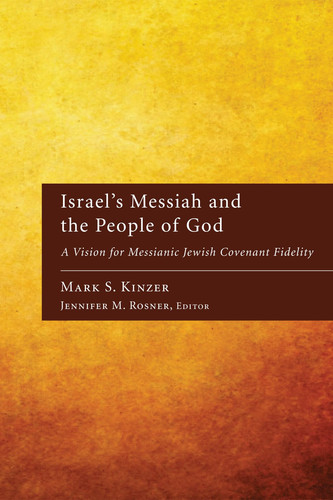
Israel's messiah and the people of God: a vision for Messianic Jewish covenant fidelity

Kinzer, Mark
Israel's Messiah and the People of God presents a rich and diverse selection of essays by theologian Mark Kinzer, whose work constitutes a pioneering step in Messianic Jewish theology. Including several pieces never before published, this collection illuminates Kinzer's thought on topics such as Oral Torah, Jewish prayer, eschatology, soteriology, and Messianic Jewish-Catholic dialogue. This volume offers the reader numerous portals into the vision of Messianic Judaism offered in Kinzer's Postmissionary Messianic Judaism (2005). An introductory essay by editor Jennifer M. Rosner sets Kinzer's thought and writings in context.
Cascade Books 2011-01-07 221 pages

Between Jewish tradition and modernity: rethinking an old opposition : essays in honor of David Ellenson

Michael A. Meyer,Meyer A. Michael,David N. Myers
Although the ideas of “tradition” and “modernity” may seem to be directly opposed, David Ellenson, a leading contemporary scholar of modern Jewish thought, understood that these concepts can also enjoy a more fluid relationship. In honor of Ellenson, editors Michael A. Meyer and David N. Myers have gathered contributors for Between Jewish Tradition and Modernity: Rethinking an Old Opposition to examine the permutations and adaptations of these intertwined forms of Jewish expression. Contributions draw from a range of disciplines and scholarly interests and vary in subject from the theological to the liturgical, sociological, and literary. The geographic and historical focus of the volume is on the United States and the State of Israel, both of which have been major sites of inquiry in Ellenson's work.
Wayne State University Press 2014 360 pages

The Talmud in dispute during the High Middle Ages

Fidora, Alexander,Hasselhoff, Görge K.,Ragacs, Ursula
"The Christian discovery of the Babylonian Talmud is a significant landmark in the long and complex history of anti-Jewish polemic. While the Talmudic corpus developed in the same period as early Christianity, this post-biblical text was largely unknown to the Christians. Full awareness of the Talmud among Christian authors did not arise until the late 1230s, when the Jewish convert Nicholas Donin presented a Latin translation of Talmudic fragments to Pope Gregory IX. Though the Talmud was subsequently put on trial (1240) and burnt (1241/2) in Paris, the controversy surrounding it continued over the following years, as Pope Innocent IV called for a revision of its condemnation. The textual basis for this revision is the Extractiones de Talmud, that is, a Latin translation of 1.922 Talmudic fragments. The articles in this volume shed new light on this monumental translation and its historical context. They also offer critical editions of related texts, such as DoninÕs anti-Talmudic polemic. Authors of the contributions are: Wout van Bekkum, Piero Capelli, Ulisse Cecini, Enric Cort s, îscar de la Cruz Palma, Federico Dal Bo, Alexander Fidora, Gšrge K. Hasselhoff, MoisŽs Orfali, Ursula Ragacs and Eulˆlia Vernet i Pons."
Universitat Autònoma de Barcelona, Servei de Publicaciones 2019-12-17 281 pages

Jews, Christians and religious pluralism

Cohn-Sherbok, Dan
Provides a basis for considering the claims of a wide variety of Jewish and Christian writers in the Judeo-Christian tradition, from biblical times to the present, who have wrestled with the issues of religious pluralism. In many cases these thinkers have reflected on the merits of one another's faith; alternatively, they have considered the truth-claims of their own faith in relation to the world's religions. Profiles on some 90 thinkers, such as Augustine, Helen Fry, and Baruch Spinoza, provide the type of information most commonly sought by students and general readers, including biographical details, theological position, and samples of work. The author is a professor of Judaism at the University of Wales, and visiting professor of interfaith dialog at Middlesex University. Annotation c. Book News, Inc., Portland, OR (booknews.com)
Edwin Mellen Press 1999 336 pages

Paul the convert: the apostolate and apostasy of Saul the Pharisee

Segal, Alan F.
Although Paul's writings have been intensively studied by Christian theologians, they have been dismissed by Jewish scholars as the meditations of an antagonistic apostate who broke completely with his Jewish past. In this revisionist account of Paul's work, Alan Segal argues that Paul's life can be better understood by taking his Jewishness seriously, and that Jewish history can be illuminated greatly by examining Paul's writings. By reading Paul from the viewpoint of the religion he left behind, Segal sheds new light on the man who played a critical role in both Judaism and Christianity.
Yale University Press 1990-01-01 368 pages

Hate: The Rising Tide of Anti-Semitism in France (and What It Means for Us)

Weitzmann, Marc
"From an award-winning journalist, a provocative, deeply reported expose of the history and present crisis of anti-Semitism in France--and its dire consequences for the rest of Europe. Hate explores the alarming history and present predicament of anti-Semitism in France. By examining the issue at local, international, and personal levels--interviewing everyday French men and women as well as powerful leaders such as National Front president Marine Le Pen--Weitzmann attempts to understand how nine Jews have been murdered by French citizens in the last eight years, and how France has become the number one country from which Western jihadists flee to join ISIS and other extremist Middle Eastern organizations. How do contemporary French Jews grapple with these troubling facts, and with the historical legacies of the French Revolution, the Holocaust, and the Gaullist "Arab-French policy"? While internationally minded consumers of the news may have some knowledge of the events Weitzmann describes--including the 2013 "Day of Anger" and the rise of France's popular, and famously anti-Semitic, comedian Dieudonne M'bala M'bala--these controversies are largely unknown in the States, and utterly shocking in the unity Weitzmann gives them here. In his hands, these events are not just the story of French anti-Semitism, but that of the breakdown of a major Western power, of the dark side of our global age"--
Houghton Mifflin Harcourt 2019 290 pages

Jews, Christians and Muslims in encounter

Kessler, Edward
This book reflects on one of the most pressing challenges of our time: the current and historical relationships that exist between the faith-traditions of Judaism, Christianity and Islam. It begins with discussion on the state of Jewish-Christian relations, examining antisemitism and the Holocaust, the impact of Israel and theological controversies such as covenant and mission. Kessler also traces different biblical stories and figures, from the Hebrew Bible and the New Testament, demonstrating Jewish-Christian contact and controversy. Jews and Christians share a sacred text, but more surprisingly, a common exegetical tradition. They also need to deal with some of the more problematic and violent biblical texts. Jews, Christians and Muslims includes reflection on the encounter with Islam, including topics associated with a divergent history and memory as well contemporary relations between the three Abrahamic faiths. Kessler's writings shed light on common purpose as well as how to manage difference, both vital in forming a positive identity and sustaining a flourishing community.
SCM Press 2013 266 pages