34 results for "Literature"

The holy barbarians

Lipton, Lawrence
Reprint of the 1959 edition. Mr. Lipton's book is the first complete and unbiased survey of the beat generation and its role in our society. Here are the intimate facts about these people and their attitudes-toward sex, dope, jazz, art, religion, parents, landlords, employers, politicians, draft boards, the law and, most important, toward the "square". The author presents a picture of their way of life, their individual backgrounds, the language they have appropriated, in terms made clear for the first time to those of us who have been confused and puzzled about them. He also provides a balanced discussion of their literature, art and music, of what they produce and fail to produce in the arts they practice.
Martino Pub 2009 320 pages

1929: mapping the Jewish world

Hasia R. Diner,Gennady Estraikh
Winner of the 2013 National Jewish Book Award, Anthologies and Collections The year 1929 represents a major turning point in interwar Jewish society, proving to be a year when Jews, regardless of where they lived, saw themselves affected by developments that took place around the world, as the crises endured by other Jews became part of the transnational Jewish consciousness. In the United States, the stock market crash brought lasting economic, social, and ideological changes to the Jewish community and limited its ability to support humanitarian and nationalist projects in other countries. In Palestine, the anti-Jewish riots in Hebron and other towns underscored the vulnerability of the Zionist enterprise and ignited heated discussions among various Jewish political groups about the wisdom of establishing a Jewish state on its historical site. At the same time, in the Soviet Union, the consolidation of power in the hands of Stalin created a much more dogmatic climate in the international Communist movement, including its Jewish branches. Featuring a sparkling array of scholars of Jewish history, 1929 surveys the Jewish world in one year offering clear examples of the transnational connections which linked Jews to each other—from politics, diplomacy, and philanthropy to literature, culture, and the fate of Yiddish—regardless of where they lived. Taken together, the essays in 1929 argue that, whether American, Soviet, German, Polish, or Palestinian, Jews throughout the world lived in a global context.
New York University Press 2013-08-12 244 pages

Yom Kippur a go-go

Roth, Matthue
Yom Kippur A Go-Go is a mind-blowing meeting of pop culture, Orthodox faith, and hipster poetics. Matthue Roth is an American original: an Orthodox Jew who cites Outkast and Michelle Tea among his influences, who won’t touch a light switch on Shabbos but mimics a screaming orgasm onstage while reading his paean to Orthodox girls. From the World Bank riots (what can you do when the revolution starts on Shabbos?) to Thursday night tranny basketball in San Francisco’s Dolores Park, Matthue takes readers on a journey among the queer and hip streets of urban America in his exuberant memoir, Yom Kippur a Go-Go. With humor and insight, Roth describes the tension between contemporary life and the demands of faith. He falls in love and in lust with a panoply of girls, both strictly kosher and determinedly secular, to the accompaniment of MP3 rabbinical lectures on modesty ("Boys are nothing but perverts and filthy animals!”).
Cleis Press 2005 268 pages

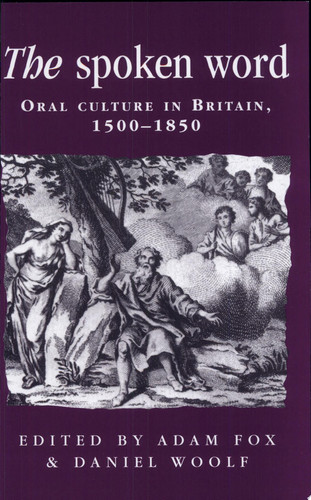
The spoken word: oral culture in Britain, 1500-1850

Adam Fox,Daniel Woolf
"The early modern period was of great significance throughout Europe with respect to its gradual transition from a largely oral to a fundamentally literate society. On the one hand, the spoken word remained of the utmost importance to the dissemination of ideas, the communication of information and the transmission of the cultural repertoire. On the other hand, the proliferation of written documents of all kinds, the development of printing and the spread of popular literacy combined to transform the nature of communication. Studies previous to this have traditionally focused on individual countries or regions, and emphasised the contradictions between oral and literate culture. The essays in this fascinating collection depart from these approaches in several ways. By examining not only English, but also Scottish and Welsh oral culture, they provide the first pan-British study of the subject. The authors also emphasise the ways in which oral and literate culture continued to compliment and inform each other, rather than focusing exclusively on their incompatibility, or on the 'inevitable' triumph of the written word. The chronological focus, ranging from the sixteenth to the mid-nineteenth century, with glances ahead to the twentieth, set the problem against a longer chronological span than most other studies, providing a link between early modern and modern oral and literate cultures. This book it will be of interest to students and scholars of British history, Linguistics, Literary Studies and Folklore Studies"--Publisher's description.
Manchester University Press 2002 286 pages

The first Roman mysteries quiz book

Lawrence, Caroline
FRAGILE EARTH v1.2 CONTAINS 12 NEW SETS OF BEFORE-AND-AFTER IMAGES, including flooding on the Arabian Peninsular, a dust storm at Sydney Harbour, the expansion of Tehran’s city limits, and ice melting on Hudson Bay. Fragile Earth is a stunning photography app giving a birdseye view of climate change, urbanization and nature’s raw power. It shows what happens to our planet when rivers flood or dry up, mountains erupt, glaciers melt and cities sprawl outward. STUNNING PHOTOGRAPHY APPSee years pass under your fingertips by swiping across before-and-after images. Explore how Dubai has grown from a small city to a thriving metropolis over the last 10 years, or how the notorious Warming Island got its name since 1985.The top photography app contains some of the world’s best environmental images, giving you detailed ecological snapshots from around the globe. Beautiful, shocking and thought-provoking, Fragile Earth provides thought provoking portraits of our world – its beauty, vastness and vulnerability. SEE THE WORLD CHANGE IN FRONT OF YOUR EYES The images can viewed by country/region, category and date. Each can also be shared via facebook, twitter or email. NEW to Fragile Earth v1.2:Flooding, Arabian Peninsula, Oman, Saudi Arabia and United Arab EmiratesCollapsing sea stack, The Twelve Apostles, Victoria, AustraliaDust storm, Sydney Harbour Bridge, New South Wales, AustraliaCity expansion, Tehran, IranRhone Glacier retreat, SwitzerlandWildfire Smog, St Basil’s Cathedral, Moscow, RussiaShrinking lake, Lake Urmia, IranShrinking sea and salt projects, The Dead SeaSea Ice in Bristol Bay, Alaska, United States of AmericaTohoku Tsunami one year on, Ishinomaki, JapanMelting ice, Hudson Bay, CanadaLandscape change, Gulf of Fonseca, Honduras and Nicaragua Developed by Aimer Media, the team behind The Tate Guide to Modern Art Terms and The Worlds Heritage apps.
Orion Children's 2007 124 pages

Living our language: Ojibwe tales & oral histories

Treuer, Anton
A language carries a people's memories, whether they are recounted as individual reminiscences, as communal history, or as humorous tales. This collection of stories from Anishinaabe elders offers a history of a people at the same time that it seeks to preserve the language of that people.> As fluent speakers of Ojibwe grow older, the community questions whether younger speakers know the language well enough to pass it on to the next generation. Young and old alike are making widespread efforts to preserve the Ojibwe language, and, as part of this campaign, Anton Treuer has collected stories from Anishinaabe elders living at Leech Lake, White Earth, Mille Lacs, Red Lake, and St. Croix reservations. Based on interviews Treuer conducted with ten elders—Archie Mosay, Jim Clark, Melvin Eagle, Joe Auginaush, Collins Oakgrove, Emma Fisher, Scott Headbird, Susan Jackson, Hartley White, and Porky White—this anthology presents the elders' stories transcribed in Ojibwe with English translation on facing pages. These stories contain a wealth of information, including oral histories of the Anishinaabe people and personal reminiscences, educational tales, and humorous anecdotes. Treuer's translations of these stories preserve the speakers' personalities, allowing their voices to emerge from the page. This dual-language text will prove instructive for those interested in Ojibwe language and culture, while the stories themselves offer the gift of a living language and the history of a people.
Minnesota Historical Society Press 2001-05-01 272 pages

The rise of the individual in 1950s Israel: a challenge to collectivism / Orit Rozin ; translated by Haim Watzman

Rozin, Orit
n this sharply argued volume, Orit Rozin reveals the flaws in the conventional account of Israeli society in the 1950s, which portrayed the Israeli public as committed to a collectivist ideology. In fact, major sectors of Israeli society espoused individualism and rejected the state-imposed collectivist ideology. Rozin draws on archival, legal, and media sources to analyze the attitudes of black-market profiteers, politicians and judges, middle-class homemakers, and immigrants living in transit camps and rural settlements. Part of a refreshing trend in recent Israeli historiography to study the voices, emotions, and ideas of ordinary people, Rozin’s book provides an important corrective to much extant scholarly literature on Israel’s early years.
Brandeis University Ppress 2011 254 pages

Last waltz in Vienna

Clare, George
On February 26, 1938, 17-year-old Georg Klaar took his girlfriend Lisl to his first ball at the Konzerthaus. His family was proudly Austrian; they were also Jewish, and two weeks later came the German Anschluss. This incredibly affecting account of Nazi brutality towards the Jews includes a previously unpublished post-war letter from the author's uncle to a friend who had escaped to Scotland. This moving epistle passes on the news of those who had survived and the many who had been arrested, deported, murdered, or left to die in concentration camps, and those who had been orphaned or lost their partners or children. It forms a devastating epilogue to what has been hailed as a classic of holocaust literature.
Pan 2007 322 pages

The big night out

Beker, Jeanne
A big night out can be graduation, a prom, a family wedding, confirmation, or Bar or Bat Mitzvah. Whatever the occasion, it is a time when every young person wants to look her (or his) best. This is the book that has it all – tips on planning for the big day, a countdown for getting ready, how to look great in photos, a common-sense guide to party manners, and sound advice about making sure the evening is safe as well as fun. It provides a get-ready plan, the scoop on the comfortable versus excruciating shoe debate, what to do if a zipper breaks, and of course how to accept a compliment gracefully. Jeanne Beker, the mother of two teenage girls and fashion guru extraordinaire, writes wisely and sensitively, affirming that realities like a budget or non-model looks are no barrier to feeling and looking good. You’re on a budget? Scour vintage stores or your favorite aunt’s closet. You don’t look like a model? Take pleasure in finding your own style. From the big question of what to wear to the essential question of how to get home safely, this is a book that’s sure to make a big night out a treasured memory.
Tundra Books 2005-03-08 80 pages

From Odessa with love: political and literary essays from post-Soviet Ukraine

Davidzon, Vladislav
"The Tashkent-born Russian-American literary critic, editor, essayist, and journalist Vladislav Davidzon has been covering post-Soviet Ukraine for the past ten years, a tumultuous time for that country and the surrounding world. The 2014 "Revolution of Dignity" heralded a tremendous transformation of Ukrainian politics and society that has continued to ripple and reverberate throughout the world. These unprecedented events also wrought a remarkable cultural revolution in Ukraine itself. In late 2015, a year and a half after the 2014 Revolution swept away the presidency of the Moscow-leaning kleptocratic President Viktor Yanukovich, Davidzon and his wife founded a literary journal, The Odessa Review, focusing on newly emergent trends in film, literature, painting, design, and fashion. The journal became an East European cultural institution, publishing outstanding writers in the region and beyond. From his vantage point as a journalist and editor, Davidzon came to observe events and know many of the leading figures in Ukrainian politics and culture, and to write about them for a Western audience. Davidzon later found himself in the center of world events as he became a United States government witness in the Ukraine scandal that shook the presidency of Donald Trump. This eagerly anticipated debut tells the real story of what happened in Ukraine from the keen and resilient perspective of an observer at its center"-- Provided by publisher.
Academica Press 2021 321 pages

The Beta Israel (Falasha) in Ethiopia: from earliest times to the twentieth century

Kaplan, Steven
...balanced and well informed...a striking piece of scholarship aimed at demythologizing the origins of the Ethiopian Falasha. -Foreign AffairsKaplan's definitive treatment will be of interest to students and scholars of Jewish history, African history, and comparative religion, as well as anyone interested in Jewish affairs and the modern Middle East. The Midwest Book ReviewKaplan's conceptualizations are judicious and clearly expressed...incisive and well documented... and provides essential background for the process of assimilation now taking lace in Israel. -The International Journal of African Historical Studies Kaplan's able interdisciplinary approach is of great value for persons interested in religion, civilization, and process of change. -Religious Studies Review Kaplan's well-written, lucid presentation make[s] this important, competent contribution accessible to all levels of readers. Highly recommended.ChoiceInsightful and thorough, a welcome contribution.Kay Kaufman Shelemay, Professor of Music, Harvard UniversityUndoubtedly the most detailed, most scholarly, and most dispassionate argument of Falasha history hitherto published. [T]his work deserves ... the most careful study by all those (and in particular in Israel) who have any practical or scholarly connection with the Beta Israel. -- Edward UllendorffEmeritus Professor of Ethiopian Studies, University of LondonFellow of the British AcademyGiven Kaplan's facility with both written and oral sources, he is in a unique position to synthesize and reconcile the new historical findings of ethnographers with the written sources and differing conclusions of earlier historians and linguists. His work is insightful and thorough, a welcome contribution. -- Kay Shelemay, Wesleyan University The origin of the Black Jews of Ethiopia has long been a source of fascination and controversy. Their condition and future continues to generate debate. The culmination of almost a decade of research, The Beta Israel (Falasha) in Ethiopia marks the publication of the first book-length scholarly study of the history of this unique community. In this volume, Steven Kaplan seeks to demythologize the history of the Falasha and to consider them in the wider context of Ethiopian history and culture. This marks a clear departure from previous studies which have viewed them from the external perspective of Jewish history. Drawing on a wide variety of sources including the Beta Israel's own literature and oral traditions, Kaplan demonstrates that they are not a lost Jewish tribe, but rather an ethnic group which emerged in Ethiopia between the 14th and 16th century. Indeed, the name, Falasha, their religious hierarchy, sacred texts, and economic specialization can all be dated to this period. Among the subjects the book addresses are their links with Ethiopian Christianity, the medieval legends concerning their existence, their wars with the Ethiopian emperors, their relegation to the status of a despised semi-caste, their encounters with European missionaries, and the impact of the Great Famine of 1888-1892. Kaplan's definitive treatment will be of interest to students and scholars of Jewish history, African history, and comparative religion, as well as anyone interested in Jewish affairs and the modern Middle East.
New York University Press 1992 231 pages

The Jewish dark continent: life and death in the Russian pale of settlement

Deutsch, Nathaniel
"At the turn of the twentieth century, over forty percent of the world's Jews lived within the Russian Empire, almost all in the Pale of Settlement. From the Baltic to the Black Sea, the Jews of the Pale created a distinctive way of life little known beyond its borders. This led the historian Simon Dubnow to label the territory a Jewish 'Dark Continent.' Just before World War I, a socialist revolutionary and aspiring ethnographer named An-sky pledged to explore the Pale. He dreamed of leading an ethnographic expedition that would produce an archive--what he called an Oral Torah of the common people rather than the rabbinic elite--which would preserve Jewish traditions and transform them into the seeds of a modern Jewish culture. Between 1912 and 1914, An-sky and his team collected jokes, recorded songs, took thousands of photographs, and created a massive ethnographic questionnaire. Consisting of 2,087 questions in Yiddish--exploring the gamut of Jewish folk beliefs and traditions, from everyday activities to spiritual exercises to marital intimacies--the Jewish Ethnographic Program constitutes an invaluable portrait of Eastern European Jewish life on the brink of destruction. Nathaniel Deutsch offers the first complete translation of the questionnaire, as well as the riveting story of An-sky's almost messianic efforts to create a Jewish ethnography in an era of revolutionary change. An-sky's project was halted by World War I, and within a few years the Pale of Settlement would no longer exist. These survey questions revive and reveal shtetl life in all its wonder and complexity." -- Publisher's Web site.
Harvard University Press 2011-11-29 374 pages