62 results for "Memoir"

Burned child seeks the fire: a memoir

Edvardson, Cordelia
[A] searing memoir. . . . An enduring, indeed universal, story. Robert Taylor, The Boston Globe Summoned with her mother to Gestapo headquarters in 1943, fourteen-year-old Cordelia Edvardson was given a terrible choice: to acknowledge her secret Jewish heritage and suffer the consequences or to see her mother charged with treason. Burned Child Seeks the Fire is the true story of the love between this mother and daughter, and a piercing example of the tragedies wrought by Nazi Germany. "A lacerating, beautifully translated memoir." Publishers Weekly , starred review "Mesmerizing. . . . [Has] the concise unreality of a horrifying fairy tale." Thomas Frick, Los Angeles Times Book Review "Behind [Edvardson's] deceptively simple prose is a complex and tragic story." Judith Bolton-Fasman, Newsday "Cordelia Edvardson's defiant tone challenges us to eschew simplified encounters with the literature and experiences of Holocaust survivors." Paul H. Hamburg, Jewish Book World "To see the horrors of the Holocaust through a child's eye is to experience hell. Cordelia Edvardson's astonishing story captures, with a terrifying reality, a child's response to the myriad atrocities of the Nazis and their murderous regime. Burned Child Seeks the Fire is compelling, horrifying, poetic in its intensity." Deborah Peifer, Bay Area Reporter
Beacon Press 1997 105 pages

Free as a Jew: a personal memoir of national self-liberation

Wisse, Ruth R.
"First came parents with the good sense to flee Europe in 1940 and the good fortune to reach the land of freedom. Their daughter, Ruth, grew up in the shadow of genocide--but in tandem with the birth of Israel, which remained her lodestar. She learned that although Jewishness is biologically transmitted, democracy is not, and both require intensive, intelligent transmission through education in each and every generation. They need adults with the confidence to teach their importance. Ruth tried to take on that challenge as dangers to freedom mounted and shifted sides on the political spectrum. At the high point of her teaching at Harvard University, she witnessed the unraveling of standards of honesty and truth until the academy she left was no longer the one she had entered."--Book flap.
Wicked Son 2021-09-21 359 pages

Hunting the truth: memoirs of Beate and Serge Klarsfeld

Klarsfeld, Beate,Klarsfeld, Serge
"For more than half a century, Beate and Serge Klarsfeld have hunted, confronted, and exposed Nazi war criminals, tracking them down in places as far-flung as South America and the Middle East. It is they who uncovered the notorious torturer Klaus Barbie, known as 'the Butcher of Lyon, ' in Bolivia. It is they who outed Kurt Lischka as chief of the Gestapo in Paris, the man responsible for the largest deportation of French Jews. And it is they who, with the help of their son, Arno, brought the Vichy police chief Maurice Papon to justice. They were born on opposite sides of the Second World War. Beate's father was in the Wehrmacht, while Serge's father was deported to Auschwitz because he was a Jew. But when Serge and Beate met on the Paris metro, they instantly fell in love. They soon married and have since dedicated their lives to 'hunting the truth'--both as world-famous Nazi hunters and as meticulous documenters of the fate of the innocent French Jewish children who were killed in the death camps. They have been jailed and targeted by letter bombs, and their car was even blown up. Yet nothing has daunted the Klarsfelds in their pursuit of justice. Beate made worldwide headlines at age twenty-nine by slapping the high-profile ex-Nazi propagandist Chancellor Kurt Georg Kiesinger and shouting 'Nazi!' Serge intentionally provoked a neo-Nazi in a German beer hall by wearing an armband with a yellow star on it, so that the press would report on the assault. When Pope John Paul II met with Austria's then-president, Kurt Waldheim, a former Wehrmacht officer in the Balkans suspected of war crimes, the Klarsfelds' son, dressed as a Nazi officer, stood outside the Vatican. The Klarsfelds also dedicated themselves to defeating Jean-Marie Le Pen's National Front and his daughter Marine Le Pen's 2017 campaign for president in France. Brave, urgent, and buoyed by a remarkable love story, Hunting the Truth is not only the dramatic memoir of bringing Nazis to justice, it is also the inspiring story of an unrelenting battle against prejudice and hate."--Back cover
Farrar, Straus and Giroux 2019-03-12 454 pages

Rue Ordener, Rue Labat

Kofman, Sarah
Rue Ordener, Rue Labat is a moving memoir by the distinguished French philosopher Sarah Kofman. It opens with the horrifying moment in July 1942 when the author’s father, the rabbi of a small synagogue, was dragged by police from the family home on Rue Ordener in Paris, then transported to Auschwitz—“the place,” writes Kofman, “where no eternal rest would or could ever be granted.” It ends in the mid-1950s, when Kofman enrolled at the Sorbonne. The book is as eloquent as it is forthright. Kofman recalls her father and family in the years before the war, then turns to the terrors and confusions of her own childhood in Paris during the German occupation. Not long after her father’s disappearance, Kofman and her mother took refuge in the apartment of a Christian woman on Rue Labat, where they remained until the Liberation. This bold woman, whom Kofman called Mémé, undoubtedly saved the young girl and her mother from the death camps. But Kofman’s close attachment to Mémé also resulted in a rupture between mother and child that was never to be fully healed. This slender volume is distinguished by the author’s clear prose, the carefully recounted horrors of her childhood, and the uncommon poise that came to her only with the passage of many years.
University of Nebraska Press 1996 85 pages

From ashes to life: my memories of the Holocaust

Eichengreen, Lucille
In this disturbing but inspirational account of her experiences of the Holocaust, Lucille Eichengreen relates her journey as a young Jewish girl through Nazi Germany and Poland - including internment in the camps at Auschwitz, Neuengamme, and Bergen-Belsen. It was a journey that began in 1933, when she was eight years old and witnessed the beginnings of Jewish persecution, a journey along which she suffered the horrible deaths of her father, mother and sister. Sustained by great courage and resourcefulness, Lucille Eichengreen emerged from her nightmare with the inner strength to build a new life for herself in the United States. Only in 1991 did she return to Germany and Poland to assess the Jewish situation there. Her story is a testament to the very thing the Holocaust sought to destroy: the regeneration of Jewish life. Blessed with a remarkable memory that made her one of the most effective witnesses in the postwar trial of her persecutors, Eichengreen has composed a memoir of exceptional accuracy. As important as its factual accuracy is its emotional clarity and truth. Simple and direct, Eichengreen's words compel with their moral authority.
Mercury House 1994 217 pages

The unwelcome one: returning home from Auschwitz

Frankenthal, Hans
After surviving the Nazi death camp at Auschwitz, Hans Frankenthal chose to return to live in his hometown of Schmallenberg, Germany at the age of 19. In this memoir, he describes his experiences working as a butcher in the town, a town emptied of its Jewish residences where few wanted to hear about his experiences during the war. He also describes his experiences after retirement, when he finally spoke out and became an advocate for those who had been forced to work as slave laborers for the company I.G. Farben. Translated from Verweigerte Rueckkehr (1999). Annotation (c)2003 Book News, Inc., Portland, OR (booknews.com).
Northwestern University Press 2002 169 pages

Hitler, Stalin and I: an oral history

Kovály, Heda,Třeštíková, Helena
The oral history of a renowned Czech writer, whose optimism and faith in people survived grueling experiences under authoritarian regimes. Heda Margolius Kovály (1919-2010) was a renowned Czech writer and translator born to Jewish parents. Her bestselling memoir, Under a Cruel Star: A Life in Prague, 1941-1968 has been translated into more than a dozen languages. Her crime novel Innocence; or, Murder on Steep Street --based on her own experiences living under Stalinist oppression--was named an NPR Best Book in 2015. In the tradition of Studs Terkel, Hitler, Stalin and I is based on interviews between Kovály and award-winning filmmaker Helena Trestíková. In it, Kovály recounts her family history in Czechoslovakia, starving in the deprivations of Lodz Ghetto, how she miraculously left Auschwitz, fled from a death march, failed to find sanctuary amongst former friends in Prague as a concentration camp escapee, and participated in the liberation of Prague. Later under Communist rule, she suffered extreme social isolation as a pariah after her first husband Rudolf Margolius was unjustly accused in the infamous Slánsky Trial and executed for treason. Remarkably, Kovály, exiled in the United States after the Warsaw Pact invasion in 1968, only had love for her country and continued to believe in its people. She returned to Prague in 1996. Heda had an enormous talent for expressing herself. She spoke with precision and was descriptive and witty in places. I admired her attitude and composure, even after she had such extremely difficult experiences. Nazism and Communism afflicted Heda's life directly with maximum intensity. Nevertheless, she remained an optimist. Helena Trestíková has made over fifty documentary films. Hitler, Stalin and I has garnered several awards in the Czech Republic and Japan.
DoppelHouse Press 2018 160 pages

The illusion of safety: the story of the Greek Jews during World War II

Matsas, Michael
A history of the Holocaust in Greece and of Jewish participation in Greek partisan warfare during World War II, based largely on personal accounts of survivors. Describes the development of events that ended with the deportations of Jews to death camps, from the German zone of occupation (which included Salonika), the Bulgarian zone, and the Italian zone (which included Athens). Although the Allies already knew about the death camps, nobody warned the Greek Jews. Many Greeks, Italians, Bulgarians, and others sympathized with Jews and attempted to help them, but very few survivors owe their lives to Christian rescuers. The best way to survive was to join the resistance. Pp. 127-326 contain excerpts from memoirs of Jewish survivors, including some who survived Auschwitz and other camps, and resistance fighters. Pp. 329-402 contain Matsas' memoirs. He was born in 1930 in Ioannina and survived the war hiding in a mountain village with his parents and sister.
Pella Pub 1997 446 pages

An end to Childhood

Akavia, Miriam
This memoir, written as fiction, but based on fact, describes the fear-filled efforts of a pair of Polish adolescents, brother and sister, to survive in secrecy and constant anxiety in Lvov at a time when Jews were being rounded up and sent to the Ghetto - or worse. They have only their false identity papers, their few trusted contacts and their own wits to help them conceal their Jewish background and keep one step ahead of the German authorities. Miriam Akavia, who experienced at first hand similar terrors and anxieties, skillfully conveys the fluctuations in mood from the natural optimism and high spirits of youth to the painfully learned caution and dissembling forced upon them by their situation.
Vallentine Mitchell 2003-10-01 171 pages

A childhood under Hitler and Stalin: memoirs of a "certified" Jew

Wieck, Michael
A bestseller in Germany, Michael Wieck's account of his childhood in Königsberg recalls a German city obliterated by fire-bombing during the Second World War. As the child of a Jewish mother and Gentile father, Wieck was persecuted first as a "certified Jew" by the Nazis, then as a German by the Russian occupiers, including horrific internment in the Rothenstein concentration camp. His emigration to the West in 1948 marked the end of the 408-year history of the Jewish community in Königsberg. From the earliest delights of a childhood filled with music, family, and the smell of pines and the sea, Wieck retraces his life. He tells of his school days and their sudden end, the shock of Kristallnacht, his Aunt Fanny being sent by train to a destination unknown, the chemical factory where Jewish workers gradually disappeared, the bombs falling on Königsberg. The Russian occupation was anything but the expected delivery from the horrors of the war. In the midst of privation, savagery, and death, there were moments of absurdity, and Wieck powerfully depicts them in this unforgettable memoir.
the University of Wisconsin Press 2003 293 pages

Destined to live

Ungar, William
Memoirs of Wilo (Wolf) Ungar, a Jew born in 1913 in Krasne, near Tarnopol. In September 1939 he was drafted into the Polish Army; notes the anti-Jewish mood of Poles after the Polish defeat. He fled to Lvov, where the Nazi invasion caught up with him in July 1941. Describes Nazi measures against the Jews and life in the ghetto. Ungar's wife and newly-born child perished during the Nazi "action" in June 1942. He lived on "Aryan papers" in the vicinity of Lvov and later fled to Warsaw. From there he moved to Nowy Dwór, northwest of Warsaw, and before March 1943 was interned in the ghetto there. He fled and returned to Lvov. Having been exposed as a Jew, he narrowly escaped being sent to the Janowska camp; he was hidden by a Ukrainian woman until the liberation. He tried to enlist in the Polish army in Lvov in 1944, but was rejected as a Jew. After the war he emigrated to the USA.
University Press of America 2000 362 pages

Child of war

Seltzer, Nachman
Memoirs of Friedman, born in 1936 in Budapest, whose hasidic family survived in and around his native city, thanks to their luck or Divine providence, and their abilities - including his father's skillful forging of fake documents, the daring of his young aunts, and the acting ability of his mother and himself. Friedman, his mother, and baby brother survived posing as non-Jews in Buda, while most of the city's Jews were in danger in Pest. He pretended to be mentally ill due to the absence of a father serving in the Hungarian army, while his father was actually sheltered in the "glass house". Includes a brief account of how one aunt escaped on the Kasztner train. One sister was hidden in a convent until the Jewish children were found by the Gestapo, but she was saved by the ingenuity of her aunt Irene. Another sister was hidden in the countryside, discovered by the fascists, and rescued by her Aunt Edith. One relative survived by pretending to be a Gypsy violinist; another found refuge in a mental hospital. Friedman's grandmother escaped from a death march. Relates some of the horrors of life under the Arrow Cross, and the difficulty of remaining alive until the Russians liberated the city.
Mesorah Publications 2009 267 pages

The choice: Poland, 1939-1945

Eber, Irene
Memoirs of a Jew born in 1927 in Halle. In 1938, together with other Jews of Polish origin, she and her family were deported to Poland; they settled in Mielec. Describes the Nazi occupation and the establishment of a ghetto. In March 1942 most of the ghetto's inhabitants were transferred to other ghettos or concentration camps. Eber and her family were sent to the Dębica ghetto, but she soon escaped. She found shelter with a Polish family, and hid in a chicken coop for almost two years. Her father was shot in a labor camp. After the war Eber discovered that her mother and sister had been saved by Oskar Schindler. In 1948, after living in a DP camp in Germany, Eber emigrated to the USA.
Schocken Books 2004 229 pages

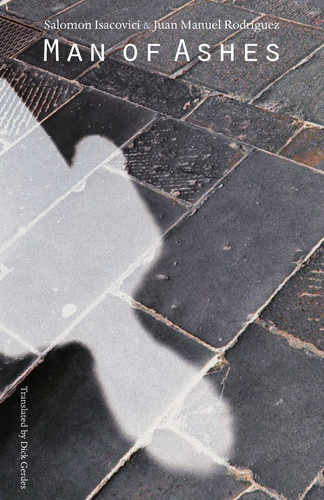
Man of ashes

Isacovici, Salomon
"A poignant, groundbreaking memoir that links the Holocaust and its aftermath to the safe haven that opened for camp survivors in Latin America at mid-century. The controversy surrounding the collaboration between Isacovici and Rodr guez remains an extraordinary opportunity to reflect on the thorny path of Jewish-Hispanic relations worldwide."-Ilan Stavans"Distinguished by geography as well as by its painful testimony. . . . Much of the memoir's early drama involves the creeping Nazi threat opposing Jews' wishful thinking-that the war might be ending and that 'it can't happen here.' . . . The author's family is shattered in Birkenau, but he survives Auschwitz with jobs peeling potatoes and mining coal at Jaworno, and he survives a gruesome death march as the Soviets advance. Isacovici is able to rejoin two brothers in a fruitless return to the family farm and to many European cities in search of a haven. He then joins the family of a woman with whom he has a serious romance, who end up with visas for Ecuador, where he feels an empathy for the suffering of the local Indians. . . . This account tells an unforgettable and unique story."-Kirkus ReviewsSalomon Isacovici died in 1998. Dick Gerdes is a professor of Spanish at George Mason University. Man of Ashes was first published in Mexico in 1990 as A7393: Hombre de cenizas and was awarded the Fernando Jeno Prize.
University of Nebraska Press 2002 244 pages

Peter Owen, not a nice Jewish boy: memoirs of a Maverick publisher

Owen, Peter,Nye, James
In this wry, candid, and sometimes poignant memoir, Peter Owen recalls his lonely Jewish boyhood in Nazi Germany and migration to England where he survived the London Blitz, a teenage dalliance with aspiring actress Fenella Fielding, and working with a motley variety of book publishers. He founded his eponymous publishing firm in 1951, becoming one of the youngest publishers in Britain. A pioneer of books on social themes, gay and lesbian writing, and literature in translation, Owen's authors included ten Nobel laureates and brought Hermann Hesse, Ezra Pound, and Anaïs Nin to a wider audience. Enjoying their success, he and his wife Wendy were memorably stylish and eccentric figures at the literary parties of the 1960s and 1970s. Owen describes his often hilarious encounters with many of those he published, including John Lennon, Yoko Ono, and Salvador Dalí, his adventures in Japan with Yukio Mishima and Shūsaku Endō, and in Morocco with Tennessee Williams and Paul and Jane Bowles. As one of the last of the great émigré publishers, his death in 2016 aged 89 signalled the end of a literary era.
Fonthill Media 2021 255 pages

The straits of hell: the chronicle of a Salonikan Jew in the Nazi extermination camps Auschwitz, Mauthausen, Melk, Ebensee

Ha-Elion, Moshe
"The Jerusalem of the Balkans is today a city of ghosts. Saloniki or Salonika, as Thessaloniki was known its Jewish community, today barely numbers a thousand Jews whereas from 1500 to World War I the Jews constituted the majority of its inhabitants. Moshe Ha-Elyon and his extended family were part of the deportation from Salonika of some 45,000 Jews to Auschwitz where all but a handful were gassed, beaten, or starved to death during the spring of 1943 to the end of the war. This memoir differs from the many memoirs of Greek Jews. Moshe Ha- Elyon portrays the religious and cultural life of his ancestral community as well as the spiritual and mystical research of his father who predicted, prior to his death at the onset of the war, both the persecution of the Jews and the subsequent rise of a Jewish state in its aftermath. It is the moving story of a teenager who suffered in extremis yet lived to transmit to his family in Israel the legacy of a vanished era. A most informative and worthwhile insight into the inner world of Greek Jewry before and during its destruction during World War II"--
Bibliopolis 2005 120 pages

My lucky star

Fantlová, Zdenka
Memoirs of a Jew born in 1922 in Blatná, Czechoslovakia. In 1925 her family moved to Rokycany (west of Prague). In 1940 Fantlová's father was arrested; he was interned in various camps and died in 1945 on a death march. In January 1942, Fantlová was deported to Theresienstadt with her stepmother, brother, and sister. Describes cultural activities in Theresienstadt, especially musical theater, in which she participated. In October 1944 the family was deported to Auschwitz, where Fantlová's stepmother was killed. Her brother was sent to Gleiwitz and died there. Fantlová and her sister were taken to the Kurzbach labor camp, and from there to Gross-Rosen, Mauthausen, and Bergen-Belsen, where her sister perished and Fantlová was liberated. In July 1945 she was sent for treatment to Sweden and remained there.
Herodias 2001 203 pages

Parallel lines

Lantos, Peter L.
Memoirs of Lantos, born to the Leipniker family in 1939 in Makó, Hungary. In 1944, after his older brother was taken away, the rest of the family was sent to the ghetto of Szeged, but the Jews there were soon deported. He and his parents were first sent to Strasshof in Austria for a short time, then to Wiener Neustadt and to Bergen-Belsen, where his father died. He and his mother were then sent on a death transport, during which they were liberated by American soldiers. They returned to Hungary and found that his brother had perished. Lantos later studied medicine in England, and in 1969 decided to remain there.
Arcadia Books 2006 246 pages