125 results for "Psychology"

The McDonaldization of society

Ritzer, George
One of the most popular Sociology books of all time has been thoroughly updated to examine how McDonaldization has roared into the 21st century. The McDonaldization of Society, Revised New Century Edition discusses how McDonaldization and the broader process of globalization (in a new Chapter 8), are spreading more widely and more deeply into various social institutions such as education, medicine, the criminal justice system, and more. This Revised New Century Edition provides many new, relevant examples from recent events and contemporary popular culture, including the ever-increasing global proliferation of McDonald′s and other fast food franchises, shopping malls, and similar commercial entities. Their impact is examined in the post-September 11, 2001 era.
Pine Forge Press 2004-01-21 309 pages

Annie Duke: how I raised, folded, bluffed, flirted, cursed, and won millions at the world series of poker

Duke, Annie
The top-ranked female poker player in the world reveals an insider’s view of the World Series of Poker, a glimpse of her fascinating journey to the top, and keen analysis of winning hands.From the IntroductionI never set out to become a professional poker player. I was schooled at St. Paul’s School, where my father taught English; Columbia University, where I majored in psychology and English lite[Bokinfo]
Hudson Street Press 2005 260 pages

Hope Dies Last Keeping the Faith in Troubled Times

Studs Terkel
America's most inspirational voices, in their own words: "If you're looking for a reason to act and dream again, you'll find it in the pages of this book" ( Chicago Tribune ). Published when Studs Terkel was ninety-one years old, this astonishing oral history tackles one of the famed journalist's most elusive subjects: Hope. Where does it come from? What are its essential qualities? How do we sustain it in the darkest of times? An alternative, more personal chronicle of the "American century," Hope Dies Last is a testament to the indefatigable spirit that Studs has always embodied, and an inheritance for those who, by taking a stand, are making concrete the dreams of today. A former death row inmate who served nearly twenty years for a crime he did not commit discusses his never-ending fight for justice. Tom Hayden, author of The Port Huron Statement , contemplates the legacy of 1960s student activism. Liberal economist John Kenneth Galbraith reflects on the enduring problem of corporate malfeasance. From a doctor who teaches his young students compassion to the retired brigadier general who flew the Enola Gay over Hiroshima, these interviews tell us much about the power of the American dream and the force of individuals who advocate for a better world. With grace and warmth, Terkel's subjects express their secret hopes and dreams. Taken together, this collection of interviews tells an inspiring story of optimism and persistence, told in voices that resonate with the eloquence of conviction. "The value of Hope Dies Last lies not in what it teaches readers about its narrow subject, but in the fascinating stories it reveals, and the insight it allows into the vast range of human experience." -- The A.V. Club "Very Terkelesque--by now the man requires an adjective of his own." --Margaret Atwood, The New York Times Review of Books "An American treasure." --Cornel West
The New Press 2004-11 360 pages

Ceremonial violence: a psychological explanation of school shootings

Fast, Jonathan
Ceremonial Violence analyzes the Columbine high school shooting and four other cases and explains for the first time why teenagers commit school rampage shootings. With his grasp of the elements of abnormal psychology, developmental psychology, sociology, and neurology that contribute to the homicidal mindset, Fast offers us a means of understanding and coming to terms with these tragedies.--From publisher description.
Overlook Press 2008-09-04 333 pages

Manhood in America: a cultural history

Kimmel, Michael S.
For more than three decades, the women's movement and its scholars have exhaustively studied women's complex history, roles, and struggles. In Manhood in America: A Cultural History, Fourth Edition, author Michael Kimmel argues that it is time for men to rediscover their own evolution. Drawing on a myriad of sources, he demonstrates that American men have been eternally frustrated by their efforts to keep up with constantly changing standards. Kimmel contends that men must follow the lead of the women's movement; it is only by mining their past for its best qualities and worst excesses that men will free themselves from the constraints of the masculine ideal.
Oxford University Press 2017-05-26 384 pages

Mesmerized How Ben Franklin Solved a Mystery that Baffled All of France

Mara Rockliff
“Together, Rockliff and Bruno make the scientific method seem exciting, and kids interested in science and history will likely be, well, mesmerized.” — Booklist (starred review) When American inventor Benjamin Franklin arrives in Paris, he is upstaged by a compelling and enigmatic figure: Dr. Mesmer. In elaborately staged shows, Mesmer has Parisians believing he can control a magic force that changes the taste of water, cures illness, and controls thoughts! Can Ben Franklin’s approach of observing, hypothesizing, and testing get to the bottom of Mesmer’s tricks? A rip-roaring, lavishly illustrated peek into a fascinating moment in history shows the development of the scientific method — and reveals the amazing power of the human mind.
National Geographic Books 2017-09-12 48 pages

Embattled Eros

Seidman, Steven
In the 1990s Americans are divided on virtually every issue surrounding sexuality. Emotion and political passion have come to dominate sexual matters, and the debates on teenage pregnancy, pornography, homosexuality, abortion, and AIDS reveal deep social conflicts. The sexual sphere is so entangled that it defies analysis or even description. In Embattled Eros Steven Seidman seeks to clarify some of the major dynamics and patterns of contemporary American intimate culture. He shows that at the root of the major conflicts are two sexual ideologies, the libertarian and the romanticist. Examining the strengths and limits of each ideology, he suggests broad outlines for a sexual ethic that goes beyond the current polarization. In part one Seidman argues that we should reject our usual way of looking at recent history--a sexual revolution in the '60s followed by a conservative backlash in the '80s, an ongoing struggle between the forces of freedom and the forces of repression. Between the '60s and the '80s he argues, there transpired neither a sexual revolution nor counter-revolution but a heightened conflict over the meaning of sex, its relation to pleasure, romance, and self-identity, its proper moral role in private and public life. In part two Seidman's primary purpose is to analyze moral arguments over sexual norms and practices. He chooses the sex debates that occurred within feminism and the gay male community in the late '70s through the '80s as his sites for moral engagement, as it is here that the debate over sexual ethics has been given its fullest elaboration. In conclusion, Seidman offers a pragmatic ethic that revolves around the concept of sexual and social responsibility as a bridge between libertarians and romanticists. The main issue is how to preserve the expansive notion of sexual choice, diversity, and pleasure contained in the libertarian ethic yet also retain standards that allow us to offer social and personal criticisms of intimate life. Building on the work presented in Romantic Longings, the author's history of intimacy in the United States, Embattled Eros presents a sophisticated yet accessible analysis of contemporary sexual life and its moral conflicts. Emphasizing feminist and lesbian and gay issues, the book is for all readers interested in contemporary sexuality.
Routledge 1992 220 pages

Taking it big: C. Wright Mills and the making of political intellectuals

Aronowitz, Stanley
C. Wright Mills (1916-1962) was a pathbreaking intellectual who transformed the independent American Left in the 1940s and 1950s. Often challenging the established ideologies and approaches of fellow leftist thinkers, Mills was central to creating and developing the idea of the "public intellectual" in postwar America and laid the political foundations for the rise of the New Left in the 1960s. Written by Stanley Aronowitz, a leading sociologist and critic of American culture and politics, Taking It Big reconstructs this icon's formation and the new dimension of American political life that followed his work. Aronowitz revisits Mills's education and its role in shaping his outlook and intellectual restlessness. Mills defined himself as a maverick, and Aronowitz tests this claim (which has been challenged in recent years) against the work and thought of his contemporaries. Aronowitz describes Mills's growing circle of contacts among the New York Intellectuals and his efforts to reenergize the Left by encouraging a fundamentally new theoretical orientation centered on more ambitious critiques of U.S. society. Blurring the rigid boundaries among philosophy, history, and social theory and between traditional orthodoxies and the radical imagination, Mills became one of the most admired and controversial thinkers of his time and was instrumental in inspiring the student and antiwar movements of the 1960s. In this book, Aronowitz not only reclaims this critical thinker's reputation but also emphasizes his ongoing significance to debates on power in American democracy.
Columbia University Press 2012 276 pages

Burn rate: launching a startup and losing my mind

Dunn, Andy (Entrepreneur)
NATIONAL BESTSELLER • In this “gripping” ( TechCrunch ), “eye-opening” (Gayle King, Oprah Daily ) memoir of mental illness and entrepreneurship, the co-founder of the menswear startup Bonobos opens up about the struggle with bipolar disorder that nearly cost him everything. “Arrestingly candid . . . the most powerful book I’ve read on manic depression since An Unquiet Mind .”—Adam Grant, #1 New York Times bestselling author of Think Again and host of WorkLife At twenty-eight, fresh from Stanford’s MBA program and steeped in the move-fast-and-break-things ethos of Silicon Valley, Andy Dunn was on top of the world. He was building a new kind of startup—a digitally native, direct-to-consumer brand—out of his Manhattan apartment. Bonobos was a new-school approach to selling an old-school product: men’s pants. Against all odds, business was booming. Hustling to scale the fledgling venture, Dunn raised tens of millions of dollars while boundaries between work and life evaporated. As he struggled to keep the startup afloat, Dunn was haunted by a ghost: a diagnosis of bipolar disorder he received after a frightening manic episode in college, one that had punctured the idyllic veneer of his midwestern upbringing. He had understood his diagnosis as an unspeakable shame that—according to the taciturn codes of his fraternity, the business world, and even his family—should be locked away. As Dunn’s business began to take off, however, some of the very traits that powered his success as a founder—relentless drive, confidence bordering on hubris, and ambition verging on delusion—were now threatening to undo him. A collision course was set in motion, and it would culminate in a night of mayhem—one poised to unravel all that he had built. Burn Rate is an unconventional entrepreneurial memoir, a parable for the twenty-first-century economy, and a revelatory look at the prevalence of mental illness in the startup community. With intimate prose, Andy Dunn fearlessly shines a light on the dark side of success and challenges us all to take part in the deepening conversation around creativity, performance, and disorder.
Crown 2023-05-09 320 pages

The victory lab: the secret science of winning campaigns

Issenberg, Sasha
The book Politico calls “ Moneyball for politics” shows how cutting-edge social science and analytics are reshaping the modern political campaign—now updated with a new postscript. Renegade thinkers are crashing the gates of a venerable American institution, shoving aside its so-called wise men and replacing them with a radical new data-driven order. We’ve seen it in sports, and now in The Victory Lab , journalist Sasha Issenberg tells the hidden story of the analytical revolution upending the way political campaigns are run in the 21st century. The Victory Lab follows the academics and maverick operatives rocking the war room and re-engineering a high-stakes industry previously run on little more than gut instinct and outdated assumptions. Armed with research from behavioural psychology and randomized experiments that treat voters as unwitting guinea pigs, the smartest campaigns now believe they know who you will vote for even before you do. Issenberg tracks these fascinating techniques—which include cutting edge persuasion experiments, innovative ways to mobilize voters, heavily researched electioneering methods—and shows how our most important figures, such as Barack Obama and Mitt Romney, are putting them to use with surprising skill and alacrity. Provocative, clear-eyed and energetically reported, The Victory Lab offers iconoclastic insights into political marketing, human decision-making, and the increasing power of analytics.
Broadway 2013-09-17 385 pages

Romantic longings: love in America, 1830-1980

Seidman, Steven
In Romantic Longings Steven Seidman offers an original perspective on the origins and current meaning of the American intimate culture. Drawing on a wide range of sources--sex surveys, advice literature, autobiographies, novels--he charts a change from a Victorian spiritual ideal to efforts by current reformers to sexualize love. Stressing that contemporary notions of intimacy are grounded in twentieth-century historical developments, he observes the birth of a culture of eroticism in the post-World War II years--a culture where sexuality is conceived as both a sphere of love and intimacy and a domain of pleasure and self-expression.
Routledge 1991 247 pages

Owning up curriculum: empowering adolescents to confront social cruelty, bullying, and injustice

Wiseman, Rosalind
Grades 6-12. The Owning Up Curriculum, written and developed by Rosalind Wiseman, author of The New York Times bestseller Queen Bees and Wannabes, provides a structured program for teaching students to own up and take responsibility for their behavior. The curriculum is designed for adolescent groups in schools and other settings. The Owning Up Curriculum presents a unique and comprehensive approach to preventing youth violence by targeting the root causes of bullying and other forms of social cruelty. It addresses issues such as racism, classism, and homophobia, as well as moral courage, perseverance, and commitment to ethical behavior. Separate sessions for girls and for boys combine group discussions, games, role-playing, and other activities to engage students in understanding the complexities of adolescent social culture. A CD-ROM of reproducible program forms and student handouts is included with the curriculum.
Research Press 2009 439 pages

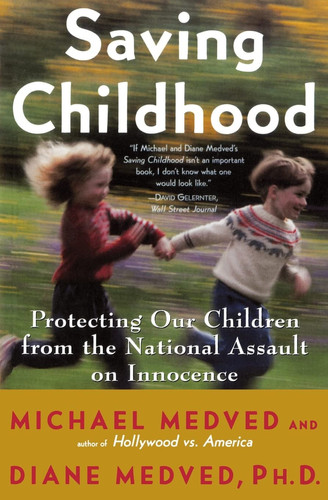
Saving childhood: how to protect your children from the national assault on innocence

Medved, Michael
Saving Childhood offers parents and grandparents practical strategies to cope with a society that seems perversely determined to frighten and corrupt its young. Cultural critic and popular radio host Michael Medved and his wife, psychologist Diane Medved, argue that in a mistaken effort to curb problems plaguing its youth, our culture has changed from protecting childhood as a precious time of growth to hammering even the smallest youngsters with a grim, harsh, and menacing view of the world. The Medveds systematically present unassailable scientific evidence, moving anecdotes, and personal experiences of raising their three young children to explain the attack from four primary directions--media, schools, peers, and even well-intentioned parents themselves. In a unique analysis the Medveds define innocence not as ignorance but as the result of three components--security, a sense of wonder and optimism. They empower parents and all who care about childhood with concrete, easily accomplished means to fend off the assault, as well as advice for handling hurdles such as the Internet, television, peer pressure, and the plague of pessimism. Saving Childhood enables us to restore and maintain for our children imagination, confidence, and hope for the future.
HarperCollinsPublishers 1998 324 pages