139 results for "Science"

The Fat Duck cookbook

Blumenthal, Heston
The cookbook hailed by the Los Angeles Times as a "showstopper" and by Jeffrey Steingarten of Vogue as "the most glorious spectacle of the season...like no other book I have seen in the past twenty years" is now available in a reduced-price edition. With a reduced trim size but an identical interior, this lavishly illustrated, stunningly designed, and gorgeously photographed masterpiece takes you inside the head of maverick restaurateur Heston Blumenthal. Separated into three sections (History; Recipes; Science), the book chronicles Blumenthal's improbable rise to fame and, for the first time, offers a mouth-watering and eye-popping selection of recipes from his award-winning restaurant. He also explains the science behind his culinary masterpieces, the technology and implements that make his alchemical dishes come to life. Designed by acclaimed artist Dave McKean-and filled with photographs by Dominic Davies-this artfully rendered celebration of one of the world's most innovative and renowned chefs is a foodie's dream.
Bloomsbury 2009-10-20 529 pages

The big Fat Duck cookbook

Blumenthal, Heston
Takes you inside the head of maverick restaurateur, Heston Blumenthal. Separated into three sections (History; Recipes; Science), Blumenthal chronicles his improbable background and unorthodox rise to fame and, for the first time ever, offers a mouth-watering and eyes-widening selection of recipes from his award-winning restaurant. He also explains the science behind his culinary masterpieces, the technology and implements that make his alchemic dishes come to life.
Bloomsbury 2008 529 pages

The House of Government: a saga of the Russian Revolution

Slezkine, Yuri
"On the 100th anniversary of the Russian Revolution, the epic story of an enormous apartment building where Communist true believers lived before their destruction. The House of Government is unlike any other book about the Russian Revolution and the Soviet experiment. Written in the tradition of Tolstoy's War and Peace, Grossman's Life and Fate, and Solzhenitsyn's The Gulag Archipelago, Yuri Slezkine's gripping narrative tells the true story of the residents of an enormous Moscow apartment building where top Communist officials and their families lived before they were destroyed in Stalin's purges. A vivid account of the personal and public lives of Bolshevik true believers, the book begins with their conversion to Communism and ends with their children's loss of faith and the fall of the Soviet Union. Completed in 1931, the House of Government, later known as the House on the Embankment, was located across the Moscow River from the Kremlin. The largest residential building in Europe, it combined 550 furnished apartments with public spaces that included everything from a movie theater and a library to a tennis court and a shooting range. Slezkine tells the chilling story of how the building's residents lived in their apartments and ruled the Soviet state until some eight hundred of them were evicted from the House and led, one by one, to prison or their deaths. Drawing on letters, diaries, and interviews, and featuring hundreds of rare photographs, The House of Government weaves together biography, literary criticism, architectural history, and fascinating new theories of revolutions, millennial prophecies, and reigns of terror. The result is an unforgettable human saga of a building that, like the Soviet Union itself, became a haunted house, forever disturbed by the ghosts of the disappeared."--Publisher description
Princeton University Press 2017 1104 pages

Alger Hiss and the battle for history

Jacoby, Susan
Books on Whittaker Chambers and Alger Hiss abound, as countless scholars havelabored to uncover the facts behind Chambers s shocking accusation before the House Committee on Un-American Activities in the summer of 1948 that Alger Hiss, a former rising star in the State Department, had been a Communist and engaged in espionage. In this highly original work, Susan Jacoby turns her attention to the Hiss case, including his trial and imprisonment for perjury, as a mirror of shifting American political views and passions. Unfettered by political ax-grinding, the author examines conflicting responses, from scholars and the media on both the left and the right, and the ways in which they have changed from 1948 to our present post Cold War era. With a brisk, engaging style, Jacoby positions the case in the politics of the post World War II eraand then explores the ways in which generations of liberals and conservatives have put Chambers and Hiss to their own ideological uses. An iconic event of the McCarthy era, the case of Alger Hiss fascinates political intellectuals not only because of its historical significance but because of its timeless relevance to equally fierce debates today about the difficult balance between national security and respect for civil liberties."
Yale University Press 2009 256 pages

The impossible presidency: the rise and fall of America's highest office

Suri, Jeremi
Why have recent presidents failed to create the change they promised? Should we blame the individual men, all flawed in their own ways? Or are there fundamental reasons why modern presidents fail to deliver, time and time again? In The Impossible Presidency, historian Jeremi Suri charts the long rise and quick fall of the world's most important job, from the 1790s to the present day. As he shows, early presidents greatly expanded the power of the office beyond the limited role envisioned by the founders. Suri argues that the immense accomplishments of Washington, Jackson, Lincoln and FDR left their successors with outsized and unrealistic expectations. John F. Kennedy, Lyndon B. Johnson and Ronald Reagan lost control of their agendas as they were buffeted by the onrush of events and threats their predecessors never had to face. Clinton and Obama were propelled to the presidency by their personal stories but hamstrung by prurient, partisan, and prejudiced criticisms of their leadership. Contemporary presidents must react to a truly globalized world and a rapid twenty-four-our news cycle. There is little room left for bold, strategic thinking. Suri traces our disenchantment with recent presidents to the current mismatch between presidential promises and the limitations of the office.
Basic Books 2017-09-12 343 pages

Capitol punishment: the hard truth about Washington corruption from America's most notorious lobbyist

Abramoff, Jack
He's a perfect bundle of contradictions: an Orthodox Jew and upstanding family man with a staunch moral streak, caught in multiple scandals of bribery and corruption with an undercurrent of murder. Sentenced to prison in the largest scandal in Washington, Abramoff pulls back the curtain on K Street and shows the dirty underbelly of America's government and what steps must be taken to reform it.
WND Books 2011 303 pages

The smallest lights in the Universe

Seager, Sara
Winner of the Los Angeles Times Book Prize for Science and Technology in 2020 'A stunningly original memoir ... her most human tale of love, loss and redemption is illuminated and given meaning by this backdrop. A beautiful and compelling read' Abraham Verghese, author of Cutting for Stone In The Smallest Lights in the Universe, MIT astrophysicist Sara Seager interweaves the story of her search for meaning and solace after losing her first husband to cancer, her unflagging search for an Earth-like exoplanet and her unexpected discovery of new love. Sara Seager has made it her life's work to peer into the spaces around stars - looking for exoplanets outside our solar system, hoping to find the one-in-a-billion world enough like ours to sustain life. But with the unexpected death of her husband, her life became an empty, lightless space. Suddenly, she was the single mother of two young boys, a widow at forty, clinging to three crumpled pages of instructions her husband had written for things like grocery shopping - things he had done while she did pioneering work as a planetary scientist at MIT. She became painfully conscious of her Asperger's, which before losing her husband had felt more like background noise. She felt, for the first time, alone in the universe. In this probing, invigoratingly honest memoir, Seager tells the story of how, as she stumblingly navigated the world of grief, she also kept looking for other worlds. She continues to develop ground-breaking projects, such as the Starshade, a sunflower-shaped instrument that, when launched into space, unfurls itself so as to block planet-obscuring starlight, and she takes solace in the alien beauty of exoplanets. At the same time, she discovers what feels every bit as wondrous: other people, reaching out across the space of her grief. Among them are the Widows of Concord, a group of women offering consolation and advice, and her beloved sons, Max and Alex. Most unexpected of all, there is another kind of one-in-a-billion match with an amateur astronomer. Equally attuned to the wonders of deep space and human connection, The Smallest Lights in the Universe is its own light in the dark.
4th Estate 2020-08-20 308 pages

Feynman's rainbow: a search for beauty in physics and in life

Mlodinow, Leonard
In the early 1980's, Leonard Mlodinow came to the California Institute of Technology to begin a postdoctoral fellowship. Mlodinow had written a groundbreaking Ph.D. thesis, but he was afraid he was simply not smart enough to be at Caltech. In danger of losing himself watching hours of Rockford Files reruns while waiting for one good idea, Mlodinow took his doubts and insecurities to Caltech's intimidating resident genius and iconoclast, Richard Feynman. So began a pivotal year in a young man's life and a year of awakening. In the funny, inspiring, and revelatory book, Leonard Mlodinow looks back at the time he shared with Feynman: the ideas they explored, the views of life and physics they exchanged, and what Mlodinow learned from a mentor who had not only helped shape the landscape of physics, but whose mind was drawn to all aspects of human experience. In a series of fascinating, sprawling exchanges, Feynman delved into the nature of science, creativity, love, mathematics, happiness, God, art, pleasures and ambition. And as the relationship between the older scientist and Mlodinow deepened - at one point the two crashed a wedding buffet together - their conversations took on a sense of urgency. For while Mlodinow was floundering, Feynman was battling cancer - and confronting his own mortality.
Warner Books 2003 171 pages

From the ground up: a journey to reimagine the promise of America

Schultz, Howard,Gordon, Joanne
"From the longtime CEO and chairman of Starbucks, a bold, dramatic work about the new responsibilities that leaders, businesses, and citizens share in American society today--as viewed through the intimate lens of one man's life and work. What do we owe one another? How do we channel our drive, ingenuity, even our pain, into something more meaningful than individual success? And what is our duty in the places where we live, work, and play? These questions are at the heart of the American journey. They are also ones that Howard Schultz has grappled with personally since growing up in the Brooklyn housing projects and while building Starbucks from eleven stores into one of the world's most iconic brands. In From the Ground Up, Schultz looks for answers in two interwoven narratives. One story shows how his conflicted boyhood--including experiences he has never before revealed--motivated Schultz to become the first in his family to graduate from college, then to build the kind of company his father, a working-class laborer, never had a chance to work for: a business that tries to balance profit and human dignity. A parallel story offers a behind-the-scenes look at Schultz's unconventional efforts to challenge old notions about the role of business in society. From health insurance and free college tuition for part-time baristas to controversial initiatives about race and refugees, Schultz and his team tackled societal issues with the same creativity and rigor they applied to changing how the world consumes coffee. Throughout the book, Schultz introduces a cross-section of Americans transforming common struggles into shared successes. In these pages, lost youth find first jobs, aspiring college students overcome the yoke of debt, post-9/11 warriors replace lost limbs with indomitable spirit, former coal miners and opioid addicts pave fresh paths, entrepreneurs jump-start dreams, and better angels emerge from all corners of the country. From the Ground Up is part candid memoir, part uplifting blueprint of mutual responsibility, and part proof that ordinary people can do extraordinary things. At its heart, it's an optimistic, inspiring account of what happens when we stand up, speak out, and come together for purposes bigger than ourselves. Here is a new vision of what can be when we try our best to lead lives through the lens of humanity."--Dust jacket.
Random House 2019 352 pages

The future of science is female: the brilliant minds shaping the 21st century

Stone, Zara
The Future of science is female, by award-winning journalist Zara Stone, shares the fascinating stories of how diverse and powerful women have (and continue to) shape science and humanity. Filled with real-life inspiration for today's amazing girls, these stories show how women can break gender norms and succeed in the "traditionally masculine" fields of coding, science, robotics, and beyond! Learn about the challenges and adventures everyday heroes face as they race to fix everything the world has messed up.--
Mango Publishing Group 2020 145 pages

The art and politics of science

Varmus, Harold
A Nobel Prize–winning cancer biologist, leader of major scientific institutions, and scientific adviser to President Obama reflects on his remarkable career. A PhD candidate in English literature at Harvard University, Harold Varmus discovered he was drawn instead to medicine and eventually found himself at the forefront of cancer research at the University of California, San Francisco. In this “timely memoir of a remarkable career” ( American Scientist ), Varmus considers a life’s work that thus far includes not only the groundbreaking research that won him a Nobel Prize but also six years as the director of the National Institutes of Health; his current position as the president of the Memorial Sloan-Kettering Cancer Center; and his important, continuing work as scientific adviser to President Obama. From this truly unique perspective, Varmus shares his experiences from the trenches of politicized battlegrounds ranging from budget fights to stem cell research, global health to science publishing.
W. W. Norton 2010-04-27 315 pages

In search of memory: the emergence of a new science of mind

Kandel, Eric R.
Nobelist Eric Kandel's account of how his personal quest to understand memory intersected with the emergence of a new science. In Search of Memory relates the astonishing story of how four different and distinct disciplinesbehaviorist psychology, cognitive psychology, neuroscience, and molecular biologyconverged into a powerful new science of mind. Through its profound insights into thought, perception, action, recollection, and mental illness, this new science is revolutionizing our understanding of learning and memory while simultaneously showing great promise for more effective healing. The narrative follows Eric R. Kandel through the last five decades, focusing on Vienna, where he became fascinated with memory. With intrepid scientific ardor, Kandel was captivated first by history and psychoanalysis, then by neurobiology, and finally by the biological processes of memory. His resulting, multifaceted perspective was the foundation for his path-breaking research that will continue to dominate modern thoughtnot only in science but in culture at large. 50 illustrations.
W. W. Norton & Company 2006 510 pages

Adventures of a computational explorer

Wolfram, Stephen
Through his pioneering work in science, technology and language design, Stephen Wolfram has developed his own signature way of thinking about an impressive range of subjects. From science consulting for a Hollywood movie, solving problems of AI ethics, hunting for the source of an unusual polyhedron, communicating with extraterrestrials, to finding the fundamental theory of physics and exploring the digits of pi, Adventures of a Computational Explorer captures the infectious energy and curiosity of one of the great pioneers of the computational world.
Stephen Wolfram, LLC 2019 421 pages

Ravenous: Otto Warburg, the Nazis, and the search for the cancer-diet connection

Apple, Sam
"The extraordinary story of the Nazi-era scientific genius who discovered how cancer cells eat-and what it means for how we should. The Nobel laureate Otto Warburg-a cousin of the famous finance Warburgs-was widely regarded in his day as one of the most important biochemists of the twentieth century, a man whose research was integral to humanity's understanding of cancer. He was also among the most despised figures in Nazi Germany. As a Jewish homosexual living openly with his male partner, Warburg represented all that the Third Reich abhorred. Yet Hitler and his top advisors dreaded cancer, and protected Warburg in the hope that he could cure it"--
Liveright Publishing Corporation, a division of W.W. Norton & Company 2021-05-25 399 pages

Frozen in time: Clarence Birdseye's outrageous idea about frozen food

Kurlansky, Mark
"This biography--perfect for middle-grade readers--tells the life story of Clarence Birdseye, the man who revolutionized the frozen food industry, and is adapted from Mark Kurlansky's adult work Birdseye: The Adventures of a Curious Man. Adventurer and inventor Clarence Birdseye had a fascination with food preservation that led him to develop and patent the Birdseye freezing process and start the company that still bears his name today. His limitless curiosity spurred his other inventions, including the electric sunlamp, an improved incandescent lightbulb, and a harpoon gun to tag finback whales. This true story of an early entrepreneur is as thrilling as the story of Steve Jobs or Mark Zuckerberg. Includes an 8-page black-and-white photo insert"--
Delacorte Press 2014 165 pages

True believer: Stalin's last American spy

Marton, Kati
“Relevant...fascinating...vividly reconstructed.” — The New York Times Book Review “Riveting reading...a mesmerizing look at Cold War espionage.” — USA TODAY This astonishing real-life spy thriller, filled with danger, misplaced loyalties, betrayal, treachery, and pure evil, with a plot twist worthy of John le Carré, is relevant today as a tale of fanaticism and the lengths it takes us to. True Believer reveals the life of Noel Field, an American who betrayed his country and crushed his family. Field, once a well-meaning and privileged American, spied for Stalin during the 1930s and '40s. Then, a pawn in Stalin’s sinister master strategy, Field was kidnapped and tortured by the KGB and forced to testify against his own Communist comrades. How does an Ivy League-educated, US State Department employee, deeply rooted in American culture and history, become a hardcore Stalinist? The 1930s, when Noel Field joined the secret underground of the International Communist Movement, were a time of national collapse: ten million Americans unemployed, rampant racism, retreat from the world just as fascism was gaining ground, and Washington—pre FDR—parched of fresh ideas. Communism promised the righting of social and political wrongs and many in Field’s generation were seduced by its siren song. Few, however, went as far as Noel Field in betraying their own country. With a reporter’s eye for detail, and a historian’s grasp of the cataclysmic events of the twentieth century, Kati Marton captures Field’s riveting quest for a life of meaning that went horribly wrong. True Believer is supported by unprecedented access to Field family correspondence, Soviet Secret Police records, and reporting on key players from Alger Hiss, CIA Director Allen Dulles, and World War II spy master, “Wild Bill” Donovan—to the most sinister of all: Josef Stalin. A story of another time, this is a tale relevant for all times.
Simon & Schuster 2016-09-06 289 pages

Stealing God's thunder: Benjamin Franklin's lightning rod and the invention of America

Dray, Philip
“Dray captures the genius and ingenuity of Franklin’s scientific thinking and then does something even more fascinating: He shows how science shaped his diplomacy, politics, and Enlightenment philosophy.” –Walter Isaacson, author of Benjamin Franklin: An American Life Today we think of Benjamin Franklin as a founder of American independence who also dabbled in science. But in Franklin’s day, the era of Enlightenment, long before he was an eminent statesman, he was famous for his revolutionary scientific work. Pulitzer Prize finalist Philip Dray uses the evolution of Franklin’s scientific curiosity and empirical thinking as a metaphor for America’s struggle to establish its fundamental values. He recounts how Franklin unlocked one of the greatest natural mysteries of his day, the seemingly unknowable powers of lightning and electricity. Rich in historical detail and based on numerous primary sources, Stealing God’s Thunder is a fascinating original look at one of our most beloved and complex founding fathers.
Random House 2005-12-27 279 pages

Jewish women in America: an historical encyclopedia

Paula Hyman,Deborah Dash Moore,Phyllis Holman Weisbard,American Jewish Historical Society
This encyclopedia provides the first standard reference work on the lives, history and activities of Jewish women in the United States. Covering a period which extends from the arrival of the first Jewish women in North America in 1654 to the present, this two-volume set presents the most comprehensive and detailed portrait of American Jewish women ever published, and brings together for the first time the wealth of recent scholarship on this subject. Includes: * Biographical entries on over 800 individual women. * 128 topical articles on organizations such as Hadassah, the National Council of Jewish Women, Mizrachi, and the Ladies' Garment Workers' Union. * Major essays on Jewish women's participation in the movement for women's suffrage, social reform, civil rights, and the recent women's movement. * The activities of Jewish women in politics, business, education, the arts, and religion. * A readable, inviting format with over 500 large photographs. * Bibliographies at the end of each entry which include overviews of major scholarship in the field, complete citations of more general works and citations of additional bibliographical and reference sources. * The comprehensive index includes citations to every substantive discussion in the entries as well as all proper names appearing in the text, such as organizations, book, song and film titles, schools, and individuals. The "Encyclopedia" provides information on American Jewish women in all fields of endeavor, and pays special attention to the work of women in the arts, academics, law, the labor movement, education, science, medicine, journalism and publishing, and on the lives of ordinary Jewish women during all time periods and in all regions of the United States.
Routledge 1997 1770 pages

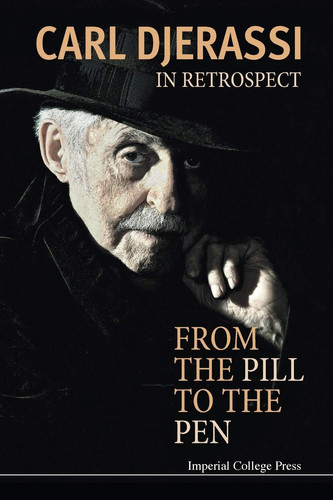
In retrospect: from the pill to the pen

Djerassi, Carl
These are the reflections of a nonagenarian polymath describing the shift from a fifty-year-long career as a world-famous chemist to a subsequent twenty-five-year immersion in "science-in-fiction" and "science-in-theater," a change virtually unique among contemporary scientists. Sharply self-critical yet full of humor, this autobiographical account covers themes such as the future of sex in an age of technological reproduction, the history of the Pill seen through the eyes of one of its inventors, innovative--even unique--pedagogic experiments, the insoluble homelessness of a refugee, suicide, and art collecting.--Adapted from publisher description
Imperial College Press 2015 388 pages