88 results for "Technology"

Understanding computers and cognition: a new foundation for design

Winograd, Terry
Understanding Computers and Cognition presents an important and controversial new approach to understanding what computers do and how their functioning is related to human language, thought, and action. While it is a book about computers, Understanding Computers and Cognition goes beyond the specific issues of what computers can or can't do. It is a broad-ranging discussion exploring the background of understanding in which the discourse about computers and technology takes place. Understanding Computers and Cognition is written for a wide audience, not just those professionals involved in computer design or artificial intelligence. It represents an important contribution to the ongoing discussion about what it means to be a machine, and what it means to be human. Book jacket.
Ablex 1986 207 pages

A glossary of netspeak and textspeak

Crystal, David
Have you been flamed recently? Or pinged? Or felt 404? This exciting glossary provides all the answers. It includes an A to Z of the jargon entering the English language with the rise of the Internet and cell phone technology, and it gives a dictionary-style treatment of those Internet terms that have begun to change their meaning in colloquial speech. Entries include illustrations showing contemporary usage, helping you to participate in the cool communication of the electronic age.
Edinburgh University Press 2004 197 pages

Content

Cory Doctorow
Readers will discover how America chose Happy Meal toys over copyright, why Facebook is taking a faceplant, how the Internet is basically just a giant Xerox machine, why Wikipedia is a poor cousin of The Hitchhikers Guide to the Galaxy, and how to enjoy free e-books. Notice: This Book is published by Historical Books Limited (www.publicdomain.org.uk) as a Public Domain Book, if you have any inquiries, requests or need any help you can just send an email to [email protected] This book is found as a public domain and free book based on various online catalogs, if you think there are any problems regard copyright issues please contact us immediately via [email protected]
CreateSpace Independent Publishing Platform 2016-04-18 180 pages

Tomorrowland: our journey from science fiction to science fact

Kotler, Steven
New York Times , Wired , Atlantic Monthly , Discover bestselling author Steven Kotler has written extensively about those pivotal moments when science fiction became science fact...and fundamentally reshaped the world. Now he gathers the best of his best, updated and expanded upon, to guide readers on a mind-bending tour of the far frontier, and how these advances are radically transforming our lives. From the ways science and technology are fundamentally altering our bodies and our world (the world's first bionic soldier, the future of evolution) to those explosive collisions between science and culture (life extension and bioweapons), we're crossing moral and ethical lines we've never faced before. As Kotler writes, "Life is tricky sport--and that's the emotional core of this story, the real reason we can't put Pandora back in the box. When you strip everything else away, technology is nothing more than the promise of an easier tomorrow. It's the promise of hope. And how do you stop hope?" Join Kotler in this fascinating exploration of our incredible next: a deep dive into those future technologies happening now--and what it means to be a part of this brave new world.
Amazon Publishing 2022-02 306 pages

Atom and void: essays on science and community

Oppenheimer, J. Robert
J. Robert Oppenheimer was one of the outstanding physicists of his generation. He was also an immensely gifted writer and speaker, who thought deeply about the way that scientific discoveries have changed the way people live and think. Displaying his subtlety of thought and expression as do few other documents, this book of his lectures discusses the moral and cultural implications of developments in modern physics. Originally published in 1989. The Princeton Legacy Library uses the latest print-on-demand technology to again make available previously out-of-print books from the distinguished backlist of Princeton University Press. These editions preserve the original texts of these important books while presenting them in durable paperback and hardcover editions. The goal of the Princeton Legacy Library is to vastly increase access to the rich scholarly heritage found in the thousands of books published by Princeton University Press since its founding in 1905.
Princeton University Press 1989 155 pages

Science and survival

Commoner, Barry
In Science and Survival, Barry Commoner announces that "the age of innocent faith in science and technology may be over." A massive electric power failure all over the Northeast, the admission of children to a St. Louis hospital 15 years after they had been exposed to radio-iodine from Nevada nuclear bomb tests, the disturbing news about DDT, and the potential menace of recombinant DNA - not to mention the threat of "nuclear winter" in the event of thermonuclear war, a prospect Commoner discussed years before most Americans even heard of it - led him to the conclusion that science, like the magic practiced by the legendary Sorcerer's Apprentice, was getting out of control. Therefore, scientists could no longer simply remain at their work; they had to go out and alert the nonscientists to the problems that their work was creating. "Science can reveal the depth of this crisis," the book concluded, "but only social action can resolve it."
Viking Press 1967-08-15 150 pages

Which side of history? how technology is reshaping democracy and our lives

James P. Steyer
"A collection of 20-25 essays from prominent voices that brings forward creative, bold opinions that will examine the current state and impact of technology on our society and will highlight solutions for constructive change. Sample topics may include: 1 the impact of technology on elections and global democratic institutions; 2 the evisceration of longstanding privacy norms and standards; 3 the impact of technology on kids and teenagers; 4 the rise of cyberbullying and hate speech and how to address these challenges; and, 5 the libertarian ethos that often prizes a "move fast and break things" mentality and its relationship to the Silicon Valley culture bubble"--
Chronicle Prism 2020 327 pages

Present shock: when everything happens now

Rushkoff, Douglas
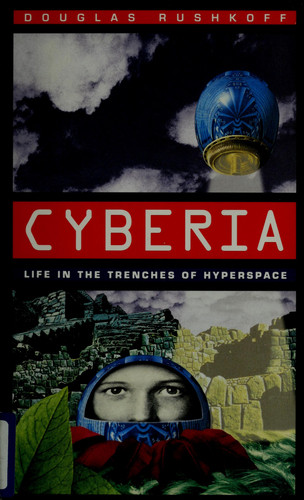
"An award-winning author explores how the world works in our age of "continuous now" Back in the 1970s, futurism was all the rage. But looking forward is becoming a thing of the past. According to Douglas Rushkoff, "presentism" is the new ethos of a society that's always on, in real time, updating live. Guided by neither history nor long term goals, we navigate a sea of media that blend the past and future into a mash-up of instantaneous experience. Rushkoff shows how this trend is both disorienting and exhilarating. Without linear narrative we get both the humiliations of reality TV and the associative brilliance of The Simpsons. With no time for long term investing, we invent dangerously compressed derivatives yet also revive sustainable local businesses. In politics, presentism drives both the Tea Party and the Occupy movement. In many ways, this was the goal of digital technology--outsourcing our memory was supposed to free us up to focus on the present. But we are in danger of squandering this cognitive surplus on trivia. Rushkoff shows how we can instead ground ourselves in the reality of the present tense. "--
Penguin Books 2014-02-25 296 pages

Bad Ideas? An Arresting History of Our Inventions

Robert Winston,Robert M. L. Winston
We are born with the instinct to create and invent. Indeed our ability to do so is what separates we humans from the rest of the animal world. The moment man first converted a stone to a useful tool set him on a relentless path toward greater control and power over his environment. But have our creative ideas always produced desirable results in line with their original good intention? How many ill-effects and dangers have they brought about along the way? And have they really served us well? Bad Ideas? traces the fascinating history of our attempts at self-improvement but also questions their value. The dubious consequences of the development of weaponry, for example, is self-evident from the primitive but lethal sling to the devastating nuclear bomb. But what of apparently more innocuous inventions such as farming, writing or medicine? All were initiated for the greater good but have nonetheless produced unforeseen fallout that continues to this day. What are their undesirable side-effects, how did they emerge over the years and where will they take us in the future? Written against a huge historical canvas, we join Robert Winston on a thrilling and inspiring journey from our earliest days to the present. We learn about the history of modern science, engineering, IT and much more, following the unexpected twists and turns of their progress. We meet the individuals who played a key role in their development, and share quirky anecdotes about their lives and brainwaves. Inspiring, unusual, and at times controversial, Bad Ideas? enables us by appreciating the past to look forward to the technological opportunities and ethical challenges of the future. In so doing it celebrates man's extraordinary capacity for achievement whilst warning us that his good intentions can sometimes end up as thoroughly bad ideas.
Bantam 2010 417 pages

Pressed for time: the acceleration of life in digital capitalism

Wajcman, Judy
The technologically tethered, iPhone-addicted figure is an image we can easily conjure. Most of us complain that there aren't enough hours in the day and too many e-mails in our thumb-accessible inboxes. This widespread perception that life is faster than it used to be is now ingrained in our culture, and smartphones and the Internet are continually being blamed. But isn't the sole purpose of the smartphone to give us such quick access to people and information that we'll be free to do other things? Isn't technology supposed to make our lives easier? In Pressed for Time, Judy Wajcman explains why we immediately interpret our experiences with digital technology as inexorably accelerating everyday life. She argues that we are not mere hostages to communication devices, and the sense of always being rushed is the result of the priorities and parameters we ourselves set rather than the machines that help us set them. Indeed, being busy and having action-packed lives has become valorized by our productivity driven culture. Wajcman offers a bracing historical perspective, exploring the commodification of clock time, and how the speed of the industrial age became identified with progress. She also delves into the ways time-use differs for diverse groups in modern societies, showing how changes in work patterns, family arrangements, and parenting all affect time stress. Bringing together empirical research on time use and theoretical debates about dramatic digital developments, this accessible and engaging book will leave readers better versed in how to use technology to navigate life's fast lane.
The University of Chicago Press 2016-07-11 215 pages

Work mate marry love: how machines shape our human destiny

Spar, Debora L.
A crucial guide to life before—and after—Tinder, IVF, and robots. What will happen to our notions of marriage and parenthood as reproductive technologies increasingly allow for newfangled ways of creating babies? What will happen to our understanding of gender as medical advances enable individuals to transition from one set of sexual characteristics to another, or to remain happily perched in between? What will happen to love and sex and romance as our relationships migrate from the real world to the Internet? Can people fall in love with robots? Will they? In short, what will happen to our most basic notions of humanity as we entangle our lives and emotions with the machines we have created? In Work Mate Marry Love , Harvard Business School professor and former Barnard College president Debora L. Spar offers an incisive and provocative account of how technology has transformed our intimate lives in the past, and how it will do so again in the future. Surveying the course of history, she shows how marriage as we understand it resulted from the rise of agriculture, and that the nuclear family emerged with the industrial revolution. In their day, the street light, the car, and later the pill all upended courtship and sex. Now, as we enter an era of artificial intelligence and robots, how will our deepest feelings and attachments evolve? In the past, the prevailing modes of production produced a world dominated by heterosexual, mostly-monogamous, two-parent families. In the future, however, these patterns are almost certain to be reshaped, creating entirely new norms for sex and romance, and for the construction of families and the raising of children. Steering clear of both techno-euphoria and alarmism, Spar offers a bold and inclusive vision of how our lives might be changed for the better.
Farrar, Straus and Giroux 2021-08-17 384 pages

Tech-Savvy Parenting A Guide to Raising Safe Children in a Digital World

Nikki Bush,Arthur Goldstuck
*Are you a parent looking to make sense of a daunting digital world, with new technical challenges appearing daily? * Feel you're not keeping up with the demands of technology? * Feel you're not keeping up with your children's use of social media? * Worried it's getting harder to keep your children safe in the digital world? Tech-Savvy Parenting brings together the experience, research, observations and advice of respected parenting expert Nikki Bush, and leading technology commentator Arthur Goldstuck. This insightful duo will help you get a handle on what's happening in the digital space to ensure your children are safe and savvy in this fast-changing world. They'll guide you through the terminology, dangers and opportunities of technology, while placing children's use of all things digital firmly in the context of the relationship between parents and their children. For families to remain connected, both online and offline, and for young people to develop into responsible digital citizens, parents must bridge the digital divide to their children by understanding the attraction of social media and technology, how communication is changing, and how technology is changing the world. This book is filled with practical advice that will help you to navigate the digital space, together with your children, with greater confidence.
Bookstorm 2015-01-13 256 pages

One Child at a Time The Global Fight to Rescue Children from Online Predators

Julian Sher
From a renowned investigative reporter, the true story behind a horrifying Internet abuse epidemic - and the heroes who are out to stop it. The Internet has helped make child abuse terrifyingly common - it is the new face of crime in the 21st century. There are tens, probably hundreds of thousands of children whose sexual abuse has been electronically recorded and distributed on the Internet. As Julian Sher reveals, the men perpetrating these crimes include lawyers, priests, doctors and politicians. They pick their victims from the streets of Bangkok to Boy Scout troops in England, while the police - from a crack image analyst with the Toronto police to an FBI agent who poses as a thirteen-year-old girl online - work desperately to nab the predators. One Child at a Time goes behind the headlines to show how law officers are fighting back against this tide of abuse, from daring rescues in homes to the seizures of millions of dollars in the offshore bank accounts of the porn merchants. In riveting detail, Julian Sher shows how clue by clue, and image by image, investigators are using cutting edge tools, turning the technology of the Internet against the perpetrators as they race to find and rescue the victims - children who otherwise have no voice. This important book explores the ramifications of a worldwide struggle, from the need for updated legal powers to the unexpected effects the Internet has had on our social fabric. It also includes a full list of resources for concerned parents. Though sometimes harrowing, One Child at a Time is alsoinspiring - and never less than absolutely relevant. In their efforts to rescue the child victims of one of today's most pervasive and insidious crimes, police must be creative, dogged and go well beyond the borders drawn on any map. . . Canadian cop Paul Gillespie changed the way that police around the world tackle Internet porn. He decided that if the system was broken, he was going to send an email to Bill Gates and ask for help. Gates not only answered, but Microsoft ended up kicking in millions of dollars, working with Gillespie's team to develop the Child Exploitation Tracking System, a searchable database to track and investigate Web predators and their victims. It soon spread across Canada, and then to the UK, Australia and the U.S. Older men pretend to be young and caring, luring lonely young girls in chat rooms. But when they show up to meet their victim, they discover the FBI is waiting to arrest them. Emily Vacher, one of the FBI's top Internet undercover operatives, specializes in trapping the predators at their own game of deception. The photos of the child's abuse were everywhere on the Net, but no one knew who or where she was. In a frantic 36-hour hunt, using CSI-type sleuthing to find clues in the pictures, Canadian, American and European police rescued a girl from North Carolina. Jim Gamble, one of the most senior police officers in the UK, has spearheaded the creation of a Virtual Global Taskforce to patrol the web 24/7. It was time for a sheriff to tame the wild, wild Web, Gamble decided. Now children have a redreport abuse button on chat room software and browsers they can click any time they feel threatened. It is time for the children's stories-too often hidden in the dark corners of the Web-to be told. Their torment has been etched in their memories-and the memories of the police officers dedicated to rescuing them. It is what scars them. But it is also what spurs them on. Because they know behind every picture or video lies a little, frightened child. Detective Sergeant Paul Gillespie of the Toronto Police's Exploited Child Unit can't shake the lingering echoes of some of the worst videos he has seen of shackled children: Sometimes, he says, you can hear the children cry. --from One Child at a Time
Random House Canada 2007 327 pages

The best that money can't buy: beyond politics, poverty, & war

Fresco, Jacque
Jacque Fresco envisions a global civilization in which science and technology are applied with human and environmental concern to secure, protect, and encourage a more humane world for all people. This book offers a possible way out of our recurring cycles of boom and recession, famine, poverty, a declining environment, and territorial conflicts where peace is merely the interval between wars. It outlines an attainable, humane social design of the near future where human rights are no longer paper proclamations but a way of life. The Best That Money Can't Buy is a challenge to all people to work toward a society in which all of the world's resources become the common heritage of all of the earth's people. It is accompanied by 70 color photos of Fresco's original designs, which illuminate the fulfilling lifestyle of a global, resource-based economy.
Global Cyber-Visions 2002 168 pages

Simulation and its discontents

Turkle, Sherry
How the simulation and visualization technologies so pervasive in science, engineering, and design have changed our way of seeing the world. Over the past twenty years, the technologies of simulation and visualization have changed our ways of looking at the world. In Simulation and Its Discontents , Sherry Turkle examines the now dominant medium of our working lives and finds that simulation has become its own sensibility. We hear it in Turkle's description of architecture students who no longer design with a pencil, of science and engineering students who admit that computer models seem more “real” than experiments in physical laboratories. Echoing architect Louis Kahn's famous question, “What does a brick want?”, Turkle asks, “What does simulation want?” Simulations want, even demand, immersion, and the benefits are clear. Architects create buildings unimaginable before virtual design; scientists determine the structure of molecules by manipulating them in virtual space; physicians practice anatomy on digitized humans. But immersed in simulation, we are vulnerable. There are losses as well as gains. Older scientists describe a younger generation as “drunk with code.” Young scientists, engineers, and designers, full citizens of the virtual, scramble to capture their mentors' tacit knowledge of buildings and bodies. From both sides of a generational divide, there is anxiety that in simulation, something important is slipping away. Turkle's examination of simulation over the past twenty years is followed by four in-depth investigations of contemporary simulation culture: space exploration, oceanography, architecture, and biology.
The MIT Press 2009-04-17 217 pages

Notes on resistance

Chomsky, Noam
"Noam Chomsky dissects the multiple crises facing humankind and the planet; and provides a road map for resistance. In this completely original set of interviews between the legendary duo of Noam Chomsky and David Barsamian, the two confront topics such as the pandemic, the wealth gap (made worse because of the pandemic), climate destruction, the increasing power of the corporate owned media, systematic racism, Big Tech, and more."--
Haymarket Books 2022 238 pages

Everything is miscellaneous: the power of the new digital disorder

Weinberger, David
From A to Z, Everything Is Miscellaneous will completely reshape the way you think - and what you know - about the world. Includes information on alphabetical order, Amaxon.com, animals, Aristotle, authority, Bettmann Archive, blogs (weblogs), books, broadcasting, British Broadcasting Corporation (BBC), business, card catalog, categories and categorization, clusters, companies, Colon Classification, conversation, Melvil Dewey, Dewey Decimal Classification system, Encyclopaedia Britannica, encyclopedia, essentialism, experts, faceted classification system, first order of order, Flickr.com, Google, Great Books of the Western World, ancient Greeks, health and medical information, identifiers, index, inventory tracking, knowledge, labels, leaf and leaves, libraries, Library of Congress, links, Carolus Linnaeus, lumping and splitting, maps and mapping, marketing, meaning, metadata, multiple listing services (MLS), names of people, neutrality or neutral point of view, New York Public Library, Online Computer Library Center (OCLC), order and organization, people, physical space, everything having place, Plato, race, S.R. Ranganathan, Eleanor Rosch, Joshua Schacter, science, second order of order, simplicity, social constructivism, social knowledge, social networks, sorting, species, standardization, tags, taxonomies, third order of roder, topical categorization, tree, Uniform Product Code (UPC), users, Jimmy Wales, web, Wikipedia, etc. Philosopher Weinberger shows how the digital revolution is radically changing the way we make sense of our lives. Human beings constantly collect, label, and organize data--but today, the shift from the physical to the digital is mixing, burning, and ripping our lives apart. In the past, everything had its one place--the physical world demanded it--but now everything has its places: multiple categories, multiple shelves. Everything is suddenly miscellaneous. Weinberger charts the new principles of digital order that are remaking business, education, politics, science, and culture. He examines how Rand McNally decides what information not to include in a physical map (and why Google Earth is winning that battle), how Staples stores emulate online shopping to increase sales, why your children's teachers will stop having them memorize facts, and how the shift to digital music stands as the model for the future. --
Holt 2008-04-29 277 pages