103 results for "Technology"

Chemistry Lessons

Meredith Goldstein
From advice columnist Meredith Goldstein, a dazzling, romantic, and emotionally resonant YA debut about a teen science whiz in Cambridge, Massachusetts, who tries to crack the chemical equation for lasting love and instead wreaks havoc on herself and the boys in her life. For seventeen-year-old Maya, the equation for happiness is simple: a dream internship at MIT + two new science nerd friends + a perfect boyfriend = one amazing summer. Then Whit dumps her out of the blue. Maya is miserable until she discovers that her scientist mother, before she died, was conducting research on manipulating pheromones to enhance human attraction. If Maya can finish her mother's work, maybe she can get Whit back. But when her experiment creates chaos in her love life, she realizes that maybe love and loss can't be understood using the scientific method. Can she learn to trust the unmeasurables of love and attraction instead?
HarperCollins Publishers 2021-03-02 272 pages

Which side of history? how technology is reshaping democracy and our lives

James P. Steyer
"A collection of 20-25 essays from prominent voices that brings forward creative, bold opinions that will examine the current state and impact of technology on our society and will highlight solutions for constructive change. Sample topics may include: 1 the impact of technology on elections and global democratic institutions; 2 the evisceration of longstanding privacy norms and standards; 3 the impact of technology on kids and teenagers; 4 the rise of cyberbullying and hate speech and how to address these challenges; and, 5 the libertarian ethos that often prizes a "move fast and break things" mentality and its relationship to the Silicon Valley culture bubble"--
Chronicle Prism 2020 327 pages

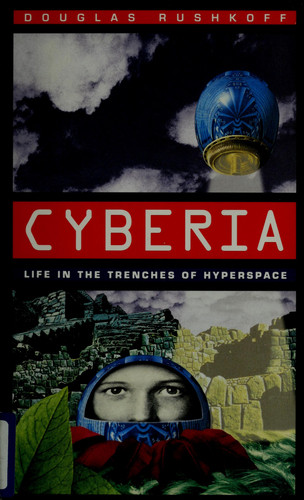
Present shock: when everything happens now

Rushkoff, Douglas
"An award-winning author explores how the world works in our age of "continuous now" Back in the 1970s, futurism was all the rage. But looking forward is becoming a thing of the past. According to Douglas Rushkoff, "presentism" is the new ethos of a society that's always on, in real time, updating live. Guided by neither history nor long term goals, we navigate a sea of media that blend the past and future into a mash-up of instantaneous experience. Rushkoff shows how this trend is both disorienting and exhilarating. Without linear narrative we get both the humiliations of reality TV and the associative brilliance of The Simpsons. With no time for long term investing, we invent dangerously compressed derivatives yet also revive sustainable local businesses. In politics, presentism drives both the Tea Party and the Occupy movement. In many ways, this was the goal of digital technology--outsourcing our memory was supposed to free us up to focus on the present. But we are in danger of squandering this cognitive surplus on trivia. Rushkoff shows how we can instead ground ourselves in the reality of the present tense. "--
Penguin Books 2014-02-25 296 pages

Brooklyn Bridge: Fact and symbol

Trachtenberg, Alan
Fourteen of Walker Evans's evocative photographs of Brooklyn Bridge, most of which have never been published, appear in this edition of Alan Trachenberg's Brooklyn Bridge: Fact and Symbol. In the new afterword Trachenberg explores the history of Hart Crane's The Bridge, especially the poem's integral relationship with the powerful photography of Evans."[Brooklyn Bridge] is familiar in so many movies, in so many stage sets and, as Mr. Trachtenberg shows in this brilliant . . . book, it is at least as much a symbol as a reality. . . . Mr. Trachtenberg is always exciting and illuminating."—Times Literary Supplement "The book is a skillful and insightful synthesis of materials about Brooklyn Bridge from such diverse fields as history, engineering, literature and art. Essentially it asks the question of why Brooklyn Bridge achieved such great impact on the nineteenth century American imagination and why it has continued to have a significant impact on twentieth century art and literature. In addition to its exploration of the bridge's symbolic significance, which includes perceptive analyses of such particular works as Hart Crane's great poem cycle and the paintings of artists like Joseph Stella, the book also includes a solidly researched account of the conception, planning and construction of the bridge. Trachtenberg's account of the intellectual and cultural sources of the bridge is particularly fascinating in its demonstration of the convergence of many different philosophical and ideological currents of the time around this great engineering enterprise, illustrating as effectively as any discussion I know the complex interplay of ideas and material culture."—John G. Cawelti, University of Chicago"Alan Trachtenberg's Brooklyn Bridge is a fascinating story, the philosophic genesis of the idea in Europe, John Roebling's heroic effort to translate it into masonry and steel, and the meanings that Americans attached to the physical object as an emblem of their aspirations."—Leo Marx, Amherst College, author of The Machine in the Garden
Oxford University Press 1965 192 pages

Technology, war, and fascism

Marcuse, Herbert
The largely unpublished work collected in this volume makes clear the continuing relevance of Marcuse's thought to contemporary issues. The texts published here, dealing with concerns during the period 1942-1951, exhibit penetrating critiques of technology and fascism. Marcuse analyzes the ways that modern technology produces novel forms of society and culture with new modes of social control. The material collected in "Technology, War and Fascism" provides exemplary attempts to link theory with practice, to develop ideas that can be used to grasp and transform existing social reality.
Routledge 1998-01 278 pages

The inner history of devices

Turkle,Sherry
"For more than two decades, in such landmark studies as The Second Self and Life on the Screen, Sherry Turkle has challenged our collective imagination with her insights about how technology enters our private worlds. In The Inner History of Devices, she describes her process, an approach that reveals how what we make is woven into our ways of seeing ourselves. She brings together three traditions of listening--that of the memoirist, the clinician, and the ethnographer. Each informs the others to compose an inner history of devices. We read about objects ranging from cell phones and video poker to prosthetic eyes, from Web sites and television to dialysis machines.
MIT Press 2008 208 pages

The best that money can't buy: beyond politics, poverty, & war

Fresco, Jacque
Jacque Fresco envisions a global civilization in which science and technology are applied with human and environmental concern to secure, protect, and encourage a more humane world for all people. This book offers a possible way out of our recurring cycles of boom and recession, famine, poverty, a declining environment, and territorial conflicts where peace is merely the interval between wars. It outlines an attainable, humane social design of the near future where human rights are no longer paper proclamations but a way of life. The Best That Money Can't Buy is a challenge to all people to work toward a society in which all of the world's resources become the common heritage of all of the earth's people. It is accompanied by 70 color photos of Fresco's original designs, which illuminate the fulfilling lifestyle of a global, resource-based economy.
Global Cyber-Visions 2002 168 pages

Simulation and its discontents

Turkle, Sherry
How the simulation and visualization technologies so pervasive in science, engineering, and design have changed our way of seeing the world. Over the past twenty years, the technologies of simulation and visualization have changed our ways of looking at the world. In Simulation and Its Discontents , Sherry Turkle examines the now dominant medium of our working lives and finds that simulation has become its own sensibility. We hear it in Turkle's description of architecture students who no longer design with a pencil, of science and engineering students who admit that computer models seem more “real” than experiments in physical laboratories. Echoing architect Louis Kahn's famous question, “What does a brick want?”, Turkle asks, “What does simulation want?” Simulations want, even demand, immersion, and the benefits are clear. Architects create buildings unimaginable before virtual design; scientists determine the structure of molecules by manipulating them in virtual space; physicians practice anatomy on digitized humans. But immersed in simulation, we are vulnerable. There are losses as well as gains. Older scientists describe a younger generation as “drunk with code.” Young scientists, engineers, and designers, full citizens of the virtual, scramble to capture their mentors' tacit knowledge of buildings and bodies. From both sides of a generational divide, there is anxiety that in simulation, something important is slipping away. Turkle's examination of simulation over the past twenty years is followed by four in-depth investigations of contemporary simulation culture: space exploration, oceanography, architecture, and biology.
The MIT Press 2009-04-17 217 pages

The Ballad of the Pirate Queens

Jane Yolen
Two sailors were keeping watch alone when the governor's men stormed aboard the Vanity. Those two--the legend-inspiring pirate queens Anne Bonney and Mary Reade--fought bravely but called in vain for their shipmates, who sported and drank below deck. Jane Yolen's stirring ballad immortalizes these two daring women and offers readers an intriguing look at life on the high seas.
Houghton Mifflin Harcourt 1995 32 pages

The real world of technology

Franklin, Ursula
"In this expanded edition of her bestselling 1989 CBC Massey Lectures, renowned Canadian scientist and humanitarian Ursula M. Franklin examines the impact of technology upon our lives and addresses the extraordinary changes in the bit sphere since The Real World of Technology was first published. In four new chapters, Franklin tackles contentious issues, such as the dilution of privacy and intellectual property rights, the impact of the current technology on government and governance, the shift from consumer capitalism to investment capitalism, and the influence of the Internet upon the craft of writing." --Cover.
Anansi 1999 209 pages

Favorites of fortune: technology, growth, and economic development since the Industrial Revolution

Patrice L. R. Higonnet,David S. Landes,Henry Rosovsky
A galaxy of distinguished international economists and historians pit economic history against the shaky assumptions of the classical economic theory of natural growth. Their explanations consider the factors of technology, entrepreneurialism, and paths to economic growth, but each reflects an ideological wave of explanation that has marked the last two hundred years.
Harvard University Press 1991-01 558 pages