412 results for "Technology History"

How to Watch TV News

Neil Postman,Steve Powers
A scathing and prescient look at television newsÂ-now updated for the new tech-savvy generation Television news : genuine information or entertainment fodder? Fifteen years ago, Neil Postman, a pioneer in media education and author of the bestselling Amusing Ourselves to Death, and Steve Powers, an award-winning broadcast journalist, concluded that anyone who relies exclusively on their television for accurate world news is making a big mistake. A cash cow laden with money from advertisers, so-called news shows glut viewers with celebrity coverage at the cost of things they really should know. Today, this message is still appallingly true but the problems have multipliedÂ- along with the power of the Internet and the abundance of cable channels. A must-read for anyone concerned with the way media is manipulating our worldview, this newly revised edition addresses the evolving technology and devolving quality of AmericaÂ's television news programming.
Penguin 2008 178 pages

That Used to Be Us

Thomas L. Friedman
America has a huge problem. It faces four major challenges, on which its future depends, and it is failing to meet them. In "That Used to Be Us," Thomas L. Friedman, one of our most influential columnists, and Michael Mandelbaum, one of our leading foreign policy thinkers, analyze those challenges--globalization, the revolution in information technology, the nation's chronic deficits, and its pattern of energy consumption--and spell out what we need to do "now" to rediscover America and rise to this moment. They explain how the end of the cold war blinded the nation to the need to address these issues. They show how our history, when properly understood, provides the key to addressing them, and explain how the paralysis of our political system and the erosion of key American values have made it impossible for us to carry out the policies the country needs. They offer a way out of the trap into which the country has fallen, which includes the rediscovery of some of our most valuable traditions and the creation of a new, third-party movement. "That Used to Be Us" is both a searching exploration of the American condition today and a rousing manifesto for American renewal. "As we were writing this book," Friedman and Mandelbaum explain, "we found that when we shared the title with people, they would often nod ruefully and ask: 'But does it have a happy ending?' Our answer is that we can write a happy ending, but it is up to the country--to all of us--to determine whether it is fiction or nonfiction. We need to study harder, save more, spend less, invest wisely, and get back to the formula that made us successful as a country in every previous historical turn. What we need is not novel or foreign, but values, priorities, and practices embedded in our history and culture, applied time and again to propel us forward as a country. That is all part of our past. That used to be us and can be again--if we will it."
Farrar, Straus & Giroux 2011-09-05 380 pages

Stealing fire: how Silicon Valley, the Navy SEALs, and maverick scientists are revolutionizing the way we live and work

Kotler, Steven,Wheal, Jamie
NATIONAL BESTSELLER CNBC and Strategy + Business Best Business Book of 2017 "Steven and Jamie have done a wonderful job of balancing the promises, perils, and how-to prescriptions of engineering peak states such as 'flow.'" —Tim Ferriss, #1 New York Times best-selling author of The 4-Hour Workweek It’s the biggest revolution you’ve never heard of, and it’s hiding in plain sight. Over the past decade, Silicon Valley executives like Eric Schmidt and Elon Musk, Special Operators like the Navy SEALs and the Green Berets, and maverick scientists like Sasha Shulgin and Amy Cuddy have turned everything we thought we knew about high performance upside down. Instead of grit, better habits, or 10,000 hours, these trailblazers have found a surprising short cut. They're harnessing rare and controversial states of consciousness to solve critical challenges and outperform the competition. New York Times bestselling author Steven Kotler and high performance expert Jamie Wheal spent four years investigating the leading edges of this revolution—from the home of SEAL Team Six to the Googleplex, the Burning Man festival, Richard Branson’s Necker Island, Red Bull’s training center, Nike’s innovation team, and the United Nations’ Headquarters. And what they learned was stunning: In their own ways, with differing languages, techniques, and applications, every one of these groups has been quietly seeking the same thing: the boost in information and inspiration that altered states provide. Today, this revolution is spreading to the mainstream, fueling a trillion dollar underground economy and forcing us to rethink how we can all lead richer, more productive, more satisfying lives. Driven by four accelerating forces—psychology, neurobiology, technology and pharmacology—we are gaining access to and insights about some of the most contested and misunderstood terrain in history. Stealing Fire is a provocative examination of what’s actually possible; a guidebook for anyone who wants to radically upgrade their life.
Dey St. 2018-05-08 293 pages

Danielle: chronicles of a superheroine

Kurzweil, Ray
USA Today Top 150 Best Seller Publishers Weekly Best Seller Ray Kurzweil, legendary inventor and author of New York Times bestsellers The Singularity is Near and How to Create a Mind , has created inventions and ideas that have changed human civilization. PBS called him "One of the revolutionaries who made America," and Inc. magazine name him "Edison's rightful heir." Now Kurzweil has created a novel and an unforgettable character-Danielle-to help convey some of his most important ideas. Danielle: Chronicles of a Superheroine , tells the story of a precocious young girl who uses her intelligence and accelerating technology to solve humanity's grandest challenges. Now if only we can find more courageous visionaries like Danielle. Written as an alternative history, Danielle's journey as a driven young girl brings her face to face with many important figures from recent history and our modern world. Told through the eyes of Danielle's equally remarkable sister Claire, a girl adopted from Haiti after surviving the earthquake, this story shows all readers a hopeful vision of humanity's future-and how to achieve it. The novel features 24 graphic novel-style illustrations, one for each year of Danielle's life, by New Yorker cartoonist and Ray's daughter, Amy Kurzweil (author of Flying Couch: A Graphic Memoir , a New York Times Editor's Pick and Best of 2016). Accompanying the novel are two nonfiction companion works by the author, which is a literary first. Included in this volume is How You Can Be A Danielle , bound in the same volume as the novel, is a call to action, providing pragmatic, thought-provoking and clear guidance on how readers can be inspired to emulate Danielle and help bring about a better world. A separate volume, A Chronicle of Ideas: A Guide for Superheroines (and Superheroes) provides Kurzweil's-and Danielle's-unique spin on 282 concepts presented in the novel. A Chronicle of Ideas is sold separately. See DanielleWorld.com for more information. A Chronicle of Ideas and How You Can Be a Danielle are available to read for free on DanielleWorld.com.
Greenleaf Book Group Press 2019-03 472 pages

Shadows of Forgotten Ancestors

Carl Sagan,Ann Druyan
NATIONAL BESTSELLER • “Exciting and provocative . . . A tour de force of a book that begs to be seen as well as to be read.”— The Washington Post Book World World renowned scientist Carl Sagan and acclaimed author Ann Druyan have written a Roots for the human species, a lucid and riveting account of how humans got to be the way we are. Shadows of Forgotten Ancestors is a thrilling saga that starts with the origin of the Earth. It shows with humor and drama that many of our key traits—self-awareness, technology, family ties, submission to authority, hatred for those a little different from ourselves, reason, and ethics—are rooted in the deep past, and illuminated by our kinship with other animals. Sagan and Druyan conduct a breathtaking journey through space and time, zeroing in on critical turning points in evolutionary history, and tracing the origins of sex, altruism, violence, rape, and dominance. Their book culminates in a stunningly original examination of the connection between primate and human traits. Astonishing in its scope, brilliant in its insights, and an absolutely compelling read, Shadows of Forgotten Ancestors is a triumph of popular science.
Random House Publishing Group 1993-09-07 528 pages

The March of Folly From Troy to Vietnam

Barbara Wertheim Tuchman
Pulitzer Prize–winning historian Barbara W. Tuchman, author of the World War I masterpiece The Guns of August, grapples with her boldest subject: the pervasive presence, through the ages, of failure, mismanagement, and delusion in government. Drawing on a comprehensive array of examples, from Montezuma’s senseless surrender of his empire in 1520 to Japan’s attack on Pearl Harbor, Barbara W. Tuchman defines folly as the pursuit by government of policies contrary to their own interests, despite the availability of feasible alternatives. In brilliant detail, Tuchman illuminates four decisive turning points in history that illustrate the very heights of folly: the Trojan War, the breakup of the Holy See provoked by the Renaissance popes, the loss of the American colonies by Britain’s George III, and the United States’ own persistent mistakes in Vietnam. Throughout The March of Folly, Tuchman’s incomparable talent for animating the people, places, and events of history is on spectacular display.
Cardinal 1990 559 pages

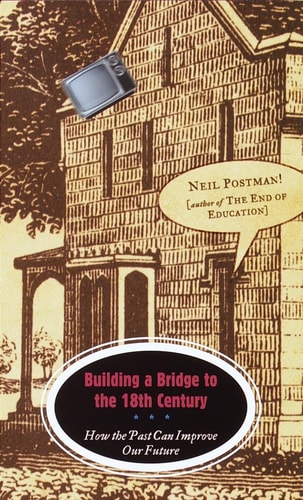
Building a bridge to the 18th century: how the past can improve our future

Postman, Neil
In Building a Bridge to the 18th Century , acclaimed cultural critic Neil Postman offers a cure for the hysteria and hazy values of the postmodern world. Postman shows us how to reclaim that balance between mind and machine in a dazzling celebration of the accomplishments of the Enlightenment-from Jefferson's representative democracy to Locke's deductive reasoning to Rousseau's demand that the care and edification of children be considered an investment in our collective future. Here, too, is the bold assertion that Truth is invulnerable to fashion or the passing of time. Provocative and brilliantly argued, Building a Bridge to the 18th Century illuminates a navigable path through the Information Age-a byway whose signposts, it turns out, were there all along.
Knopf 2000-10-10 213 pages

Counterinsurgency Warfare Theory and Practice

David Galula
This volume in the Praeger Security International (PSI) series "Classics of the Counterinsurgency Era" defines the laws of insurgency and outlines the strategy and tactics to combat such threats. Drawn from the observations of a French officer, David Galula, who witnessed guerrilla warfare on three continents, the book remains relevant today as American policymakers, military analysts, and members of the public look to the counterinsurgency era of the 1960s for lessons to apply to the current situation in Iraq and Afghanistan. With a new foreword by John A. Nagl, author of Counterinsurgency Lessons from Malaya and Vietnam (Praeger, 2002).
Greenwood Publishing Group 1964-05 143 pages

Benjamin Franklin An American Life

Walter Isaacson
A New York Times Bestseller A Book of the Month Club Main Selection A History Book Club Alternate Selection In this colorful and intimate narrative, Isaacson provides the full sweep of Franklin's amazing life, from his days as a runaway printer to his triumphs as a statesman, scientist, and Founding Father. He chronicles Franklin's tumultuous relationship with his illegitimate son and grandson, his practical marriage, and his flirtations with the ladies of Paris. He also shows how Franklin helped to create the American character and why he has a particular resonance in the twenty-first century.
Thorndike Press 2004 907 pages

Deng Xiaoping and the transformation of China

Vogel, Ezra F.
Winner of the Lionel Gelber Prize National Book Critics Circle Award Finalist An Economist Best Book of the Year | A Financial Times Book of the Year | A Wall Street Journal Book of the Year | A Washington Post Book of the Year | A Bloomberg News Book of the Year | An Esquire China Book of the Year | A Gates Notes Top Read of the Year Perhaps no one in the twentieth century had a greater long-term impact on world history than Deng Xiaoping. And no scholar of contemporary East Asian history and culture is better qualified than Ezra Vogel to disentangle the many contradictions embodied in the life and legacy of China’s boldest strategist. Once described by Mao Zedong as a “needle inside a ball of cotton,” Deng was the pragmatic yet disciplined driving force behind China’s radical transformation in the late twentieth century. He confronted the damage wrought by the Cultural Revolution, dissolved Mao’s cult of personality, and loosened the economic and social policies that had stunted China’s growth. Obsessed with modernization and technology, Deng opened trade relations with the West, which lifted hundreds of millions of his countrymen out of poverty. Yet at the same time he answered to his authoritarian roots, most notably when he ordered the crackdown in June 1989 at Tiananmen Square. Deng’s youthful commitment to the Communist Party was cemented in Paris in the early 1920s, among a group of Chinese student-workers that also included Zhou Enlai. Deng returned home in 1927 to join the Chinese Revolution on the ground floor. In the fifty years of his tumultuous rise to power, he endured accusations, purges, and even exile before becoming China’s preeminent leader from 1978 to 1989 and again in 1992. When he reached the top, Deng saw an opportunity to creatively destroy much of the economic system he had helped build for five decades as a loyal follower of Mao—and he did not hesitate.
The Belknap Press of Harvard University Press 2013-10-14 876 pages

Palo Alto: a history of California, capitalism, and the world

Harris, Malcolm
"Palo Alto's weather is temperate, its people are educated and enterprising, its corporations are spiritually and materially ambitious and demonstrably world-changing. Palo Alto is also a haunted toxic waste dump built on stolen Indian burial grounds, and an integral part of the capitalist world system. In Palo Alto, the first comprehensive, global history of Silicon Valley, Malcolm Harris examines how and why Northern California evolved in the particular, consequential way it did, tracing the ideologies, technologies, and policies that have been engineered there over the course of 150 years of Anglo settler colonialism, from IQ tests to the "tragedy of the commons," racial genetics, and "broken windows" theory. The Internet and computers, too. It's a story about how a small American suburb became a powerful engine for economic growth and war, and how it came to lead the world into a surprisingly disastrous 21st century. Palo Alto is an urgent and visionary history of the way we live now, one that ends with a clear-eyed, radical proposition for how we might begin to change course"--Provided by publisher.
Little, Brown and Company 2024-03-19 712 pages

The Upright Thinkers

Mlodinow, Leonard
How did a near-extinct species, eking out a meager existence with stone axes, become the dominant power on earth, able to harness a knowledge of nature ranging from tiny atoms to the vast structures of the universe? Leonard Mlodinow takes us on an enthralling tour of the history of human progress, from our time on the African savannah through the invention of written language, all the way to modern quantum physics. Along the way, he explores the colorful personalities of the great philosophers, scientists, and thinkers, and traces the cultural conditions—and the elements of chance—that influenced scientific discovery. Deeply informed, accessible, and infused with the author’s trademark humor and insight, The Upright Thinkers is a stunning tribute to humanity’s intellectual curiosity and an important book for any reader with an interest in the scientific issues of our day.
Random House US 2016-04-19 352 pages

Apollo 8 The Thrilling Story of the First Mission to the Moon

Jeffrey Kluger
The untold story of the historic voyage to the moon that closed out one of our darkest years with a nearly unimaginable triumph In August 1968, NASA made a bold decision: in just sixteen weeks, the United States would launch humankind's first flight to the moon. Only the year before, three astronauts had burned to death in their spacecraft, and since then the Apollo program had suffered one setback after another. Meanwhile, the Russians were winning the space race, the Cold War was getting hotter by the month, and President Kennedy's promise to put a man on the moon by the end of the decade seemed sure to be broken. But when Frank Borman, Jim Lovell and Bill Anders were summoned to a secret meeting and told of the dangerous mission, they instantly signed on. Written with all the color and verve of the best narrative non-fiction, Apollo 8 takes us from Mission Control to the astronaut's homes, from the test labs to the launch pad. The race to prepare an untested rocket for an unprecedented journey paves the way for the hair-raising trip to the moon. Then, on Christmas Eve, a nation that has suffered a horrendous year of assassinations and war is heartened by an inspiring message from the trio of astronauts in lunar orbit. And when the mission is over--after the first view of the far side of the moon, the first earth-rise, and the first re-entry through the earth's atmosphere following a flight to deep space--the impossible dream of walking on the moon suddenly seems within reach. The full story of Apollo 8 has never been told, and only Jeffrey Kluger--Jim Lovell's co-author on their bestselling book about Apollo 13--can do it justice. Here is the tale of a mission that was both a calculated risk and a wild crapshoot, a stirring account of how three American heroes forever changed our view of the home planet.
Thorndike Press, a part of Gale, a Cengage Company 2017 511 pages

A history of the twentieth century

Gilbert, Martin
Martin Gilbert brings readers up to date in this rich historical narrative of the contradictory events of the last fifty years. Volume II ended in 1951, as the world recovered from World War II, and the nuclear threat increased. In this volume, Gilbert recalls the Cold War and communism--including McCarthyism, the Soviet and Warsaw Pact, the Berlin Wall--and the wars, from Korea to Vietnam to Bosnia. He moves from Poland's Solidarity Movement to Ireland's Bloody Sunday, from Pol Pot and his killing fields to the dissolution of the Soviet Union. Mao began a cultural revolution, Martin Luther King, Jr. and John F. Kennedy were assassinated, and Beijing's Tiananamen Square shocked the world. Technology and medicine advanced in leaps and bounds as the society struggled to catch up. Art, literature, and music, as well as epidemics and natural disasters, all have their place here. Many of the events are described through the words of those who were present. As in the previous two volumes, Gi
W. Morrow 1997 1088 pages

Age of Spiritual Machines

Ray Kurzweil
How We Will Live, Work, and Think in the New Age of Intelligent Machines; 1999...Computers able to perform a trillion calculations per second...Most routine business transactions take place between a human and virtual personality...Translating telephones are commonly used for most language pairs...Bioengineered treatments for cancer and heart disease greatly reduce the mortality from these diseases...Human musicians jam with cybernetic musicians. 2019...Computers equal the memory capacity and computational ability of the human brain...Interaction with computers is through gestures and two-way spoken communication...Most learning conducted through software-based teachers instead of paper books and documents...Automated driving systems installed in most roads...People have relationships with automated personalities. 2029...Computers have the computing capacity of 1 000 human brains...Majority of communication does not involve a human...There is no human employment in production, agriculture or transportation...Computers have read all available human- and machine-generated literature and are now learning on their own...Machines claim to be conscious. 2049...The common use of nanoproduced food means that the availability of food is no longer affected by limited resources and bad crop weather. 2072...Picoengineering (developing technology at the scale of picometers or trillionths of a meter) becomes practical. 2099...There is no longer any clear distinction between humans and computers...Most conscious entities do not have a permanent physical presence...The goal of education, and of intelligent beings, is discovering new knowledge to learn...Life expectancy is no longer a viable term in relation to intelligent beings.
New York: Viking 1999

THE EMPEROR'S NEW MIND: Concerning Computers, Minds, and the Laws of Physics

Penrose, Roger
For decades, proponents of artificial intelligence have argued that computers will soon be doing everything that a human mind can do. Admittedly, computers now play chess at the grandmaster level, but do they understand the game as we do? Can a computer eventually do everything a human mind can do? In this absorbing and frequently contentious book, Roger Penrose--eminent physicist and winner, with Stephen Hawking, of the prestigious Wolf prize--puts forward his view that there are some facets of human thinking that can never be emulated by a machine. Penrose examines what physics and mathematics can tell us about how the mind works, what they can't, and what we need to know to understand the physical processes of consciousness. He is among a growing number of physicists who think Einstein wasn't being stubborn when he said his "little finger" told him that quantum mechanics is incomplete, and he concludes that laws even deeper than quantum mechanics are essential for the operation of a mind. To support this contention, Penrose takes the reader on a dazzling tour that covers such topics as complex numbers, Turing machines, complexity theory, quantum mechanics, formal systems, Godel undecidability, phase spaces, Hilbert spaces, black holes, white holes, Hawking radiation, entropy, quasicrystals, the structure of the brain, and scores of other subjects. The Emperor's New Mind will appeal to anyone with a serious interest in modern physics and its relation to philosophical issues, as well as to physicists, mathematicians, philosophers and those on either side of the AI debate.
Oxford University Press 1990 466 pages

First freedom: a ride through America's enduring history with the gun

Harsanyi, David
From “one of America’s smartest political writers” (Glenn Beck) comes a fascinating and accessible history of the United States’ unique and enduring relationship with guns, for fans of Chris Kyle’s American Gun . For America, the gun is a story of innovation, power, violence, character, and freedom. From the founding of the nation to the pioneering of the West, from the freeing of the slaves to the urbanization of the twentieth century, our country has had a complex and lasting relationship with firearms. Now, in First Freedom , nationally syndicated columnist and veteran writer David Harsanyi explores the ways in which firearms have helped preserve our religious, economic, and cultural institutions for over two centuries. From Samuel Colt’s early entrepreneurism to the successful firearms technology that helped make the United States a superpower, the gun is inextricably tied to our exceptional rise. In the vein of popular histories like Salt and Seabiscuit , Harsanyi takes you on a captivating and thrilling ride of Second Amendment history that demonstrates why guns are not only an integral part of America’s past, but also an essential part of its future.
Threshold Editions 2018-10-02 310 pages

How to destroy surveillance capitalism

Doctorow, Cory
OneZero, Medium's official technology publication, is thrilled to announce a print-on-demand edition of How to Destroy Surveillance Capitalism by Cory Doctorow, with an exclusive new chapter. How to Destroy Surveillance Capitalism was first published online in August, where it was an instant hit with readers, scholars, and critics alike. For years now, we've been hearing about the ills of surveillance capitalism - the business of extracting, collecting, and selling vast reams of user data that has exploded with the rise of tech giants like Google, Facebook, and Amazon. But what if everything we've been hearing is wrong? What if surveillance capitalism is not some rogue capitalism or a wrong turn taken by some misguided corporations? What if the system is working exactly as intended - and the only hope of restoring an open web is to take the fight directly to the system itself? In Doctorow's timely and crucial new nonfiction work, the internationally bestselling author of Walkaway, Down and Out in the Magic Kingdom, and Little Brother, argues that if we're to have any hope of destroying surveillance capitalism, we're going to have to destroy the monopolies that currently comprise the commercial web as we know it. Only by breaking apart the tech giants that totally control our online experiences can we hope to return to a more open and free web - one where predatory data-harvesting is not a founding principle. Doctorow shows how, despite popular misconception, Facebook and Google do not possess any "mind-control rays" capable of brainwashing users into, say, voting for a presidential candidate or joining an extremist group--they have simply used their monopoly power to profit mightily off of people interested in doing those things and made it easy for them to find each other. Doctorow takes us on a whirlwind tour of the last 30 years of digital rights battles and the history of American monopoly - and where the two intersect. Through a deeply compelling and highly readable narrative, he makes the case for breaking up Google, Facebook, Amazon, and Apple as a means of ending surveillance capitalism.
Stonesong Digital 2020 138 pages

Beyond the Melting Pot The Negroes, Puerto Ricans, Jews, Italians, and Irish of New York City (Classic Reprint)

Nathan Glazer
Excerpt from Beyond the Melting Pot: The Negroes, Puerto Ricans, Jews, Italians, and Irish of New York City History, or perhaps historians, keep passing New York by. During the Civil War New York [state] pro vided the greatest number of soldiers, the greatest quantity of supplies, and the largest amount of money. In addition, New York's citizens paid the most taxes, bought the greatest number of war - bonds, and gave the most to relief organiza tions. 1 Yet it is recalled as a war between Yankees and Southerners. The Union preserved, the American mind roams westward with the cowboys, returning, if at all, to the Main Streets of the Midwest. The only New York image that has permanently impressed itself on the national mind is that of Wall Street - a street on which mobod lives. Paris may be France, London may be England, but New York, we continue to reassure ourselves, is not America. About the Publisher Forgotten Books publishes hundreds of thousands of rare and classic books. Find more at www.forgottenbooks.com This book is a reproduction of an important historical work. Forgotten Books uses state-of-the-art technology to digitally reconstruct the work, preserving the original format whilst repairing imperfections present in the aged copy. In rare cases, an imperfection in the original, such as a blemish or missing page, may be replicated in our edition. We do, however, repair the vast majority of imperfections successfully; any imperfections that remain are intentionally left to preserve the state of such historical works.
1kg Limited 2017-09-17 372 pages