833 results for "Environment"

Scared to Death How Chemophobia Threatens Public Health

Jon Entine
If news stories and the Internet are to be believed, the dangers from chemicals are increasing, cancer stalks us at every turn and our children are vulnerable. Synthetic chemicals are essential for modern life, but our views of them are conflicted. Pharmaceuticals keep us healthy. Plastics are found in everything from toys to cars to medical supplies. Pesticides and herbicides boost food production and quality. It's impossible to conceive of life in the 21st century without the materials and fuels that synthetic chemicals have made possible. But from soap to sunscreens, drugs to DDT, we are faced with an endless stream of confusing messages about the safety of chemicals we come in contact with every day. How does the public adjudge hazard, safety and risk? Presented by the American Council on Science and Health, in Scared to Death: How Chemophobia Threatens Public Health, journalist and scholar Jon Entine details how scientists assess the risks and benefits of chemicals. He explains how it's an irrational fear of chemicals that poses the real risk to public health.
Am Cncl on Science, Health 2011 122 pages

The harrows of spring: a World made by hand novel

Kunstler, James Howard
In Union Grove, early spring is a challenging season, known as the "six weeks want," a time when fresh food is scarce and the winter stores are dwindling. The town is struggling in particular this year as the Hudson River trade route to Albany has been halted by the local plantation tycoon Stephen Bullock, who has deemed it too resource-intensive and is now striving for self-sufficiency. Meanwhile, after returning from his travels around what is left of the United States, Daniel Earle is intent on resurrecting a newspaper for the community, and finds an interesting story to cover when representatives of a group of anti-establishment, hyper-liberals known as the Berkshire People's Republic arrive in the town.
Atlantic Monthly Press 2016 317 pages

The economics of growth

Aghion, Philippe
"The Economics of Growth" first presents the main growth paradigms: the neoclassical model, the AK model, Romer's product variety model, and the Schumpeterian model. The text then builds on the main paradigms to shed light on the dynamic process of growth and development, discussing such topics as club convergence, directed technical change, the transition from Malthusian stagnation to sustained growth, general purpose technologies, and the recent debate over institutions versus human capital as the primary factor in cross-country income differences. Finally, the book focuses on growth policies - analyzing the effects of liberalizing market competition and entry, education policy, trade liberalization, environmental and resource constraints, and stabilization policy - and the methodology of growth policy design. All chapters include literature reviews and problem sets. An appendix covers basic concepts of econometrics.
MIT Press 2009 495 pages

One with Nineveh: politics, consumption, and the human future

Ehrlich, Paul R.
Named a Notable Book for 2005 by the American Library Association, One with Nineveh is a fresh synthesis of the major issues of our time, now brought up to date with an afterword for the paperback edition. Through lucid explanations, telling anecdotes, and incisive analysis, the book spotlights the three elephants in our global living room-rising consumption, still-growing world population, and unchecked political and economic inequity-that together are increasingly shaping today's politics and humankind's future. One with Nineveh brilliantly puts today's political and environmental debates in a larger context and offers some bold proposals for improving our future prospect.
Island Press 2004 447 pages

Human shields: a history of people in the line of fire

Gordon, Neve,Perugini, Nicola
"From Syrian civilians locked in iron cages to veterans joining peaceful indigenous water protectors at the Standing Rock Sioux Reservation, from Sri Lanka to Iraq and from Yemen to the United States, human beings have been used as shields for protection, coercion, or deterrence. Over the past decade, human shields have also appeared with increasing frequency in noncombat contexts such as antinuclear struggles, civil and environmental protests, and even computer games. The phenomenon, however, is by no means a new one. In Human Shields, Neve Gordon and Nicola Perugini describe how human shields have been used in key historical and contemporary moments and across geographical sites. The practice of human shielding corresponds with the history of shifting understandings of what is valued as "human": in the American Civil War and the Franco-German War, only the elite were used as shields, while in later conflicts, hundreds of thousands of women and children and people of color were placed in the crossfire as deterrents. Human Shields demonstrates how this increasing weaponization of human beings has made the position of civilians trapped in theaters of violence more precarious and their lives more expendable"--
University of California Press 2020-08-25 296 pages

Diabolical How Pope Francis Has Betrayed Clerical Abuse Victims Like Me -- and why He Has to Go

Milo Yiannopoulos
Who is the real Pope Francis? And can the Church survive him? Milo Yiannopoulos traces the origins of the Church's descent into sin and shame, pointing the finger at left-wing reformers, trendy progressive bishops, gay clergy, and ultimately, Francis himself. The Catholic Church hasn't had a crisis like this since the Reformation. It won't survive unless it learns how to talk to men again, sets aside transitory political nostrums like environmentalism and identity politics, and gets back to worshiping Almighty God.--Back cover.
Bombardier Books 2018 155 pages

NATO: what you need to know

Benjamin, Medea,Swanson, David
What is the North Atlantic Treaty Organization (NATO)? What role is played by its members and partners? Does the largest military alliance ever to exist serve the cause of peace or the causes of weapons sales and war mongering? Published to coincide with the 75th anniversary of the alliance, this sharp, concise account examines NATO's origins, structure, and its goals at a time of mounting global tension. NATO has remade itself repeatedly, as its past purposes have disappeared. In the last 35 years it has been part of wars in Bosnia, Kosovo, Afghanistan, Iraq, and Libya. It has played a major role in Ukraine, and supported warmaking by Israel. NATO is now expanding rapidly, both in geography and in scope, adding partners from Colombia to Mongolia to Australia, and claiming a role in policing, immigration, economics, public budgeting, scientific research, and environmental protection. With pointed investigations of how NATO's decisions are made, the widely misunderstood question of the way it is funded, its relationship to international law, and the available alternatives to it, NATO: What You Need to Know is an indispensable primer on an organization that not only confronts expanding military conflict but, the authors contend, plays an active part in its escalation.
OR Books 2024 181 pages

Designing economic mechanisms

Hurwicz, Leonid
A mechanism is a mathematical structure that models institutions through which economic activity is guided and coordinated. There are many such institutions; markets are the most familiar ones. Lawmakers, administrators and officers of private companies create institutions in orders to achieve desired goals. They seek to do so in ways that economize on the resources needed to operate the institutions, and that provide incentives that induce the required behaviors. This book presents systematic procedures for designing mechanisms that achieve specified performance, and economize on the resources required to operate the mechanism, i.e., informationally efficient mechanisms. Our systematic design procedures are algorithms for designing informationally efficient mechanisms. Most of the book deals with these procedures of design. When there are finitely many environments to be dealt with, and there is a Nash-implementing mechanism, our algorithms can be used to make that mechanism into an informationally efficient one. Informationally efficient dominant strategy implementation is also studied.
Cambridge University Press 2008-03-03 344 pages

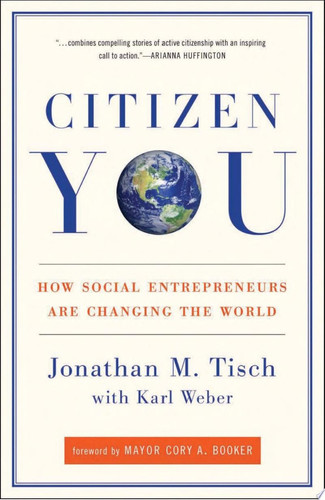
Citizen You How Social Entrepreneurs Are Changing the World

Jonathan Tisch,Karl Weber
Just when the world needs it most, a new style of social engagement is emerging: Active Citizenship. A key member of one of New York’s most civic-minded families—one that has supported many of America’s notable institutions and deserving programs—Jonathan Tisch has devoted a lifetime to “active citizenship.” It’s an idea that uses the power of practical creativity and grassroots participation to solve seemingly intractable problems. In Citizen You , Tisch challenges readers to join this movement and points the way toward making our world a better place, one person and one neighborhood at a time. Tisch has filled Citizen You with accounts of people who you’ll meet, such inspirational individuals as: Scott Harrison, who has used the networking and marketing skills he developed as a night club promoter to help over a million people in the developing world get access for the first time to clean, safe drinking water. Steffi Coplan, whose Broadway2Broadway project brought out the hidden musical talents of kids at an inner city school. Eric Schwarz, who decided to do something about America’s under-performing schools, and parlayed a single classroom mentoring project into the nationwide Citizens Schools movement. Chris Swan, who is training a new generation of “citizen engineers” to make sure that the projects they build aren’t just structurally sound but also environmentally and socially sustainable. Dave Nelson, who traded his role as an executive at IBM for a job at a struggling nonprofit that teaches kids about the power of entrepreneurship—and discovered a host of new challenges and rewards in the process. Through these and many other remarkable stories, you’ll learn how today’s active citizens are transforming thinking about social change. Rather than short-term fixes and hand-me-down charity, they’re striving to build sustainable, systemic solutions to our most challenging problems, building and empowering communities rather than fostering dependency. And they’re using a host of new tools, from online networking and private-public partnerships to corporate engagement and social entrepreneurship, to redefine how change can happen. Citizen You is a potent antidote to pessimism. At a time of unprecedented challenges on the national and world stage, when active citizenship is not a choice but a necessity, Citizen You dares us to reshape the social, political, and intellectual structures that have long confined us, and offers fresh thinking that redefines the very concept of activism. For more information and ideas about how to be an active citizen go to www.citizenyou.org
Crown 2011-05-03 288 pages

Mālama honua: Hōkūle'a -- a voyage of hope

Allen, Jennifer
From the launch in Hawai'i in May 2014, around the world 60,000 miles, to 23 different countries, this beautiful hardcover book chronicles Hokule'a's epic mission to raise awareness of and nurture worldwide sustainability. Interwoven with descriptions of Hokule'a's experiences in port are the voices of the master navigators and crew members, who guide the ship along the ocean's trackless path using only stars, birds, wind, and seas -- non-instrumental wayfinding techniques-- and the local pioneers -- scientists, teachers, and children touched by Hokule'a' -- who work tirelessly to weather the many environmental challenges in our modern lives. This is a story about our need to draw together into one global community. By respecting one another and nature's delicate and intricate systems, this book captures the many ways indigenous cultures are committed to living in ecological balance.
Patagonia 2017 351 pages

The psychology of interpersonal relations

Heider, Fritz
2015 Reprint of 1958 Edition. Full facsimile of the original edition. Not reproduced with Optical Recognition Software. "The Psychology of Interpersonal Relations" pioneered the modern field of social cognition. A giant of social psychology, Heider had few students, but his book on social perception had many readers, and its impact continues into the 21st Century, having been cited over 13,000 times. In "The Psychology of Interpersonal Relations," Heider argued that social perception follows many of the same rules of physical object perception, and that the organization found in object perception is also found in social perception. Because biases in object perception sometimes lead to errors (e.g., optical illusions), one might expect to find that biases in social perception likewise lead to errors (e.g., underestimating the role social factors and overestimating the effect of personality and attitudes on behavior). Heider also argued that perceptual organization follows the rule of psychological balance. Although tedious to spell out in completeness, the idea is that positive and negative sentiments need to be represented in ways that minimize ambivalence and maximize a simple, straightforward affective representation of the person. He writes "To conceive of a person as having positive and negative traits requires a more sophisticated view; it requires a differentiation of the representation of the person into subparts that are of unlike value (1958, p. 182)." But the most influential idea in "The Psychology of Interpersonal Relations" is the notion of how people see the causes of behavior, and the explanations they make for it-what Heider called "attributions". Contents: Introduction -- Perceiving the other person -- The other person as perceiver -- The naive analysis of action -- Desire and pleasure -- Environmental effects -- Sentiment -- Ought and value -- Request and command -- Benefit and harm -- Reaction to the lot of the other person -- Conclusion -- Appendix: A notation for representing interpersonal relations.
Martino Publ. 2015-03-05 322 pages

Social mindscapes: an invitation to cognitive sociology

Zerubavel, Eviatar
Why do we eat sardines, but never goldfish; ducks, but never parrots? Why does adding cheese make a hamburger a "cheeseburger" whereas adding ketchup does not make it a "ketchupburger"? By the same token, how do we determine which things said at a meeting should be included in the minutes and which ought to be considered "off the record" and officially disregarded? In this wide-ranging and provocative book, Eviatar Zerubavel argues that cognitive science cannot answer these questions, since it addresses cognition on only two levels: the individual and the universal. To fill the gap between the Romantic vision of the solitary thinker whose thoughts are the product of unique experience, and the cognitive-psychological view, which revolves around the search for the universal foundations of human cognition, Zerubavel charts an expansive social realm of mind--a domain that focuses on the conventional, normative aspects of the way we think. With witty anecdote and revealing analogy, Zerubavel illuminates the social foundation of mental actions such as perceiving, attending, classifying, remembering, assigning meaning, and reckoning the time. What takes place inside our heads, he reminds us, is deeply affected by our social environments, which are typically groups that are larger than the individual yet considerably smaller than the human race. Thus, we develop a nonuniversal software for thinking as Americans or Chinese, lawyers or teachers, Catholics or Jews, Baby Boomers or Gen-Xers. Zerubavel explores the fascinating ways in which thought communities carve up and classify reality, assign meanings, and perceive things, "defamiliarizing" in the process many taken-for-granted assumptions.
Harvard University Press 1999 164 pages

Crime, Its Causes and Remedies

Cesare Lombroso
Crime, Its Causes and Remedies is a work of criminology by author and Professor of Criminal Anthropology, Cesare Lombroso. Lombroso was a professor at the Italian University of Turin, and thus all of his works were written in Italian. This book, translated by Henry P. Horton, was not released in English until after Lombroso's death. It was selected by the American Institute of Criminal Law and Criminology for translation and deemed vitally important in the understanding of crime and criminals. Part one examines the factors that contribute to crime, paying more attention to the individual than to environmental factors. Part two looks at ways in which crime can be reduced and avoided, highlighting both effective and ineffective measures that have been used. Part three applies the lessons of the first two parts to propose a detailed system for dealing with crime and criminals, from the penalties that criminals should face to the appropriate institutions they should be held in. If nothing else, Crime, Its Causes and Remedies is a case study on how far a field of science can progress in 100 years. Much of the content of this book is hopelessly out of date and many of the theories forwarded in this book would be highly controversial if presented today, including equating epileptics and criminals, and the heavy reliance on racial profiling. This book is valuable mostly for the historical insights it provides into criminology and moral attitudes rather than as a source of textbook knowledge about the subject. About the Publisher Forgotten Books publishes hundreds of thousands of rare and classic books. Find more at www.forgottenbooks.com This book is a reproduction of an important historical work. Forgotten Books uses state-of-the-art technology to digitally reconstruct the work, preserving the original format whilst repairing imperfections present in the aged copy. In rare cases, an imperfection in the original, such as a blemish or missing page, may be replicated in our edition. We do, however, repair the vast majority of imperfections successfully; any imperfections that remain are intentionally left to preserve the state of such historical works.
Fb&c Limited 2015-06-02 524 pages

The pill, pygmy chimps, and Degas' horse: the autobiography of Carl Djerassi

Djerassi, Carl
Father of the birth control pill, developer of antihistamines, founder of biomedical companies, teacher of world-class chemists, best-selling novelist.... As The Scientist notes, "Few can match Carl Djerassi's juggling act for success and longevity". Here is Djerassi's remarkable autobiography. Blending vivid descriptions of the lucrative world of drug development with controversial chapters on the politics of contraception and poignant disclosures about his personal life, this book tells the story of one of the most productive and socially conscious chemists working today. The Pill, Pygmy Chimps, and Degas' Horse tells how Djerassi, while still in his twenties and leading a small team in an obscure laboratory in Mexico City, used a locally grown yam first to synthesize cortisone and then, within twelve months, to create the first steroid effective as a birth control pill. Dubbed for this latter work "the father of the pill", a title he often shares with Gregory Pincus and John Rock, who performed the biological and clinical studies to confirm the pill's efficacy in humans, Djerassi has spent a lifetime thinking and rethinking, discussing and debating, the social, economic, and biological consequences of the changed attitudes toward contraception engendered by the pill. In two riveting chapters entitled "The Pill at Twenty" and "The Pill at Forty: What Now?" Djerassi recounts the fascinating history of the pill's journey from its first days in the laboratory to widespread public use--from being hailed as an agent of the sexual revolution to condemnation as an agent of the new promiscuity, to being accused of being an expression of the scientific community's sexism (Why was there no malebirth control pill?). And then, in a powerful consideration of where the politics of contraception have taken us, he discusses why so few innovations in contraception are being investigated today, and why even fewer are making their way to the public. The Pill, Pygmy Chimps, and Degas' Horse chronicles Djerassi's many successful careers in science, business, the academy, and the arts (he is a published poet and novelist, as well as the founder of an artists' colony). His growing appreciation for the soft side of science--its human and humane aspects--have long been reflected in the courses he teaches at Stanford, in the plot of his novel, Cantor's Dilemma, and in his decision to found one of the first environmentally aware pesticide companies. In this intellectually challenging book, the reader is let into the fertile mind and psyche of one of the few Renaissance men of twentieth-century science.
Basic Books 1992-04-26 319 pages

Introduction to internet of things in management science and operations research: implemented studies

Fausto Pedro García Márquez,Benjamin Lev
This book aims to provide relevant theoretical frameworks and the latest empirical research findings in Internet of Things (IoT) in Management Science and Operations Research. It starts with basic concept and present cases, applications, theory, and potential future. The contributed chapters to the book cover wide array of topics as space permits. Examples are from smart industry; city; transportation; home and smart devices. They present future applications, trends, and potential future of this new discipline. Specifically, this book provides an interface between the main disciplines of engineering/technology and the organizational, administrative, and planning capabilities of managing IoT. This book deals with the implementation of latest IoT research findings in practice at the global economy level, at networks and organizations, at teams and work groups and, finally, IoT at the level of players in the networked environments. This book is intended for professionals in the field of engineering, information science, mathematics, economics, and researchers who wish to develop new skills in IoT, or who employ the IoT discipline as part of their work. It will improve their understanding of the strategic role of IoT at various levels of the information and knowledge organization. The book is complemented by a second volume of the same editors with practical cases
Springer 2021-09-29 306 pages

Living with the dragon: how the American public views the rise of China

Page, Benjamin I.
It is widely believed that most Americans not only distrust but also despise China. Considering the country's violent political history, unprecedented economic rise, and growing military capabilities, China has become America's strongest market competitor and arguably the most challenging global threat to the United States.Nevertheless, a full consideration of American opinion proves the opposite to be true. Carefully analyzing all available polls and surveys, Benjamin I. Page and Tao Xie find most Americans favor peaceful engagement with China. The public view has been surprisingly coherent and consistent, changing only in response to major events and new information.While a majority of Americans are not happy that China's economy is projected to become as large as that of the United States, they are prepared to live with it. "Unfair" Chinese trade practices and their impact on American jobs and wages are a concern, along with the quality and safety of Chinese-made goods. However, Americans favor free trade with China, provided it is tempered with environmental and workplace protections. They also believe that the United States should "balance" Chinese power through alliances with neighboring countries, such as Japan. Yet they oppose military action to defend Taiwan. Page and Xie examine these opinions in relation to facts about China and in light of current U.S. debates on diplomacy and policy
Columbia University Press 2010 212 pages

Return of the primitive: the anti-industrial revolution

Rand, Ayn
In the tumultuous late 60s and early 70s, a social movement known as the "New Left" emerged as a major cultural influence, especially on the youth of America. It was a movement that embraced "flower-power" and psychedelic "consciousness-expansion," that lionized Ho Chi Minh and Fidel Castro and launched the Black Panthers and the Theater of the Absurd. In Return Of The Primitive (originally published in 1971 as The New Left), Ayn Rand, bestselling novelist and originator of the theory of Objectivism, identified the intellectual roots of this movement. She urged people to repudiate its mindless nihilism and to uphold, instead, a philosophy of reason, individualism, capitalism, and technological progress. Editor Peter Schwartz, in this new, expanded version of The New Left, has reorganized Rand's essays and added some of his own in order to underscore the continuing relevance of her analysis of that period. He examines such current ideologies as feminism, environmentalism and multiculturalism and argues that the same primitive, tribalist, "anti-industrial" mentality which animated the New Left a generation ago is shaping society today. --
Meridian 1999-01-01 290 pages