671 results for "Memoir"

For solo violin: a Jewish childhood in fascist Italy : a memoir

Zargani, Aldo
" For Solo Violin is a gracefully written, elegiac memoir of childhood."— The Los Angeles Times "An eloquent tribute to [and] a moving account of those who, despite the cruelty of so many around them, found ways to rejoice and trust in the kindness of a few. One is instantly reminded of Life Is Beautiful ."—André Aciman, author of Out of Egypt In an extraordinary literary debut, Aldo Zargani reconstructs the lost world of his Jewish childhood during the perilous years 1938–45 when he and his family fled from Fascists and Nazis in northern Italy. His haunting memoir acquires a cinematic intensity as he crosscuts from the blood-red stone spires of Basel, where his father failed to find refuge for his family in 1939, to fiery scenes of the Allied bombing of Turin in 1942, to the freezing winter of 1943–44, which Zargani and his brother spent hidden in a Catholic boarding school deep in the countryside. For Solo Violin is filled with colorful portraits of Italian aristocrats and peasants, priests and soldiers, teachers and students, informers and partisans. At its heart is Zargani's vivid depiction of his father, a concert violinist forced to give up his career when the Fascists came to power. In this time of persecution, the Zargani family survived through their own resourcefulness and through the efforts of the many Italians who came to their aid, from the young doctor who helped them escape from Turin to the shepherd who supplied them with milk during the last year of the war, when they lived among the partisans in a remote Piedmont valley. Looking back over a distance of fifty years, Zargani rediscovers the enchantment of childhood shining in "fable-like constellations" even amidst the inferno of war. Lullabies and school games, fairy tales and family jokes are interwoven with the events of terror and oppression. Lyrical, humorous, tender, and wise, For Solo Violin is a testament to resilience and hope during the darkest period in human history. "A broad panorama of Italian-Jewish history in [the last] century. Elegant in its style and, however tragic, also rich with understatement, irony, and wit, For Solo Violin counts among the great, enduring works of art."— Focus Magazine , Germany "A tragic, deeply engaging, delicious book—yes delicious, too. (Reading it makes you smile.) It's a miracle…It makes one think of the wit of Kafka!"— L'Espresso , Italy "Zargani depicts a wealth of sad, despairing, but often also incredibly funny episodes…But vibrating along with the humor is always the sense of threat, and behind it opens the abyss of terror."— Neue Zürcher Zeitung , Switzerland
Paul Dry Books 2002 326 pages

Making sense of my life in science: a memoir

Keller, Evelyn Fox
"Evelyn Fox Keller trained as a theoretical physicist at a time when women didn't "do physics." Unable to find a supportive advisor, she moved into the new field of molecular biology just getting off the ground. After receiving her doctorate, she returned to physics but then took another swerve, joining a small interdisciplinary effort to develop mathematical models of biological systems. This work led to her appointment to a special position as Professor of Mathematics and Humanities at Northeastern University. When second-wave feminism arrived in the 1960s, it changed the lives of everyone in its path. It certainly changed Keller's, leading her beyond the borders of science altogether. Eventually she began to think of herself as a dual citizen of the proverbial two cultures―science and humanities. The trajectory was hardly straightforward, nor was it conducive to building a conventional career, or even getting a job. Now in hindsight, after an illustrious career and having published fourteen books, Keller reflects on her life, influences, successes and struggles along her trailblazing path as a scientist and feminist." -- From publisher's website
Modern Memoirs, Inc 2023-03-29 206 pages

My family: the memoir

Baddiel, David
On the surface, David Baddiel's childhood was fairly standard: a lower-middle-class Jewish family living in an ordinary house in Dollis Hill, north-west London. But David came to realise that his mother was in fact not ordinary at all. Having escaped extermination by fleeing Nazi Germany as a child, she was desperate to make her life count, which took the form of a passionate, decades-long affair with a golfing memorabilia salesman. Meanwhile, as Baddiel investigates his family's past, his father's memories are fading; dementia is making him moodier and more disinhibited, with an even greater penchant for obscenity. As with his mother's affair, there is both comedy and poignancy to be found: laughter is a constant presence, capable of transforming the darkest of experiences into something redemptive.
4th Estate 2024-07-04 352 pages

The encore: a memoir in three acts

Tillemann-Dick, Charity
"Charity Tillemann-Dick was a vivacious young American soprano studying at the celebrated Franz Liszt Academy of Music in Budapest when she received devastating news: her lungs were failing, her heart was three and a half sizes too big, and she would die within five years. Inexplicably, despite her fatal pulmonary condition, she could still sing. Medical experts advised Charity to abandon her musical dreams, but if her time was running out, she wanted to spend it doing what she loved. In just three years, she endured two double lung transplants. Teetering between life and death, she slowly learned to breathe, walk, talk, eat, and sing again. With new lungs and fierce determination, she eventually fell in love, rebuilt her career, and reclaimed her life. Over a decade after her diagnosis, she has a chart-topping album, performs around the globe, and is a leading voice for organ donation. Weaving Charity's extraordinary tale of triumph with those of opera's greatest heroines, The Encore illuminates the indomitable human spirit. It's the story of confronting devastating challenges with love: the intimate love of a mother for her daughter, a man for a woman, a doctor for her craft, and a singer for her music. Ultimately, grace from God and strangers enabled the work of love to save one young woman's breath and allowed her to reclaim her life"--Inside dust jacket.
Atria Books 2017 304 pages

My nine lives: sixty years in Israeli and biblical archaeology

Dever, William G.
This autobiography of William G. Dever is unabashedly his story that offers not only candid reflections on his life, but also on the remarkable generation of giants in archaeology in Israel and the evolving history of the fields of biblical and Israeli archaeology. Chapters cover the ups and downs in both his life and career with brutally honesty. His memoir concludes with a postscript on the likely future of biblical archaeology, and an annotated bibliography provides a guide for serious readers who wish to explore some of the scholarly literature to flesh out Dever's narrative--
SBL Press 2020-11-24 233 pages

Chopping onions on my heart: on losing and preserving culture

Ellis, Samantha
"Samantha's mother tongue is dying out. An urgent need to find out more becomes an expansive investigation into how to keep hold of her culture -- and when to let it go. The daughter of Iraqi-Jewish refugees, Samantha grew up surrounded by the noisy, vivid, hot sounds of Judeo-Iraqi Arabic. A language that's now on the verge of extinction. The realisation that she won't be able to tell her son he's 'living in the days of the aubergines' or 'chopping onions on my heart' opens the floodgates. The questions keep coming. How can she pass on the stories of displacement without passing on the trauma? Will her son ever love mango pickle? In her search for answers Samantha encounters demon bowls, the perils of kohl and the unexpected joys of fusion food. Her journey transports us from the clamour of Noah's Ark to the calm of the British Museum, from the Oxford School of Rare Jewish Languages to the banks of the River Tigris. As Samantha considers what we lose and keep, she also asks what we might need to let go of to preserve our culture and ourselves. This is a life-affirming memoir about resilience and repair, and the healing power of dancing to our ancestors' music, cooking up their recipes and sharing their stories"--Publisher's description.
Vintage Publishing 2025-04 270 pages

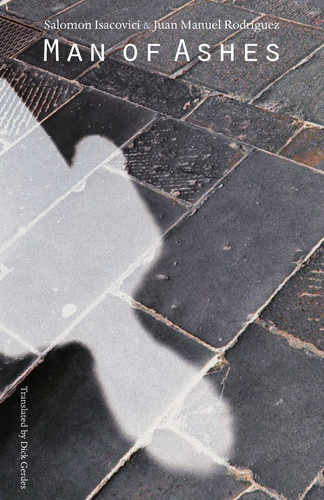
Man of ashes

Isacovici, Salomon
"A poignant, groundbreaking memoir that links the Holocaust and its aftermath to the safe haven that opened for camp survivors in Latin America at mid-century. The controversy surrounding the collaboration between Isacovici and Rodr guez remains an extraordinary opportunity to reflect on the thorny path of Jewish-Hispanic relations worldwide."-Ilan Stavans"Distinguished by geography as well as by its painful testimony. . . . Much of the memoir's early drama involves the creeping Nazi threat opposing Jews' wishful thinking-that the war might be ending and that 'it can't happen here.' . . . The author's family is shattered in Birkenau, but he survives Auschwitz with jobs peeling potatoes and mining coal at Jaworno, and he survives a gruesome death march as the Soviets advance. Isacovici is able to rejoin two brothers in a fruitless return to the family farm and to many European cities in search of a haven. He then joins the family of a woman with whom he has a serious romance, who end up with visas for Ecuador, where he feels an empathy for the suffering of the local Indians. . . . This account tells an unforgettable and unique story."-Kirkus ReviewsSalomon Isacovici died in 1998. Dick Gerdes is a professor of Spanish at George Mason University. Man of Ashes was first published in Mexico in 1990 as A7393: Hombre de cenizas and was awarded the Fernando Jeno Prize.
University of Nebraska Press 2002 244 pages

Musically speaking: a life through song

Westheimer, Ruth K.
Musically Speaking A Life Through Song Dr. Ruth K. Westheimer "Touching and frequently witty."-- Publishers Weekly "Dr. Ruth sees music as a kind of conscience. Melody is something she has measured her life on. It's an extraordinary story, her story."--Bono "Dr. Ruth shows us how and why music functions in her life, with lessons for all of us. A real gem of a book."--Wynton Marsalis "A wonderful book, both moving and delightful. With her customary charm and brio, Westheimer shares with us how a life can be shaped by music. Brava!"--Zubin Mehta "Who would have thought that when Dr. Ruth finally explained the rhythm method, she'd be talking about music? To read her is to know her, to know her is to adore her."--Harvey Fierstein "Music, I have come to realize, is for me a kind of golden thread running through my life. It has helped maintain my connection with the past that otherwise might have been severed by catastrophe and time. I am often asked--indeed, I often wonder myself--why it is that I should always have had such joie de vivre in the face of the losses and dislocations I had to endure in my early years. The answer I always gave was that the warmth and security of my early childhood had a remarkable power and influence. This is certainly true. But now I have realized that there is another part to the answer. And that is music."--from the introduction Who among us does not have a song that triggers vivid memories--of jubilation, of belonging, of sorrow, of love? In Musically Speaking , Dr. Ruth K. Westheimer, one of America's most beloved personalities, has written a warm and contemplative book about the role music has played in her life and the ineradicable traces it has left on her thoughts, emotions, her very being. In this memoir through song, Dr. Ruth invites us to share her story from a uniquely musical perspective. By the time she was thirty, Ruth Westheimer had lived in five countries, each with a distinctive musical culture, each with a different hold on her sensibility. For the first ten years of her life, the comforting melodies of childhood helped drown out the anthems of Nazism to be heard elsewhere in her native Germany; as an adolescent refugee in Switzerland, she came to be aware that, however loudly she sang the patriotic songs of the land that gave her shelter, she could never truly be at home there. Present at the creation of the modern state of Israel, she sang and danced to the new music of a new nation; as a young woman eagerly absorbing all that Paris had to offer in the way of romance and worldliness in the early 1950s, the songs of Edith Piaf, Mouloudji, and Yves Montand were her tutors. An almost accidental emigration to America brought new challenges and new stability, as she became a wife, mother, and professional; tremendous and unforeseen celebrity came later, and with it the giddy opportunity to indulge her love of music as never before. Dr. Ruth K. Westheimer is a psychosexual therapist who pioneered the field of media therapy. She is author of 24 books. An Adjunct Professor at New York University, she also holds visiting appointments at Princeton and Yale. Personal Takes 2003 152 pages 5 1/2 x 8 1/2 ISBN 978-0-8122-3746-7 Cloth $24.95t £16.50 ISBN 978-0-8122-0835-1 Ebook $24.95t £16.50 World Rights Biography, Music
University of Pennsylvania Press 2003-08-29 143 pages

Peter Owen, not a nice Jewish boy: memoirs of a Maverick publisher

Owen, Peter,Nye, James
In this wry, candid, and sometimes poignant memoir, Peter Owen recalls his lonely Jewish boyhood in Nazi Germany and migration to England where he survived the London Blitz, a teenage dalliance with aspiring actress Fenella Fielding, and working with a motley variety of book publishers. He founded his eponymous publishing firm in 1951, becoming one of the youngest publishers in Britain. A pioneer of books on social themes, gay and lesbian writing, and literature in translation, Owen's authors included ten Nobel laureates and brought Hermann Hesse, Ezra Pound, and Anaïs Nin to a wider audience. Enjoying their success, he and his wife Wendy were memorably stylish and eccentric figures at the literary parties of the 1960s and 1970s. Owen describes his often hilarious encounters with many of those he published, including John Lennon, Yoko Ono, and Salvador Dalí, his adventures in Japan with Yukio Mishima and Shūsaku Endō, and in Morocco with Tennessee Williams and Paul and Jane Bowles. As one of the last of the great émigré publishers, his death in 2016 aged 89 signalled the end of a literary era.
Fonthill Media 2021 255 pages

What's exactly the matter with me? memoirs of a life in music

Sloan, P. F.,Feinberg, S. E.
P.F. Sloan was one of the most prolific and influential geniuses to emerge from the golden age of the 60s. From his little studio at Dunhill Records, Sloan was a veritable hit-machine, writing and playing guitar for The Mamas & The Papas (that's Sloan's infectious guitar lick on 'California Dreamin'), Barry McGuire (the brilliant and controversial 'Eve Of Destruction'), Johnny Rivers (the iconic 'Secret Agent Man'), The Turtles, The Grass Roots, Herman's Hermits, The Fifth Dimension, The Searchers, and more. P.F. Sloan was everywhere. And then he disappeared. With a foreword by British singer-songwriter Rumer and an afterword by Creed Bratton, the Grass Roots guitarist turned star of The Office, What's Exactly The Matter With Me? is a revelatory memoir of an extraordinary life through the most fascinating years of American and British musical and pop culture. Beginning with a chance meeting with Elvis Presley, this is the story of a boy whose only love was music--of dreams, success, destruction, and miraculous resurrection. Along the way we encounter The Beatles, The Rolling Stones, The Byrds, Bob Dylan, Buffalo Springfield, The Beach Boys, and more, as well as UFOs and psychiatric hospitals. This is the dangerous ride and inspiring story of one of the greatest songwriters in popular music--and also one of the most elusive and mysterious.
Jawbone 2014-06-01 320 pages

Preminger: an autobiography

Preminger, Otto
"With the same candor that has characterized his life, Otto Preminger--actor, director, producer, and now writer--exposes himself (in writing) as well as an impressive line-up of show business folk in this engrossing memoir. As one of Hol1ywood's pre-eminent directors with 36 films and 32 stage productions to his credit, Preminger reveals the funny, outrageous, and often exasperating moments of his career, and his association with the eccentric, the gracious, the wealthy, the egomaniacal--'the stars.' Beginning his career as an apprentice of Max Reinhardt, Preminger became an instant success as an actor and then as a director. Hollywood called and he went there in 1935. His outspoken manner clashed with the autocratic studio moguls. He was forced to return to New York and find work directing plays on Broadway. He rebounded in 1944 to begin his stormy and remarkably creative period in Hollywood with Laura, his first all-out hit, starring Gene Tierney, Clifton Webb, and Dana Andrews. Preminger gives an inside glimpse at shooting such films as Daisy Kenyon with Joan Crawford (whom he considers a remarkable, independent, and generous woman); River of No Return, starring Marilyn Monroe; the all-black productions of Carmen Jones and Porgy and Bess, both accused of being racist; The Man With the Golden Arm, with Frank Sinatra and Kim Novak; plus such legendary films as Anatomy of a Murder (James Stewart, Lee Remick, and George C. Scott), Exodus (Paul Newman, Eva Marie Saint), Advise and Consent (Henry Fonda and Charles Laughton), The Cardinal (Tom Tryon, Romy Schneider), Hurry Sundown (Jane Fonda, Michael Caine, Diahann Carroll and Faye Dunaway), and In Harm's Way (John Wayne). Making no bones about naming enemies or exalting his friends, Preminger elaborates on the blacklisting during the fifties and includes his own critique of the critics. Preminger gives us a little more insight into his friend Tallulah Bankhead and her affinity for shocking behavior (with a few choice examples), as well as his opinion of Howard Hughes (a fascinating man, but not all that eccentric). He sets the record straight on a number of his love affairs and marriages, and divulges the story of his relationship with Gypsy Rose Lee and their child, who after Gypsy's death emerged as Erik Preminger. Leaving few stones unturned, this unique "Otto-biography" zooms in on Hollywood through the eyes of one of its most active and highly creative personalities--Preminger!"--Jacket.
Doubleday 1977 245 pages

Tiny lights for travellers

Lewis, Naomi K.
"When her marriage suddenly ends, and a diary documenting her beloved grandfather's escape from Nazi-occupied Netherlands in the summer of 1942 is discovered, Naomi K. Lewis decides to retrace his journey to learn about her family history. Despite suffering from extreme disorientation and a lifetime of anxiety, she travels alone for the first time. Moving from Amsterdam to Lyon--relying on the marvels of GPS--she discovers family secrets and her own narrative as a second-generation Jewish Canadian. With vulnerability, humour, and wisdom, Lewis's memoir asks tough questions about her identity as a secular Jew, the accuracy of family stories, and the impact of the Holocaust on subsequent generations. How do immigrants weave their sense of identity into their chosen countries? Must we be able to locate ourselves within family and cultural geography to belong?"--
University of Alberta Press 2019-05-15 281 pages

The straits of hell: the chronicle of a Salonikan Jew in the Nazi extermination camps Auschwitz, Mauthausen, Melk, Ebensee

Ha-Elion, Moshe
"The Jerusalem of the Balkans is today a city of ghosts. Saloniki or Salonika, as Thessaloniki was known its Jewish community, today barely numbers a thousand Jews whereas from 1500 to World War I the Jews constituted the majority of its inhabitants. Moshe Ha-Elyon and his extended family were part of the deportation from Salonika of some 45,000 Jews to Auschwitz where all but a handful were gassed, beaten, or starved to death during the spring of 1943 to the end of the war. This memoir differs from the many memoirs of Greek Jews. Moshe Ha- Elyon portrays the religious and cultural life of his ancestral community as well as the spiritual and mystical research of his father who predicted, prior to his death at the onset of the war, both the persecution of the Jews and the subsequent rise of a Jewish state in its aftermath. It is the moving story of a teenager who suffered in extremis yet lived to transmit to his family in Israel the legacy of a vanished era. A most informative and worthwhile insight into the inner world of Greek Jewry before and during its destruction during World War II"--
Bibliopolis 2005 120 pages

This year in Jerusalem

Richler, Mordecai
"Part memoir, part history, part political commentary - and all Richler - This Year in Jerusalem is a personal, passionate, and quirkily comic examination of the idea of Israel-as-homeland: for Jews, for Palestinians, and, not least, for the author himself. Richler re-creates the Montreal of his adolescence - the local Zionist youth organization functioning as an escape from the zealous Hasidism of his grandfathers; the idea of emigration to Israel growing into a shimmering dream for himself and his friends. And, going to Israel to look up his old pals from St. Urbain Street, he shows us what happened to those who actually did "make aliyah"--Who settled in the cities and on the kibbutzim, survived the turmoils of war, and are faced today with the opportunities and dangers of peace with the Palestinians. He shows us, as well, the course of his own migration - away from Zionism and through the maze of his own sense of Judaism until he rediscovers his true homeland: "I owe as much to the thin gruel of my Canadian experience as I do to my Jewish provenance." Woven through his story are his fond (and not so fond) recollections of his family, his encounters in today's Israel with the kids he grew up with in Montreal a million years ago, and his most mordant observations on the state of the state of Israel and the Israeli-Palestinian conflict. Witty, intelligent, well reasoned, and across-the-board provocative, here is Mordecai Richler at his inimitable - and controversial - best." -- dust jacket
Knopf 1994-09-06 291 pages

Forever fat: essays by the Godfather

Gutkind, Lee
Dubbed-some would say drubbed-the "godfather behind creative nonfiction" by Vanity Fair, Lee Gutkind takes the opportunity of these essays, and the rich material of his own life, to define, defend, and further expand the genre he has done so much to shape. The result is an explosive and hilarious memoir of Gutkind's colorful life as a motorcyclist, a medical insider, a sailor, a college professor, an over-aged insecure father, and a literary whipping boy. In Forever Fat Gutkind battles his weight, his ex-wives, his father, his rabbi, his psychiatrist, and his critics in a lifelong cross-country, cross-cultural search for stability and identity. And from Gutkind's battles, the reader emerges a winner, treated to a sometimes poignant, sometimes harrowing, sometimes uproarious, and always engrossing story of the simultaneous awakening of a man and his mission, and of the constant struggle, in literature and in life, to sort out memory and imagination. Here, enacted in technicolor terms, is the universal, symbolic truth that no matter how far you travel, over how many years, you will never completely shed the weighty baggage of adolescence. Yet, as Gutkind proves again and again, he has learned to describe his burden with an ever-lightening brilliance. Lee Gutkind is the founder and editor of the journal Creative Nonfiction. The author and editor of a dozen books, including the award-winning Many Sleepless Nights: The World of Organ Transplantation, he is a professor of English at the University of Pittsburgh and the director of the Mid-Atlantic Creative Nonfiction Writers' Conference at Goucher College.
University of Nebraska Press 2003 177 pages

George Kennan: a study of character

Lukacs, John
A profoundly moving biographical study of George Kennan by the fine historian John Lukacs A man of impressive mental powers, of extraordinary intellectual range, and--last but not least--of exceptional integrity, George Frost Kennan (1904-2005) was an adviser to presidents and secretaries of state, with a decisive role in the history of this country (and of the entire world) for a few crucial years in the 1940s, after which he was made to retire; but then he became a scholar who wrote seventeen books, scores of essays and articles, and a Pulitzer Prize-winning memoir. He also wrote remarkable public lectures and many thousands of incisive letters, laying down his pen only in the hundredth year of his life. Having risen within the American Foreign Service and been posted to various European capitals, and twice to Moscow, Kennan was called back to Washington in 1946, where he helped to inspire the Truman Doctrine and draft the Marshall Plan. Among other things, he wrote the "X" or "Containment" article for which he became, and still is, world famous (an article which he regarded as not very important and liable to misreading). John Lukacs describes the development and the essence of Kennan's thinking; the--perhaps unavoidable--misinterpretations of his advocacies; his self-imposed task as a leading realist critic during the Cold War; and the importance of his work as a historian during the second half of his long life.
Yale University Press 2009 207 pages

Mother's boy

Jacobson, Howard
"Howard Jacobson's funny, revealing and tender memoir of his path to becoming a writer. It's my theory that only the unhappy, the uncomfortable, the gauche, the badly put together, aspire to make art. Why would you seek to reshape the world unless you were ill-at-ease in it? And I came out of the womb in every sense the wrong way round. In Mother's Boy, Booker-Prize winner Howard Jacobson reveals how he became a writer. It is an exploration of belonging and not-belonging, of being an insider and outsider, both English and Jewish. Jacobson was forty when his first novel was published. In Mother's Boy he traces the life that brought him there. Born to a working-class family in 1940s Manchester, the great-grandson of Lithuanian and Russian immigrants, Jacobson was raised by his mother, grandmother and aunt Joyce. His father was a regimental tailor, as well as an upholsterer, a market-stall holder, a taxi driver, a balloonist, and a magician. Grappling always with his family's history and his Jewish identity, Jacobson takes us from the growing pains of childhood to studying at Cambridge under F.R. Leavis, and landing in Sydney as a maverick young professor on campus." --
Jonathan Cape 2022 279 pages