

2051 results for "Psychology"

Owning up curriculum: empowering adolescents to confront social cruelty, bullying, and injustice
Grades 6-12. The Owning Up Curriculum, written and developed by Rosalind Wiseman, author of The New York Times bestseller Queen Bees and Wannabes, provides a structured program for teaching students to own up and take responsibility for their behavior. The curriculum is designed for adolescent groups in schools and other settings. The Owning Up Curriculum presents a unique and comprehensive approach to preventing youth violence by targeting the root causes of bullying and other forms of social cruelty. It addresses issues such as racism, classism, and homophobia, as well as moral courage, perseverance, and commitment to ethical behavior. Separate sessions for girls and for boys combine group discussions, games, role-playing, and other activities to engage students in understanding the complexities of adolescent social culture. A CD-ROM of reproducible program forms and student handouts is included with the curriculum.

Successful Intelligence How Practical and Creative Intelligence Determine Success in Life
Argues that creative and practical intelligence, rather than the results of a standard IQ test, are the keys to succeeding in the business world and doing well at most jobs.

Great house
Connected solely by a desk of enormous dimension and many drawers that exerts a power over those who possess it or give it away, three people--a lonely American novelist clinging to the memory of a poet who has mysteriously vanished in Chile, an old man in Israel facing the imminent death of his wife of 51 years, and an esteemed antiques dealer tracking down the things stolen from his father by the Nazis--struggle to create a meaningful permanence in the face of inevitable loss

Defending identity: its indispensable role in protecting democracy
In this compelling book, Sharansky takes on those who see identity as a foe of freedom. He asserts that when framed by democracy, strong identities enrich our lives and enable us to defend the values we most deeply cherish.

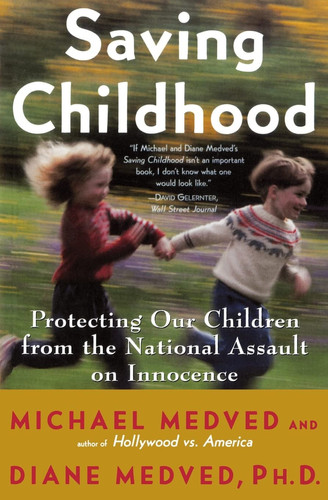
Saving childhood: how to protect your children from the national assault on innocence
Saving Childhood offers parents and grandparents practical strategies to cope with a society that seems perversely determined to frighten and corrupt its young. Cultural critic and popular radio host Michael Medved and his wife, psychologist Diane Medved, argue that in a mistaken effort to curb problems plaguing its youth, our culture has changed from protecting childhood as a precious time of growth to hammering even the smallest youngsters with a grim, harsh, and menacing view of the world. The Medveds systematically present unassailable scientific evidence, moving anecdotes, and personal experiences of raising their three young children to explain the attack from four primary directions--media, schools, peers, and even well-intentioned parents themselves. In a unique analysis the Medveds define innocence not as ignorance but as the result of three components--security, a sense of wonder and optimism. They empower parents and all who care about childhood with concrete, easily accomplished means to fend off the assault, as well as advice for handling hurdles such as the Internet, television, peer pressure, and the plague of pessimism. Saving Childhood enables us to restore and maintain for our children imagination, confidence, and hope for the future.
Separation-individuation

How does analysis cure?
The Austro-American psychoanalyst Heinz Kohut was one of the foremost leaders in his field and developed the school of self-psychology, which sets aside the Freudian explanations for behavior and looks instead at self/object relationships and empathy in order to shed light on human behavior. In How Does Analysis Cure? Kohut presents the theoretical framework for self-psychology, and carefully lays out how the self develops over the course of time. Kohut also specifically defines healthy and unhealthy cases of Oedipal complexes and narcissism, while investigating the nature of analysis itself as treatment for pathologies. This in-depth examination of “the talking cure” explores the lesser studied phenomena of psychoanalysis, including when it is beneficial for analyses to be left unfinished, and the changing definition of “normal.” An important work for working psychoanalysts, this book is important not only for psychologists, but also for anyone interested in the complex inner workings of the human psyche.

Poetry and repression: revisionism from Blake to Stevens
This reinterpretation of the full sweep of English and American romantic poetry offers close readings of poems of Blake, Wordsworth, Shelley, Keats, Tennyson, Browning, Whitman, Yeats, and Stevens. It also reviews the crucial ideas of Emerson, Nietzsche, and in particular Freud, whose psychoanalytic theory of repression and defense Bloom undertakes to revise for purposes of literary criticism. "Bloom offers a fully defined alternative to the principal modes of contemporary criticism, from Freudian literary criticism (which he insists is neither Freudian nor literary criticism) to the New Criticism and structuralist and archetypal approaches. It is an original, vigorous, and passionate study which is both compelling and provocative."-The British Studies Monitor "Show me but one paragraph of Bloom's approaches to texts, and I'm hooked. . . . I find sheer delight in his ingenious ways."-Kenneth Burke "Bloom has made a remarkable contribution to poetic theory."-Phoebe Pettingell, The New Leader

August blue
At the height of her career, piano virtuoso Elsa M. Anderson walks off the stage in Vienna, mid-performance. Now she is in Athens, watching a woman purchase a pair of mechanical dancing horses in at flea market. Elsa wants the horses, too, but there are no more for sale. She travels across Europe, shadowed by the elusive woman who seems to be her double. -- adapted from jacket

Irrationally yours: on missing socks, pickup lines and other existential puzzles
Presents a humorous look at a series of common everyday problems, describing the pros and cons of each situation and offering a possible rational solution

A good enough parent: a book on child-rearing
In this book, the preeminent child psychologist of our time gives us the results of his lifelong effort to determine what is most crucial in successful child-rearing. His purpose is not to give parents preset rules for raising their children, but rather to show them how to develop their own insights so that they will understand their own and their children's behavior in different situations and how to cope with it. Above all, he warns, parents must not indulge their impulse to try to create the child they would like to have, but should instead help each child fully develop into the person he or she would like to be.

Democracy and disagreement
The din and deadlock of public life in America - where insults are traded, slogans proclaimed, and self-serving deals are made and unmade - reveal the deep disagreement that pervades our democracy. The disagreement is not only political but also moral, as citizens and their representatives increasingly take extreme and intransigent positions. A better kind of public discussion is needed, and Amy Gutmann and Dennis Thompson provide an eloquent argument for "deliberative democracy" today. They develop a principled framework for opponents to come together on moral and political issues.

Everyday holiness: the Jewish spiritual path of Mussar
Here is an accessible and inspiring introduction to the Jewish spiritual tradition known as Mussar. Well known in the Orthodox Jewish world, Mussar is an illuminating, approachable, and highly practical set of teachings for cultivating personal growth and spiritual realization in the midst of day-to-day life. The ultimate goal of Mussar is to become a more whole and holy person. The path is simple: learn to be a mensch, a deeply good and decent human being, or what has been called an "extraordinary ordinary person." The core teaching of Mussar is that our deepest essence is inherently pure and holy, but this inner radiance is obscured by extremes of emotion, desire, and bad habits. Our work in life is to uncover the brilliant light of the soul. The Mussar masters developed transformative teachings and practices—some of which are contemplative, some of which focus on how we relate to others in daily life—to help us to heal and refine ourselves. Alan Morinis, founder of the Mussar Institute, presents these teachings in terms that anyone can understand and put to use. Everyday Holiness features short chapters on eighteen key character traits that the Mussar masters emphasize, including humility, generosity, gratitude, trust, patience, and enthusiasm. Morinis also explains how to make Mussar practice part of our daily lives. Here is a welcome resource for all those who are interested in reinvigorating their religious lives, exploring contemplative spirituality, and making spirituality part of everyday life. For more information on Mussar and the author, Alan Morinis, visit www.mussarinstitute.org.

The art of controversy: political cartoons and their enduring power
"A lavishly illustrated, witty, and learned look at the awesome power of the political cartoon throughout history to enrage, provoke, and amuse. As a former editor of The New York Times Magazine and the longtime editor of The Nation, Victor Navasky knows just how incendiary--and transformative--cartoons can be. Here Navasky guides readers through some of the greatest cartoons ever sketched--by George Grosz, David Levine, Herblock, Honore Daumier, Thomas Nast, Ralph Steadman, et al.--as he asks what makes cartoons so uniquely positioned to affect our minds and our hearts. Incorporating neuroscience, psychology, and a sweeping historical view of the cartoon's evolution, The Art of Controversy is a book for all lovers of satire, politics, and the vastly underappreciated and endlessly surprising art form of the political cartoon. "--

Soccernomics
Why do England lose? Why does Scotland suck? Why doesn't America dominate the sport internationally...and why do the Germans play with such an efficient but robotic style? These are questions every soccer aficionado has asked. Soccer nomics answers them. Using insights and analogies from economics, statistics, psychology, and business to cast a new and entertaining light on how the game works, Soccer nomics reveals the often surprisingly counterintuitive truths about soccer. An essential guide for the 2010 World Cup, Soccer nomics is a new way of looking at the world's most popular game.

Understanding other minds: perspectives from autism
This book focuses on a recent, important psychological theory of autism, the 'theory of mind' hypothesis. This claims that children with autism fail to develop the ability to think about mental states in the normal way, and thus fail to understand behavior in terms of mental states. In current terminology, they are impaired in the development of a 'theory of mind'. This psychological deficit is held to underlie some of the key feature of the syndrome: the abnormalities in social and communication development. The editors have collected together both the evidence and the controversies surrounding the theory, and present these as a valuable debate about the nature of what is widely recognized as the most severe childhood psychiatric disorder. The chapters are written by scholars from a variety of disciplines (developmental psychology, neuropsychology, philosophy, psycholinguistics, primatology, child psychiatry, and psychoanalysis). The book stands as an illustration of the mutual influence of studies of the mind from the prespectives of normality and pathology.

Between man and man
Scholar, theologian and philosopher, Martin Buber is one of the twentieth century's most influential thinkers. He believed that the deepest reality of human life lies in the relationship between one being and another. Between Man and Man is the classic work where he puts this belief into practice, applying it to the concrete problems of contemporary society. Here he tackles subjects as varied as religious ethics, social philosophy, marriage, education, psychology and art. Including some of his most famous writings, such as the masterful What is Man?, this enlightening work challenges each reader to reassess their encounter with the world that surrounds them.

Brilliant Blunders
Drawing on the lives of five great scientists, this "scholarly, insightful, and beautifully written book" (Martin Rees, author of From Here to Infinity ) illuminates the path to scientific discovery. Charles Darwin, William Thomson (Lord Kelvin), Linus Pauling, Fred Hoyle, and Albert Einstein all made groundbreaking contributions to their fields--but each also stumbled badly. Darwin's theory of natural selection shouldn't have worked, according to the prevailing beliefs of his time. Lord Kelvin gravely miscalculated the age of the earth. Linus Pauling, the world's premier chemist, constructed an erroneous model for DNA in his haste to beat the competition to publication. Astrophysicist Fred Hoyle dismissed the idea of a "Big Bang" origin to the universe (ironically, the caustic name he gave to this event endured long after his erroneous objections were disproven). And Albert Einstein speculated incorrectly about the forces of the universe--and that speculation opened the door to brilliant conceptual leaps. As Mario Livio luminously explains in this "thoughtful meditation on the course of science itself" ( The New York Times Book Review ), these five scientists expanded our knowledge of life on earth, the evolution of the earth, and the evolution of the universe, despite and because of their errors. "Thoughtful, well-researched, and beautifully written" ( The Washington Post ), Brilliant Blunders is a wonderfully insightful examination of the psychology of five fascinating scientists--and the mistakes as well as the achievements that made them famous.

Agnostic: a spirited manifesto
“Vital” – The New York Times Book Review “Provocative…[Hazleton] paddles the river of doubt with energy and exuberance.” –The Seattle Times A widely admired writer on religion celebrates agnosticism as the most vibrant, engaging—and ultimately the most honest—stance toward the mysteries of existence. One in four Americans reject any affiliation with organized religion, and nearly half of those under thirty describe themselves as “spiritual but not religious.” But as the airwaves resound with the haranguing of preachers and pundits, who speaks for the millions who find no joy in whittling the wonder of existence to a simple yes/no choice? Lesley Hazleton does. In this provocative, brilliant book, she gives voice to the case for agnosticism, breaks it free of its stereotypes as watered-down atheism or amorphous “seeking,” and celebrates it as a reasoned, revealing, and sustaining stance toward life. Stepping over the lines imposed by rigid conviction, she draws on philosophy, theology, psychology, science, and more to explore, with curiosity and passion, the vital role of mystery in a deceptively information-rich world; to ask what we mean by the search for meaning; to invoke the humbling yet elating perspective of infinity; to challenge received ideas about death; and to reconsider what “the soul” might be. Inspired and inspiring, Agnostic recasts the question of belief not as a problem to be solved but as an invitation to an ongoing, open-ended adventure of the mind.
