

4260 results for "World History"

The myth of Hitler's pope: how Pope Pius XII rescued Jews from the Nazis
Was Pope Pius XII secretly in league with Adolf Hitler? No, says Rabbi David G. Dalin, but there was a cleric in league with Hitler: the grand mufti of Jerusalem, Hajj Amin al-Husseini. As Pope Pius XII worked to save Jews from the Nazis, the grand mufti became Hitler’s staunch ally and a promoter of the Holocaust, with a legacy that feeds radical Islam today. In this shocking and thoroughly documented book, Rabbi Dalin explodes the myth of Hitler’s pope and condemns the mythmakers for not only rewriting history, but for denying the testimony of Holocaust survivors, hijacking the Holocaust for unseemly political ends, and ignoring the real threat to the Jewish people.

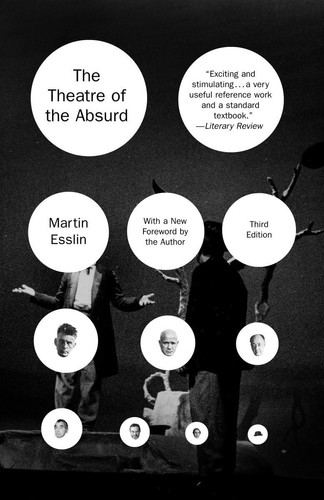
The theatre of the absurd
In 1953, Samuel Beckett’s Waiting for Godot premiered at a tiny avant-garde theatre in Paris; within five years, it had been translated into more than twenty languages and seen by more than a million spectators. Its startling popularity marked the emergence of a new type of theatre whose proponents—Beckett, Ionesco, Genet, Pinter, and others—shattered dramatic conventions and paid scant attention to psychological realism, while highlighting their characters’ inability to understand one another. In 1961, Martin Esslin gave a name to the phenomenon in his groundbreaking study of these playwrights who dramatized the absurdity at the core of the human condition. Over four decades after its initial publication, Esslin’s landmark book has lost none of its freshness. The questions these dramatists raise about the struggle for meaning in a purposeless world are still as incisive and necessary today as they were when Beckett’s tramps first waited beneath a dying tree on a lonely country road for a mysterious benefactor who would never show. Authoritative, engaging, and eminently readable, The Theatre of the Absurd is nothing short of a classic: vital reading for anyone with an interest in the theatre.
The virtue of nationalism
A leading conservative thinker argues that a world of sovereign nations is the only option for those who care about personal and collective freedom.

When Everybody Wore a Hat
This is the story of when I was a boy, almost 100 years ago, when fire engines were pulled by horses, boys did not play with girls, kids went to libraries for books, there was no TV, you could see a movie for a nickel and everybody wore a hat. When Everybody Wore a Hat was one of celebrated author/artist William Steig's last gifts to the world of children's books: a portrait of the artist himself, told in Steig's signature quirky words and illustrations. Now in paperback, this funny, poignant, and revealing picture book has all the vitality and wit of a Steig classic. Ages 2+

Putinism: Russia and its future with the West
"A timely, topical book grounding Russia's recent turn towards conservativism in pre-1917 culture and explaining what this shift could mean for the rest of the world" ; "There is no question that tensions between Russia and America are on the rise. The forced annexation of Crimea, the downing of Malaysia Airlines flight 17, and the Russian government's treatment of homosexuals have created diplomatic standoffs and led to a volley of economic sanctions. Much of the blame for Russia's recent hostility towards the West has fallen on steely-eyed President Vladimir Putin, and Americans have begun to wonder if they are witnessing the rebirth of Cold War-style dictatorship. Not so fast, argues veteran historian Walter Laqueur. For two decades Laqueur has been ahead of the curve, predicting events in post-Soviet Russia with uncanny accuracy. In Putinism, he deftly demonstrates how three long-standing pillars of Russian ideology: a strong belief in the Orthodox Church, a sense of Eurasian 'manifest destiny, ' and a fear of foreign enemies, continue to exert a powerful influence on the Russian populace. As a result, Putin may well be much more a servant of his people than we think. Topical and provocative, Putinism contains much more than historical analysis. Looking to the future, Laqueur explains how the tendency to view Russia as a Cold War relic is dangerous and premature. Russia can, and will, continue to challenge the West so it is in our best interest to figure out exactly who it is we are facing--and what they want--before it is too late"

Leopoldstadt
"At the beginning of the 20th Century, Leopoldstadt was the old, crowded Jewish quarter of Vienna. But Hermann Merz, a manufacturer and baptised Jew married to Catholic Gretl, has moved up in the world. Gathered in the Merz apartment in a fashionable part of the city, Hermann's extended family are at the heart of Tom Stoppard's epic yet intimate drama. By the time we have taken leave of them, Austria has passed through the convulsions of war, revolution, impoverishment, annexation by Nazi Germany and - for Austrian Jews - the Holocaust in which 65,000 of them were murdered. It is for the survivors to pass on a story which hasn't ended yet"--Back cover

There's No Bones in Ice Cream Sylvain Sylvain's Story of the New York Dolls
There's No Bones in Ice Cream, by Sylvain Sylvain, is the inside story of glam heroes the New York Dolls - outrageous, defiant, sleaze kings, transgender posers, drug casualties and victims, not just of their own excess but of an unsympathetic music industry that simply didn't know how to process them. Sylvain, one of only two surviving members of the original New York Dolls, offers a fly-on-the-wall, sincere and often hilarious account of the rise and fall of the Dolls, the group that flew so close to the sun that they exploded in a fireball that lit the touch paper under punk rock. Though their brief, sensation-filled yet doomed career produced just two albums, the Dolls exerted an influence on rock that changed it forever. A cross between the Rolling Stones and the Sex Pistols, the Dolls became the link in the chain between them, offering a crash course in mischief, cross-dressing and anarchy, but like unheralded prophets of Biblical times they were cast aside until the world finally caught up. "Other people turned the New York Dolls into legends. We just went along for the ride."

The death of the banker: the decline and fall of the great financial dynasties and the triumph of the small investor
"For anyone interested in the world behind the business-page headlines, this is the book to read." --Publishers Weekly With the same breadth of vision and narrative élan he brought to his monumental biographies of the great financiers, Ron Chernow examines the forces that made dynasties like the Morgans, the Warburgs, and the Rothschilds the financial arbiters of the early twentieth century and then rendered them virtually obsolete by the century's end. As he traces the shifting balance of power among investors, borrowers, and bankers, Chernow evokes both the grand theater of capital and the personal dramas of its most fascinating protagonists. Here is Siegmund Warburg, who dropped a client in the heat of a takeover deal because the man wore monogrammed shirt cuffs, as well as the imperious J. P. Morgan, who, when faced with a federal antitrust suit, admonished Theodore Roosevelt to "send your man to my man and they can fix it up." And here are the men who usurped their power, from the go-getters of the 1920s to the masters of the universe of the 1980s. Glittering with perception and anecdote, The Death of the Banker is at once a panorama of twentieth-century finance and a guide to the new era of giant mutual funds on Wall Street. "Chernow . . . delivers a sound, accessible account of the forces shaping capital, credit, currency, and securities markets on the eve of a new millennium. " --Kirkus Reviews

The death of the banker: the decline and fall of the great financial dynasties and the triumph of the small investor
National Book Award winner Ron Chernow expertly traces the decline of the big bankers and the rise of small investors. The reader is taken on a fascinating tour of Anglo-American high finance over the past two centuries, with detours into Canadian, German and Japanese finance. As the point of departure for his colourful, panoramic survey, Mr. Chernow poses a historic riddle: Why did the great financial dynasties - the Rothschilds, Barings, Morgans and Warburgs - flare so brilliantly in the 19th and 20th centuries and then enter into a precipitous decline? Why did such heavyweights give way to more anonymous financial conglomerates? And, most curious of all, why have small investors, banded together in mutual funds, suddenly inherited the financial earth? The Death of the Banker shows how American reformers mounted a spirited campaign to pry captive companies loose from their traditional bankers and restored competition to financial markets. In a world criss-crossed by capital flows, the banker will never again exercise such spectacular but arbitrary rule over clients.

One renegade cell: how cancer begins
Cancer research has reached a major turning point. The quality and quantity of information gathered about this disease in the past twenty years has revolutionized our understanding of its origins and behavior. No one is better qualified to comment on these dramatic leaps forward than molecular biologist Robert A. Weinberg, director of one of the leading cancer research centers in the world. In One Renegade Cell , Weinberg presents an accessible and state-of-the-art account of how the disease begins and how, one day, it will be cured.Weinberg tells how the roots of cancer were uncovered in 1909 and when the first cancer-causing virus was discovered. He then moves forward to the discovery of the role of chemical carcinogens and radiation in triggering cancer, and relates the remarkable story of the discoveries of oncogenes and tumor suppressor genes, the master controllers of normal and malignant cell proliferation.This book, which presumes little prior knowledge of biology, describes the revolution in biomedical research that has finally uncovered the forces driving malignant growth. Drawing on insights that simply were not available until recently, the discoveries presented in One Renegade Cell have already begun to profoundly alter the way that we diagnose and treat human cancers.

How to win an information war: the propagandist who outwitted Hitler
"From one of our leading experts on disinformation, this inventive biography of the rogue WWII propagandist Thomas Sefton Delmer confronts hard questions about the nature of information war: what if you can't fight lies with truth? Can a propaganda war ever be won? In the summer of 1941, Hitler ruled Europe from the Atlantic to the Black Sea. Britain was struggling to combat his powerful propaganda machine, crowing victory and smearing his enemies as liars and manipulators over his frequent radio speeches, blasted out on loudspeakers and into homes. British claims that Hitler was dangerous had little impact against this wave of disinformation. Except for the broadcasts of someone called Der Chef, a German who questioned Nazi doctrine. He had access to high-ranking German military secrets and spoke of internal rebellion. His listeners included German soldiers and citizens, as well as politicians in Washington DC who were debating getting into the war. And--most importantly--Der Chef was a fiction. He was a character created by the British propagandist Thomas Sefton Delmer, a unique weapon in the war. Then, as author Peter Pomerantsev seeks to tell Delmer's story, he is called into a wartime propaganda effort of his own: the US response to the invasion of Ukraine. In flashes forward to the present day, Pomerantsev weaves in what he's learning from Delmer as he seeks to fight against Vladimir Putin's tyranny and lies. This book is the story of Delmer and his modern investigator, as they each embark on their own quest to manipulate the passions of supporters and enemies, and to turn the tide of an information war, an extraordinary history that is informing the present before our eyes"--

Koshersoul: the faith and food journey of an African American Jew
"The James Beard award-winning author of the acclaimed The Cooking Gene explores the cultural crossroads of Jewish and African diaspora cuisine and issues of memory, identity, and food. In Koshersoul, Michael W. Twitty considers the marriage of two of the most distinctive culinary cultures in the world today: the foods and traditions of the African Atlantic and the global Jewish diaspora. To Twitty, the creation of African-Jewish cooking is a conversation of migrations and a dialogue of diasporas offering a rich background for inventive recipes and the people who create them. The question that most intrigues him is not just who makes the food, but how the food makes the people. Jews of Color are not outliers, Twitty contends, but significant and meaningful cultural creators in both Black and Jewish civilizations. Koshersoul also explores how food has shaped the journeys of numerous cooks, including Twitty's own passage to and within Judaism. As intimate, thought-provoking, and profound as The Cooking Gene, this remarkable book teases the senses as it offers sustenance for the soul. Koshersoul includes 48-50 recipes"--

Churchill and the Jews
Visiting Israel in 1972, Gilbert discussed Winston Churchill’s influence on the evolution of the Zionist ideal with the Israeli leader, David Ben-Gurion, at whose last meeting with Churchill in 1960, Churchill declared: “You are a wise leader of a brave people.” Born into a British class and society that was far from well-disposed towards Jews, Churchill rejected anti-Semitic attitudes. In the early 1920s, as a senior member of the British government, Churchill took a lead in securing for the Jews a National Home in Palestine that would be open to Jewish immigration from all over the world. In 1948, Churchill urged immediate recognition of the State of Israel, and, in 1951, strongly supported Israel’s right — denied by Egypt — of free passage through the Suez Canal. The book also details acts of rescue initiated by Churchill on behalf of European Jewry during the Second World War. When Churchill was asked to bomb the railway lines leading to Auschwitz, his response was immediate: “Get anything out of the air force you can.” Gilbert follows this story to its unexpected conclusion, and the saving of more than 100,000 Jewish lives. Many times during fifty years of public life, Churchill was called upon by the Jews of Britain to intervene on their behalf both nationally and internationally. His responses made it clear to them that he was, as he once expressed it, “their friend.”

The Complete Works of Count Tolstoy
This work has been selected by scholars as being culturally important, and is part of the knowledge base of civilization as we know it. This work was reproduced from the original artifact, and remains as true to the original work as possible. Therefore, you will see the original copyright references, library stamps (as most of these works have been housed in our most important libraries around the world), and other notations in the work. This work is in the public domain in the United States of America, and possibly other nations. Within the United States, you may freely copy and distribute this work, as no entity (individual or corporate) has a copyright on the body of the work. As a reproduction of a historical artifact, this work may contain missing or blurred pages, poor pictures, errant marks, etc. Scholars believe, and we concur, that this work is important enough to be preserved, reproduced, and made generally available to the public. We appreciate your support of the preservation process, and thank you for being an important part of keeping this knowledge alive and relevant.

Triumph: the untold story of Jesse Owens and Hitler's Olympics
In 1936, against a backdrop of swastikas flying and storm troopers looming, an African-American son of sharecroppers set three world records and won an unprecedented four gold medals, single-handedly crushing Hitler's myth of Aryan supremacy. The story of Jesse Owens at the 1936 Olympic Games is that of a high-profile athlete giving a performance that transcends sports--but it is also the intimate and complex tale of the courage of one remarkable man. From the start, American participation in the games was controversial--a boycott attempt was thwarted by the president of the American Olympic Committee. Owens was befriended by a German rival, who helped Owens win the gold medal at his own expense; two Jewish sprinters were, at the last moment, denied the chance to compete for the United States out of misguided politeness to the Nazi hosts; and a myth was born that Hitler himself had snubbed Owens.--From publisher description

The Naked Crowd Reclaiming Security and Freedom in an Anxious Age
In The Naked Crowd , acclaimed author Jeffrey Rosen makes an impassioned argument about how to preserve freedom, privacy, and security in a post-9/11 world. How we use emerging technologies, he insists, will be crucial to the preservation of essential American ideals. In our zeal to catch terrorists and prevent future catastrophic events, we are going too far—largely because of irrational fears—and violating essential American freedoms. That’s the contention at the center of this persuasive new polemic by Jeffrey Rosen, legal affairs editor of The New Republic , which builds on his award-winning book The Unwanted Gaze . Through wide-ranging reportage and cultural analysis, Rosen argues that it is possible to strike an effective and reasonable balance between liberty and security. Traveling from England to Silicon Valley, he offers a penetrating account of why well-designed laws and technologies have not always been adopted. Drawing on a broad range of sources—from the psychology of fear to the latest Code Orange alerts and airport security technologies—he also explores the reasons that the public, the legislatures, the courts, and technologists have made feel-good choices that give us the illusion of safety without actually making us safer. He describes the dangers of implementing poorly thought out technologies that can make us less free while distracting our attention from responses to terrorism that might work. Rosen also considers the social and technological reasons that the risk-averse democracies of the West continue to demand ever-increasing levels of personal exposure in a search for an illusory and emotional feeling of security. In Web logs, chat rooms, and reality TV shows, an increasing number of citizens clutter the public sphere with private revelations best kept to themselves. The result is the peculiar ordeal of living in the Naked Crowd, in which few aspects of our lives are immune from public scrutiny. With vivid prose and persuasive analysis, The Naked Crowd is both an urgent warning about the choices we face in responding to legitimate fears of terror and a vision for a better future.

Isaac Asimov's Guide to Earth and Space
In this engaging study of the physical world, Asimov explores the natural scientific phenomena that people question on a daily basis. Unabridged selections. 4 cassettes. *****COPY SAYS UNABRIDGED SELECTIONS*****

Corporate Lifecycles
Corporations, like living organisms, experience predictable patterns of behavior as they grow and develop. And, like living organisms, they are faced with specific problems as they progress through the various stages of their lifestyle. According to Dr. Ichak Adizes, the success or failure of any organization depends on its ability to meet the challenges presented by this growth, and make healthy transitions from one stage of development to the next. And if there is anyone who really understands organizational behavior and what keep an organization vital and growing, it's Ichak Adizes. Regarded as one of the world's foremost management theorists, Dr. Adizes has spent more than 22 years successfully helping to increase the effectiveness and efficiency of hundreds of companies around the world. In this revolutionary new guide, Dr. Adizes gives you a close look at how corporations develop -- and how to keep yours a dynamic and vital entity. He shows you step-by-step how to assess your organization's strengths and weaknesses and how to determine where your company is located on the lifecycle curve. He offers tested strategies which can be used to change the organizational climate and remove obstacles that prevent growth. Adizes also provides innovative forecasting methods that will help you predict what problems lie ahead for your company and specific preventative measures you can take to avoid them. Designed for executives, manages and entrepreneurs in all sized companies, this practical, comprehensive guide provides you with the tools you need to keep your organization running as efficiently and profitably as possible. Nowhere else has such a simple but comprehensive means been made available for business professionals to assess and improve the health of their corporation. This is one book that should be on every executive's desk..

Murder in Amsterdam: liberal Europe, Islam and the limits of tolerance
On a cold November day in Amsterdam, an angry young Muslim man, the son of Moroccan immigrants, killed celebrated and controversial Dutch filmmaker Theo van Gogh, great-grandnephew of Vincent and iconic European provocateur, for making a movie that "blasphemed" Islam. The murder horrified quiet, complacent, prosperous Holland, a country that prides itself on being a bastion of tolerance, and sent shock waves across Europe and around the world. Ian Buruma returned to his native Netherlands to try to make sense of it all and to see what larger meaning should and shouldn't be drawn from this story. The result is a true-crime page-turner with the intellectual resonance we've come to expect from this well-regarded journalist and thinker: the exemplary tale of our age, the story of what happens when political Islam collides with the secular West and tolerance finds its limits.--From publisher description
