

58,196 results in 0.12 seconds

Freud's legacy in the global era
Freud's Legacy in the Global Era presents a radically new perspective on Freud's relevance today as a forerunner of the contemporary evolutionary neurosciences also steeped in the tradition of humanistic thought. Carlo Strenger shows how globalisation has produced new theoretical, practical and clinical issues for psychoanalysis, which can best be understood by drawing on influences from economics, sociology and philosophy. Strenger's lively case histories demonstrate a new psychoanalytic viewpoint engaged with surrounding scientific disciplines in an enriching interchange, and open to the fascinating cultural and social developments that shape patients' reality, lives and concerns in a global era. This book will be of interest to psychoanalysts, psychoanalytic and psychodynamically oriented psychotherapists and to all mental health professionals interested in the interaction of psychoanalysis and other disciplines from a global viewpoint as well as to lay readers keen to understand the complexity of globalized life.

The Passion of Judas
Text: English, French (translation)

The Quranic Noah and the making of the Islamic prophet: a study of intertextuality and religious identity formation in late antiquity

The alchemy of possibility: reinventing your personal mythology

The Yeshiva
The Yeshiva: Masters and Disciples is the second and concluding volume of Chaim Grade's masterwork. Continuing the moving story of Tsemakh Atlas, head of the Yeshiva, Grade re-creates the rich world of his native city Vilna in pre-World War II Lithuania. The now-vanished Eastern European Jewish community was inhabited by the pious and the heretical, the righteous and the sinful, the wise and the foolish. Religion was as crucial to living, and as much a part of Grade's people, as their daily bread. How they reacted to it - and, through it, to one another - formed the core of day-to-day life. Each problem, each experience was felt through the teachings of Tsemakh Atlas. Chaim Grade has brought his striking characters to full life, revealing them in all their glory and pain. The Yeshiva is a brilliant work that mourns, and finally locks into memory, a culture sadly lost in reality but eternal in spirit.

Reason to believe: rational explanations of Orthodox Jewish faith
"Reason to Believe is veritable tour de force in defense of Orthodox Jewish faith. The author, a veteran teacher of Judaic Studies, an internationally known rabbi and dayan, faces the tough questions and perennial doubts head-on and offers compelling evidence in favor of Orthodoxy from science, philosophy, history, and Jewish tradition. A valuable and timely resource for those who seek answers, Reason to Believe will also anchor and amplify the faith of those who feel secure in their Orthodox beliefs and lifestyle"--front flap.

What Is Zionism? Two Chapters from Zionism and the Jewish Future
This work has been selected by scholars as being culturally important and is part of the knowledge base of civilization as we know it. This work is in the public domain in the United States of America, and possibly other nations. Within the United States, you may freely copy and distribute this work, as no entity (individual or corporate) has a copyright on the body of the work. Scholars believe, and we concur, that this work is important enough to be preserved, reproduced, and made generally available to the public. To ensure a quality reading experience, this work has been proofread and republished using a format that seamlessly blends the original graphical elements with text in an easy-to-read typeface. We appreciate your support of the preservation process, and thank you for being an important part of keeping this knowledge alive and relevant.

Essays in Freethinking
Book by Chapman Cohen

Controlling Interests
Poetry. "In the poems of CONTROLLING INTERESTS Bernstein continually reveals his desire for the concomitance of the individual and the world, of all language and experience . This book is one of the most original and imaginative in American lyric verse"--Douglas Messerli. "Bernstein presents the reader with a world in which the articulation of an individual language is all but prevented by the official discourses that bombard the consciousness from all sides . He [is] on to something important"--Marjorie Perloff. "It is writing of absolute necessity, demanding not to be appreciated, but understood"--Ron Silliman.

Ben Franklin Stilled the Waves An Informal History of Pouring Oil on Water with Reflections on the Ups and Downs of Scientific Life in General
When Ben Franklin watched the calming effect of a drop of oil on the waves & ripples of a London pond, he was observing what Pliny the Elder & generations of seafarers had done before him. Franklin, though, was the first to investigate this strange phenomenon. Following Franklin's lead, a crowd of scientists over the next two centuries chose to investigate the nature of atoms & molecules through the interaction of fluid membranes. They included Lord Rayleigh, an English lord, Agnes Pockels, one of the earliest women to make lasting contributions to science, the renowned Dutch pediatrician Evert Gorter, & Irving Langmuir, a great industrial scientist. Their work has culminated in the discovery of the structure of cell membranes. Illustrations.

Charlotte Dacre - The passions: a novel in four volumes
A nineteenth-century epistolary novel about a vengeful woman, available to modern readers for the first time. In The Passions (1811), Countess Appollonia Zulmer, beautiful, rich, and popular, can have any man she wants, at least until she meets Count Wiemar, who rejects her in favor of Julia, a simple and obedient woman. Despondent and then furious, Appollonia vows revenge on the couple, leading to madness, suffering, and death. An epistolary novel about the destructive power of emotion, The Passions offers new insights into early feminism, romance, and early nineteenth-century religion. It is an engrossing, powerful work of literature, featuring one of the most memorable female villains of all time. This edition makes the engrossing novel available to modern readers for the first time.

Melusine or Devil Take Her
This work is a romantic novel revolving around the legend of Melusine. Raymond de Forests travels to visit his father at the estate of Emory, Earl of Poitou. Emory immediately likes the boy and Raymond becomes a fosterling. Raymond becomes one of the family, but on his 21st birthday, the ominous counselor and magician to Emory, Owain arranges for Raymond to accidentally murder Emory. In a state of intense bereavement, Raymond rides away, discovering a grotto where Melusine has been secreted to seduce him. Raymond and Melusine build a grand castle on some land granted to them by Emory's eldest son, Bertrand, calling it Lusignan. Bertrand later dies of poisoning and Raymond inherits his land. The Lusignans are prosperous, and one of the younger sons, Geffray, is meant to inherit. However, after Geffray murders another brother who was to be a monk, Raymond condemns his wife as a witch and she throws herself out the window. Raymond gives his titles to his son and retires to Montserrat to spend the rest of his life in meditation.

The worm in the apple: a history of the Conservative Party and Europe from Churchill to Cameron
"The Conservative Party has been in power for 47 of the 65 years since the end of World War II. During that time the division within the party over Europe has been the enduring drama of British politics--from Churchill's decision not to join the original European Coal and Steel Community in 1951 to Cameron's decision to hold the Brexit referendum in 2016. Other leaders came and went, but the issue was always there--sometimes center-stage, at others behind the scenes--destabilizing foreign policy, corroding the body politic, and destroying several of the party's leaders. These questions, and how they panned out, created a deep, grumbling discontent--the worm in the apple--that, over time, turned the Conservative Party and, by extension, a significant section of the electorate, against British membership of the EU. By telling the story of the arguments and divisions within the Conservative Party, The Worm in the Apple helps to explain why Britain voted to leave the European Union in 2016."--Amazon

Blitz
London in the Blitz. Poppy is a mature and capable woman. She struggles to enable her family to lead normal lives. The problems they create are known to all mothers-a daughter torn between two men and a difficult and headstrong stepdaughter. It is a time of fear and uncertainty but love and passion grow amidst the devastation.

Children's ward

Dangerous Things
For widow Hattie Clements, a job at a local school should be ideal. Hattie can handle the problems that occur - but then the accidents start: Her determination to get to the truth, threatens to expose a terrible secret that has already scarred too many lives.

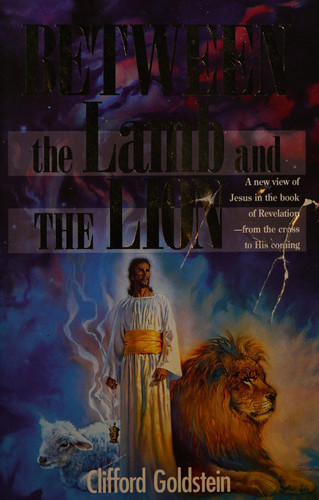
Between the lamb and the lion: a new view of Jesus in the book of Revelation, from the cross to His coming
A new view of Jesus in the book of Revelation--from the cross to His coming. With the approach of this century's end comes a heightened interest in the plethora of apocalyptic predictions. Some are complicated. Most are silly. And a surprising number of interpretations leave out the key Character in this cosmic drama--Jesus. Most Christians, even Adventists, deal with Christ either as the Lamb at His first coming, the lion at His second, or both, but they miss His crucial role in between. Between the Lamb and the Lion, by Clifford Goldstein, answers the question, What is Jesus doing now? It looks at Christ's role as High Priest in the heavenly sanctuary as depicted in Revelation and brings crystal clarity to the concept of a two-phased, or two-apartment, ministry. In characteristic Goldsein style, this book vibrates with a passion for Jesus and shows that His ministry in the heavenly sanctuary today in no way conflicts with the cross. It is, in fact, the very means by our lives and prepares us to meet the Lion when He comes again. - 1. Between the Lamb and the Lion. 2. The Faithful Witness. 3. The Son of Man. 4. The Lamb Who Was Slain. 5. The Prayers of the Saints. 6. The Post-Cross Christ. 7. The Alter of Incense. 8. The Hour of His Judgment. 9. One Like the Son of Man. 10. The Tabernacle of the Testimony. 11. The Tabernacle of God
The losers.
Juvenile Delinquency

Shylock must die
Since his first public appearance in the late 1590s, Shylock has been synonymous with antisemitism. Many of his bon mots remain common currency among Jew-haters; among them "3000 ducats" and the immortal "pound of flesh". But Shakespeare, being Shakespeare, was incapable of inventing anyone so uninteresting; instead he affords Shylock such ambiguity that some of his other lines have become keynotes for believers in shared humanity and tolerance. Following Shakespeare's example these stories - all inspired by The Merchant of Venice - range from the comic to the melancholic. Many pivot on significant productions of the play: Stockholm in 1944, London in 2012, and Venice in 2016. Some are concerned with domestic matters, others with the political, including one - more outrageous than the others - that links Shylock via Israel with the American presidency; most combine both. Running through these linked stories - of which there are seven, like the ages of man - is the cycle of family life, with all its comedy and tragedy.
