8468 results for "History"

New directions in European historiography

Iggers, Georg G.
Impressive analytical essays on the transformation of historical studies in Europe. In four impressively researched essays Georg Iggers recounts the transformation of historical studies in Europe during the twentieth century, with particular emphasis on the historiography of the past fifteen years. Although the book does survey a broad area of contemporary historical thought, it is primarily a careful analytical examination of the methodological and theoretical reorientation of certain influential European historians. The first essay discusses the emergence at German Universities during the eighteenth and nineteenth centuries of the concept of history as a scientific discipline, distinct from the classical tradition of literary history, and the later broad acceptance of this mode of Enquiry in the Western world. Against this background Mr. Iggers then considers the challenge to this mode of the political, social, and intellectual upheavals of the twentieth century, especially after World War II. The three essays following examine important attempts to develop alternate paradigms for historical study: the French historians of the Annales tradition; the German political historians of the 1960s; the various Marxist historians of France, Poland, East Germany, and Great Britain. In despite of the frequent insistence by philosophers and theorists of history that history is not a science in contemporary terms, historians themselves have striven in recent years to strengthen the quantitative aspects of historical study, moving away from traditional patterns of writing and adopting methods and concepts from the systematic social sciences. Mr. Iggers' book is an excellent introduction to these contemporary changes in historiography, and in its comparative analyses itself makes a contribution to historical studies.
Wesleyan University Press 1984-07 267 pages

Sharing the burden: Rabbi Simhah Zissel Ziv and the path of musar

Claussen, Geoffrey D.
"Sharing the Burden analyzes the rich moral traditions of the nineteenth-century Musar movement, an Eastern European Jewish movement focused on the development of moral character. Geoffrey D. Claussen focuses on that movement's leading moral theorist, Rabbi Simḥah Zissel Ziv (1824-1898), the founder of the first Musar movement yeshiva and the first traditionalist institution in Eastern Europe that included general studies in its curriculum. Simḥah Zissel offered a unique and compelling voice within the Musar movement, joining traditionalism with a program for contemplative practice and an interest in non-Jewish philosophy. His thought was also distinguished by its demanding moral vision, oriented around an ideal of compassionately loving one's fellow as oneself and an acknowledgment of the difficulties of moral change. Drawing on Simḥah Zissel's writings and bringing his approach into dialogue with other models of ethics, Claussen explores Simḥah Zissel's Jewish virtue ethics and evaluates its strengths and weaknesses. The result is a volume that will expose readers to a fascinating and important voice in the history of modern Jewish ethics and spirituality"--Back cover.
State University of New York Press 2015-09-11 245 pages

From tolerance to tyranny: a cautionary tale from fifteenth century Spain

Paris, Erna
Before the Inquisition, Spain was a tolerant and peaceful society. How, precisely, does a culture that prizes autonomy and harmony within the population descend so quickly into one of the most oppressive nations to have ever existed? Focusing on the humanity of the major historical players, Erna Paris traces the obscure origins of what was to become a brutal and enduring campaign of religious and ethnic conformity through terror and segregation. The conclusions she draws from the annals of Spanish history are enduring lessons on basic human nature, as applicable to the modern world as they are to the medieval.
Cormorant Books 2015 316 pages

Diaspora: Jews amidst Greeks and Romans

Gruen, Erich S.
Gruen (history and classics, Berkeley) explores four centuries of Jewish life within the dominant classical civilization, from Alexander the Great's conquest of the Near East to the Roman destruction of the Jewish Temple in 70 C.E. He begins with an investigation of "the conspicuous absence of a philosophy of Diaspora" and attempts very capably to identify the traces of the concept among Jews ... More under Roman rule. He looks at the cultures of the Jews living in Rome, Asia, and Alexandria, finding very vibrant communities in all three places. In exploring Jewish views of the Diaspora, Gruen offers up two chapters on Diaspora humor, one about the way biblical tales were retold and the lessons they could convey and the other about creating fanciful yet didactic stories. Then the author looks at the evidence about the Jewish image of the Greeks and Romans, a subject usually investigated from the opposite viewpoint. This leads into his final chapter on the Jewish view of the homeland during the period, a view not much different from today's. Gruen admits that his work is far from exhaustive, but it is certainly substantial, fascinating, and scholarly
Harvard University Press 2004-10-25 400 pages

Liberating Society from the State And Other Writings, a Political Reader

Erich Muhsam
Erich Mühsam (187S-1934), poet, bohemian, revolutionary, remains one of Germany's most renowned and influential anarchists. Born into a middle-class Jewish family, he challenged the conventions of bourgeois society at the turn of the century, engaged in heated debates on the rights of women and homosexuals, and traveled Europe in search of radical communes and artist colonies. He was a primary instigator of the ill-fated Bavarian Council Republic in 1919, and held the libertarian banner high during a Weimar Republic that came under increasing threat by right-wing forces. In 1933, four weeks after HitlerÆs ascension to power, Mühsam was arrested in his Berlin home. He spent the last sixteen months of his life in detention and died in the Oranienburg Concentration Camp in July 1934. Mühsam wrote poetry, plays, essays, articles, and diaries. His work unites a burning desire for individual liberation with anarcho-communist convictions, and bohemian strains with syndicalist tendencies. The body of his writings is immense, yet hardly any English translations have existed. This collection presents not only Liberating Society from the State: What is Communist Anarchism? MühsamÆs main political pamphlet and one of the key texts in the history of German anarchism, but also letters, unbending defenses of political prisoners, passionate calls for solidarity with the lumpenproletariat, recollections of the utopian community of Monte Verita, debates on the rights of homosexuals and women, excerpts from his journals, and essays contemplating German politics and anarchist theory as well as Jewish identity and the role of intellectuals in the class struggle. An appendix documents the fate of Zenzl Mühsam, who, after her husband's death, escaped to the Soviet Union where she spent twenty years in Gulag camps. Book jacket.
Merlin Press Limited 2011-06 304 pages

The civil wars of Julia Ward Howe: a biography

Showalter, Elaine
"Julia Howe (1819-1910) was a beautiful, studious New York heiress and aspiring poet when she married Bostonian Dr. Samuel Gridley Howe, a hero of the Greek war of independence against the Turks and an internationally acclaimed pioneer in the education of the blind. Their marriage united two exceptional people. Together the Howes knew many of the key figures of their era, from Charles Dickens and Florence Nightingale in England, to Margaret Fuller, Henry Wadsworth Longfellow, Horace Mann, Charles Sumner, and John Brown. But despite his philanthropic and abolitionist ideals, Dr. Howe did not support married women's work outside the home. He isolated Julia, opposed her literary ambitions, and wasted her inheritance. She defied him by continuing to publish poems and plays while raising their six children. She also secretly wrote a bold novel about a hermaphrodite, undiscovered until long after her death. And during the Civil War, she wrote the words to the most powerful and enduring anthem in the nation's history. Authorship of the 'Battle Hymn of the Republic' made her famous and revered. But she fought her own civil war at home, battling with her husband over her rights to equality, intellectual freedom, and a public voice. As soon as the war ended, she became a pacifist and suffragist leader. In the second half of her life, she came into her own as a tireless campaigner for women's rights and social reform. In this biography, Elaine Showalter tells the story of Howe's determined self-creation and vividly restores her to the pantheon of feminist intellectuals who changed the world"--Jacket
Simon & Schuster 2016-03-08 303 pages

Jews, Christians and Muslims in Encounter

Edward Kessler
This book reflects on one of the most pressing challenges of our time: the current and historical relationships that exist between the faith-traditions of Judaism, Christianity and Islam. It begins with discussion on the state of Jewish-Christian relations, examining antisemitism and the Holocaust, the impact of Israel and theological controversies such as covenant and mission. Kessler also traces different biblical stories and figures, from the Hebrew Bible and the New Testament, demonstrating Jewish-Christian contact and controversy. Jews and Christians share a sacred text, but more surprisingly, a common exegetical tradition. They also need to deal with some of the more problematic and violent biblical texts. Jews, Christians and Muslims includes reflection on the encounter with Islam, including topics associated with a divergent history and memory as well contemporary relations between the three Abrahamic faiths. Kessler's writings shed light on common purpose as well as how to manage difference, both vital in forming a positive identity and sustaining a flourishing community.
Hymns Ancient & Modern Limited 2013-05-31 290 pages

Jews, Christians and Muslims in encounter

Kessler, Edward
This book reflects on one of the most pressing challenges of our time: the current and historical relationships that exist between the faith-traditions of Judaism, Christianity and Islam. It begins with discussion on the state of Jewish-Christian relations, examining antisemitism and the Holocaust, the impact of Israel and theological controversies such as covenant and mission. Kessler also traces different biblical stories and figures, from the Hebrew Bible and the New Testament, demonstrating Jewish-Christian contact and controversy. Jews and Christians share a sacred text, but more surprisingly, a common exegetical tradition. They also need to deal with some of the more problematic and violent biblical texts. Jews, Christians and Muslims includes reflection on the encounter with Islam, including topics associated with a divergent history and memory as well contemporary relations between the three Abrahamic faiths. Kessler's writings shed light on common purpose as well as how to manage difference, both vital in forming a positive identity and sustaining a flourishing community.
SCM Press 2013 266 pages

Full Circle A Memoir

Edith Kurzweil
This is a personal history of the twentieth century as seen through the eyes of Edith Kurzweil, author, teacher, editor of Partisan Review, and a recent recipient of the National Medal of Humanities. The book opens with Kurzweil early adolescence in Vienna during the Nazi takeover. It ends with the author finding herself in the new century. In between, she kept moving on and interrogating the world around her. The reader follows Kurzweil on her perilous journey, at the age of fourteen, to Belgium, through France, Spain, and Portugal, alone with her younger brother. Her fantasies of reunion with her parents in New York kept her going but came to naught: she had not expected to fall from a wealthy childhood into the life of the working-class poor, as a millinery apprentice or a diamond cutter. Instead of entering college life, she eventually became a conventional American housewife. Unhappy and anxious, she anticipated the social changes in America, and returned to Europe with her second husband and her two children. She arrived at the beginning of the Italian miracle--its post-war revitalization. In Milan she met many Americans as an active member of its community and of the British-American club. After personal tragedy she returned to New York, and only then pursued her early intellectual ambitions. The author eventually became a professor of sociology and quickly climbed up the academic ladder. Just as she had been as a little girl, she still "wanted to know everything," beginning with her study of Italian entrepreneurs and going on to European history and French thought, to psychoanalysis and anti-Semitism. Her early writings prompted William Phillips, co-founder and editor of Partisan Review, to invite her into the elite circle of New York intellectuals. She worked alongside him, first as a reader, then as executive editor, and took over the editorship of the legendary journal during its final period. Kurzweil's journey was one of courage, and of emotional and intellectual growth. Full Circle will be of interest to intellectual and cultural historians, literary and Holocaust scholars, and American studies specialists.
Taylor & Francis Group 2017-10-06 310 pages

Boston Radio 1920-2010

Donna L. Halper
Boston's radio history begins with pioneering station 1XE/WGI, one of America's first radio stations, and includes the first station to receive a commercial license, WBZ; the first FM radio network, W1XOJ and W1XER; and one of the first news networks, the Yankee News Service. Nationally known bandleaders like Joe Rines and Jacques Renard were first heard on Boston radio, as was one of the first weathercasters, E. B. Rideout. The city has been home to a number of legendary announcers, such as Bob and Ray, Arnie Ginsburg, Dick Summer, Dale Dorman, and Charles Laquidara; talk show giants like Jerry Williams and David Brudnoy; and sports talkers like Eddie Andelman and Glenn Ordway. Many Boston radio personalities, such as Curt Gowdy, "Big Brother" Bob Emery, Don Kent, and Louise Morgan, found fame on television but first established themselves on Boston's airwaves. Since 1920, Boston radio has remained vibrant, proving that live and local stations are as important as ever--Publisher.
Arcadia Publishing Library Editions 2011-02-21 130 pages

Mohammedanism

D. S. MARGOLIOUTH
“Mohammedanism†by D.S. Margoliouth offers a detailed exploration of the origins, development, and core tenets of Islam. Examining the life of the Prophet Muhammad and the historical context in which Islam emerged, Margoliouth delves into the religious, political, and social forces that shaped the early Islamic world. This comprehensive study provides insights into the key doctrines of Islam, including the Quran, the Hadith, and the Sharia, as well as the major theological and philosophical debates that have characterized Islamic thought throughout history. A valuable resource for students, scholars, and anyone interested in gaining a deeper understanding of one of the world's major religions, “Mohammedanism†remains a significant contribution to the field of Islamic studies. This work has been selected by scholars as being culturally important, and is part of the knowledge base of civilization as we know it. This work was reproduced from the original artifact, and remains as true to the original work as possible. Therefore, you will see the original copyright references, library stamps (as most of these works have been housed in our most important libraries around the world), and other notations in the work. This work is in the public domain in the United States of America, and possibly other nations. Within the United States, you may freely copy and distribute this work, as no entity (individual or corporate) has a copyright on the body of the work. As a reproduction of a historical artifact, this work may contain missing or blurred pages, poor pictures, errant marks, etc. Scholars believe, and we concur, that this work is important enough to be preserved, reproduced, and made generally available to the public. We appreciate your support of the preservation process, and thank you for being an important part of keeping this knowledge alive and relevant.
Creative Media Partners, LLC 2025-05-22 262 pages

Bonnie Prince Charlie: the life and times of Charles Edward Stuart

Daiches, David
This biography looks at the man, the period and its significance in Scottish history by brushing away the dust of legend that blurs the image of the young pretender. The author makes clear how Charles Edward became the Bonnie Prince Charlie of legend and folk memory. As the biography is based almost entirely on contemporary sources, Charles emerges directly from 18th century Europe with all its political and dynastic intrigue and the insights into familiar and unfamiliar events which emerge explain the unwavering appeal that the prince has exerted for so long.
Penguin 2002 335 pages

Gay essentials: facts for your queer brain

Bianco, David
TABLE OF CONTENTS: Who was Sappho? How gay was the Renaissance? When were the first sodomy laws passed in America? Were there any gay heroes in the American Revolution? Were "passing" women lesbians? Who was Walt Whitman? Who was Karl Heinrich Ulrichs? How did San Francisco become so gay? Was Susan B. Anthony a lesbian? Who were the "berdaches"? Who was Katharine Lee Bates? What was the Scientific-Humanitarian Committee? What were Oscar Wilde's trials about? What is the history of gay bathhouses? When did American gays, lesbians, and others first start calling themselves "queer"? Who was E.M. Forster? Who were Havelock Ellis and Edith Lees Ellis? How gay was the Harlem Renaissance? Who were Gertrude Stein and Alice B. Toklas? Who was Willa Cather? What was the Leopold and Loeb case? Who was Natalie Barney? What was the first gay rights organization in America? Who was Janet Flanner? What was the "Padlock" Bill? What was The Well of Loneliness? Who was Babe Didrikson Zaharias? Was Eleanor Roosevelt a lesbian? What was The Children's Hour? What happened to gays and lesbians during the Holocaust? Who were some of the lesbians in Hollywood's golden age? What is the origin of the phrase "a friend of Dorothy's"? Who were Ruth Benedict and Margaret Mead? What were the army drag shows during World War II? What were "blue discharges"? When did the American gay and lesbian press begin? How gay were Tennessee Williams's plays? What was the Kinsey Report? What were the lesbian pulp novels of the 1950s? What were physique magazines? Who was Christine Jorgensen? What was the Mattachine Society? How did McCarthyism affect gays and lesbians? Who were the Daughters of Bilitis? Who was Rudi Gernreich? Who was James Baldwin? What was the Boise Sex Scandal? What was Evelyn Hooker's research about? What was the Wolfenden Report? Who was Lorraine Hansberry? What was the Supreme Court's first pro-gay ruling? What have gays and lesbians experienced in revolutionary Cuba? Who was Bayard Rustin? What was NACHO? What is the origin of the annual gay and les
Alyson Books 1999 327 pages

Later medieval Europe, 1250-1520

Waley, Daniel Philip,Denley, Peter
From the divine right of kings to the political philosophies of writers such as Machiavelli, the medieval city-states to the unification of Spain, Daniel Waley and Peter Denley focus on the growing power of the state to illuminate changing political ideas in Europe between the thirteenth and sixteenth centuries. Spanning the entire continent and beyond, and using contemporary voices wherever possible, the authors include substantial sections on economics, religion, and art, and how developments in these areas fed into and were influenced by the transformation of political thinking. The new edition takes the narrative beyond the confines of western Europe with chapters on East Central Europe and the teutonic knights, and the Portuguese expansion across the Atlantic. The third edition of this classic introduction to the period includes even greater use of contemporary voices,full reading lists, and new chapters on East Central Europe and Portuguese exploration. Suitable as an introductory text for undergraduate courses in Medieval Studies and Medieval European History.
Routledge 2014-12-15 372 pages

The art of boxing. By Daniel Mendoza, P.P.

Mendoza, Daniel
The 18th century was a wealth of knowledge, exploration and rapidly growing technology and expanding record-keeping made possible by advances in the printing press. In its determination to preserve the century of revolution, Gale initiated a revolution of its own: digitization of epic proportions to preserve these invaluable works in the largest archive of its kind. Now for the first time these high-quality digital copies of original 18th century manuscripts are available in print, making them highly accessible to libraries, undergraduate students, and independent scholars. Rich in titles on English life and social history, this collection spans the world as it was known to eighteenth-century historians and explorers. Titles include a wealth of travel accounts and diaries, histories of nations from throughout the world, and maps and charts of a world that was still being discovered. Students of the War of American Independence will find fascinating accounts from the British side of conflict. ++++ The below data was compiled from various identification fields in the bibliographic record of this title. This data is provided as an additional tool in helping to insure edition identification: ++++ British Library T132832 With a half-title. Dublin: printed by M. O'Leary, 1792. xi, [1],36p., plate; 12°
Gale ECCO, Print Editions 2010-05-28 54 pages

The Americanist

Aaron, Daniel
“I have read all of Daniel Aaron’s books, and admired them, but in The Americanist I believe he has composed an intellectual and social memoir for which he will be remembered. His self-portrait is marked by personal tact and admirable restraint: he is and is not its subject. The Americanist is a vision of otherness: literary and academic friends and acquaintances, here and abroad. Eloquently phrased and free of nostalgia, it catches a lost world that yet engendered much of our own.” —Harold Bloom “ The Americanist is the absorbing intellectual autobiography of Daniel Aaron, who is the leading proponent and practitioner of American Studies. Written with grace and wit, it skillfully blends Daniel Aaron’s personal story with the history of the field he has done so much to create. This is a first-rate book by a first-rate scholar.” —David Herbert Donald, Professor Emeritus, Harvard University The Americanist is author and critic Daniel Aaron’s anthem to nearly a century of public and private life in America and abroad. Aaron, who is widely regarded as one of the founders of American Studies, graduated from the University of Michigan, received his Ph.D. from Harvard, and taught for over three decades each at Smith College and Harvard. Aaron writes with unsentimental nostalgia about his childhood in Los Angeles and Chicago and his later academic career, which took him around the globe, often in the role of America’s accidental yet impartial critic. When Walt Whitman, whom Aaron frequently cites as a touchstone, wrote, “I am large, I contain multitudes,” he could have been describing Daniel Aaron—the consummate erudite and Renaissance individual whose allegiance to the truth always outweighs mere partisan loyalty. Not only should Aaron’s book stand as a resplendent and summative work from one of the finest thinkers of the last hundred years, it also succeeds on its own as a first-rate piece of literature, on a par with the writings of any of its subjects. The Americanist is a veritable Who’s Who of twentieth-century writers Aaron interviewed, interacted with, or otherwise encountered throughout his life: Ralph Ellison, Robert Frost, Lillian Hellman, Richard Hofstadter, Alfred Kazin, Sinclair Lewis, Malcolm Muggeridge, John Crowe Ransom, Upton Sinclair, Edmund Wilson, Leonard Woolf, and W. B. Yeats, to name only a few. Aaron’s frank and personal observations of these literary lights make for lively reading. As well, scattered throughout The Americanist are illuminating portraits of American presidents living and passed—miniature masterworks of astute political observation that offer dazzlingly fresh approaches to well-trod subjects.
University of Michigan Press 2007-02-26 199 pages

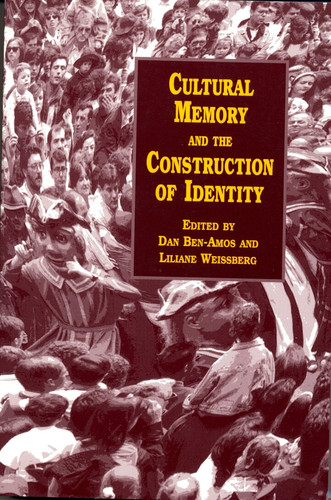
Cultural memory and the construction of identity

Dan Ben-Amos,Liliane Weissberg
This volume explores the dynamics of cultural memory in a variety of contexts. How do we remember persons, objects, events? Memory seems so personal, but, at the same time, it is shaped by collective experience and public representations. Newspapers, television, and even celebrations and festivities mark for us not only who we are, but also who we were and how we lived. Cultural Memory and the Construction of Identity brings together scholars of folklore, literature, history, and communication to explore the dynamics of cultural memory in a variety of contexts. The authors show how memory is shaped and how it operates in uniting society and creating images that attain the value of truth even if they deviate from fact. They point to the relationship between this memory and our notion of "culture." They also discuss this cultural memory on the level of everyday life. Building on research in the field, their contributions clearly show that cultural memory has become the creative invention of the past in service of both the present and an imagined future.
Wayne State University Press 1999 333 pages

The magnitude of genocide

Tatz, Colin Martin,Higgins, Winton
This book defines genocide, distinguishing it from mass murder, war crimes, and other atrocities; allows readers to grasp the magnitude of the crime of genocide across time and throughout human civilization; and facilitates an understanding of new and potential cases of genocide as they occur. Recently, the topic of intervention against genocide has received attention in global politics and the national political discourse of major countries. The challenges in confronting genocide and attempting to make a positive change are manifold. Simply establishing an agreement on the legal definition of genocide—and distinguishing it from genocidal massacres, war crimes, and other crimes against humanity—is problematic. This book provides a valuable resource for students, scholars, and journalists when public awareness of, and interest in, genocide has reached unprecedented levels. Written in an accessible way for a broad readership, the book makes use of case studies to enable an understanding of emerging and potential genocide with the necessary depth of coverage to evaluate critically the ways in which the United Nations and national governments engage them. Readers will understand the essential ingredients of genocide, from antiquity to the present, and grasp the extent of the crime across human history. A variety of case studies provides a means to measure genocidal magnitudes in terms of their intent and motive, geographical extent, pace, method, participants, outcomes, legacies, punishments, and reparations. A unique and crucial feature of the book is that it gives as much attention to the differences among genocides—for example, between a large-scale genocide like the Holocaust and the extermination of a 500-person Amazonian tribe—while still treating both within a single conceptual framework of genocide, without "discounting" the smaller case.
Praeger, an imprint of ABC-CLIO, LLC 2016-03-14 296 pages