58,196 results in 0.07 seconds

A Wall of Light

Edeet Ravel
“I am Sonya Vronsky, professor of mathematics at Tel Aviv University, and this is the story of a day in late August. On this remarkable day I kissed a student, pursued a lover, found my father, and left my brother.” So begins A Wall of Light , a novel which chronicles a single day in the life of Sonya, a thirty-two-year-old deaf woman about to break out of her predictable routine. Sonya lives in Tel Aviv with her protective half-brother, Kostya; their household has dwindled from five to two. Anna, their mother, is now in a nursing home and Noah, Kostya’s son, is living in Berlin. Kostya, wracked with guilt for the tragedies that have befallen Sonya, also grapples with the memory of his wife, Iris, a lawyer murdered in the course of a dangerous investigation seventeen years earlier. As we move through Sonya’s day, Noah and Anna narrate their stories as well. Noah’s journal entries cover the years 1980-1993, and Anna’s letters to Andrei, her married lover in Russia, are written in 1957, after Anna has emigrated to Israel to build a new life for herself and her son, Kostya. While Sonya’s story moves rapidly through the events of a single day, Noah and Anna’s voices take the reader back in time, filling in the circumstances that have led Sonya to this pivotal moment. We learn that Sonya has already endured two catastrophes. At age twelve, a medical mishap leaves her deaf, and at eighteen, while studying at university in Beersheba, Sonya is assaulted by two hoodlums. Throughout the novel, Sonya’s experiences, instigated by both human error and human evil, are echoed by the larger, political violence that haunts modern Israel. While Noah’s and Anna’s voices shed light on Sonya’s journey, they also provide insights into the political and cultural fabric of Israel from the mid 1950s to the present. Noah’s journal entries, starting with his tenth birthday and ending shortly after his army service, map his coming of age. We see him wrestling with his sexual identity and first sexual encounters, the fallout from his mother’s leftist politics, and his own conscription to the army. Anna’s secret letters to Andrei offer an outsider’s perspective on the new Israeli state. The remarkable events of Sonya’s day are set in motion when her brother gives her an antihistamine. Overcome with sleepiness, she dismisses her morning class early, asking only one student, Matar, to stay behind. She wants to understand what lies behind his unusual expression. He answers that he has been involved in war crimes, and surprises Sonya by kissing her. Sonya feels that she has been roused from a long slumber and as the novel progresses we see the ways in which her awakened desire shapes her choices. She decides to take a taxi home from the university and impulsively invites the taxi driver inside and seduces him. He complies, but when she tells him she’s deaf, he flees in confusion. Sonya is convinced that she has fallen in love with him, and decides to pursue him. She solicits her brother’s help and sets out to find her lover. Sonya’s search gains in intensity and purpose as she travels to East Jerusalem. There she encounters the walls that prevent Palestinians from moving freely through the West Bank. After an Alice in Wonderland -like journey past numerous obstacles, Sonya finally makes it to her lover’s house. This second encounter leads Sonya to a central revelation: the identity of her father. As this day of awakened desire and dispelled secrets closes, Sonya is able to step out from under the protective wing of her brother into a life that reflects both the ambiguity and uncertainty of contemporary Israel and her own personal possibilities.
Random House of Canada 2006-09-12 272 pages

The mysterious adventures of Pauline Bovary

Ravel, Edeet
With life simply overflowing with pungent melodrama, it's all Pauline and her purple pen can do to record each twist of the plot. First, her best friend splits to become a teen ice queen. Then, Pauline's dragged into the revolting details of her divorcing parents' love life. And to top it off, she finds herself falling for a self-described "neo-existentialist" -- much to the displeasure of her loyal boyfriend. How will she ever write her way out of this one?
Raincoast Books 2007 217 pages

The last goodbye

Hofmann, Edith
Edith Hofmann came to this country in 1946, studied and became a teacher in London. Her book, Unshed Tears, relates Edith's own experiences of being deported to a ghetto and of Auschwitz and Bergen Belsen. It was finally published in 2001. In the 1970s she went to art classes which inspired her to interpret her memories in a visual way. Her paintings are reproduced in this book accompanied by some equally powerful and emotive poems.
Able 2007 57 pages

Unshed Tears

Edith Hofmann
When Edith Hofmann sat down to write this book, she was a 19-year-old coming to terms with the fact of her own survival. It is a story which describes a struggle; the struggle to come to terms with a haunting past, the struggle to survive, and the struggle to unburden a broken heart. It also embodies a struggle to form, in language, that which at times all but defies linguistic form. When Hofmann started writing this book she had only been speaking English for two years, and yet she wanted to convey her experiences, in English, to those with whom she had made her home. The cruel reality was that no one really wanted to hear. She poured out her soul, only to be told that 'no one was interested in the war any more'. This was 1950. Some fifty years later she revisited the manuscript, wondering whether such a text would have any value. For fifty years her text had lain in her drawer, waiting to be read. Her story is a novel, but it certainly is not a fiction. Scared for her own safety, Hofmann chose to write in the third person rather than pen a memoir. Every page is bound up with the intricate details of her life, those whom she loved, and those whom she lost; the echoes of those terrible years, and the memory they imposed. In compiling this text, she decided neither to change it, by removing discrepancies or updating anything, which Hofmann wrote in the late 1940s, nor to improve her English, but rather to leave it as a raw and indelible testimony not only to her survival but to her bid to survive survival. You will be moved; not only by what she has written, but by the fact that she wrote at all.
Memoirs Publishing 2013-03-13 480 pages

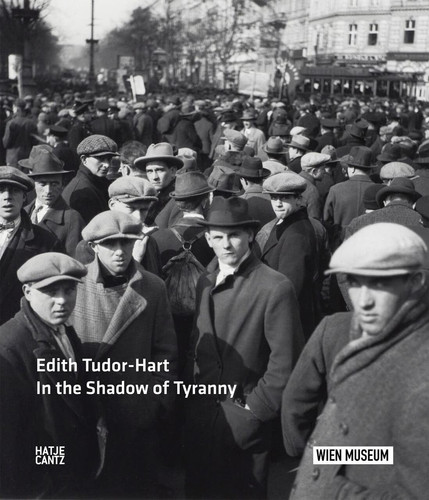
Edith Tudor-Hart: im Schatten der Diktaturen

Hart, Edith Tudor
The committed realism of working-class photography in the 1930s met the political developments of the time with an enlightening impetus. Among the first ranks of these socially motivated photographers, such as Paul Strand or Tina Modotti, was the Viennese photographer Edith Tudor-Hart (1908-1973), who had close ties to the communist party. The Jewish photographer took an introductory course at the Bauhaus in Dessau, and in 1933, she married an Englishman who supported the labor movement. The couple fled to Great Britain, where she became posthumously infamous for supplying recruits to the group of Soviet spies known as the Cambridge Five, until the ring was broken up in the 1960s.For her sensitive black-and-white photographs Tudor-Hart used a medium-format camera, shooting pictures from the hip, which allowed her to communicate freely with her models while working. This volume features her unpretentious, documentary-style photographs on social themes, which were taken in Vienna, London, Wales, and Scotland. (German edition ISBN 978-3-7757-3566-7) Exhibition schedule: National Galleries of Scotland, Edinburgh, March 4, 2013 | Wien Museum, Vienna, September 26, 2013-January 12, 2014
Hatje Cantz 2013 151 pages

The Book of Questions Yael, Elya, Aely

Edmond Jabès
The Book of Questions, of which volumes IV, V, VI are together published here, is a meditative narrative of Jewish Experience, and, more generally, man's relation to the world. In these volumes the word is personified in the woman Yael, silence in her still-born child Elya. Even though words imply ambiguity and lies, they are the home of the exile. A book becomes the Book, fragments of the law that are in some way unified, where past and present, the visionary, and the common place, encounter each other. For Jabes every word is a question in the book of being. Man defines himself in the world against all that threatens his existence- death, the infinite, silence, that is, God, his primal opponent. How can one speak what cannot be spoken?
Wesleyan University Press 1983 343 pages

The Blue Paradise A Viennese Operetta in a Prologue and Two Acts

Edmund Eysler,Sigmund Romberg,Leo Stein
This work has been selected by scholars as being culturally important and is part of the knowledge base of civilization as we know it. This work is in the public domain in the United States of America, and possibly other nations. Within the United States, you may freely copy and distribute this work, as no entity (individual or corporate) has a copyright on the body of the work. Scholars believe, and we concur, that this work is important enough to be preserved, reproduced, and made generally available to the public. To ensure a quality reading experience, this work has been proofread and republished using a format that seamlessly blends the original graphical elements with text in an easy-to-read typeface. We appreciate your support of the preservation process, and thank you for being an important part of keeping this knowledge alive and relevant.
Creative Media Partners, LLC 2018-11-10 116 pages

$1200 A Year: A Comedy In Three Acts

Ferber, Edna,Levy, Newman
This scarce antiquarian book is a facsimile reprint of the original. Due to its age, it may contain imperfections such as marks, notations, marginalia and flawed pages. Because we believe this work is culturally important, we have made it available as part of our commitment for protecting, preserving, and promoting the world's literature in affordable, high quality, modern editions that are true to the original work.
Kessinger Publishing, LLC 2010-09-10 184 pages