8468 results for "History"

Rising from the rails: Pullman porters and the making of the Black middle class

Tye, Larry
An engaging social history that reveals the critical role Pullman porters played in the struggle for African American civil rights When George Pullman began recruiting Southern blacks as porters in his luxurious new sleeping cars, the former slaves suffering under Jim Crow laws found his offer of a steady job and worldly experience irresistible. They quickly signed up to serve as maid, waiter, concierge, nanny, and occasionally doctor and undertaker to cars full of white passengers, making the Pullman Company the largest employer of African American men in the country by the 1920s. In the world of the Pullman sleeping car, where whites and blacks lived in close proximity, porters developed a unique culture marked by idiosyncratic language, railroad lore, and shared experience. They called difficult passengers "Mister Charlie"; exchanged stories about Daddy Jim, the legendary first Pullman porter; and learned to distinguish generous tippers such as Humphrey Bogart from skinflints like Babe Ruth. At the same time, they played important social, political, and economic roles, carrying jazz and blues to outlying areas, forming America's first black trade union, and acting as forerunners of the modern black middle class by virtue of their social position and income. Drawing on extensive interviews with dozens of porters and their descendants, Larry Tye reconstructs the complicated world of the Pullman porter, and provides a lively and enlightening look at this important social phenomenon.
Henry Holt 2004-07-06 314 pages

Reefer madness

Sloman, Larry
Reefer Madness , a classic in the annals of hemp literature, is the popular social history of marijuana use in America. Beginning with the hemp farming if George Washington, author Larry "Ratso" Sloman traces the fascinating story of our nation's love-hate relationship with the resilient weed we know as marijuana. Herein we find antiheroes such as Allen Ginsberg, Robert Mitchum (the first Hollywood actor busted for pot), Louis Armstrong (who smoked pot every day), the Beatles, and more rapscallions standing up for, supporting, smoking, and politicizing the bounties of marijuana. With a new afterword by Michael Simmons, who has written for Rolling Stone , LA Weekly , and High Times , on the progress of the hemp movement and the importance of medical marijuana, Reefer Madness is a classic that goes on.
St. Martin's 1998-11-15 447 pages

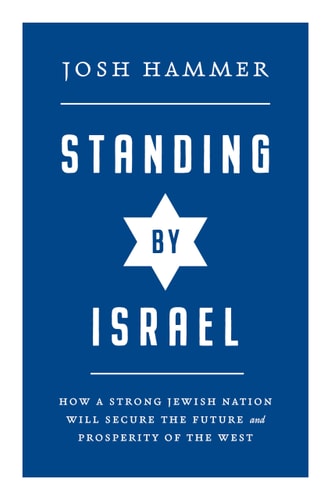
Israel and civilization: the fate of the Jewish nation and the destiny of the West

Hammer, Josh
"In Israel and Civilization, acclaimed journalist, legal expert, and pundit Josh Hammer makes a righteous case that the key to the prosperity of the West is the flourishing of the Jewish people and the Jewish State of Israel. Hammer's uplifting offense is our best defense against the enemies of the Jewish people's right to self-determination in their ancestral homeland. And as Hammer makes clear, manifesting the promise of Israel requires action by the United States and its allies. There can be no overstating the impact of the trauma of October 7, 2023, on the Jewish people. Yet the anti-Israel reactions the world over have been equally devastating. Rallies of hundreds of thousands explicitly or implicitly promoting Hamas violence; demonstrations of Ivy League professors celebrating the pogrom as awesome and exhilarating; so-called human rights organizations that refuse to unequivocally condemn the use of rape as a weapon of war; and a hydra of multiculturalism, postmodern relativism, and tolerance--it all threatens the physical and metaphysical survival of the West and our essential Jewish heritage. Preserving the best of what's been thought and said throughout history and ensuring that there will be centuries more requires a West that is proud of its Jewish heritage. In other words, the continued existence of the Jewish people is inextricably tied to the endurance of Western civilization. Israel is the center of the battle, and Israel and Civilization explains why and how the Jewish state must win."--
Radius Book Group 2025-03-18 293 pages

The Expanding Blaze How the American Revolution Ignited the World, 1775-1848

Jonathan Israel
"A major intellectual history of the American Revolution and its influence on later revolutions in Europe and the Americas, the Expanding Blaze is a sweeping history of how the American Revolution inspired revolutions throughout Europe and the Atlantic world in the eighteenth and nineteenth centuries. Jonathan Israel, one of the world's leading historians of the Enlightenment, shows how the radical ideas of American founders such as Paine, Jefferson, Franklin, Madison, and Monroe set the pattern for democratic revolutions, movements, and constitutions in France, Britain, Ireland, the Netherlands, Belgium, Poland, Greece, Canada, Haiti, Brazil, and Spanish America. The Expanding Blaze reminds us that the American Revolution was an astonishingly radical event--and that it didn't end with the transformation and independence of America. Rather, the revolution continued to reverberate in Europe and the Americas for the next three-quarters of a century. This comprehensive history of the revolution's international influence traces how American efforts to implement Radical Enlightenment ideas--including the destruction of the old regime and the promotion of democratic republicanism, self-government, and liberty--helped drive revolutions abroad, as foreign leaders explicitly followed the American example and espoused American democratic values. The first major new intellectual history of the age of democratic revolution in decades, The Expanding Blaze returns the American Revolution to its global context."--
Princeton University Press 2019-11-26 768 pages

Return from Siberia

John Shallman
** Wall Street Journal , Publishers Weekly , and USA Today Bestseller!** In the lead-up to the Bolshevik Revolution, one young revolutionary is condemned to exile in Siberia; a hundred years later, his ancestors discover his story and learn just how much history has repeated itself. In the midst of running a long-shot political campaign, Democratic political consultant John Simon discovers a 100-year-old manuscript written by his grandfather Joseph—a brilliant young revolutionary whose exile to Siberia by the last czar of Russia is just the beginning of an extraordinary tale of survival, romance, and revolution. Return From Siberia chronicles not only the Simon family's relationship to each other and the past, but also the remarkable story of a young man who sacrificed everything for his political ideals. As Joseph's manuscript is translated, chapter-by-chapter, the Simon family is pulled deep into their ancestor’s story— in particular, the bitter rivalry between two brothers, whose competing visions of the American Dream are played out on the campaign trail and in their lives. Return from Siberia is a timely appraisal of modern politics and society juxtaposed with an inside look into the machinations of a young political mind 100 years ago. The true story documents an extraordinary time of political upheaval in Russia and Europe just prior to World War I while also drawing parallels to current day American politics and the current philosophical and ideological debates about immigration, Democratic Socialism, and Capitalism. Beyond the deep social, political, and philosophical themes, there is romance, adventure, betrayal, suspense, and the struggles of families today and in yesteryear. Return from Siberia illustrates how one modern family's connection to the past helps them resolve their future.
Skyhorse 2020-08-18 256 pages

Sweetness The Enigmatic Life of Walter Payton

Jeff Pearlman
The definitive biography of Chicago Bears superstar Walter Payton. In the twelve years since his death from cancer, Walter Payton’s legend has only grown in magnitude. The Hall of Fame running back, who broke Jim Brown’s all-time NFL rushing mark, appeared in nine Pro Bowls, won a Super Bowl ring with the 1985 Chicago Bears, and is still revered throughout the sporting landscape. Payton has become the lasting image of what’s great about football. Yet in mindlessly canonizing the man simply known as “Sweetness,” we have missed the opportunity to understand—and appreciate—one of the most uniquely complex and enigmatic superstars in the history of American sports. No longer. Based on meticulous research and interviews with nearly seven hundred family members, friends, teammates, and various associates, Sweetness delivers an unforgettable portrait of a man who lived his life just like he played the game: at full speed. From his childhood in segregated Mississippi, to Chicago, where Payton emerged from athlete to icon as he broke the NFL’s all-time rushing record and led the Bears to Super Bowl glory; to his darker moments battling depression and adjusting to life after football, Sweetness is an eloquently written, revelatory saga of a complex, guarded superstar who died far too young.
Penguin Publishing Group 2012-08-28 512 pages

Sandy Koufax: a lefty's legacy

Leavy, Jane
In an era when too many heroes have been toppled from too many pedestals, Sandy Koufax stands apart and alone, a legend who declined his own celebrity. As a pitcher, he was sublime, the ace of baseball lore. As a human being, he aspired to be the one thing his talent and his fame wouldn't allow: a regular guy. A Brooklyn kid, he was the product of the sedate and modest fifties who came to define and dominate baseball in the sixties. In Sandy Koufax: A Lefty's Legacy, former award-winning Washington Post sportswriter Jane Leavy delivers an uncommon baseball book, vividly re-creating the Koufax era, when presidents were believed and pitchers aspired to go the distance. He was only a teenager when Dodgers owner Walter O'Malley proclaimed him "the Great Jewish Hope" of the franchise. But it wasn't until long after the team had abandoned Brooklyn that the man became the myth. Old-fashioned in his willingness to play when he was injured and in his acute sense of responsibility to his team, Koutax answered to an authority higher than manager Walter Alston. When he refused to pitch the opening game of the 1965 World Series because it fell on Yom Kippur, the holiest day of the Jewish calendar, he inadvertently made himself a religious icon and an irrevocably public figure. A year later, he was gone -- done with baseball at age thirty. No other sports hero had retired so young, so well, or so completely. Despite Sandy Koufax's best efforts to protect his privacy, his legend has grown larger ever since. Part biography, part cultural history, Sandy Koufax: A Lefty's Legacy gets as close to that legend as he will allow. Through meticulous reporting and interviews with five hundred of his friends, teammates, and opponents, Leavy penetrates the mythology to discover a man more than worthy of myth.
HarperCollins 2002-09-17 282 pages

Neighbors: the destruction of the Jewish community in Jedwabne, Poland

Gross, Jan Tomasz
One summer day in 1941, half of the Polish town of Jedwabne murdered the other half, 1,600 men, women, and children, all but seven of the town's Jews. Neighbors tells their story. Jan Gross pieces together eyewitness accounts and other evidence into a reconstruction of the horrific July day remembered well by locals but forgotten by history. His investigation reads like a detective story, and its unfolding yields wider truths about Jewish-Polish relations, the Holocaust, and human responses to occupation and totalitarianism. It is a story of surprises: The newly occupying German army did not compel the massacre, and Jedwabne's Jews and Christians had previously enjoyed cordial relations. After the war, the nearby family who saved Jedwabne's surviving Jews was derided and driven from the area. The single Jew offered mercy by the town declined it. Most arresting is the sinking realization that Jedwabne's Jews were clubbed, drowned, gutted, and burned not by faceless Nazis, but by people whose features and names they knew well: their former schoolmates and those who sold them food, bought their milk, and chatted with them in the street. As much as such a question can ever be answered, Neighbors tells us why.
Arrow Books 2003 271 pages

Firestorm: the great Los Angeles fires and America's new age of disaster

Soboroff, Jacob
"On the morning of January 7, 2025, a message pinged the phone of Jacob Soboroff, a national correspondent for NBC News. "Big Palisades fire. We are evacuating," his brother texted within minutes of the blaze engulfing the hillside behind the home where he and his pregnant wife were living. "Really bad." An attached photo showed a huge black plume rising from behind the house, an umbrella of smoke towering over everything they owned. Jacob rushed to the office of the bureau chief. "I should go. I grew up in the Palisades." Soon he was on the front line of the blaze-his first live report of what would turn out to be weeks covering unimaginable destruction, from both the Palisades Fire and the Eaton Fire, in Altadena. In the days to come, Soboroff appeared across the networks of NBC News as Los Angeles was ablaze, met with displaced residents and workers, and pressed Governor Gavin Newsom in an interview on MEET THE PRESS. But no story Soboroff has covered at home or abroad-the trauma of family separation at the border, the displacement of the war in Ukraine, the collapse of order in Haiti-could have prepared him for reporting live as the hallmarks of his childhood were engulfed in flames around him while his hometown burned to the ground. But for Soboroff, questions remained after the fires were controlled: what had he just witnessed? How could it have happened? Is it inevitable something like it will happen again? This set Soboroff off on months of reporting-with firefighters, fire victims, political leaders, academics, earth scientists, wildlife biologists, meteorologists and more-that made him keenly aware of how the misfortune of seeing his past carbonize was also a form of time travel into the dystopian world his children will inhabit. This is because the 2025 LA fires were not an isolated tragedy, but rather they are a harbinger-"the fire of the future," in the words of one senior emergency-management official. FIRESTORM is the story of the costliest wildfire in American history, the people it affected and the deeply personal connection to one journalist covering it. It is a love letter to Los Angeles, a yearning to understand the fires, and why America's new age of disaster we are living through portends that-without a reckoning of how Los Angeles burned-there is more yet, and worse, to come"-- Provided by publisher.
Mariner Books 2026-01-06 288 pages

Asimov's chronology of the world

Asimov, Isaac
From the world's greatest science writer, a history of the world from the Big Bang to 1945, told in irresistible short takes and highlighted by a timeline.Author To list Isaac Asimov's honors, as to list his books, would be excessive. Let it simply be noted that Isaac Asimov was the most famous, most honored, most widely read, and most beloved science fiction author of all time. In his five decades as an author, he wrote more than four hundred books, won every award his readers and colleagues could contrive to give him, and provided pleasure and insight to millions. He died in 1992, still at work.
HarperCollins 1991-01-01 674 pages

The next 100 years: a forecast for the 21st century

Friedman, George
“Conventional analysis suffers from a profound failure of imagination. It imagines passing clouds to be permanent and is blind to powerful, long-term shifts taking place in full view of the world.” —George Friedman In his long-awaited and provocative new book, George Friedman turns his eye on the future—offering a lucid, highly readable forecast of the changes we can expect around the world during the twenty-first century. He explains where and why future wars will erupt (and how they will be fought), which nations will gain and lose economic and political power, and how new technologies and cultural trends will alter the way we live in the new century. The Next 100 Years draws on a fascinating exploration of history and geopolitical patterns dating back hundreds of years. Friedman shows that we are now, for the first time in half a millennium, at the dawn of a new era—with changes in store, including: • The U.S.-Jihadist war will conclude—replaced by a second full-blown cold war with Russia. • China will undergo a major extended internal crisis, and Mexico will emerge as an important world power. • A new global war will unfold toward the middle of the century between the United States and an unexpected coalition from Eastern Europe, Eurasia, and the Far East; but armies will be much smaller and wars will be less deadly. • Technology will focus on space—both for major military uses and for a dramatic new energy resource that will have radical environmental implications. • The United States will experience a Golden Age in the second half of the century. Written with the keen insight and thoughtful analysis that has made George Friedman a renowned expert in geopolitics and forecasting, The Next 100 Years presents a fascinating picture of what lies ahead. For continual, updated analysis and supplemental material, go to www.Stratfor.com
Doubleday 2009 253 pages

Forever free: the story of emancipation and Reconstruction

Foner, Eric
From one of our most distinguished historians, a new examination of the vitally important years of Emancipation and Reconstruction during and immediately following the Civil War–a necessary reconsideration that emphasizes the era's political and cultural meaning for today's America. In Forever Free, Eric Foner overturns numerous assumptions growing out of the traditional understanding of the period, which is based almost exclusively on white sources and shaped by (often unconscious) racism. He presents the period as a time of determination, especially on the part of recently emancipated black Americans, to put into effect the principles of equal rights and citizenship for all. Drawing on a wide range of long-neglected documents, he places a new emphasis on the centrality of the black experience to an understanding of the era. We see African Americans as active agents in overthrowing slavery, in helping win the Civil War, and–even more actively–in shaping Reconstruction and creating a legacy long obscured and misunderstood. Foner makes clear how, by war's end, freed slaves in the South built on networks of church and family in order to exercise their right of suffrage as well as gain access to education, land, and employment. He shows us that the birth of the Ku Klux Klan and renewed acts of racial violence were retaliation for the progress made by blacks soon after the war. He refutes lingering misconceptions about Reconstruction, including the attribution of its ills to corrupt African American politicians and “carpetbaggers,” and connects it to the movements for civil rights and racial justice. Joshua Brown's illustrated commentary on the era's graphic art and photographs complements the narrative. He offers a unique portrait of how Americans envisioned their world and time. Forever Free is an essential contribution to our understanding of the events that fundamentally reshaped American life after the Civil War–a persuasive reading of history that transforms our sense of the era from a time of failure and despair to a threshold of hope and achievement.
Knopf 2005 268 pages

The Book on Bush How George W. Bush (mis)leads America

Eric Alterman,Mark J. Green
When George W. Bush Became President in January 2001, he took office with a comfortably familiar surname, bipartisan rhetoric, and the promise of calming a public shaken by the convulsions of a contested election. Then, after the tragedy of 9/11, both the country and the world looked to him for leadership that could unite people behind great common goals. Instead, George W. Bush squandered the good will felt toward America, turned allies into adversaries, and ran what may well be the most radical and divisive administration in the history of the presidency. Carefully documented and with vivid detail, The Book on Bush traces the guiding ideology that runs through a wide range of W.'s policies. The Book on Bush is an invaluable resource that exposes plutocracy posing as patriotism and, in area after area, the encroachment of radical right-wing ideology onto a moderate country. Book jacket.
Penguin Books 2004 419 pages

Survivor Café The Legacy of Trauma and the Labyrinth of Memory

Elizabeth Rosner
Named a Best Book of the Year by The San Francisco Chronicle "Survivor Café . . . feels like the book Rosner was born to write. Each page is imbued with urgency, with sincerity, with heartache, with heart.... Her words, alongside the words of other survivors of atrocity and their descendants across the globe, can help us build a more humane world." — San Francisco Chronicle As firsthand survivors of many of the twentieth century's most monumental events—the Holocaust, Hiroshima, the Killing Fields—begin to pass away, Survivor Café addresses urgent questions: How do we carry those stories forward? How do we collectively ensure that the horrors of the past are not forgotten? Elizabeth Rosner organizes her book around three trips with her father to Buchenwald concentration camp—in 1983, in 1995, and in 2015—each journey an experience in which personal history confronts both commemoration and memorialization. She explores the echoes of similar legacies among descendants of African American slaves, descendants of Cambodian survivors of the Killing Fields, descendants of survivors of the bombing of Hiroshima and Nagasaki, and the effects of 9/11 on the general population. Examining current brain research, Rosner depicts the efforts to understand the intergenerational inheritance of trauma, as well as the intricacies of remembrance in the aftermath of atrocity. Survivor Café becomes a lens for numerous constructs of memory—from museums and commemorative sites to national reconciliation projects to small–group cross–cultural encounters. Beyond preserving the firsthand testimonies of participants and witnesses, individuals and societies must continually take responsibility for learning the painful lessons of the past in order to offer hope for the future. Survivor Café offers a clear–eyed sense of the enormity of our twenty–first–century human inheritance—not only among direct descendants of the Holocaust but also in the shape of our collective responsibility to learn from tragedy, and to keep the ever–changing conversations alive between the past and the present.
Catapult 2018-09-04 288 pages

Bad indians: a tribal memoir

Miranda, Deborah A.
"If we allow the pieces of our culture to lie scattered in the dust of history, trampled on by racism and grief, then yes, we are irreparably damaged. But if we pick up the pieces and use them in new ways that honor their integrity, their colors, textures, stories, then we do those pieces justice, no matter how sharp they are, no matter how much handling them slices our fingers and makes us bleed." This book, part tribal history, part lyric and intimate memoir, teaches us about California Indian history, past and present. In it, the author tells stories of her Ohlone Costanoan Esselen family as well as the experience of California Indians as a whole through oral histories, newspaper clippings, anthropological recordings, personal reflections, and poems.
Heyday 2012 217 pages

Who we are and how we got here: ancient DNA and the new science of the human past

Reich, David (Of Harvard Medical School)
"A groundbreaking book about how technological advances in genomics and the extraction of ancient DNA have profoundly changed our understanding of human prehistory while resolving many long-standing controversies. Massive technological innovations now allow scientists to extract and analyze ancient DNA as never before, and it has become clear--in part from David Reich's own contributions to the field--that genomics is as important a means of understanding the human past as archeology, linguistics, and the written word. Now, in The New Science of the Human Past, Reich describes with unprecedented clarity just how the human genome provides not only all the information that a fertilized human egg needs to develop but also contains within it the history of our species. He delineates how the Genomic Revolution and ancient DNA are transforming our understanding of our own lineage as modern humans; how genomics deconstructs the idea that there are no biologically meaningful differences among human populations (though without adherence to pernicious racist hierarchies); and how DNA studies reveal the deep history of human inequality--among different populations, between the sexes, and among individuals within a population"--
Oxford University Press 2018 335 pages

Dark agenda: the war to destroy Christian America

Horowitz, David
Filled with stories that demonstrate the mind-numbing reasons behind the secular left's smug disdain for Christianity, Horowitz traces the history of religious liberty from the Founding Fathers to now. He shows how the Founding Fathers put aside their own skepticisms about God and religion to write The Declaration of Independence. Today, he writes Donald Trump's "genuine love for his country" has galvanized Christians to fight the secular war waged against them -- as the president has become a lightning rod for the radical left.
Humanix Books 2018 194 pages

The problem of slavery in the age of emancipation

Davis, David Brion
Winner of the National Book Critics Circle Award 2014 With this volume, Davis presents the age of emancipation as a model for reform and as probably the greatest landmark of willed moral progress in human history. Bringing to a close his staggeringly ambitious, prizewinning trilogy on slavery in Western culture Davis offers original and penetrating insights into what slavery and emancipation meant to Americans. He explores how the Haitian Revolution respectively terrified and inspired white and black Americans, hovering over the antislavery debates like a bloodstained ghost. He offers a surprising analysis of the complex and misunderstood significance the project to move freed slaves back to Africa. He vividly portrays the dehumanizing impact of slavery, as well as the generally unrecognized importance of freed slaves to abolition. Most of all, Davis presents the age of emancipation as a model for reform and as probably the greatest landmark of willed moral progress in human history.
Vintage Books 2015-01-06 422 pages