8468 results for "History"

Race, class and power: Harold Wolpe and the radical critique of apartheid

Friedman, Steven
Over four decades ago, radical scholars began to suggest a new way of looking at South African society - one that blamed the economic power of those who owned property for the racial bondage of the black majority. Their work, and the debates it triggered, are mostly forgotten, but they and their critics have much to say that sheds lights on today's South African realities. Harold Wolpe was arguably the most influential theorist of this generation. His writings played a major role in a revolution in thought, and his celebrated escape from prison in the 1960s made him a symbol of alternative action. Race, Class and Power clearly and insightfully examines Wolpe's work in the political, intellectual, and social contexts in which it was developed and to which it gave form. Drawing on interviews with those who Wolpe worked with, disagreed with, and inspired, the book also maps his influence on ideas and the culture that emerged in anti-apartheid circles in the 1970s. Harold Wolpe's writings are a prism through which South African society can be viewed, and this book is an intellectual biography both of Wolpe and of South Africa's left. It also assesses and engages with the ongoing impact of Wolpe's ideas into the post-apartheid present. Moreover, it suggests how Wolpe's work can move us towards a way of thinking about and acting upon South Africa's realities differently.
University of KwaZulu-Natal Press 2015 368 pages

Jews, Christians and polytheists in the ancient synagogue

Steven Fine
Jews, Christians and Polytheists in the Ancient Synagogue explores the ways in which divergent ethnic, national and religious communities interacted with one another within the synagogue in the Greco-Roman period. It presents new perspectives regarding the development of the synagogue and its significance of this institution for understanding religion and society under the Roman Empire.
Routledge 1999 253 pages

Belshazzar Court Or Village Life in New York City

Simeon Strunsky
We have been called a nation of villagers, and Mr. Strunsky in these sketches discourses in a friendly way on some of our village characteristics. He writes from the point of view of the man who has an uptown apartment, with rent just a trifle higher than he can afford, in Belshazzar court, and who travels daily to his place of business in Park Row via the subway. Occasionally the point of view of Emmeline is called in by way of reinforcement or contrast. In general it is with the street, the show, the game, and the night life of the city that he is concerned, but now and again it is the young son Harold who offers a fruitful subject for meditation.* * * * *"His book has that quality which is becoming rare: it is companionable." --Bookman"By his very lightness of style and his gentle grace of humor he makes 'Belshazzar court' a genuine interpretation of a place, a people and a life whose spirit has been utterly missed by many an ultra serious and portentous analyst. --Boston Transcript"Few have the power or the inclination to see In the complexities of modern city life the simplicity and kindliness of human nature, essentially the same everywhere, but that is the chief charm of these essays." --Dial"The rare quality of the book Is not so much the humor as the suggestive quality of the thought." --Nation"Delightful essays about New York City." --Library Bulletin
Amazon Digital Services LLC - KDP Print US 2019-05-12 195 pages

Queen Victoria A Biography by Sidney Lee

Sir Sidney Lee
This work has been selected by scholars as being culturally important, and is part of the knowledge base of civilization as we know it. This work was reproduced from the original artifact, and remains as true to the original work as possible. Therefore, you will see the original copyright references, library stamps (as most of these works have been housed in our most important libraries around the world), and other notations in the work. This work is in the public domain in the United States of America, and possibly other nations. Within the United States, you may freely copy and distribute this work, as no entity (individual or corporate) has a copyright on the body of the work.As a reproduction of a historical artifact, this work may contain missing or blurred pages, poor pictures, errant marks, etc. Scholars believe, and we concur, that this work is important enough to be preserved, reproduced, and made generally available to the public. We appreciate your support of the preservation process, and thank you for being an important part of keeping this knowledge alive and relevant.
BiblioBazaar 2015-09 668 pages

Classical economics

Hollander, Samuel
In this unconventionial and sharply written text, Hollander introduces the work of Smith, Ricardo, and Mill, and, on specific Malthus and Marx. He leads the student through the nuances of the arguments, making clear how he agrees with or challenges recieved ideas about their writings. Attention is given to the precursors of the classics, to their immediate successors, and to the Sraffian system.
B. Blackwell 1987-09-24 485 pages

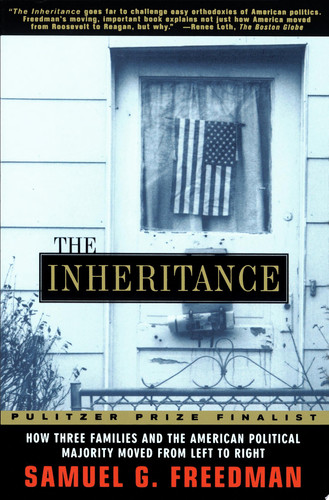
The inheritance: how three families and America moved from Roosevelt to Reagan and beyond

Freedman, Samuel G.
Orphan in the new world (Silvio Burigo) -- Liverpool on the Hudson (Lizzie Sanford Garrett) -- The dreamer and his son (Joseph Obrycki) -- The sewing room (Lizzie Garrett) -- The physics of cynicism (Joseph Obrycki) -- Worth two (Silvio Burigo) -- Voices from downstairs (Richie Garrett) -- Recessive genes (Silvio Burigo/Lorraine and Frank Trotta) -- Address as destiny (Vilma and Jack Maeby) -- Fence and basement (Silvio Burigo/Lorraine and Frank Trotta) -- Senator Clearwater (Richie Garrett) -- Uncle Paulie's Porch (Frank Trotta Jr.) -- The State Street Gang (Leslie Maeby) -- Poor snob (Tim Carey) -- Enchantment and its opposite (Frank Trotta Jr.) -- Incumbent protection (Leslie Maeby) -- Red suspenders (Tim Carey).
Simon & Schuster 1996 464 pages

Yehoshua Hankin: Two Loves

Amit-Cohen, Irit,Kark, Ruth
Yehoshua Hankin had two loves: love for his wife Olga, many years his senior, and a love for the land. The two competed with each other, but he never preferred one over the other. Displayed for the reader, against the backdrop of the atmosphere in the Land of Israel toward the close of the Ottoman period and into that of the British Mandate, is a broad slice of life spread over fifty years of the man dubbed by constituents as the “Redeemer of the Land,” and of the figures who accompanied him.The characters, events, times, and places described in this historical novel are to a great extent a faithful representation of reality, and they are interwoven into a multi-faceted biography illuminating the period and forgotten actors in a new light. Joining forces in writing this book were Irit Amit Cohen and Ruth Kark, who combined Irit Amit Cohen’s literary work in the genre of the historical novel with Ruth Kark’s long-term research endeavor on Yehoshua Hankin, which even encompassed oral documentation from his close associates.
Israel Academic Press 2022-07-24 480 pages

Tomorrow is Already Here

Robert Jungk
This work has been selected by scholars as being culturally important, and is part of the knowledge base of civilization as we know it. This work is in the "public domain in the United States of America, and possibly other nations. Within the United States, you may freely copy and distribute this work, as no entity (individual or corporate) has a copyright on the body of the work. Scholars believe, and we concur, that this work is important enough to be preserved, reproduced, and made generally available to the public. We appreciate your support of the preservation process, and thank you for being an important part of keeping this knowledge alive and relevant.
Creative Media Partners, LLC 2022-10-27 258 pages

Town and gown: the fight for social justice, urban rebirth, and higher education

Parmet, Robert D.
Town and Gown is the story of the birth in the 1960s and survival through the 1970s of an inner city college, York College of the City University of New York, in Jamaica, Queens. Created as a liberal arts college to provide increased access to minority students, it was placed in a mainly minority neighborhood, where it received exceptionally strong support from a middle class African American community seeking access to quality higher education for its children and a business community striving to overcome the effects of “white flight.” Operating in rented quarters without a permanent campus and regarded as academically illegitimate owing to its location, the college was regarded as expendable in hard times. From 1971 to 1979 critics both inside and outside of the City University, such as Governor Nelson Rockefeller and Mayor Edward Koch, questioned the school’s right to exist, especially during the New York City and State Fiscal Crisis of 1975 and 1976. Undaunted, the college and its diverse supporters rallied and won. An amazing groundswell of support from Southeast Queens, and intense political pressure, saved it. Though the fight was often bitter, York College and Jamaica would not be denied. The college moved onto its permanent campus as a new Jamaica Center emerged.
Fairleigh Dickinson University Press 2011-11-23 169 pages

Fashioning Jewish identity in medieval western Christendom

Chazan, Robert
During the course of the twelfth century, increasing numbers of Jews migrated into western Christendom from Islamic lands. But western Christendom was both appealing and threatening to the Jewish immigrants. Indeed, western Christendom was entering a phase of intense missionizing activity, some of which was directed at the long-term Jewish residents of Europe and the Jewish newcomers. The writings of twelfth- and thirteenth-century leaders from southern France and northern Spain constitute the first evidence of Jewish anti-Christian polemics from within western Christendom. These leaders were fully cognizant of the core Christian thrusts, described them in detail for their co-religionists, and rebutted them carefully. This study recreates some of the clarification and rebuttal, and examines the techniques of persuasion adopted by the Jewish polemicists in order to reassure their Jewish readers of the truth of Judaism and the error of Christianity.
Cambridge University Press 2004 379 pages