

7908 results for "Science"

Progress in bioethics: science, policy, and politics
Introduction -- Bioethics as politics -- Bioethics progressing / Sam Berger and Jonathan D. Moreno -- Can there be a progressive bioethics? / Richard Lempert -- Bioethics as progressive -- Politics, progressivism, and bioethics / R. Alta Charo -- Bioethics : the new conservative crusade / Kathryn Hinsch -- Justice that you must pursue : a progressive American bioethics / Laurie Zoloth -- The sociology of political bioethics -- Professionalism and politics : biomedicalization and the rise of bioethics / Paul Root Wolpe -- The tension between progressive bioethics and religion / John H. Evans -- Can national bioethics commissions be progressive? should they? / Eric M. Meslin -- Conflicting views of biotechnology -- Technoprogressive biopolitics and human enhancement / James J. Hughes -- Biopolitics, mythic science, and progressive values / Marcy Darnovsky -- Progress beyond politics? -- Can bioethics transcend ideology? (and should it?) / Arthur L. Caplan -- A Catholic progressive on care and conscience / Michael Rugnetta -- Reforming health care : ends and means / Daniel Callahan -- Finding common ground in bioethics? / William F. May -- Afterword

Life: the leading edge of evolutionary biology, genetics, anthropology, and environmental science
"The newest addition to John Brockman's Edge.org series explores life itself, bringing together the world's leading biologists, geneticists, and evolutionary theorists -- including Richard Dawkins, Edward O. Wilson, J. Craig Venter, and Freeman Dyson. Scientists' understanding of life is progressing more rapidly than at any point in human history, from the extraordinary decoding of DNA to the controversial emergence of biotechnology. Featuring pioneering biologists, geneticists, physicists, and science writers, Life explains just how far we've come -- and takes a brilliantly educated guess at where we're heading. Richard Dawkins and J. Craig Venter compare genes to digital information, and sketch the frontiers of genomic research. Edward O. Wilson reveals what ants can teach us about building a superorganism -- and, in turn, about how cells build an organism. Elsewhere, David Haig reports new findings on how mothers and fathers individually influence the human genome, while Kary Mullis covers cutting edge treatments for dangerous viruses. And there's much more in this fascinating volume. We may never have all the answers. But the thinkers collected in Life are asking questions that will keep us dreaming for generations."--provided by Amazon.com.

Secular religion: a polemic against the misinterpretation of modern social philosophy, science and politics as "new religions"
Despite reworking and rewriting Secular Religion for about ten years Hans Kelsen finally withdrew the text from printing in 1964. After long and careful consideration the Hans Kelsen-Institut has now decided to lift the veil on Kelsen's somewhat mysterious last book and to bring Secular Religion to a wider public. In this book Kelsen vehemently opposes any attempt to discredit modern science as failed religion, a view prominently held by Kelsen's former student Eric Voegelin. Any contemporary trend towards a "new" de-secularization will have to face Kelsen's criticism. Furthermore, as Kelsen convincingly demonstrates, any trend towards a "new" theologization holds the danger of totalitarianism. In this context Kelsen's text from 1964 offers an excellent contribution to a current discussion

Analog Science Fiction and Fact, February 1980 (Volume C, No. 2)
Quality Control essay by Stanley Schmidt Savage Planet novelette by Barry B. Longyear How to Get Along With an Extraterrestrial or Your Neighbor essay by G. Harry Stine One-Wing (Part 2 of 2) serial by George R. R. Martin and Lisa Tuttle Tetherball shortstory by Thomas A. Easton A First Glimpse novelette by Raymond Z. Gallun "Your Privacy is My Business" shortstory by Joe Patrouch Biocybernetics Revisited [The Alternate View] essay by G. Harry Stine

Hidden light: science secrets of the Bible

Reflections on Big Science
Alvin M. Weinberg has played a key role in scientific developments of the 20th century. In 1941 he joined the University of Chicago group that developed the first chain reactor. As a member of this team, he worked on the reactor that produced the plutonium that would ultimately be used for the bomb dropped on Nagasaki, Japan. He served as director of ORAU's Institute for Energy Analysis (IEA), which pioneered investigations of the greenhouse effect, alternate energy sources, and maximizing energy sources at minimum cost to the economy and the environment. Throughout his career, Weinberg has been a leading figure in the development of nuclear energy. Among his accomplishments was the proposal to use pressurized water for nuclear submarine propulsion. Weinberg has been recognized many times, winning the Atoms for Peace Award, the Harvey Prize, the Heinrich Award, and the Fermi Award. He is a member of the National Academy of Sciences, the National Academy of Engineering, the American Academy of Arts and Sciences, the American Philosophical Society, and a Foreign Member of the Royal Netherlands Academy of Sciences. In addition to his writings concerning scientific and administrative works, he is also a prolific writer on the interaction between modern technology and society. He has coined many phrases that have become part of our everyday language; "big science," "technological fix," and "faustian bargain" are just a few examples. May of his earlier essays are published in this book, Reflections on Big Science. These essays treat a number of acute or chronic problems and many prescribe remedies. Included are considerations of the population expansion and the concomitant expansion of energy and information, the new social structures built by the new technology, the effects of the organization and financing of Big Science on the nature of scientific inquiry, the potential contribution of the federal laboratories to science education, and the role of the scientist (which is distinct from, and as vital as, the role of the documentalist) is closing the Information Gap.

GALAXY Science Fiction (JANUARY 1952)

Science and Spirit Reconciled
"We live in a time of great peril. The spectre of the human race overcome by disease, starvation and an unrelenting assault by other life forms is beyond our ability to entertain. What is to be done? Alan A. D. Cohen has seen the vision and offers us hope; hope that by changing our life styles radically, humankind can be spared the suffering for which it seems destined. His message is that we must live every moment as part of a unity we have not begun to appreciate. The need for such a change in human consciousness is great. I hope many people will read this book." Reverend Richard Leonard, Minister Emeritus, All Souls Church, New York. Both quantum mechanics and digital logic theory prove that no atomic particle can exist separately from the rest of creation; therefore only unity exists. But unity is not material. It can only be spiritual. Once this is accepted, new horizons of mystery unfold. We see mind as an ocean of consciousness in which we swim like fishes in a universal sea. We are divine. New, scientifically valid spiritual laws appear. Only if we obey these laws will we survive. Examples are given of an office worker, a builder and a waitress, who, by their belief in unity, spread healing influences throughout the world.

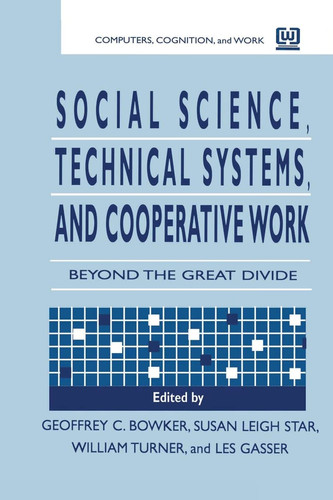
Social science, technical systems, and cooperative work: beyond the great divide
This book is the first to directly address the question of how to bridge what has been termed the ""great divide"" between the approaches of systems developers and those of social scientists to computer supported cooperative work--a question that has been vigorously debated in the systems development literature. Traditionally, developers have been trained in formal methods and oriented to engineering and formal theoretical problems; many social scientists in the CSCW field come from humanistic traditions in which results are reported in a narrative mode. In spite of their differences in style,
The art and science of handwriting
Reflects the various facets of the author's lifetime of work in letterforms. This collection of papers and articles, linked by a commentary on a decade in handwriting studies, shows how the educational and medical aspects of her work could not have taken place without a lengthy grounding in lettering.

The feast of St Dionysus: five science fiction stories

Polluted science: the EPA's campaign to expand clean air regulations
In his book, Michael Fumento persuasively shows that the Environmental Protection Agency's (EPA) expansion of the Clean Air Act could burden Americans with major lifestyle changes and cost tens of billions of dollars-with no real benefit. The author looks at recent EPA proposals to tighten national air quality standards for particulate matter and ozone. He argues that the evidence supporting the health benefits of the new standards is extremely weak and ambiguous and has been distorted by the EPA. Furthermore, he says that proposing new regulations is absurd considering that the levels of these pollutants are already much lower than they used to be and are still dropping. By demanding pollution levels well below the level at which health effects are apparent, he says, the EPA labels all man-made emissions-even those that are harmless-as pollutants. He suggests that the clearest results of adopting the new standards would be to expand the agency's regulatory powers and set a precedent for making future revisions to air quality standards with little regard for demonstrated health effects. This book will appeal to environmental, energy and health policy makers and analysts, scientists, economists, legislators, and executives in utilities, chemical, transportation and manufacturing industries.

A dark science: women, sexuality, and psychiatry in the nineteenth century
This interpretation of the way female sexuality was viewed by the nineteenth-century European medical profession characterizes an attitude based on massive ignorance and prejudice

A woman wanders through life and science
Irena Koprowska's autobiography illuminates the struggles of a young immigrant woman to combine family responsibilities and a demanding medical career. Irena Koprowska's autobiography chronicles the life and struggles of an immigrant woman who successfully pursued a career while raising a family. In the process, she became an award-winning physician, professor, and research pioneer at a time in history when it was believed a woman's place was in the home. Born in Warsaw in 1917, Irena Koprowska was married, pregnant, and a physician by the age of twenty-two. Forced to flee the Nazis, first in Poland and then in France, she fled to Brazil in 1940. Four years later she immigrated to the United States. Unable to speak English, she started her academic career as a volunteer at the Department of Pathology at Cornell University Medical College. During the years of her subsequent Research Fellowships at Cornell University Medical College, she worked with George N. Papanicolaou, inventor of the Pap smear. The two co-authored a case report of the earliest diagnosis of lung cancer by a sputum smear. Eight years later, she was appointed Assistant Professor of Pathology at State University of New York Downstate Medical College and went on to become the first woman physician to become a full professor at Hahnemann Medical College and Hospital (now known as Hahnemann University) in Philadelphia. Later she joined the faculty of Temple University Medical School where, upon her retirement in 1987, she became Professor Emerita. She was recognized as "Woman Physician of the Year" by a Gold Medicus award of the Polish American Society in 1977 and received the Papanicolaou Award of the AmericanSociety of Cytology in 1985.

Sociology: a multiple paradigm science

A history of modern experimental psychology: from James and Wundt to cognitive science

The lost science of man
Book by Becker, Ernest

Nuclear Reactions: Science and Trans Science (Masters of Modern Physics)

The Science of Money
This work has been selected by scholars as being culturally important, and is part of the knowledge base of civilization as we know it. This work was reproduced from the original artifact, and remains as true to the original work as possible. Therefore, you will see the original copyright references, library stamps (as most of these works have been housed in our most important libraries around the world), and other notations in the work. This work is in the public domain in the United States of America, and possibly other nations. Within the United States, you may freely copy and distribute this work, as no entity (individual or corporate) has a copyright on the body of the work. As a reproduction of a historical artifact, this work may contain missing or blurred pages, poor pictures, errant marks, etc. Scholars believe, and we concur, that this work is important enough to be preserved, reproduced, and made generally available to the public. We appreciate your support of the preservation process, and thank you for being an important part of keeping this knowledge alive and relevant.
