

533 results for "World History"

Tory heaven: or, Thunder on the right
"The novel opens in 1945. Five Britons, shipwrecked on an island in the Far East in the early years of World War 2, listen to the general election results on their radio and learn that a Socialist government has been elected. They are rescued and return home by ship. While waiting to disembark at Southampton, James prays to God to "fix the election" and let him see "the England of all decent Conservatives' dreams." He hears a clap of thunder over his right shoulder and once on dry land, finds himself in a society designed entirely to suit people of his class. An entertaining satirical novel"--Review.

Facing the past: looking back at refugee childhood in New Zealand, 1940s-1960s
Focuses on the lives of the children of wartime immigrants, whose perceptions and experiences of both the old and the new world were very different from their parents'. At school, in the neighbourhood, or on the sportsfield, many of them were painfully aware of being 'outsiders' in a society unused to cultural diversity. Yet their need to belong was frequently complicated by loyalty to the very different ideals and expectations of their parents. Based on a wide range of interviews as well as documentary evidence from second-generation refugees worldwide, this is an account of the lives of immigrant children growing up in the decades between the 1940s and the 1960s.

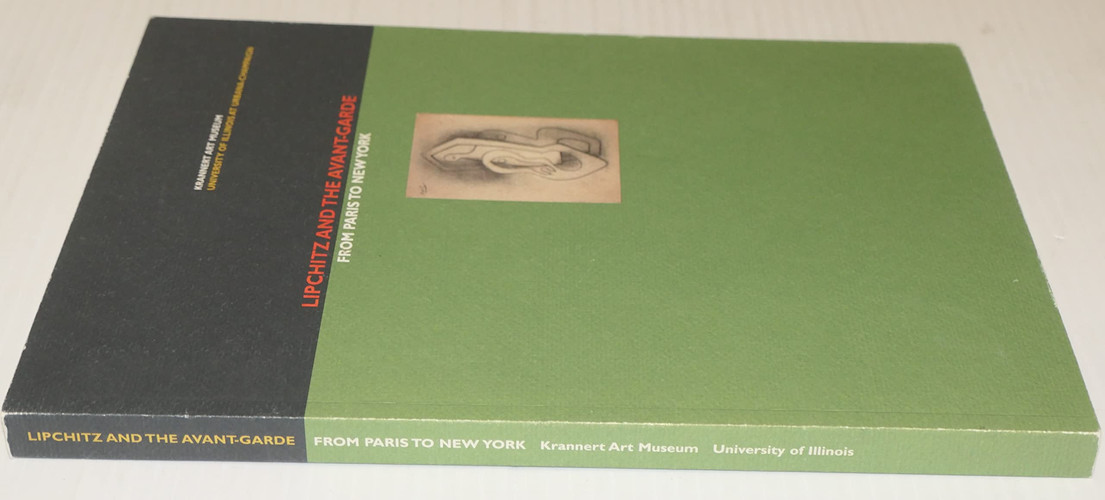
Lipchitz and the avant-garde: from Paris to New York
Utilizing works from museums across North America, Lipchitz and the Avant-Garde traces the path of the pioneering sculptor Jacques Lipchitz from his birthplace in Lithuania to his early work in Paris before World War I, where he was associated with the Parisian avant-garde and applied cubist principles to three-dimensional artwork. By breaking the volume and using different planes, Lipchitz created works that were a new force in the history of sculpture. His innovation of the transparents style in sculpture during the late 1920s was groundbreaking and was copied by many, including Picasso. At the outbreak of World War II the Jewish artist fled to New York, where he worked on increasingly monumental sculptures until his death in 1973. This substantive catalog contains new essays by internationally renowned scholars and translated articles by contemporaries Ramón Gómez de la Serna and Joaquin Torres-García that have not appeared in English before.
A memoir of creativity: abstract painting, politics & the media, 1956-2008
A Memoir of Creativity chronicles one woman's life journey as she derives a theory, revealing meaning in abstract painting, from varied personal and professional experiences, and tells how she locates this theory within a broader social context. In 1966, Piri Halasz became the first woman within living memory to write a cover story for Time (and not just any cover story, either: the notorious one on "Swinging London"). With wit and wisdom, she provides a glimpse into her "red-diaper" childhood, as well as reporting on her climb at Time from research to the writing staff. Vividly, she describes her controversial career as a female journalist during the sixties, offering an inside view of newsweekly rivalries during that tempestuous decade. Halasz then moves on to her initiation into the art world, her lively interaction with some of its most distinguished denizens and her immersion in graduate school. She concludes with what she has learned about art, art history, and history itself since the early eighties, applying that knowledge to better understand the twenty-first century. Through sharing her life story, Halasz encourages others to remain open to new experiences, to try different ways of seeing, and to use creativity to tackle hurdles.

The rise of modern Yiddish culture
The Rise of Modern Yiddish Culture explores the transformation of Yiddish from a low-status vernacular to the medium of a complex modern culture. David Fishman examines the efforts of east European Jews to establish their linguistic distinctiveness as part of their struggle for national survival in the diaspora. Fishman considers the roots of modern Yiddish culture in social and political conditions in Imperial Tsarist and inter-war Poland, and its relationship to Zionism and Bundism. In so doing, Fishman argues that Yiddish culture enveloped all socioeconomic classes, not just the proletarian base, and considers the emergence, at the turn of the century, of a pro-Yiddish intelligentsia and a Yiddishist movement. As Fishman points out, the rise of Yiddishism was not without controversy. Some believed that the rise of Yiddish represented a shift away from a religious-dominated culture to a completely secular, European one; a Jewish nation held together by language, rather than by land or religious content. Others hoped that Yiddish culture would inherit the moral and national values of the Jewish religious tradition, and that to achieve this result, the Bible and Midrash would need to exist in modern Yiddish translation. Modern Yiddish culture developed in the midst of these opposing concepts. Fishman follows the rise of the culture to its apex, the founding of the Yiddish Scientific Institute (YIVO) in Vilna in 1925, and concludes with the dramatic story of the individual efforts that preserved the books and papers of YIVO during the destruction and annihilation of World War II and in postwar Soviet Lithuania. The Rise of Modern Yiddish Culture , like those efforts, preserves the cultural heritage of east European Jews with thorough research and fresh insights.

Match day: football programmes : post-war to Premiership
This collection of covers of official UK football programs--in American, that's soccer programs--includes every league club active from the end of World War II to the start of the Premiership (1992), which comes to more than 100 teams from across the United Kingdom. It covers the golden age of British football, a time of local pride and growing success, of "Roy of the Rovers" good feeling, all of which is reflected in period designs, colorful graphics and charming illustrations, far from the glossy corporate memorabilia that fans accumulate today. These pieces are rare and highly collectible, and the majority are reproduced in this book for the first time, but more importantly for most readers, they offer an armchair anthropologist's trip through 1960s, 70s and 80s England. By Bob Stanley, who worked as a freelance music writer with NME and Melody Maker before forming the group Saint Etienne, and with an introduction by Brian Glanville, a highly regarded sports writer and a leading authority on British soccer.

From Anatolia to the New World: life stories of the first Turkish immigrants to America
"In the late nineteenth and early twentieth centuries, both Muslim and non-Muslim Turks went to try their luck in the New World. [...] Drawing upon eyewitness testimony, Rifat N. Bali tells the story of a century of Turkish immigrants to the USA."--Back cover.

Gustav Mahler, Julius Korngold and the Neue Freie Presse
Zusammenfassung: "Gustav Mahler and Julius Korngold, critic at the highly influential newspaper Neue Freie Presse, had much in common. He, along with his fellow journalists, were close to and supportive of Mahler. For the first time, their essays on the man and his music are made available in English. The essays on Mahler and his time at Vienna's Imperial Opera were extensive and well informed. Julius Korngold had replaced Eduard Hanslick as principal music critic. Both Korngold and Mahler shared a common Moravian Jewish background, born in 1860 and both students of Anton Bruckner. Mahler also took an early interest in Korngold's son, the child prodigy Erich Wolfgang Korngold. The paper was Jewish owned, and Theodor Herzl, the founder of the Zionist Movement, was its cultural editor and Julius Korngold's employer. Claims that Mahler was driven out of a Vienna by an antisemitic press are wrong given Mahler's support by the most powerful critic of the day writing in the Empire's most influential newspaper. Importantly, the essays also reveal a world of Modernism that includes Mahler's innovations at the opera, and Modernism in music before departures from tonality. This book will interest Mahler enthusiasts, musicians and cultural historians. Mahler was claimed by Arnold Schoenberg as his musical hero, firmly placing him in the Modernist camp. Yet Korngold was universally seen as an archconservative and his relationship with Mahler was personal and his understanding profound. The book addresses the question of "Mahler, the first Modernist or the last Romantic?""--

The wealth tax (varlık vergisi) affair: documents from the British National Archives

Portraits from a bygone Istanbul: Georg Mayer and Simon Brod

The Anti-Greek riots of September 6-7, 1955: documents from the World Council of Churches
This book is a compilation of the official records of the World Council of Churches (Geneva) following the anti-Greek riots of September 6-7, 1955. In two days, rioters destroyed churches, shops and cemeteries belonging to the Greek Orthodox community of Istanbul and assaulted persons. The documents include two reports made by the WCC officials a short time after the riots and gives a detailed summary of the destruction and plunder.

