58,196 results in 0.09 seconds

Finding our voice: embodying the prophetic and other misadventures

Ellis, Marc H.
"Finding Our Voice is a series of meditations on how to express the deepest sense of who we are in a troubled world. What is the core of our being? How do we find the language to name that core? If the core of our faith is identifying and embodying the prophetic for our time, surviving that naming is as challenging as finding our voice. Often as not, the prophetic lands us in hot water. We feel alone and abandoned. Recognizing others in the same situation is crucial to our ability to hold fast. With others our voice grows more certain and finds a home, even in exile. Soon the community we left is replaced by a new community of fellow travelers. We are not alone"--back cover.
Cascade Books 2018-06-19 128 pages

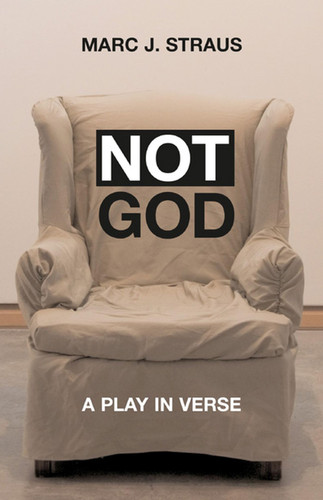
Not God: a play in verse

Straus, Marc J.
The tread of the nurses leaving the room next door tells the woman her neighbor has died. The language of the hospital is one she has unwillingly, painstakingly learned: the rhythm of machines, the counting of pills, the measuring of words, the shadowy news of an MRI. And in these harrowing, eloquent poems, she opens this world, this language of illness, to us, revealing how deeply these words and rhythms are also the measure of life. The views of her doctor are also evocatively expressed--his anger, struggles, and hopes--as he speaks of the delicate bond he forms with his ill patients. Composed by a distinguished medical oncologist whose literary work has been performed in venues throughout the country, the poems of Not God document one woman's encounter with cancer, a journey through illness whose end, while inevitable, is also unknown. Alternating with the words of her doctor, these poems form a remarkable dialogue of the flesh becoming word, and of the body inventorying--and finally transcending--its limitations.
TriQuarterly Books 2006-05-15 70 pages

A cleft in the rock: poems

Kaminsky, Marc
Poetry. Jewish Studies. "Marc Kaminsky's A CLEFT IN THE ROCK is a monumental achievement. At home in no world, Kaminsky has an uncanny gift for walking between worlds, traveling like a courier from the personal to the archetypal. I know of no poet whose work, passionate and visceral, inscribes itself so readily in typological time, the perpetual present of Biblical story, psalm, and creation myth. Meticulously grounded--in Yiddishkeit, the maelstrom of the family, wholehearted married love, the struggles of the aging body--these poems open onto absolutes. The chords they strike have extraordinary resonance: a dying father and Moses' encounter with God, a hospital procedure and an interrogation site. Kaminsky visits the depths to find how to 'live / with catastrophe in the world / of signs and wonders.' His book is itself a cleft in the rock, a site of hard-won emotional possibility in a stone-hearted age. These are poems of naked vulnerability and contingency; they remind us what it means to be whole and human."--D. Nurkse
Dos Madres 2018 117 pages

The Manual on Ownership of the Shashka in the Military Guard of the USSR English Translation of K Brimmer's Work by Marc Lawrence

Marc Lawrence
This manual was written for the Red Army to provide a standard of training for the Shashka Saber for the military personnel. This manual is for teaching how to use this weapon in melee situations and in convoys. This weapon was used in conjunction with rifles and pistols in the field and in urban environments.
Lulu.com 2022-07-12 84 pages

Haskalah and Hasidism in the Kingdom of Poland: a history of conflict

Wodziński, Marcin
The conflict between Haskalah and hasidism was one of the most important forces in shaping the world of Polish Jewry for almost two centuries, but our understanding of it has long been dominated by theories based on stereotypes rather than detailed analysis of the available sources. In this award-winning study, Marcin Wodziński challenges the long-established theories about the conflict by contextualizing it, principally in the Kingdom of Poland but also with regard to other parts of eastern Europe. Covering the period from the earliest anti-hasidic polemics in the late eighteenth century through to the post-Haskalah movements of the twentieth century, it follows the development of this important conflict in its central arena. Using source materials (including many hitherto unknown documents) in Polish and five other languages, Wodziński has succeeded in reconstructing the way the conflict expressed itself. Identifying the motives, the methods, and the consequences of the conflict as it was played out in five Polish towns (Lódz, Opoczno, Piotrków, Warsaw, and Warta), he shows that it was primarily informed by non-ideological clashes at the level of local communities rather than by high-level ideological debates. Much attention is also devoted to the general characteristics of hasidism and the Haskalah, as well as to the post-Haskalah movements. Here too Wodziński challenges the ideologically charged assumptions of a generation of historians who refused to see the advocates of Jewish modernity in nineteenth-century Poland as an integral part of the Haskalah movement. Extensive consideration is given to the professional, social, institutional, and ideological characteristics of the Polish Haskalah as well as to its geographic extent, and to the changes the movement underwent in the course of the nineteenth century. Similar attention is given to the influence of the specific characteristics of Polish hasidism on the shape of the conflict, especially as regard the size of the movement and the evolution of hasidic communal involvement. In consequence the book presents a synthesis that offers both breadth and depth, contextualizing its subject matter within the broader domains of the European Enlightenment and Polish culture, hasidism and rabbinic culture, tsarist policy and Polish history, not to mention the ins and outs of the Haskalah itself across Europe. An extensive appendix presents translations of nineteen important and hitherto unknown sources of relevance to a nuanced understanding of many aspects of nineteenth-century Jewish history in Poland and eastern Europe more generally.
The Littman Library of Jewish Civilization 2009 335 pages

Tory heaven: or, Thunder on the right

Laski, Marghanita
"The novel opens in 1945. Five Britons, shipwrecked on an island in the Far East in the early years of World War 2, listen to the general election results on their radio and learn that a Socialist government has been elected. They are rescued and return home by ship. While waiting to disembark at Southampton, James prays to God to "fix the election" and let him see "the England of all decent Conservatives' dreams." He hears a clap of thunder over his right shoulder and once on dry land, finds himself in a society designed entirely to suit people of his class. An entertaining satirical novel"--Review.
Persephone Books 2018 212 pages

Close Your Books Selected Writings and Sermons of Rabbi Mark S. Shapiro

Mark S. Shapiro,Karyn D. Kedar
For almost 50 years Rabbi Mark Shapiro spoke to his congregants through his sermons and bulletin columns. His style was conversational, inspirational and memorable. He often prefaced those sermons with the words “Close Your Books, “ which indicated that prayer books should be put away so that the congregation could concentrate on what he had to say. This collection of his sermons was carefully selected from the many hundreds that he delivered over the years of BJBE and beyond. Interspersed with contributions from many of his students and colleagues, the sermons in this book are still relevant in today’s world.
Bonnie Anderson 2016-12-11 230 pages

An entrance for the eyes: space and meaning in seventeenth-century Dutch art

Hollander, Martha
Martha Hollander's lively and gracefully written book considers one of the most intriguing features of seventeenth-century Dutch painting: the pictorial language of space, in particular the use of secondary scenes. Many Dutch pictures, especially genre scenes and portraits, introduce a gap through the trees; a view of distant mountains; views through windows, archways, open doors, and pulled-back curtains; or mirrors and pictures-within-pictures to comment on, explain, and enrich the primary scene that unfolds on the canvas. Hollander uncovers the meanings generated by the formal structure of such pictures, tracing their heritage in the medieval and Renaissance pictorial traditions of illuminated manuscripts, emblems, and stage design. A number of Dutch painters, working for a fiercely competitive art market fostering experiment and novelty, created these secondary scenes in remarkably various and inventive ways. An Entrance for the Eyes focuses on striking features in the works of several artists who carried out bold experiments with space and meaning. Hollander introduces the ideas of pictorial organization formulated by Karel van Mander in both his paintings and his theoretical treatise Het Schilder-boeck. She explains how Gerard Dou (1613-1675), in his tightly constructed allegorical pictures, particularly those set in niches, used the secondary space to comment on the figure in the foreground. In a penetrating analysis of the early domestic scenes of Nicolaes Maes (1634-1693), she relates the juxtaposition of rooms in the household to the status and representation of women in seventeenth-century Holland. In the courtyard scenes and interiors of Pieter de Hooch (1629-1684), always open to the outdoors, she examines the articulation of the still fluid relationship between public and private life. Hollander's narrative deals with complex issues in lucid and direct language. In tracing how the inventive juxtaposing of public and private spaces played out social anxieties and ideals, she inspires readers to look more closely and thoughtfully at the paintings.
University of California Press 2001 263 pages

Self-portrait

Friedlander, Marti,Manson, Hugo
"From a childhood in London's East End to half a century in New Zealand photographing wine-makers, artists, children and kuia, Marti Friedlander has lived a rich life, one defined by the art of looking. In Self-portrait, Marti tells her story for the first time. As forthright and revealing in words as in her photographs, she tells of growing up in London orphanages, being Jewish, working in a Kensington photography studio, marrying a New Zealander and moving across the world to a challenging new country. Here she began to photograph the ordinary and the extraordinary, protests and politicians, balloons and beaches, capturing on film the transformation of New Zealand life over more than fifty years. This book is a rich meditation on one women's photographic journey through the twentieth century."--Publisher's information.
Auckland University Press 2013 258 pages

Western Jewry; an Account of the Achievements of the Jews and Judaism in California, Including Eulogies and Biographies. "The Jews in California,"

Martin A. Meyer
This book has been considered by academicians and scholars of great significance and value to literature. This forms a part of the knowledge base for future generations. So that the book is never forgotten we have represented this book in a print format as the same form as it was originally first published. Hence any marks or annotations seen are left intentionally to preserve its true nature.
Alpha Editions 2020-04 250 pages