2051 results for "Psychology"

Scripts People Live

Steiner, Claude M
When Claude Steiner and the late Eric Berne developed the theory of Transactional Analysis, their basic belief that people were “born princes and princesses, until their parents turned them into frogs” countered the fundamental principle of psychiatry which asserts that emotional and mental distress comes from within. This theory was further developed in Steiner’s book Games Alcoholics Play. Dr. Berne, in What Do You Say After You Say Hello?, acknowledged Steiner’s important role in the analysis of “life scripts” which we choose at an early age and which rule every detail of our lives until our death. In Scripts People Live, Steiner expands upon this belief to show that people are innately healthy but develop a pattern early in life based upon negative or positive influences of those around them. Thus children decide, however unconsciously, whether they will be happy or depressed, winners or failures, strong or dependent, and having decided, they spend the rest of their lives making the decision come true. For those who choose a negative script, the consequences can be disastrous unless they make a conscious decision to change.
Bantam 1973-01-01 394 pages

The birth of pleasure

Gilligan, Carol
Tracing a lineage from Greek mythology to our own most intimate relationships, Carol Gilligan asks why, generation after generation, we relive tragic stories of loss and betrayal, and sets out to create a radical new map of love. Within the sweep of this book, Gilligan takes us through novels and dreams, ancient legends and contemporary research to an illumination of modern couples in crisis. She shows us that, although the women's movements of the 20th century have challenged patriarchal structures, the underlying patterns remain: the early channeling of boys into "masculinity, " the double consciousness of girls in adolescence, the silences between men and women, the splits between our social and inner selves. In the haunting love story of Psyche and Cupid, Gilligan discovers a crucial tale of resistance--showing us that the path of pleasure can be found in the heart of tragedy, that joy and harmony can defy anger and pain.
Alfred A. Knopf 2002-05-07 253 pages

Make magic: the book of inspiration you didn't know you needed

Meltzer, Brad
"Based on bestselling author Brad Meltzer's viral commencement speech for his son's graduating class at the University of Michigan, Make Magic is the little book of hope for anyone who has ever wished for more. More authenticity. More empathy. More gratitude. A more fulfilling life. With charming, thoughtful insights from his remarkable life and career, Meltzer uses magic as allegory, sharing the secret that there are only four types of magic tricks: 1. you make something appear, 2. you make something disappear, 3. you make two things switch places, and 4. you turn one thing into something else-the hardest trick of all, transformation. Embracing each of these easy-to-follow tricks-and unleashing your kindness and empathy-will inspire you to craft a life filled with wonder and awe. Make Magic is an uplifting message from one of today's most inspiring voices"--
William Morrow, an imprint of HarperCollins Publishers 2025 96 pages

Feel this book: an essential guide to self-empowerment, spiritual supremacy, and sexual satisfaction

Stiller, Ben
and Sexual Satisfaction Ideal for fans of actor/comedian Ben Stiller (There's Something About Mary) and partner (ex) Janeane Garofalo, Feel This Book' tackles some pretty tough questions: Is Love Necessary? How Can I Make Money Off My Spouse? Why Can't I Sleep Around and Still Love You? Let it be your path, your compass and your sensible shoes, it's what self-help was meant to be. An ideal gift for anyone taking themselves too seriously.'
Ballantine 2000-04 215 pages

Moral education

Durkheim, Émile
The great French sociologist and philosopher Emile Durkheim is best known for his classic book Suicide (1897), a landmark in social psychology. Among his other major works is this study in the sociology of education, which features 18 lectures by an influential theorist who discusses his ideas on the school as the appropriate setting for moral education. The first element in developing a moral being, he maintains, is instilling a sense of discipline, followed by a willingness to behave in terms of the group's collective interest, and a sense of autonomy. Durkheim also examines discipline and the psychology of the child, discipline of the school and the use of punishment, altruism in the child, the influence of the school environment, and the teaching of science, aesthetics, and history. Perceptive and provocative, this volume abounds in valuable insights for teachers and others involved in education.
Dover Publications 2002 287 pages

The hard problem

Stoppard, Tom
"Hilary, a young psychology researcher at the Krohl Institute for Brain Science, is nursing a private sorrow and a troubling question. She and other researchers at the institute are grappling with what science calls the 'hard problem'--if there is nothing but matter, what is consciousness? What Hilary discovers puts her fundamentally at odds with her colleagues, who include her first mentor and onetime lover, Spike; her boss, Leo; and the billionaire founder of the institute, Jerry. Hilary needs a miracle, and she is prepared to pray for one."--Back cover.
Grove Press 2015 76 pages

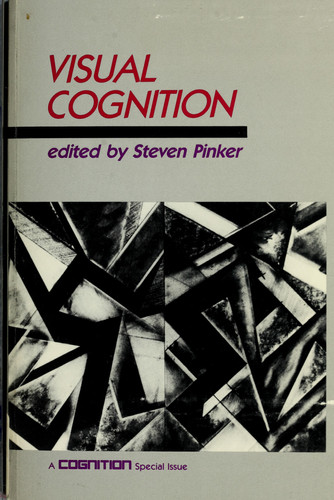
Visual cognition

Steven Pinker
These essays tackle some of the central issues in visual cognition, presentingexperimental techniques from cognitive psychology, new ways of modeling cognitive processes oncomputers from artificial intelligence, and new ways of studying brain organization fromneuropsychology, to address such questions as: How do we recognize objects in front of us? How do wereason about objects when they are absent and only in memory? How do we conceptualize the threedimensions of space? Do different people do these things in different ways? And where are theseabilities located in the brain?While this research, which appeared as a special issue of the journalCognition, is at the cutting edge of cognitive science, it does not assume a highly technicalbackground on the part of readers. The book begins with a tutorial introduction by the editor,making it suitable for specialists and nonspecialists alike.Steven Pinker is Associate Professor,Department of Psychology and Center for Cognitive Science at MIT.
MIT Press 1985 280 pages

Tyrant: Shakespeare on power

Greenblatt, Stephen
How does a truly disastrous leader - a sociopath, a demagogue, a tyrant - come to power? How, and why, does a tyrant hold on to power? And what goes on in the hidden recesses of the tyrant's soul? For help in understanding our most urgent contemporary dilemmas, William Shakespeare has no peer. As an ageing, tenacious Elizabeth I clung to power, a talented playwright probed the social and psychological roots and the twisted consequences of tyranny. What he discovered in his characters remains remarkably relevant today. With uncanny insight, he shone a spotlight on the infantile psychology and unquenchable narcissistic appetites of demagogues and imagined how they might be stopped. In Tyrant, Stephen Greenblatt examines the themes of power and tyranny in some of Shakespeare's most famous plays -- from the dominating figures of Richard III, Julius Caesar, Hamlet, Macbeth, and Coriolanus to the subtle tyranny found in Measure for Measure and The Winter's Tale. Tyrant is a highly relevant exploration of Shakespeare's work that sheds new light on the workings of power.
The Bodley Head 2018 212 pages

Information Anxiety

Richard Saul Wurman
Information might want to be free; but, why should we free it? We've got enough trouble keeping track of all the petabits that already run around untethered, and risk a computer counterrevolution if we let the situation get much crazier. Information architect Richard Saul Wurman swept the field clear in 1989 with his groundbreaking book that foresaw the problems of data clutter and proposed a radical new means of organizing and presenting knowledge humanistically; for the new century, he has revised it substantially as Information Anxiety 2 . This book is sparklingly clear and readable--it'd better be, after all--and offers insight not only to designers, educators, and content developers, but also to anyone who needs to communicate effectively through dense clouds of facts. If Wurman occasionally indulges in New Age-y pop psychology, his analysis is never muddy, and the more hardheaded reader will forgive him soon enough. The discussion alternates between describing the deeply stressful task of absorbing poorly organized data and exploring solutions that require a bit of rethinking, but that reward such an investment with improved understanding and, maybe, a state change from information to wisdom. We could do worse--if we don't pay attention to Wurman and his colleagues, we almost certainly will. --Rob Lightner
Bantam 1990-01-01 358 pages

Radical evil: a philosophical interrogation

Bernstein, Richard J.
"At present, there is an enormous gulf between the visibility of evil and the paucity of our intellectual resources for coming to grips with it. We have been flooded with images of death camps, terrorist attacks and horrendous human suffering. Yet when we ask what we mean by radical evil and how we are to account for it, we seem to be at a loss for proper responses." ; "Bernstein seeks to discover what we can learn about the meaning of evil and human responsibility. He turns to philosophers such as Kant, who coined the expression 'radical evil', as well as to Hegel and Schelling. He also examines more recent explorations of evil, namely the thinking of Freud and Nietzsche on the moral psychology of evil. Finally, he looks at the way in which three post-Holocaust thinkers - Emmanuel Levinas, Hans Jonas, and Hannah Arendt - have sought to come to grips with evil "after Auschwitz."" "Radical Evil will be essential reading for students and scholars of philosophy, social and political theory and religious studies."--Jacket
Polity Press 2002-08-02 289 pages

Sex and reason

Posner, Richard A.
How much of a say do we have in our own sexuality? More than is commonly assumed, Richard Posner asserts in this intellectually sweeping and compulsively readable account of sexuality and its social control. While acknowledging that sexual drives and orientations are formed in a fundamentally biological matrix, Posner contends that they are also subject to self-interested choice constrained by perceived costs and benefits. With this approach, he explores numerous puzzles presented by sexual history. Why, for instance, are "macho" cultures generally more tolerant of sexual deviance than their otherwise more sexually liberal Anglo-Saxon counterparts? Why were women in Victorian England less free sexually than women a century earlier? Why might the AIDS epidemic have reduced the ratio of illegitimate to legitimate births? Why is marital rape increasingly criminalized? Economics provides Sex and Reason with its unifying perspective, but Posner also draws heavily on biology, law, psychology, anthropology, history, philosophy, sociology, theology, and women's studies. The scope of his analysis is broad, ranging from ancient Greece to modern Sweden, from African tribal societies to the American Catholic priesthood, from Islamic sexual regulation to the sexual jurisprudence of the U.S. Supreme Court, from polygamy and homosexuality to abortion, surrogate motherhood, and pornography. In all these areas, Posner argues, the rational choice approach can illuminate temporal and cultural variance in sexual norms and practices and point the way to enlightened reform. A widely respected judge and legal scholar, Posner seeks to dispel the clouds of ignorance, prejudice, shame, and hypocrisy that befog the public discussion of sex. His effort is especially timely, coming as it does at a juncture when the American legal system is strained to its limits by such phenomena as the AIDS epidemic, the abortion controversy, the homosexual rights movement, battles over the federal funding of erotic art, and growing attention to sexual harassment and abuse. Lucid, informative, eclectic, and nontechnical, Sex and Reason offers a fresh approach to issues that fascinate, perplex, and ultimately shape society in its most private moments and public gestures
Harvard University Press 1992 458 pages

Being Ram Dass

Ram Dass,Das, Rameshwar
"Professor Richard Alpert's star fell fast. To the dismay of his wealthy Boston family, he got fired from Harvard over experimental use of psychedelics with his psychology students. In 1967, he traveled to India to lick his wounds and find himself. And he did, at Neem Karoli Baba's ashram, in a direct encounter with unconditional, unlimited divine love. He returned to America as Baba Ram Dass, countercultural activist for expanded human consciousness. As a spiritual guide, at the bedside of the dying, and as a stroke survivor, he has always been ahead of his time, pulling the world along behind him. The author of over a dozen books, he now shares for the very first time the full story of how his life of service intersected with an era of profound cultural upheaval. From the details of his groundbreaking research in psychedelics to his bumpy path to becoming a spiritual icon, from his struggles with his sexual identity to what it was like to find out in his late 70s that he was a father and grandfather, Ram Dass traces the pivotal points of his life against the backdrop of a mind opened by drugs, and a heart opened by a guru. Ram Dass brought America yoga, the use of psychedelics in psychotherapy, and a revolution in how we relate to death and dying. He has opened the door to the most important and healthiest conversations about the heart and mind in our culture. With this book, he opens his heart and mind to us"--
Sounds True 2021 409 pages

Read your mind: proven habits for success from the world's greatest mentalist

Pearlman, Oz
"Drawing on over thirty years of experience captivating audiences and accruing psychological insights, Oz Pearlman reveals the techniques and habits that have propelled his extraordinary career and shares the ingenious secrets behind his craft to teach you how to unlock your full potential. You'll build confidence, sharpen your memory, connect more authentically with others, and eliminate your fears-all through simple, easy-to-master strategies that can be learned in minutes and applied for a lifetime. Read Your Mind helps you turn your focus inward, teaching you how to identify and overcome the mental blocks that hold you back, building habits that stick. Through compelling stories and practical tips, you'll learn how to: Master the art of influence to read people, win trust, and shape outcomes Sharpen your mental edge Overcome rejection, procrastination, and self-doubt Unlock the psychology of connection You don't need to be a mentalist to create real, lasting change-you just need to think like one"-- Provided by publisher.
Viking 2025-10-28 304 pages

The Path of Blessing Experiencing the Energy and Abundance of the Divine

Marcia Prager
Enrich your spiritual practice with a deeper understanding of Hebrew blessing. A Hebrew blessing is a powerful thing--a short, deeply meditative exercise exploring the nature of God and the dynamic relationship between God, human consciousness and the unfolding universe. Written in clear, illuminating prose, this book will guide you through the opening words of a Hebrew blessing--six words which embody the depth of Jewish spirituality--revealing how the letters and words combine to promote joy and appreciation, wonder and thankfulness, amazement and praise. Each word becomes an invitation to discover the Presence of God flowing through even the smallest actions of our lives. Examine the deeper meaning behind: Barukh Ata Adonay Eloheynu Melekh Ha'Olam In the ancient language of the Jewish mystical tradition and the modern language of hasidism, creation theology and psychology, The Path of Blessing brings the words of the Hebrew invocation dramatically alive.
LongHill Partners, Incorporated 2003-06 232 pages

Unsold television pilots: 1955-1989

Goldberg, Lee
THE TV REFERENCE BOOK THAT BECAME A NATIONAL MEDIA SENSATION"Full of fool's gold and genuine TV treasures," New York Post"A must-browse for media freaks," USA Today"A remarkable encyclopedia," TV GuideThis is the ground-breaking, exhaustively-researched book that revealed, for the first time ever, all of the details behind the thousands of TV series ideas that were developed and rejected by the networks since the dawn of television. The book was an instant, national sensation when it was first published in 1990, winning enthusiastic critical acclaim and enormous media attention, including on-air praise from TV legend Johnny Carson on "The Tonight Show," and was adapted into two hour-long specials, "The Greatest Shows You Never Saw" on CBS and "The Best TV Shows That Never Were" on ABC. This is a landmark work of television history and research ... a must-read for anyone who loves TV... and who wants to know how shows get on-the-air...and how they don't."The best bathroom reading ever!" San Francisco Chronicle"One of the best books ever written about television," TVParty.com"A fascinating book," Johnny Carson"Packed with amusing failures," Chicago Sun-Times"Irresistible, enthralling, a page-turner. Goldberg puts just enough historical background in the book to make the bizarre psychology of the networks make sense," Hartford Courant
Adventures in Television 2015 798 pages

The Way of Transformation Daily Life as Spiritual Practice

Karlfried Graf Durckheim
The guiding theme of psychotherapist Karlfried Dürckheim’s work is that one can become "transparent to transcendence.” An early Western authority on Zen, he was one of the first to bring its methods to Europe. Incorporating Zen and depth psychology into his practice, Dürckheim was also one of the earliest transpersonal psychologists. His spiritual practice of combining Jung, Meister Eckhart, and Zazen proved to lead to moments of higher consciousness, which he described as "privileged moments.” In The Way of Transformation, one of his most concise and profound works, Dürckheim shows that once readers scrape away personal barriers and free the divine spark within, these radiant, life-altering occasions can occur at any time. His meditative approach to daily activities turns simple tasks such as making tea, posting a letter, or washing dishes into moments of new awareness: everyday life as a spiritual practice.
Morning Light Press 2006-12-07 137 pages