84 results for "Banking"

Assume nothing: encounters with assassins, spies, presidents, and would-be masters of the universe

Epstein, Edward Jay
"This memoir is the story of how curiosity led me to investigate some of the greatest political mysteries of our time, including the JFK assassination in Dallas, the Vatican banking scandal in Rome and the diamond cartel in South Africa. To learn about them, I often found myself a fly-on-the-wall at the highest reaches of the establishment where I saw how presidents, tycoons, bankers and media moguls secretly greased the wheels of power. Some accuse me of being a conspiracist, but that is not correct. I am essentially a puzzle solver. Instead of accepting the received wisdom of the media, I search for a puzzle's missing pieces, such as the autopsy photographs of President John F. Kennedy that were kept from the investigation conducted by the Warren Commission Finding suppressed or overlooked evidence often has the result of overturning the established narrative, as happened when I published my book Inquest on the Commission, but that is very different from seeking a conspiracy. Sometimes, it is true. my work results in uncovering a deep conspiracy, as happened in my investigation of the world diamond cartel; other times, however, it results in discrediting belief in a conspiracy, as happened in my investigation of the murders of numerous Black Panthers (which caused the Washington Post, Los Angeles Times and other newspapers, whose reporting had suggested the existence of an FBI conspiracy, to issue editorial apologies following the publication of my investigation in The New Yorker.) My prime interest has always been in finding gaps in the conventional wisdom about an event. How I came to be a pursuer of lost truths is a curious story of self-actualization"--
Encounter Books 2023 404 pages

Right and Left

Joseph Roth
Joseph Roth has been described as ?one of the greatest writers in German of this century? ("The Times"). With tragic foresight, "Right and Left," first published in 1929, evokes the nightlife, corruption, political unrest, and economic tyranny of Berlin in the twenties, the same territory covered trenchantly in Roth's reportage, recently published as "What I Saw: Reports from Berlin 1920-33." After serving in World War I, Paul Bernheim returns to Berlin to find himself heir to his recently deceased father's banking empire. Increasingly beset by skyrocketing inflation, and dismayed by his brother's infatuation with the brownshirts, Bernheim turns to an outsider for help?a profiteering Russian ?migr? whose advice proves alternately advantageous and disastrous. Too late to change his fate, he realizes he has been decieved by a master in the craft of manipulation.
Harry N. Abrams 2004-02-24 235 pages

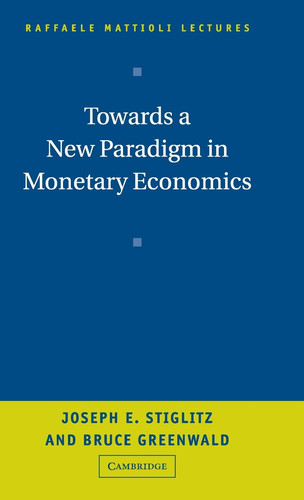
Towards a new paradigm in monetary economics

Stiglitz, Joseph E.
Expanding upon the literature of new institutional economics, the first part of this study stresses the significance of imperfections in information, bankruptcy and banks. The second part examines the policy implications of the new paradigm emphasizing loanable fund demand and supply, and demonstrates its relevance to our understanding of two recent historical episodes--the East Asian financial crisis and the 1991 U.S. recession and subsequent recovery and boom.
Cambridge University Press 2003-09-04 327 pages

Changing the Rules Adventures of a Wall Street Maverick

Muriel Siebert
When Mickie Siebert arrived in New York in the mid-1950s, she had $500 in her wallet and drove a used Studebaker. Almost fifty years later she is known as the "First Woman of Finance," the only woman to head a publicly traded national brokerage firm. Pithy, vastly entertaining, and full of behind-the-scenes anecdotes, Changing the Rules reveals how Siebert forged her phenomenal success in the chaotic and cutthroat world of Wall Street. Three four-letter words are behind Siebert's career success: One is work -- she learned everything there was to know about a company before recommending its stock. The second is luck -- as an analyst in training, she had the good fortune to follow a fledgling industry that nobody else wanted. (The "dog" industry was airlines.) The third word is risk -- she knew how to assess liability and make a decision. Siebert recounts the resistance of the good gray Stock Exchange when she dared to infiltrate the boys' club, threatening to have a Port-O-San delivered to the NYSE luncheon club if they didn't add a women's bathroom. She reveals the backstage stories about saving Lockheed and selling Conrail (at the time, the largest stock offering in Wall Street history), as well as the changes on the Street that led to May Day, 1975, when she was first in line as a discount broker (and considered a pariah by industry standards). She tells of her memorable encounters with such legendary figures as Captain Eddie Rickenbacker, the World War I flying ace who ran Eastern Airlines, and Robert Brimberg, the iconoclastic "Scarsdale Fats" whose investing acumen was the envy of the Street. Writing with equal candor about the politics of finance and the finance of politics, Siebert recalls her five years as Superintendent of Banking for New York State -- when she helped to prevent a national fiscal crisis during the Iran hostage situation -- and her experiences as a pro-choice Republican senatorial candidate. Siebert's reputation for rocking the boat is legendary, and Changing the Rules is both a fascinating biography of a true pioneer, and a valuable strategic and informational tool for anyone who deals with or dabbles in the money game.
Free Press 2007-08-22 240 pages

Optimum Quantity of Money A Comprehensive Presentation of the Body of Monetary Thought of One of the World's Leading Monetary Economists

Milton Friedman
This classic set of essays by Nobel Laureate and leading monetary theorist Milton Friedman presents a coherent view of the role of money, focusing on specific topics related to the empirical analysis of monetary phenomena and policy. The early chapters cover factors determining the real quantity of money held in a community and the welfare implications of policies that affect the quantity held. The following chapters formally restate why quantity analysis has become central to the science of economics. Friedman's presidential address to the American Economic Association, included here, provides a general summary of his views on the role of monetary policy, with an emphasis on its limitations and its possibilities. This theoretical framework is used in examining a number of empirical the demand for money, the explanation of price changes in wartime periods, and the role of money in business cycles. These essays summarize some of the most important results of Friedman's extensive research over the course of his lifetime. The chapters on policy that follow survey the positions of earlier economists and deal with the importance of lags and the implications of destabilizing speculation in foreign markets. Taken as a whole, The Optimum Quantity of Money provides a comprehensive view of the body of monetary theory developed in leading centers of monetary analysis. This work is essential reading for economists and graduate students in the field. The volume will be no less important for practicing business and banking personnel as well. The new statement by Michael Bordo, a student of Friedman's and an expert in the field, provides a sense of where the field now stands in the economy and academy.
Aldine Transaction 1969 308 pages

Five Men of Frankfort

M. E. Ravage
With Three New Appendices. Few Jewish names in the history of Europe have attracted more fame, more conspiracy theories, rumors, and mystery than the name Rothschild. This biography, written by a leading Jewish historian, pulls no punches in telling the true story of the banking dynasty, once known as the "financiers of nations." Cutting through all the myths and exaggeration which have surrounded the Rothschilds, Five Men of Frankfort reveals how the four Rothschild sons spread throughout Europe-to London, Paris, Vienna, and Naples, to set up a banking network which inaugurated the system of moving money internationally through simultaneous deposits and withdrawals. British indebtedness to the Rothschilds for their help in defeating Napoleon was then exploited by getting the British government to persuade the other nations of Europe-including the Austrian, Prussian, and Russian governments-to start using the Rothschilds as bankers and as the providers of their national loans and debt. Although this book ends its narrative at the beginning of the nineteenth century, this new edition has three new appendices which reveal the full extent of the Rothschild business empire to the present day. These appendices reveal in an astonishing amount of detail how this Jewish family from Frankfort ended up loaning money to governments on five continents, and their role in modern-day financial transactions across the world. This book strips away the myths which surround the Rothschilds, and provides a sober assessment of why this banking house has become the foremost subject of conspiracy theories around the globe.
Blurb, Incorporated 2019-03-31 346 pages

Handbook of Game Theory with Economic Applications

R.J. Aumann,S. Hart
This is the first volume of the Handbook of Game Theory with Economic Applications, to be followed by two additional volumes. Game Theory has developed greatly in the last decade, and today it is an essential tool in much of economic theory. The three volumes will cover the fundamental theoretical aspects, a wide range of applications to economics, several chapters on applications to political science, and individual chapters on relations with other disciplines. The topics covered in the present volume include chess-playing computers, an introduction to the non-cooperative theory, repeated games, bargaining theory, auctions, location, entry deterrence, patents, the cooperative theory and its applications, and the relation between Game Theory and ethics. For more information on the Handbooks in Economics series, please see our home page on http://www.elsevier.nl/locate/hes
Elsevier Science 1992-12-13 760 pages

Meltdown: the end of the age of greed

Mason, Paul
"Meltdown is the gripping account of the financial collapse that destroyed the West's investment banks, brought the global economy to its knees, and undermined three decades of neoliberal orthodoxy. Covering the development of the crisis from the economic front line, BBC Newsnight journalist Paul Mason explores the roots of the US and UK's financial hubris, documenting the real-world causes and consequences from the Ford factory, to Wall Street, to the City of London. In this fully updated new edition, he recounts how the credit crunch became a full-blown financial crisis, and explores its impact on capitalist ideology and politics in our new age of austerity."--P. [4] of cover.
Verso 2010-11-08 265 pages

Plunder Investigating Our Economic Calamity and the Subprime Scandal

Danny Schechter
DANNY SCHECHTER, "The News Dissector" has spent decades as a truth teller in the media, with leading media companies and as an independent filmmaker with the award-winning independent company Globalvision. A graduate of Cornell and the London School of Economics, Schechter was a Nieman Fellow at Harvard and a multiple Emmy Award winner at ABC News, where he was among the first to cover the S&L crisis. In 2007, his film IN DEBT WE TRUST was the first to expose Wall Street's connection to subprime loans, predicting the economic crisis that this book investigates. Schechter is a blogger, editor of Mediachannel.org, and author of nine books. He has reported from 53 countries, and lives in Gotham. He owns no derivatives or tranches.
Cosimo, Inc. 2008-01-01 196 pages

The Memory of All That George Gershwin, Kay Swift, and My Family's Legacy of Infidelities

Katharine Weber
The Memory of All That is Katharine Weber’s memoir of her extraordinary family. Her maternal grandmother, Kay Swift, was known both for her own music (she was the first woman to compose the score to a hit Broadway show, Fine and Dandy ) and for her ten-year romance with George Gershwin. Their love affair began during Swift’s marriage to James Paul Warburg, the multitalented banker and economist who advised (and feuded with) FDR. Weber creates an intriguing and intimate group portrait of the renowned Warburg family, from her great-great-uncle, the eccentric art historian Aby Warburg, whose madness inspired modern theories of iconography, to her great-grandfather Paul M. Warburg, the architect of the Federal Reserve System whose unheeded warnings about the stock-market crash of 1929 made him “the Cassandra of Wall Street.” As she throws new light on her beloved grandmother’s life and many amours, Weber also considers the role the psychoanalyst Gregory Zilboorg played in her family history, along with the ways the Warburg family has been as celebrated for its accomplishments as it has been vilified over the years by countless conspiracy theorists (from Henry Ford to Louis Farrakhan), who labeled Paul Warburg the ringleader of the so-called international Jewish banking conspiracy. Her mother, Andrea Swift Warburg, married Sidney Kaufman, but their unlikely union, Weber believes, was a direct consequence of George Gershwin’s looming presence in the Warburg family. A notorious womanizer, Weber’s father was a peripatetic filmmaker who made propaganda and training films for the OSS during World War II before producing the first movie with smells, the regrettable flop that was AromaRama. He was as much an enigma to his daughter as he was to the FBI, which had him under surveillance for more than forty years, and even noted Katharine’s birth in a memo to J. Edgar Hoover. Colorful, evocative, insightful, and very funny, The Memory of All That is an enthralling look at a tremendously influential—and highly eccentric—family, as well as a consideration of how their stories, with their myriad layers of truth and fiction, have both provoked and influenced one of our most prodigiously gifted writers.
Crown 2012-06-12 296 pages

Aby Warburg Bilderatlas Mnemosyne - the Original

Warburg, Aby,Heil, Axel,Scherer, Bernd M.,Sherman, Bill,Wedepohl, Claudia
From 1925 until his death in 1929 the Hamburg-based art and cultural scholar Aby Warburg worked on his Mnemosyne Atlas, a volume of plates that has, in the meanwhile, taken on mythical status in the study of modern art and visual studies. With this project, Warburg created a visual reference system that was far ahead of its time. In cooperation with the Warburg Institute, Roberto Ohrt and Axel Heil have now undertaken the task of finding all of the individual pictures from the atlas and displaying these reproductions of artworks from the Middle East, European antiquity, and the Renaissance in the same way that Warburg himself showed them, on panels hung with black fabric. This folio volume and the exhibition in Haus der Kulturen der Welt, Berlin succeed in restoring Warburg's vanished legacy something that researchers have long considered impossible. -- ABY WARBURG (1866-1929), scion of a Hamburg banking family, completed his doctorate in 1892 on the Italian Renaissance painter Sandro Botticelli. As a result, he comprehensively studied the interplay of myths, images and rites from different cultural contexts. This lead him to his main subject matter: the afterlife of antiquity in the Renaissance. With his attempt to break down the rigid boundaries of art history, Warburg is regarded as one of the fathers of modern pictorial science
Hatje Cantz 2020 183 pages

Nazi gold: the full story of the fifty-year Swiss-Nazi conspiracy to steal billions from Europe's Jews and Holocaust survivors

Bower, Tom
Praise for Nazi Gold "A compelling book on one of the greatest robberies of all time." --Rabbi Marvin Heir, dean, Simon Wesenthal Center "Nazi Gold [is] a compelling, outraged, carefully researched book. . . Tom Bower, one of the finest investigative journalists in the English-speaking world over the past generation. . .is the ideal chronicler for this story. Over the past 20 years he has built up a track record second to none in documenting crimes and conspiracies that the Nazis and their collaborators were able to cover up or escape from in the decades after 1945. . .Riveting, outstanding." --Martin Sieff, Washington Times "Nazi Gold is an important book that uncovers much new material." --Saul Friendlunder, author of Nazi Germany and the Jews "Compelling reading." --Chicago Jewish Star "[A] sensational expose. . .Impressively revealing." --Dade Jewish Star Some Revelations form Nazi Gold In 1942 thousands of Jewish refugees fleeing a Nazi roundup of Jews in occupied France crossed the border into Switzerland seeking asylum but where forcibly pushed back to the waiting Gestapo by the Swiss police. Virtually all of them were immediately shipped to concentration camps. During the war thousands of Swiss willingly worked undercover for the German secret service and the Nazis. The Swiss accepted for deposit without question gold bullion looted by German from the treasuries of Austria, Czechoslovakia, Poland, Denmark, and Holland'countries they had conquered. The Swedes and the Portuguese, also neutrals, refused to accept the looted gold.
HarperPerennial 1998-04-21 404 pages

Banking And Finance Among Jews In Renaissance Italy

Yehiel Nissim Da Pisa
Banking and Finance Among Jews in Renaissance Italy is a historical book written by Yehiel Nissim Da Pisa. The book explores the role of Jews in the banking and finance industry during the Renaissance period in Italy. It examines the economic, social, and political conditions that led to the emergence of Jewish bankers and financiers in Italy and their impact on the economy of the region. The book provides a detailed account of the Jewish banking families and their business practices, including their involvement in international trade and the creation of credit networks. It also discusses the challenges faced by Jewish bankers, including anti-Semitic attitudes and discriminatory laws. Through extensive research and analysis of primary sources, Da Pisa offers a comprehensive understanding of the Jewish banking and finance industry in Renaissance Italy. The book is an essential read for anyone interested in the history of banking and finance, Jewish history, and the Renaissance period.Text Language Is English And Hebrew.This scarce antiquarian book is a facsimile reprint of the old original and may contain some imperfections such as library marks and notations. Because we believe this work is culturally important, we have made it available as part of our commitment for protecting, preserving, and promoting the world's literature in affordable, high quality, modern editions, that are true to their original work.
Literary Licensing, LLC 2011-05 290 pages

An Austrian perspective on the history of economic thought

Rothbard, Murray N.
As the first comprehensive treatment of Classical economics from a modern Austrian perspective, this important history of nineteenth century economic thought discusses the key members of each school and reassesses their work. Professor Rothbard's approach offers new perspectives on both Ricardo and Say and their followers. The author suggests that Ricardianism declined after 1820 and was only revived with the work of John Stuart Mill. The book also resurrects the important Anglo-Irish school of thought at Trinity College, Dublin under Archbishop Richard Whately. Later chapters focus on the roots of Karl Marx and the nature of his doctrines, and laissez-faire thought in France including the work of Frederic Bastiat. Also included is a comprehensive treatment of the bullionist versus anti-bullionist and the Currency versus banking School controversies in the first half of the nineteenth century, and their influence outside Great Britain. Tracing economic thought from Smith to Marx, this book is notable for its inclusion of all the important figures in each school of thought and for assessing their theories in religious, political, philosophical and historical context. Economic Thought before Adam Smith, the first volume of Professor Rothbard's history of economic thought from an Austrian perspective, is also available.
E. Elgar Pub 1995 544 pages

The nightmare stacks

Stross, Charles
"The Laundry Files' 'fast-paced blend of espionage thrills, mundane office comedy and Lovecraftian horror' (SFX) continues as Hugo Award-winning author Charles Stross assigns a day trader to a permanent position on the night shift ... After stumbling upon the algorithm that turned him and his fellow merchant bankers into vampires, Alex Schwartz was drafted by The Laundry, Britain's secret counter-occult agency that's humanity's first line of defense against the forces of darkness. Dependent on his new employers for his continued existence--as Alex has no stomach for predatory bloodsucking--he has little choice but to accept his new role as an operative-in-training. Dispatched to Leeds, Alex's first assignment is to help assess the costs of renovating a 1950s Cold War bunker into The Laundry's new headquarters. Unfortunately, Leeds is Alex's hometown, and the thought of breaking the news to his parents that he's left banking for civil service, while hiding his undead condition, is causing more anxiety than learning how to live as a vampire secret agent preparing to confront multiple apocalypses. Alex's only saving grace is Cassie Brewer, a drama student appearing in the local Goth Festival who is inexplicably attracted to him despite his awkward personality and massive amounts of sunblock. But Cassie has secrets of her own--secrets that make Alex's night life behaviors seem positively normal ..."-
Orbit 2016-06-23 400 pages

Making Economic Sense

Rothbard, Murray N.
Do you ever watch the business news and think: what would Murray Rothbard say about this? He remained a news junky all his life, even while working on his grand scholarly treatises. He was no academic snob; he believed, like Mises, that economics was the business of everyone. It is in this book that you find his running commentary on all the economic issues that vexed the world between 1982 and 1995. They are the same issues in the headlines today! The goal of this hefty tome (551pp) by this master economist is to communicate with the public about economic theory and policy, in the form of articles that appeared in the Mises Institute's monthly .This is the expanded Second Edition, and it includes 117 articles--several additional ones that were left out of the original. It includes "Taking Money Back," a 25-page populist case for the gold standard, his famous "Protectionism and the Destruction of Prosperity," along with a new essay on fixed-exchange rates, and an obituary of Ludwig von Mises. It also has a new introduction by Robert Murphy. For this reason, it is nearly 100 pages longer.No economist has ever written so clearly about subjects usually wrapped in mystery. Even when discussing exchange rates, interest rates, and central banking, Rothbard is clear and persuasive. That's what makes this book so wonderful, and so dangerous to the purveyors of economic fallacy and those who enforce their ideas on the public. Robert Murphy has written that it was this book that is most likely to get people interested in economic issues. Rothbard's prose is witty and strong, and his logic is compelling at every step. "Divided up topically, the book touches upon almost every important policy issue that has been before the public during the last decade... Reading through these over 100 articles reminded me just how deep my intellectual debt to him really was, and how richer the cause of freedom has been because of his writings over the decades." Richard Ebeling, Foundation for Economic Education. With a new introduction by Robert Murphy
Ludwig von Mises Institute 2006-01-01 534 pages

The Deutsche Bank, 1870-1995

Lothar Gall,Gerald D. Feldman
"The work is primarily the story of a company. It traces the Deutsche Bank's evolution into a big bank, its positioning as a foreign trade and 'industrial' bank, and also its big international financing projects in East Asia, the Ottoman Empire and America, with all their foreign policy implications during the German Empire. It describes the bank's situation and business policy from the period of high inflation after the First World War to the world economic and banking crisis at the end of the Weimar Republic. The company's activities under the National Socialist dictatorship and the treatment of Jewish staff and customers are looked at in the same detail as banking business during the Second World War. The book documents the splitting-up of the bank and its reamalgamation after 1945 under Allied occupation policy and its emergence as today's international financial conglomerate. Furthermore, it portrays the leading bank managers, the changes in staff as well as the new directions in organizational structure, and shows the company's position in the banking landscape at different points in time."--BOOK JACKET.Title Summary field provided by Blackwell North America, Inc. All Rights Reserved
Weidenfeld & Nicolson 1995 946 pages