97 results for "Business"

Newspaperman: inside the news business at the Wall Street journal

Phillips, Warren
An inside look at America’s largest newspaper— The Wall Street Journal ”Phillips offers fascinating insights about American business, politics, and journalism. He traveled in the circles of CEOs, U.S. presidents, prime ministers, and royalty; always at his core he was a reporter. That is the beauty of Newspaperman .” —Vernon E. Jordan Jr., civil rights leader; senior managing director, Lazard Freres & Company; adviser to President Bill Clinton “[Phillips] captures the fabulous stories of a scrawny, precocious boy from reporter to publisher and then CEO, participating in and then presiding over the Journal ’s years of greatest growth.” —Joan Konner, Dean Emerita, Columbia University Graduate School of Journalism “Phillips fell in love with newspapers when he was a boy. He’s still infatuated but he doesn’t skip over his tough times or mistakes. That’s what makes Newspaperman such a telling guide to the newsroom and to the top office in the executive suite.” —Lou Boccardi, former president and chief executive, Associated Press; former chairman, Pulitzer Prize Board “This lovely book recounts the life of a wise, thoughtful, and admired newspaper editor and publisher. The tiny Wall Street Journal Warren Phillips joined grew up to be a giant. Newspaperman tells that story.” —Donald E. Graham, chairman and chief executive, The Washington Post Company “[Phillips provides] perceptive commentaries on Germany, Greece, Turkey, England, Spain, China, Russia, and the Middle East. All is told with modest good humor, but repeatedly emphasizes the need for integrity and high standards.” —George B. Munroe, retired chairman and chief executive, Phelps Dodge Corporation “The story of a boy born in Brooklyn, a reporter, an editor, a publisher, a corporate executive, and now the author of a fascinating book.” —James Q. Riordan, former vice chairman, Mobil Corporation “In spite of a few hiccups, honestly related here, Dow Jones was rated by Fortune magazine as the second most-admired company in the United States, and so proved that an outstanding newspaperman can also achieve enormous success as a business builder and leader.” —Hamish Maxwell, former chairman and CEO, Philip Morris Companies Inc. “A memoir from a man who helped transform The Wall Street Journal from a local newspaper to a global operation.. . . Throughout the book, Phillips looks at his part in shaping the Journal ’s news and editorial coverage, and these sections provide insight into his highly successful methods. The author includes many anecdotes culled from his diaries, some very funny, which illustrate the variegated aspects of his life and the people who shared in it.. . . A well-rounded autobiography about the journalism industry and the people who shaped the news over the past 50 years.” —Kirkus Reviews “The sections about the rise of the Wall Street Journal 's quality and influence are fascinating - for journalists and non-journalists alike.” — Philadelphia Inquirer ”Phillips provides an arresting retrospective on modern world history that general readers will find informative and delightful.” — Star-Telegram About the Book When Warren Phillips was eleven years old, his father took him on a guided tour of the New York Daily News , where he got his first look at the frenzied yet surprisingly ordered and controlled world of newspaper publishing. He saw everything from the industrial printing presses churning out newspapers at astonishing speeds to reporters hunched over their typewriters, writing the very stories those presses would be producing within hours—or even minutes. Phillips was hooked. He knew exactly what he wanted to do with his life. Newspaperman tells the story of how an immigrant’s shy son from Queens, New York, rose to the top of his industry powered by little more than passion, brains, and hard work. Phillips began his career working as a copyboy for the New York Herald Tribune for sixteen dollars a week—and ended it as publisher of The Wall Street Journal and CEO of its parent corporation, Dow Jones & Company. The life story of Warren Phillips is the story of the American newspaper business. Here, the details of his vast experience come together to create a broad picture of the newspaper business— revealing how news is discovered, reported, edited, published, and disseminated. Sharing vivid tales of working as a reporter around the world and describing the many colorful characters he meets along the way, Phillips provides a level of insight that only a leading figure in the industry could offer. Newspaperman gives you an up-close look at one of the most influential people in the history of The Wall Street Journal —and an unprecedented view of the business, from its rapid modernization during the post–WWII , cold war era to the early years of digital publishing and the rise of the Internet, which may mark the decline of the printed page forever. Phillips’s entertaining, penetrating, and impressively detailed account is a must-read for both devotees of America’s most iconic business publication and anyone with an interest in how news is reported.
McGraw-Hill 2012 316 pages

The age of Clinton: America in the 1990s

Troy, Gil
"The 1990s was a decade of extreme change. Shifts in culture, politics, and technology radically altered the way Americans did business, expressed themselves, and thought about their role in the world. At the center of it all was Bill Clinton, the charismatic and flawed baby boomer president, along with his polarizing but increasingly popular wife, Hillary. Although it was in many ways a Democratic Gilded Age, the 1990s was also a time of great anxiety. The Cold War was over. America was stable and prosperous. Yet Americans felt more unmoored and isolated. This was the era of glitz and grunge, when we relished living in the Republic of Everything even as we feared it might degenerate into the Republic of Nothing. Bill Clinton dominated this era, but his complex legacy has yet to be clearly defined. Historian Gil Troy examines Clinton's presidency alongside the decade's cultural changes. Taking the '90s year by year, Troy shows how the culture of the day shaped the Clintons even as the Clintons shaped it, offering answers to two enduring questions about Bill Clinton's legacy: How did such a talented politician leave Americans thinking he accomplished so little when he actually accomplished so much? And to what extent was Clinton responsible for the catastrophes of the following decade, specifically 9/11 and the collapse of the housing market? Even more relevant as we head toward the 2016 election, The Age of Clinton will appeal to readers on both sides of the aisle as it chronicles the wild, transformative decade and the president at its center"--
Thomas Dunne Books/St. Martin's Press 2015-10-06 368 pages

Taking Woodstock

Tiber, Elliot
Before there was a Woodstock Concert, there was Elliot Tiber working to make a go of his parents' hotel, the El Monaco. It wasn't easy. The Jewish clientele who had returned to the Catskills year after year had discovered Florida, and the hotel business was dying. To save his family's livelihood, Elliot put on plays, musicals and local festivals. In the process, Elliot became the area's official i[Bokinfo]
Square One Publishers 2007 215 pages

When I stop talking, you'll know I'm dead: useful stories from a persuasive man

Weintraub, Jerry
Here is the story of Jerry Weintraub: the self-made, Brooklyn-born, Bronx-raised impresario, Hollywood producer, legendary deal maker, and friend of politicians and stars. No matter where nature has placed him--the club rooms of Brooklyn, the Mafia dives of New York's Lower East Side, the wilds of Alaska, or the hills of Hollywood, with Elvis or Sinatra, Robert Altman or George Clooney--he has found a way to put on a show and sell tickets at the door. "All life was a theater and I wanted to put it up on a stage," he writes. "I wanted to set the world under a marquee that read: 'Jerry Weintraub Presents.'" With wit, wisdom, and the cool confidence that has colored his remarkable career, Jerry chronicles a quintessentially American journey, one marked by luck, love, and improvisation. The stories he tells and the lessons we learn are essential, not just for those who love movies and music, but for businessmen, entrepreneurs, artists--everyone.--From publisher description.
Twelve 2010-04-07 291 pages

The Geraldo show: a memoir

Rivera, Geraldo
During my half a century in public life, my image and reputation have had more ups and downs than the Cyclone roller coaster at Coney Island. I have been called savior and sinner, fool and wise man, crusader and exploiter, hothead and dope. I am routinely scorned, admired, beloved, and belittled—which one is usually based on when the viewer tuned in. Were you around for my early days as a crusading local newsman? Did you waste an evening with me inside Al Capone's empty vault? Were you watching when the bombs dropped in Afghanistan or Iraq, or did you tune in to the raucous talk show when my nose was broken in the best television studio brawl ever caught on tape? Since the attacks of September 11, 2001, and my employment by the conservative rabble-rousers of Fox News—and, more recently, with the coming of the Age of Trump—my professional life has been even more difficult to define. How could a sincerely progressive native-born Jew-Rican New Yorker like me ever work for an outfit better suited to the vibes of Orange County, California, the Dixie, Appalachia, or the Mountain West? How could I not condemn and obstruct a wrecking ball like Donald Trump? Over five decades, I have met most of the era's good and bad guys, from Ronald Reagan to Charles Manson, Fidel Castro to Yasser Arafat, Muhammad Ali to John Lennon, and Elvis Presley to Michael Jackson. Two figure heavily in this book, both longtime friends: Roger Ailes, the disgraced yet undeniably brilliant creator of Fox News; and Donald Trump, once a flamboyant playboy, billionaire businessman, and now 45th President of the United States. At the vigorous twilight of a long and largely improvised life lived in plain sight, I have little left to prove. Faced with a series of random chances, for better and worse, what I made of my life is what I made of those chances. Time has enlightened and humbled me. Sincerely, Geraldo Rivera
BenBella Books, Inc 2018-04-03 366 pages

The art of being unreasonable: lessons in unconventional thinking

Broad, Eli
Eli Broad?s embrace of "unreasonable thinking" has helped him build two Fortune 500 companies, amass personal billions, and use his wealth to create a new approach to philanthropy. He has helped to fund scientific research institutes, K-12 education reform, and some of the world?s greatest contemporary art museums. By contrast, "reasonable" people come up with all the reasons something new and different can?t be done, because, after all, no one else has done it that way. This book shares the "unreasonable" principles-from negotiating to risk-taking, from investing to hiring-that have made Eli Broad such a success.
John Wiley & Sons 2012-05-08 192 pages

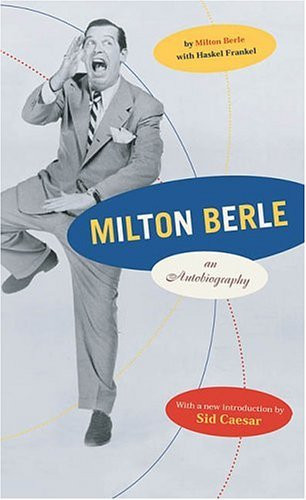
Milton Berle: an autobiography

Berle, Milton
(Applause Books). When Milton Berle died in the Spring of 2002, THE NEW YORK TIMES declared that the legendary comic "may have had a more profound influence on our way of life than some presidents or Nobel Prize winners." This landmark memoir, as startling today as it was when it was first published, reveals the life and times of the man known affectionately to millions as Uncle Miltie. Told with unflinching candor, here is one of the most fabled and influential show business careers of all time: from performing as a child in Vaudeville and making silent movies with Charlie Chaplin and Mary Pickford, to nightclub performances for Al Capone, working on radio during World War II, performing in Broadway musicals, and, finally, superstardom on television. Perhaps even more fascinating is Berle's scandal-ridden private life: his star-crossed love affair with a 1930's movie queen and the child they had out of wedlock, his numerous affairs with women ranging from evangelist Aimee Semple McPherson to Marilyn Monroe, and his stormy relationship with beautiful showgirl Joyce Mathews, whom Berle married twice. It is Berle's unsparing account of his life and his determination to show the world his real face that led Frank Sinatra, at the time, to call this "the gutsiest book I've read in years." Told with equal amounts of comedy and pathos, and featuring colorful appearancesby all the major stars of his day, MILTON BERLE is simply one of the best show business memoirs ever written.
Applause Theatre & Cinema Books 2002-09-01 337 pages

Legacy: one family, a cup of tea and the company that took on the world

Harding, Thomas
A panoramic new history of modern Britain, as told through the story of one extraordinary family, and one groundbreaking company. In the early 1800s, Lehmann Gluckstein and his family escaped the pogroms of Eastern Europe and made their way to Whitechapel in London's East End. There, starting with nothing, they worked tirelessly to pull themselves out of poverty, creating a small tobacco factory that grew to become the largest catering company in the world: J. Lyons. For over a century, Lyons was on every high street, in every home, in every coffee and teacup. It was an ascent from rags to riches in the face of many obstacles: poverty, hatred and anti-Semitism stood between this poor immigrant family and the British Dream. Legacy charts the rise and fall of one of the most influential dynasties in British history through the lives of five astonishing generations. Both sweeping and intimate, it is a story of sacrifice and selflessness, betrayal and personal tragedy, and Empire and its cost. It is also an illuminating new exploration of Britain and its place in the world, from the bestselling author of Hanns and Rudolf and The House by the Lake.
William Heinemann 2019 561 pages

Jacob's cane: a Jewish family's journey from the four lands of Lithuania to the ports of London and Baltimore

New, Elisa
Drawn to an image of her great-grandfather's ornately carved cane, scholar Elisa New embarked on a journey to discover the origins of her precious family heirloom. Treading back across the paths of her ancestors, she travels from Baltimore to the Baltic to London in order to find and understand an immigrant world profoundly affected by modern German culture, from the Enlightenment through the Holocaust. Deeply ambitious in its narrative sweep, Jacob's Cane captures the rich texture of life on several continents as New's family searches to establish itself in the tobacco trade. A fascinating history of one family's story of progress, innovation, and struggle, Jacob's Cane will change the way we think about the Jewish American experience.
Basic Books 2009-09-22 328 pages

Wassily Leontief and input-output economics

Wassily Leontief,Erik Dietzenbacher,Michael L. Lahr
Wassily Leontief (1905–1999) was the founding father of input-output economics, for which he received the Nobel Prize in 1973. This book offers a collection of papers in memory of Leontief by his students and close colleagues. The first part, 'Reflections on Input-Output Economics', focuses upon Leontief as a person and scholar as well as his personal contributions to economics. It includes contributions by Nobel Laureate Paul A. Samuelson who shares his memories of a young Professor Leontief at Harvard and ends with the last joint interview with Wassily and his wife, to date previously unpublished. The second part, 'Perspectives of Input-Output Economics', includes theoretical and empirical research inspired by Leontief's work and offers a wide-ranging sample of the state of interindustry economics, a field Leontief founded. This is a strong collection likely to appeal to a wide range of professionals in universities, government, industry and international organizations.
Cambridge University Press 2004-03-25 396 pages

Crusoes in Siberia

Soros, Tivadar
If you want to know where the brothers Paul and George Soros got their business skills, look no further than this little adventure story told by their father. In simple, understated style, Tivadar Soros tells how he and his companions broke out of their Siberian prisoner-of-war camp at the time of the Russian Revolution and traveled on foot through inhospitable mountains to freedom. And this was just preparation for the equally horrendous conditions that Tivadar and his family endured in World War II. -- "As a schoolboy, I used to join my father in the swimming pool after school, and after swimming he would regale me with an installment of his adventures. In this way they became an important part of my childhood." (George Soros) -- "I and my brother consider it to be our good fortune to grow up observing how our father lived and dealt with the problems of the world." (Paul Soros)
Mondial 2010 93 pages

Brothers of iron

Weider, Joe
In the depths of the Great Depression a scrawny, dirt-poor Jewish kid with a seventh-grade education picked up a barbell and got hooked on weight training. Building his muscles gave him confidence and hope for a better life. He pledged to make the great, transforming power of strength training available to everyone and to give bodybuilding all the glory it deserved.The kid, Joe Weider, enlisted his younger brother Ben in his quest, and together the Weider brothers accomplished things much bigger than Joe's boyhood dreams. The little muscle magazine Joe started, working at his family's dining room table, grew into a publishing empire. From a backyard barbell business, Joe and Ben built equipment and food supplement companies each as big as Weider Publishing. And they transformed bodybuilding into a hugely successful sport, organized under one of the largest and best-run athletic federations in the world.The Weider brothers are heroes to bodybuilders and fans all over the world. They're heroes because they're revolutionaries. The Weiders changed the way people think about exercise, health, and what makes a body beautiful. They changed the world and Brothers of Iron tells their fascinating story.
Sports Pub 2006 305 pages

Revenge of the nerd, or, ... The singular adventures of the man who would be Booger: a memoir

Armstrong, Curtis
"Risky Business. Revenge of the Nerds. Better Off Dead. Moonlighting. Supernatural. American Dad. New Girl. What do all of these movies and television shows have in common? Curtis Armstrong. A legendary comedic second banana to a litany of major stars, Curtis is forever cemented in the public imagination as Booger from Revenge of the Nerds. A classically trained actor, Curtis began his incredible 40-year career on stage but progressed rapidly to film and television. He was typecast early and it proved to be the best thing that could have happened. But there's more to Curtis' story than that. Born and bred a nerd, he spent his early years between Detroit, a city so nerdy that the word was coined there in 1951, and, improbably, Geneva, Switzerland. His adolescence and early adulthood was spent primarily between the covers of a book and indulging his nerdy obsessions. It was only when he found his true calling, as an actor and unintentional nerd icon, that he found true happiness. With whip-smart, self-effacing humor, Armstrong takes us on a most unlikely journey--one nerd's hilarious, often touching rise to the middle. He started his life as an outcast and matured into...well, an older, slightly paunchier, hopefully wiser outcast. In Hollywood, as in life, that counts as winning the game"--
Thomas Dunne Books/St. Martin's Press 2017 336 pages

Name dropping: the life and lies of Alan King

King, Alan
"This is not going to be a tell-all book. My few dark secrets I'm taking to my grave", Alan King, ne Irwin Alan Kniberg, assures us. Instead, this is the story of how a son of Russian immigrants - who came to this country in steerage - grew up to live in a mansion that had been built for Oscar Hammerstein. Dropping names whenever possible, he tells terrific stories about Marlon Brando, Frank Sinatra, Charlie Chaplin, Judy Garland, Billy Crystal, the Kennedys, and dozens of other friends famous and not so famous. His life in comedy and show business takes us on a glorious journey from the Borscht Belt to early success at the Palace Theater and all the way thorough to the recent Martin Scorsese film Casino. Along the way we learn a great deal about a man who still thinks of himself as two people, Alan King and Irwin Kniberg, who wins our hearts because that kid Irwin is, as he confesses, "still inside there, desperate to do something, to be somebody".
Scribner 1996 222 pages

Julius Rosenwald: repairing the world

Diner, Hasia R.
Julius Rosenwald (1862-1932) rose from modest means as the son of a peddler to immense wealth at the helm of Sears, Roebuck. Yet his most defining legacy stands not upon his business acumen but on the pioneering changes he introduced to the practice of philanthropy. While few may recall Rosenwald's name--he refused to have it attached to the buildings, projects, or endowments he supported--his passionate support of Jewish and African American causes continues to influence lives to this day. This biography of Julius Rosenwald explores his attitudes toward his own wealth and his distinct ideas about philanthropy, positing an intimate connection between his Jewish consciousness and his involvement with African Americans. The book shines light on his belief in the importance of giving in the present to make an impact on the future, and on his encouragement of beneficiaries to become partners in community institutions and projects. Rosenwald emerges from these pages as a compassionate man whose generosity and wisdom transformed the practice of philanthropy itself.
Yale University Press 2017-10-24 237 pages