84 results for "Children"

Adults and children in the Roman Empire

Wiedemann, Thomas E. J.
There is little evidence to enable us to reconstruct what it felt like to be a child in the Roman world. We do, however, have ample evidence about the feelings and expectations that adults had for children over the centuries between the end of the Roman republic and late antiquity.Thomas Wiedemann draws on this evidence to describe a range of attitudes towards children in the classical period, identifying three areas where greater individuality was assigned to children: through political office-holding; through education; and, for Christians, through membership of the Church in bapti
Routledge 2015-06-12 246 pages

Children in a violent society

Joy D. Osofsky
Today's children are bombarded with images of violence in cartoons, news reports, television shows, computer games, movies, and other media. In growing numbers, they are also exposed to real-life violence in their own homes and communities--as witnesses, victims, and, increasingly, perpetrators. Emphasizing the need for early intervention and prevention, this timely book details the incidence and scope of the violence epidemic and examines the developmental impact of violence on children. Contributors describe several exemplary prevention and intervention programs currently in place around the country and propose a range of educational and policy initiatives.
Guilford Press 1997 338 pages

Playing the future: what we can learn from digital kids

Rushkoff, Douglas
Do "The Simpsons" represent a leap forward in media consciousness? Do Sega video games andchannel-surfing offer new strategies for coping in a world fraught with unpredictability? Canraves, snowboarding, or online chatting teach us something about adapting to cultural change?Douglas Rushkoff, "one of the great thinkers and writers of our time" (Timothy Leary) says yes, yes, and yes.
Riverhead Books 1999 278 pages

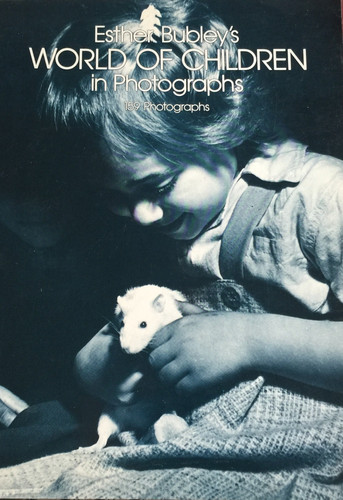
Esther Bubley's world of children in photographs

Bubley, Esther
In this collection, you will see children from Ms. Bubley's viewpoint and perspective. This is a beautiful collection from an award-wining photojournalist. Award-winning photojournalist Esther Bubley is recognized for both her artistic composition and her superb story telling ability. Bubley's career in documentary photography and photojournalism was launched in 1942 when Roy Stryker hired her to work in his dark room at the Office of War Information (OWI), where his famed Farm Security Administration (FSA) photographic project had recently been transferred. In 1944, Bubley followed Stryker to Standard Oil (New Jersey)(SONJ) where he was charged with compiling a photographic library. Bubley was a freelancer for Standard Oil for the rest of the 1940s and 1950s. She simultaneously developed a thriving career separate from Stryker, working for a variety of clients -- including Life, the Ladies' Home Journal, the Children's Bureau, Pepsi-Cola International, Pan American World Airways, and UNICEF -- who sent her on assignments throughout the continental United States and around the world.
Dover 1981 105 pages

Tears of sorrow, seeds of hope: a Jewish spiritual companion for infertility and pregnancy loss

Nina Beth Cardin
A spiritual companion for those grieving infertility, pregnancy loss, or stillbirth, bringing solace from Jewish tradition. "This book begins where the others leave off. While the doctors do what they must do, when it is time for us to wait, or hope, or cry, or sleep, or pray, it is time for this book. The passages found within are drawn from the rich pool of spiritual responses that Judaism possesses. They reach out to us and embolden us to join our voices to the ancient prayers designed to get us through the night."--from the Introduction Enables those frustrated and pained in their attempts at parenthood to mourn the loss of a pregnancy or infertility through the prayers, rituals, and meditations of the Jewish tradition. This new edition--updated and expanded--includes guided questions and pages on which to add personal reflections of your own emotions and experiences along the path toward parenting.
Jewish Lights Pub 2007 187 pages

What are we feeding our kids?

Jacobson, Michael F.
From Dr. Michael F. Jacobson, author of The Fast-Food Guide , and Bruce Maxwell, here is a necessary guide for every parent. Part expos, and part handbook, it's an impeccably researched look at kids, diet, government, and the food industry. It explains why the same dietary villains afflicting adults-too much fat, cholesterol, sugar, salt-are equally bad for kids. How big food business develops brand loyalty. How the FCC allows junk food advertisers almost unlimited access to children's programming. But it also explains what you can do about it-and how to get your kids on a healthier track.
Workman Pub 1994 309 pages

The magic kingdom

Elkin, Stanley
-- Brimming with Elkin's comic brilliance and singular wordplay, The Magic Kingdom tells the story of Eddy Bale, who, determined to learn from the ghastly experience of his son's long, drawn-out death, decides to raise enough money to take seven terminally ill children to Disney World in order to give them a dream vacation before they die. -- Stanley Elkin, a two-timer winner of the National Book Critics Award and three-time nominee for the National Book Award, is widely considered to be one of the most important writers of the contemporary period. Author of over a dozen novels and short story collections, his works include The Franchiser, George Mills, and Mrs. Ted Bliss. -- First published by Dutton (1985), most recent paperback by Thunder's Mouth (1991).
Dalkey Archive Press 2000 317 pages

Witnesses of war: children's lives under the Nazis

Stargardt, Nicholas
Examines what life was like for children - German, Polish, and Jewish - under Nazi rule, based mainly on the diaries and memoirs of 14 persons, five of them Jews: Yehuda Bacon, Janina Dawidowicz (Janina David), Thomas Geve, Dawid Sierakowiak, Miriam Wattenberg (Mary Berg). Pt. 2 (pp. 103-227), "The Race War", focuses on the experiences of the Jewish children, especially in the ghettos of Łódź and Warsaw, and includes the experiences of Bacon in Theresienstadt and Auschwitz. Provides examples of how the games of all these children reflected life and death around them.
Pimlico 2006 509 pages