154 results for "Cognitive Psychology"

Learning and Memory From Brain to Behavior

Mark A. Gluck,Eduardo Mercado,Catherine E. Myers
This textbook shows how developments in neuroscience have changed the field of learning and memory in the last ten years. A comprehensive, accessible and engaging introduction to learning and memory, the authors cover behavioural processes, brain systems, and clinical perspectives, incorporating findings both in animals and in humans.
Worth Publishers, Incorporated 2010-03 554 pages

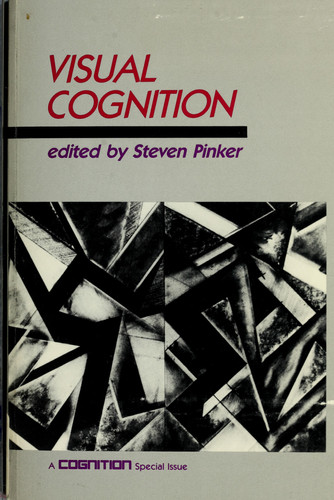
Visual cognition

Steven Pinker
These essays tackle some of the central issues in visual cognition, presentingexperimental techniques from cognitive psychology, new ways of modeling cognitive processes oncomputers from artificial intelligence, and new ways of studying brain organization fromneuropsychology, to address such questions as: How do we recognize objects in front of us? How do wereason about objects when they are absent and only in memory? How do we conceptualize the threedimensions of space? Do different people do these things in different ways? And where are theseabilities located in the brain?While this research, which appeared as a special issue of the journalCognition, is at the cutting edge of cognitive science, it does not assume a highly technicalbackground on the part of readers. The book begins with a tutorial introduction by the editor,making it suitable for specialists and nonspecialists alike.Steven Pinker is Associate Professor,Department of Psychology and Center for Cognitive Science at MIT.
MIT Press 1985 280 pages

In search of memory: the emergence of a new science of mind

Kandel, Eric R.
Nobelist Eric Kandel's account of how his personal quest to understand memory intersected with the emergence of a new science. In Search of Memory relates the astonishing story of how four different and distinct disciplinesbehaviorist psychology, cognitive psychology, neuroscience, and molecular biologyconverged into a powerful new science of mind. Through its profound insights into thought, perception, action, recollection, and mental illness, this new science is revolutionizing our understanding of learning and memory while simultaneously showing great promise for more effective healing. The narrative follows Eric R. Kandel through the last five decades, focusing on Vienna, where he became fascinated with memory. With intrepid scientific ardor, Kandel was captivated first by history and psychoanalysis, then by neurobiology, and finally by the biological processes of memory. His resulting, multifaceted perspective was the foundation for his path-breaking research that will continue to dominate modern thoughtnot only in science but in culture at large. 50 illustrations.
W. W. Norton & Company 2006 510 pages

Matter and memory

Bergson, Henri
"In Matter and Memory, Henri Bergson presents a profound examination of the relationship between perception, memory, and consciousness, intertwining philosophical inquiry with scientific insight. Bergson's literary style is both accessible and incisive, characterized by fluid prose that invites readers into a complex exploration of how human experience is scaffolded by the interplay of physical matter and mental processes. This work is situated within the context of early 20th-century philosophy, as it responds critically to the mechanistic and reductionist tendencies of contemporary thought, signaling a shift towards emphasizing the dynamism of human experience and the fluidity of time. Henri Bergson, a prominent French philosopher and Nobel laureate, was deeply influenced by the rapid advancements in science and psychology during his time. His background in both philosophy and the natural sciences shaped his approach in Matter and Memory, where he sought to articulate an understanding of consciousness that accounts for lived experience, thus challenging rigid boundaries between the existential and the material. Bergson's keen observations of life, time, and memory are informed by personal introspections and a tireless exploration of the essence of being. Matter and Memory is essential reading for those interested in philosophy, cognitive science, and the foundations of modern thought. Bergson's insights challenge readers to reconsider the nature of reality and the processes of memory, making this work a crucial addition to the canon of philosophical discourse. The book's innovative perspective has influenced generations and remains a relevant touchstone for contemporary debates on consciousness and cognition." -- Amazon.
Zone Books 1988 284 pages

What Could He Be Thinking

Michael Gurian
Having studied how boys and girls develop differently, Michael Gurian turns his attention to adult men in this entertaining, informative, and groundbreaking book on the male brain. Following two decades of neurobiological research, "What Could He Be Thinking? answers the questions women and the world are asking about husbands, fathers, boyfriends, and coworkers. Mixing neurobiology with Gurian's very readable writing style, anecdotes from everyday life, and a new vision of the male psyche, the book will satisfy the tremendous curiosity women and our culture have about the roots of male behavior. Women know intuitively that men are different from them. What women are now just coming to realize is that the men they are married to, having sex with, working with, parenting with, and trying to fathom, act and think in very male ways, not only because they are socialized to do so, but because they are built to - neurobiologically. The new field of brain science has revealed wonderful secrets about a man's mind. In this book, women who are eager to understand the men in their lives can discover the new brain science in an entertaining way, as they get answers to the prime question every woman asks at some time in her life: What could he be thinking? The book provides fascinating information about the male brain, male habits, male tendencies and the nuances of men's' actions and thoughts. It is a provocative, exciting vision into the minds of men.
St. Martin's Press 2001

Explaining culture: a naturalistic approach

Sperber, Dan
Ideas, Dan Sperber argues, may be contagious. They may invade whole populations. In the process, the people, their environment, and the ideas themselves are being transformed. To explain culture is to describe the causes and the effects of this contagion of ideas. This book will be read by all those with an interest in the impact of the cognitive revolution on our understanding of culture.
Blackwell 1996-11-06 175 pages

Concepts: where cognitive science went wrong

Fodor, Jerry A.
Oxford Cognitive Science Series General Editors: Martin Davies, Wilde Reader in Mental Philosophy, University of Oxford, UK, James Higginbotham, Professor of General Linguistics, University of Oxford, UK, John O'Keefe, Professor of Cognitive Neuroscience, University College, London, UK, Christopher Peacocke, Waynflete Professor of Metaphysical Philosophy, University of Oxford, UK, and Kim Plunkett, University Lecturer in Psychology, University of Oxford, UK The Oxford Cognitive Science series is a forum for the best contemporary work in this flourishing field, where various disciplines - cognitive psychology, philosophy, linguistics, cognitive neuroscience, and computational theory - join forces in the investigation of thought, awareness, understanding, and associated workings of the mind. Each book will represent an original contribution to its subject, but will be accessible beyond the ranks of specialists, so as to reach a broad interdisciplinary readership. The serieswill be carefully shaped and steered by the general editors, with the aim of representing the most important developments in the field and bringing together its constituent disciplines. About this book The renowned philosopher Jerry Fodor, who has been a leading figure in the study of the mind for more than twenty years, presents a strikingly original theory of the basic constituents of thought. He suggests that the heart of a cognitive science is its theory of concepts, and that cognitive scientists have gone badly wrong in many areas because their assumptions about concepts have been seriously mistaken. Fodor argues compellingly for an atomistic theory of concepts, deals out witty and pugnacious demolitions of the rival theories that have prevailed in recent years, and suggests that future work on human cognition should build upon new foundations. This lively, conversational, and surprisingly accessible book is the first volume in the Oxford Cognitive Science Series, where the best original work in this field will be presented to a broad readership. Concepts will fascinate anyone interested in contemporary work on mind and language. Cognitive science will never be the same again.
Clarendon Press 1998 174 pages

The human test: how predictability, creativity, and the quantum mind will redefine life in the age of AI

Folman, Ron
"As data harvesting continues its exponential growth and computing power increases beyond what we can even imagine, AI and Big Data will be able to predict what we want for breakfast, what shoes we will buy, which political party we will vote for, and who we will fancy in a bar. Indeed, these deep-learning machines will know us better than we know ourselves. The day awaits when academia and big business will be able to quantify just how predictable each of us are. If indeed we are predictable like machines, to what extent are we alive, and under what definition? In The Human Test, quantum physicist Ron Folman unites findings from cognitive science, quantum physics, philosophy, and technology to offer a prescient look into this startling new era of human existence. If we are indeed found to be predictable, it will change everything we thought we knew about human nature. The Human Test strives for a new paradigm, and this new paradigm is found in human predictability. Existing monitors of general brain activity measure only very rudimentary aspects of the human experience, or what may be called human life; could the advent of a disruptive new technology bring about a much more insightful measure of who we are? While The Human Test describes a new and profound near-future impact of AI, it is rooted in a topic of paramount importance to humans: the enigma of consciousness and how it defines human life-or, what differentiates humans from all other life forms. Ultimately, The Human Test addresses some of the most fundamental questions about our species, starting with the most crucial: do we have free will, or are we merely machines? Fortunately, there is an antidote to predictability: creativity, that wondrous state of being original and inherently not predictable. Ultimately, Folman argues that if we can understand predictability, we can learn how to distance ourselves from it, and transcend to a purer idea of what human life should look like"-- Provided by publisher.
Prometheus 2025-03-25 267 pages

Case studies in rational emotive behavior therapy with children and adolescents

Ellis, Albert
Preeminent psychologist Dr. Albert Ellis combines forces with other renowned therapists to create this rare and inclusive book that captures the realities of counseling with children. Rather than using a traditional case study approach, this work features verbatim transcripts that convey real issues ranging from anger management and self-esteem to peer pressure and bed-wetting. For child therapists and counselors.
Merrill/Prentice Hall 2002 152 pages

Delusion and Mass Delusion

Joost A. M. Meerloo
2021 Hardcover Reprint of the 1949 Edition. Full facsimile of the original edition and not reproduced with Optical Recognition Software. Meerloo's best-known book is Rape of the Mind, published in 1956. The book received wide attention in part because it dealt with totalitarian applications of brainwashing techniques during the Korean War. Rape of the Mind explains how scientific brainwashing is done and argues that "hardly anyone can resist such." "Fear, and continual pressure are known to create a menticidal hypnosis. The conscious part of the personality no longer takes part in the automatic confessions. The brainwashee lives in a trance, repeating the record grooved into him by somebody else." In Delusion and Mass Delusion, Meerloo attempts to explain the mechanisms within the mind that allow for such manipulation. He attempts an explanation of the several mechanisms undergirding thought, many of which are not obviously available to individuals. An interesting early study on brainwashing by an early student of the practice.
Martino Fine Books 2021-10-14 140 pages

Personality and personal growth

Fadiman, James
Unique in its cross-cultural, global, and gender-balanced perspectives--and emphasis on humanistic and transpersonal psychologists--this book explores the positive aspects of major personality theorists, stressing each ones relevance for personal understanding. Exceptionally well-written and accessible, it encourages and supports readers in using themselves as the primary touchstone for each theory. Each chapter gives them opportunities to validate their insights through direct experience, and, by observing their own reactions, come to their own conclusions about the utility and value of each theory. Sigmund Freud and Psychoanalysis. Anna Freud and the Post-Freudians: Melanie Klein, Donald Winnicott, Heinz Kohut, and the Gestalt Therapy of Fritz and Laura Perls. Carl Gustav Jung and Analytical Psychology. Alfred Adler and Individual Psychology. Karen Horney and Humanistic Psychoanalysis. The Psychology of Women: A Relational Approach. Erik Erikson and the Life Cycle. Wilhelm Reich and Somatic Psychology. William James and the Psychology of Consciousness. B. F. Skinner and Radical Behaviorism. Cognitive Psychology. The Personal Construct Theory of George Kelly. Carl Rogers and the Person-Centered Perspective. Abraham Maslow and Transpersonal Psychology. Yoga and the Hindu Tradition. Zen and the Buddhist Tradition. Sufism and the Islamic Tradition. For therapists, educators, social workers and anyone interested in personality and personal adjustment.
Prentice Hall 2002 584 pages

Prenatal testosterone in mind: amniotic fluid studies

Baron-Cohen, Simon
This pioneering study looks at the effects of prenatal testosterone on postnatal development and behavior. Hormonal effects on behavior have long been studied in animals; the unique contribution of this book is to suggest a connection between human fetal hormones and later behavior. It details for the first time testosterone's effect on social and language development, opening a new avenue of research for cognitive neuroscience.The authors look at samples of amniotic fluid taken during amniocentesis at 16 weeks' gestation, and relate the fetal level of testosterone (which is present in fetuses of both sexes, although in different quantities) to behavior at ages 1, 2, and 4 years. They argue that the amniotic fluid provides a window into the child's past -- a chemical record of that child's time in the womb -- that allows informed prediction about the child's future brain, mind, and behavior. This is not the retrospective speculation of psychoanalysis, they point out, but an opportunity to study development prospectively and trace developmental precursors and causes of later cognition.The study suggests that prenatal levels of testosterone affect a range of later behaviors in children, from the inclination to make eye contact with others to the size of the vocabulary. It also suggests that prenatal testosterone level may be related to the development of typically "masculine" and "feminine" behaviors. The study's ongoing research explores whether fetal testosterone has any link with the risk of developing autism. Connecting endocrinology and psychology, the authors propose that there is a biological component to behaviors often thought to be produced by the social environment.
MIT Press 2004 131 pages

Overcoming resistance: a rational emotive behavior therapy integrated approach

Ellis, Albert
With a new foreword by Raymond DiGiuseppe, PhD, ScD, St. John's University "Albert Ellis has written many books on his favorite topic Rational Emotive Behavior Therapy. Although he writes on that topic very well, he often does not write about generic psychotherapy. REBT is an integrative form of psychotherapy. Following this model, psychotherapists can incorporate many diverse techniques and strategies to change clients' dysfunctional behaviors and emotions . Much of what Al identifies as good REBT in this book is just good psychotherapy. Because people so universally identify Al with REBT, people may generally overlook his wisdom as a clinician. Having worked with Al for more than thirty years, I have been fortunate enough to learn from him. Much of the knowledge I learned from Al and cherish the most is not necessarily about REBT theory. They concern wise ways of thinking about clinical problems. That is why, out of all Al's books, this is my favorite. This is Al Ellis, the clinician." -- From the Foreword by Raymond DiGiuseppe , PhD, ScD, Director of Professional Education, Albert Ellis Institute; Professor and Chair, Department of Psychology, St. John's University Now available in an affordable paperback, this edition takes a look at the underlying causes of resisting cognitive-emotional-behavioral change and the methods used to overcome them. Written in present-action language, Ellis gives an overview of the basic principles of Rational Emotive Behavior Therapy and Cognitive Behavior Therapy. Ellis charts the changes in the field that have taken place in the 20 years leading up to 2002, when this edition was originally published. The book also integrates recent therapies into REBT, including psychotherapy, solution-focused therapy, and recent findings of experimental psychology.
Springer 2002 292 pages

Descartes' baby: how the science of child development explains what makes us human

Bloom, Paul
"If you really want to understand human nature, you must observe people as they are before they are corrupted by language and culture, by MTV and Hebrew school. You must look at babies." So contends psychologist Paul Bloom-whom Steven Pinker calls "the wunderkind of cognitive science"-in this fascinating account of how we learn to make sense of reality. All humans see the world in two fundamentally different ways: Even babies have a rich understanding of both the physical and social worlds. They expect objects to obey principles of physics, and they're startled when things disappear or defy gravity. Yet they can also read emotions and respond with anger, sympathy, and joy.In Descartes' Baby, Bloom draws on a wealth of scientific discoveries to show how these two ways of knowing give rise to such uniquely human traits as humor, disgust, religion, art, and morality. The myriad ways that our dualist perspectives, born in infancy, undergo development throughout our lives and profoundly influence our thoughts, feelings, and actions is the subject of this richly rewarding book.
Basic Books 2004-04-13 271 pages

Global Brain The Evolution of Mass Mind from the Big Bang to the 21st Century

Howard Bloom
"As someone who has spent forty years in psychology with a long-standing interest in evolution, I'll just assimilate Howard Bloom's accomplishment and my amazement." --DAVID SMILLIE, Visiting Professor of Zoology, Duke University In this extraordinary follow-up to the critically acclaimed The Lucifer Principle, Howard Bloom--one of today's preeminent thinkers--offers us a bold rewrite of the evolutionary saga. He shows how plants and animals (including humans) have evolved together as components of a worldwide learning machine. He describes the network of life on Earth as one that is, in fact, a "complex adaptive system," a global brain in which each of us plays a sometimes conscious, sometimes unknowing role, and he reveals that the World Wide Web is just the latest step in the development of this brain. These are theories as important as they are radical. Informed by twenty years of interdisciplinary research, Bloom takes us on a spellbinding journey back to the big bang to let us see how its fires forged primordial sociality. As he brings us back via surprising routes, we see how our earliest bacterial ancestors built multitrillion-member research and development teams a full 3.5 billion years ago. We watch him unravel the previously unrecognized strands of interconnectedness woven by crowds of trilobites, hunting packs of dinosaurs, feathered flying lizards gathered in flocks, troops of baboons making communal decisions, and adventurous tribes of protohumans spreading across continents but still linked by primitive forms of information networking. We soon find ourselves reconsidering our place in the world. Along the way, Bloom offers us exhilarating insights into the strange tricks of body and mind that have organized a variety of life forms: spiny lobsters, which, during the Paleozoic age, participated in communal marching rituals; and bees, which, during the age of dinosaurs, conducted collective brainwork. This fascinating tour continues on to the sometimes brutal subculture wars that have spurred the growth of human civilization since the Stone Age. Bloom shows us how culture shapes our infant brains, immersing us in a matrix of truth and mass delusion that we think of as reality. Global Brain is more than just a brilliantly original contribution to the ongoing debate on the inner workings of evolution. It is a "grand vision," says the eminent evolutionary biologist David Sloan Wilson, a work that transforms our very view of who we are and why.
Turner Publishing Company 2001-08 384 pages

Changing minds: the art and science of changing our own and other people's minds

Gardner, Howard
Publisher's description: Minds are exceedingly hard to change. Ask any advertiser who has tried to convince consumers to switch brands, any CEO who has tried to change a company's culture, or any individual who has tried to heal a rift with a friend. So many aspects of life are oriented toward changing minds--yet this phenomenon is among the least understood of familiar human experiences. Now, eminent Harvard psychologist Howard Gardner, whose work has revolutionized our beliefs about intelligence, creativity, and leadership, offers an original framework for understanding exactly what happens during the course of changing a mind--and how to influence that process. Drawing on decades of cognitive research and compelling case studies--from famous business and political leaders to renowned intellectuals and artists to ordinary individuals--Gardner identifies seven powerful factors that impel or thwart significant shifts from one way of thinking to a dramatically new one. Whether we are attempting to change the mind of a nation or a corporation, our spouse's mind or our own, this book provides insights that can broaden our horizons and improve our lives. Howard Gardner is the John H. and Elisabeth A. Hobbs Professor of Cognition and Education at the Harvard Graduate School of Education and senior director of Harvard Project Zero. The recipient of a MacArthur Prize Fellowship and 20 honorary degrees, he is the author of more than 20 books.
Harvard Business School Press 2004 244 pages

Methods in neuronal modeling

Christof Koch,Idan Segev
Methods in Neuronal Modeling is the first technical handbook on computational neuroscience. Written for researchers and theoreticians alike, it outlines methods and techniques used for simulating on digital computers the functional properties of single neurons from synapses, dendrites, single cells; and small invertebrate networks to large scale neural networks in the mammalian nervous system. The use of new experimental tools such as selective staining methods, membrane patch electrodes, voltage and calcium-dependent dyes, and multielectrode recordings, together with the, advent of universally available powerful computing, makes it possible to construct detailed and realistic models of neuronal systems. Methods in Neuronal Modeling addresses such questions as what can and should be simulated and what techniques should be used; what experimental parameters are crucial for such simulations, and whether these models may be verified experimentally. Chapters cover simulation of passive dendritic trees, compartmental models of single cells including neurons with a number of different ionic channels, calcium current dynamics, simulations of small invertebrate networks, simulations of the mammalian cortex, connectionists' models, and the use of parallel computers in modeling neural networks. Although the chapters were written by several authors, they are uniform in structure and notation. Detailed examples are given to clarify the different approaches. Each chapter concludes with a description of the model discussed and the details of its implementation on the computer. Christof Koch is an Assistant Professor of Computation and Neural Systems at the California Institute of Technology. Idan Segev is a Lecturer in Neurobiology at the Institute of Life Science, Hebrew University of Jerusalem. Methods in Neuronal Modeling inaugurates the new series in Computational Neuroscience, edited by Terrence J. Sejnowski and Tomaso Poggio. A Bradford Book.
MIT Press 1989-01 524 pages

Maximum Brainpower Challenging the Brain for Health and Wisdom

Shlomo Breznitz,Collins Hemingway
“A wonderfully helpful book . . . After reading it, you will understand what you must do for your brain, and why you must do it.”—Norman Doidge, M.D., New York Times bestselling author of The Brain That Changes Itself Did you know that experts are often less mentally agile than jacks-of-all-trades? That crossword puzzles and sudoku are of minimal help in building brainpower? That multitasking poses unique dangers to the brain? Cognitive psychologist Shlomo Breznitz knows—and what’s more, he knows what to do about it. In Maximum Brainpower, Breznitz and technologist Collins Hemingway provide both an in-depth look at how the brain works and proven methods to increase its capabilities. Armed with the results of cutting-edge research, they champion the stimulus of continual change over the deadening effects of comfortable routine, show how to separate good mental stress from bad, and demonstrate how hope and socialization can help defend against forgetfulness, memory loss, even dementia. Filled with colorful real-life stories and fascinating psychological experiments, this revelatory work will help adults of any age keep their minds sharp, healthy, and cognitively fit throughout life. It’s a no-brainer! Praise for Maximum Brainpower “Everyone knows the importance of physical fitness; less appreciated is the necessity of cognitive fitness. How do you maintain an exercised, stimulated, flexible brain? Start by reading this book.”—David Eagleman, New York Times bestselling author of Incognito “Profound, rich, and enriching . . . Because of its forceful suggestions, its analyses, and its wide knowledge, this book is well worth reading. And rereading.”—Elie Wiesel, Nobel Peace Prize Laureate and author “Many of us are petrified of Alzheimer’s disease, strokes, and other maladies that impair the functioning of the brain. Breznitz and Hemingway can deliver no ‘magic bullet’ to prevent dementia. But their book does get you thinking about what you can do to develop and maintain your gray matter, build on the plasticity of the brain, and increase the likelihood that you’ll live not just a longer but a fuller life.”—The Huffington Post “Most books about healthy brain maintenance just give you the ‘how’; this one tells you why. And it helps you do it.”—Rita Carter, author of Mapping the Mind
Random House Publishing Group 2013-07-30 288 pages

Max Wertheimer Productive Thinking

Max Wertheimer
Max Wertheimer (1880-1943), a pioneer of 20th-century psychology, had a major influence on the development of cognitive psychology, especially the psychology of perception and of productive thinking. His work "Productive Thinking" (1945), written in New York, is regarded as a milestone in creativity research. Consisting of many examples of creative thought processes - from geometric tasks to socio-psychologically relevant conflict resolutions to the development of Einstein's theory of relativity - the book leads the reader through a multi-faceted body of thought in the psychology of thinking. Only a few texts in psychology have remained significant even after a period of three quarters of a century - Max Wertheimer's Productive Thinking is such an exception. This book, which also presents an exposition of Gestalt psychology, highlights the "productive" (insightful) versus automatic (unreflected) thought processes for many areas of life. In addition to examples from school teaching, the chapter on the emergence of Albert Einstein's theory of relativity is of lasting interest to today's generation of psychologists, pedagogues, brain researchers, neuroscientists and philosophers. Wertheimer had the unique opportunity to analyze Einstein's thinking in direct conversation. An introductory commentary by Viktor Sarris for this new edition of the first publication of Productive Thinking in 1945 offers a detailed account of the genesis and reception of Wertheimer's work.
Springer International Publishing 2020-03-31 257 pages