324 results for "History"

Imperial grunts: the American military on the ground

Kaplan, Robert D.
Veteran correspondent Kaplan shows how American imperialism and the Global War on Terrorism are implemented on the ground, mission by mission, in the most exotic landscapes around the world. Kaplan takes us from the jungles of the southern Philippines to the dust bowls of Mongolia, from the forts of Afghanistan to the forests of South America--not to mention Iraq--to show us Army Special Forces, Marines, and other uniformed Americans carrying out the many facets of U.S. foreign policy: negotiating with tribal factions, storming terrorist redoubts, performing humanitarian missions and training foreign soldiers. Kaplan provides an insider's account of where America, including the culture of its officers and enlisted men, is headed. This book has the potential to change the way readers view the men and women of the military, war, and the global reach of America today.--From publisher description.
Random House 2005 421 pages

The silenced majority: stories of uprisings, occupations, resistance, and hope

Goodman, Amy
""Amy Goodman has taken investigative journalism to new heights of exciting, informative, and probing analysis."-Noam Chomsky Amy Goodman and Denis Moynihan began writing a weekly column, "Breaking the Sound Barrier," for King Features Syndicate in 2006. This timely new sequel to Goodman's New York Times bestseller of the same name gives voice to the many ordinary people standing up to corporate and government power-and refusing to be silent. The Silenced Majority pulls back the veil of corporate media reporting to dig deep into the politics of "climate apartheid," the implications of the Fukushima nuclear disaster, the movement to halt the execution of Troy Anthony Davis, and the globalization of dissent "From Tahrir Square to Liberty Plaza." Throughout Goodman and Moynihan show the power of ordinary people to change their media-and change the world. Amy Goodman is a multiple New York Times best-selling author and the host and executive producer of Democracy Now! a daily independent news program airing on more than one thousand television and radio stations. Time named Democracy Now! its "Pick of the Podcasts," along with NBC's Meet the Press. Goodman is the first journalist to receive the Right Livelihood Award, widely known as the "Alternative Nobel Prize." Denis Moynihan, since helping co-found Democracy Now! as an independent production company in 2002, has participated in the organization's growth, focusing primarily on distribution, infrastructure development, and coordinating complex live broadcasts from all continents (save Antarctica). He lives in Denver, Colorado. "--
Haymarket Books 2012 345 pages

The return of Marco Polo's world: war, strategy, and American interests in the twenty-first century

Kaplan, Robert D.
"A bracing assessment of U.S. foreign policy and world disorder over the past two decades, anchored by a major new Pentagon-commissioned essay about changing power dynamics among China, Eurasia, and America--from the renowned geopolitical analyst and bestselling author of The Revenge of Geography and The Coming Anarchy. In the late thirteenth century, Marco Polo began a decades-long trek from Venice to China. The strength of that Silk Road--the trade route between Europe and Asia--was a foundation of Kublai Khan's sprawling empire. Now, in the early twenty-first century, the Chinese regime has proposed a land-and-maritime Silk Road that duplicates exactly the route Marco Polo traveled. In the major lead essay, recently released by the Pentagon's Office of Net Assessment, Robert D. Kaplan lays out a blueprint of the world's changing power politics that recalls the late thirteenth century. As Europe fractures from changes in culture and migration, Eurasia coheres into a single conflict system. China is constructing a land bridge to Europe. Iran and India are trying to link the oil fields of Central Asia to the Indian Ocean. America's ability to influence the power balance in Eurasia is declining. This is Kaplan's first collection of essays since his classic The Coming Anarchy was published in 2000. Drawing on decades of firsthand experience as a foreign correspondent and military embed for The Atlantic, as well as encounters with preeminent realist thinkers, Kaplan outlines the timeless principles that should shape America's role in a turbulent world: a respect for the limits of Western-style democracy; a delineation between American interests and American values; an awareness of the psychological toll of warfare; a projection of power via a strong navy; and more. From Kaplan's immediate thoughts on President Trump ("On Foreign Policy, Donald Trump Is No Realist," 2016) to a frank examination of what will happen in the event of war with North Korea ("When North Korea Falls," 2006), The Return of Marco Polo's World is a vigorous and honest reckoning with the difficult choices the United States will face in the years ahead. "These essays constitute a truly pathbreaking, brilliant synthesis and analysis of geographic, political, technological, and economic trends with far-reaching consequences. The Return of Marco Polo's World is another work by Robert D. Kaplan that will be regarded as a classic."--General David Petraeus (U.S. Army, Ret.)"--
Random House 2018 280 pages

Hall of mirrors: the Great Depression, the great recession, and the uses-and misuses-of history

Eichengreen, Barry J.
"There have been two global financial crises in the past century: the Great Depression of the 1930s and the Great Recession that began in 2008. Both featured loose credit, precarious real estate and stock market bubbles, suspicious banking practices, an inflexible monetary system, and global imbalances; both had devastating economic consequences. In both cases, people in the prosperous decade preceding the crash believed they were living in a post-volatility economy, one that had tamed the cycle of boom and bust. When the global financial system began to totter in 2008, policymakers were able to draw on the lessons of the Great Depression in order to prevent a repeat, but their response was still inadequate to prevent massive economic turmoil on a global scale. In Hall of Mirrors, renowned economist Barry Eichengreen provides the first book-length analysis of the two crises and their aftermaths. Weaving together the narratives of the 30s and recent years, he shows how fear of another Depression greatly informed the policy response after the Lehman Brothers collapse, with both positive and negative results. On the positive side, institutions took the opposite paths that they had during the Depression; government increased spending and cut taxes, and central banks reduced interest rates, flooded the market with liquidity, and coordinated international cooperation. This in large part prevented the bank failures, 25% unemployment rate, and other disasters that characterized the Great Depression. But they all too often hewed too closely and too literally to the lessons of the Depression, seeing it as a mirror rather than focusing on the core differences. Moreover, in their haste to differentiate themselves from their forbears, today's policymakers neglected the constructive but ultimately futile steps that the Federal Reserve took in the 1930s. While the rapidly constructed policies of late 2008 did succeed in staving off catastrophe in the years after, policymakers, institutions, and society as a whole were too eager to get back to normal, even when that meant stunting the recovery via harsh austerity policies and eschewing necessary long-term reforms. The result was a grindingly slow recovery in the US and a devastating recession in Europe. Hall of Mirrors is not only a monumental work of economic history, but an essential exploration of how we avoided making only some of the same mistakes twice--and why our partial remedy makes us highly susceptible to making other, equally important mistakes yet again"--
Oxford University Press 2015 512 pages

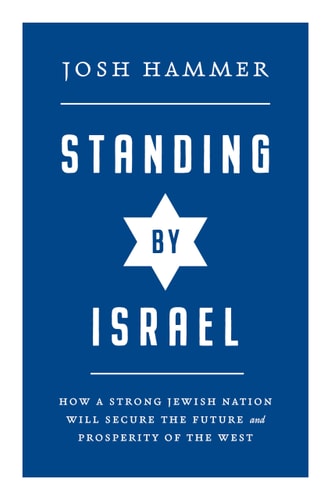
Israel and civilization: the fate of the Jewish nation and the destiny of the West

Hammer, Josh
"In Israel and Civilization, acclaimed journalist, legal expert, and pundit Josh Hammer makes a righteous case that the key to the prosperity of the West is the flourishing of the Jewish people and the Jewish State of Israel. Hammer's uplifting offense is our best defense against the enemies of the Jewish people's right to self-determination in their ancestral homeland. And as Hammer makes clear, manifesting the promise of Israel requires action by the United States and its allies. There can be no overstating the impact of the trauma of October 7, 2023, on the Jewish people. Yet the anti-Israel reactions the world over have been equally devastating. Rallies of hundreds of thousands explicitly or implicitly promoting Hamas violence; demonstrations of Ivy League professors celebrating the pogrom as awesome and exhilarating; so-called human rights organizations that refuse to unequivocally condemn the use of rape as a weapon of war; and a hydra of multiculturalism, postmodern relativism, and tolerance--it all threatens the physical and metaphysical survival of the West and our essential Jewish heritage. Preserving the best of what's been thought and said throughout history and ensuring that there will be centuries more requires a West that is proud of its Jewish heritage. In other words, the continued existence of the Jewish people is inextricably tied to the endurance of Western civilization. Israel is the center of the battle, and Israel and Civilization explains why and how the Jewish state must win."--
Radius Book Group 2025-03-18 293 pages

Firestorm: the great Los Angeles fires and America's new age of disaster

Soboroff, Jacob
"On the morning of January 7, 2025, a message pinged the phone of Jacob Soboroff, a national correspondent for NBC News. "Big Palisades fire. We are evacuating," his brother texted within minutes of the blaze engulfing the hillside behind the home where he and his pregnant wife were living. "Really bad." An attached photo showed a huge black plume rising from behind the house, an umbrella of smoke towering over everything they owned. Jacob rushed to the office of the bureau chief. "I should go. I grew up in the Palisades." Soon he was on the front line of the blaze-his first live report of what would turn out to be weeks covering unimaginable destruction, from both the Palisades Fire and the Eaton Fire, in Altadena. In the days to come, Soboroff appeared across the networks of NBC News as Los Angeles was ablaze, met with displaced residents and workers, and pressed Governor Gavin Newsom in an interview on MEET THE PRESS. But no story Soboroff has covered at home or abroad-the trauma of family separation at the border, the displacement of the war in Ukraine, the collapse of order in Haiti-could have prepared him for reporting live as the hallmarks of his childhood were engulfed in flames around him while his hometown burned to the ground. But for Soboroff, questions remained after the fires were controlled: what had he just witnessed? How could it have happened? Is it inevitable something like it will happen again? This set Soboroff off on months of reporting-with firefighters, fire victims, political leaders, academics, earth scientists, wildlife biologists, meteorologists and more-that made him keenly aware of how the misfortune of seeing his past carbonize was also a form of time travel into the dystopian world his children will inhabit. This is because the 2025 LA fires were not an isolated tragedy, but rather they are a harbinger-"the fire of the future," in the words of one senior emergency-management official. FIRESTORM is the story of the costliest wildfire in American history, the people it affected and the deeply personal connection to one journalist covering it. It is a love letter to Los Angeles, a yearning to understand the fires, and why America's new age of disaster we are living through portends that-without a reckoning of how Los Angeles burned-there is more yet, and worse, to come"-- Provided by publisher.
Mariner Books 2026-01-06 288 pages

The next 100 years: a forecast for the 21st century

Friedman, George
“Conventional analysis suffers from a profound failure of imagination. It imagines passing clouds to be permanent and is blind to powerful, long-term shifts taking place in full view of the world.” —George Friedman In his long-awaited and provocative new book, George Friedman turns his eye on the future—offering a lucid, highly readable forecast of the changes we can expect around the world during the twenty-first century. He explains where and why future wars will erupt (and how they will be fought), which nations will gain and lose economic and political power, and how new technologies and cultural trends will alter the way we live in the new century. The Next 100 Years draws on a fascinating exploration of history and geopolitical patterns dating back hundreds of years. Friedman shows that we are now, for the first time in half a millennium, at the dawn of a new era—with changes in store, including: • The U.S.-Jihadist war will conclude—replaced by a second full-blown cold war with Russia. • China will undergo a major extended internal crisis, and Mexico will emerge as an important world power. • A new global war will unfold toward the middle of the century between the United States and an unexpected coalition from Eastern Europe, Eurasia, and the Far East; but armies will be much smaller and wars will be less deadly. • Technology will focus on space—both for major military uses and for a dramatic new energy resource that will have radical environmental implications. • The United States will experience a Golden Age in the second half of the century. Written with the keen insight and thoughtful analysis that has made George Friedman a renowned expert in geopolitics and forecasting, The Next 100 Years presents a fascinating picture of what lies ahead. For continual, updated analysis and supplemental material, go to www.Stratfor.com
Doubleday 2009 253 pages

The Book on Bush How George W. Bush (mis)leads America

Eric Alterman,Mark J. Green
When George W. Bush Became President in January 2001, he took office with a comfortably familiar surname, bipartisan rhetoric, and the promise of calming a public shaken by the convulsions of a contested election. Then, after the tragedy of 9/11, both the country and the world looked to him for leadership that could unite people behind great common goals. Instead, George W. Bush squandered the good will felt toward America, turned allies into adversaries, and ran what may well be the most radical and divisive administration in the history of the presidency. Carefully documented and with vivid detail, The Book on Bush traces the guiding ideology that runs through a wide range of W.'s policies. The Book on Bush is an invaluable resource that exposes plutocracy posing as patriotism and, in area after area, the encroachment of radical right-wing ideology onto a moderate country. Book jacket.
Penguin Books 2004 419 pages

Dark agenda: the war to destroy Christian America

Horowitz, David
Filled with stories that demonstrate the mind-numbing reasons behind the secular left's smug disdain for Christianity, Horowitz traces the history of religious liberty from the Founding Fathers to now. He shows how the Founding Fathers put aside their own skepticisms about God and religion to write The Declaration of Independence. Today, he writes Donald Trump's "genuine love for his country" has galvanized Christians to fight the secular war waged against them -- as the president has become a lightning rod for the radical left.
Humanix Books 2018 194 pages

Exorbitant privilege: the rise and fall of the dollar

Eichengreen, Barry J.
Since the Second World War, the US dollar has been the world's sole international reserve currency, giving it, in the words of one critic, 'exorbitant privilege'. But in the wake of the worldwide financial crisis, will other currencies overtake it? And what impact would that have? Eichengreen explains the history and assesses what may come.
Oxford University Press 2011-02-24 215 pages

In wartime: stories from Ukraine

Judah, Tim
From one of the finest journalists of our time comes a definitive, boots-on-the-ground dispatch from the front lines of the conflict in Ukraine. Ever since Ukraine's violent 2014 revolution, followed by Russia's annexation of Crimea, the country has been at war. Misinformation reigns, more than two million people have been displaced, and Ukrainians fight one another on a second front--the crucial war against corruption. With In Wartime , Tim Judah lays bare the events that have turned neighbors against one another and mired Europe's second-largest country in a conflict seemingly without end. In Lviv, Ukraine's western cultural capital, mothers tend the graves of sons killed on the other side of the country. On the Maidan, the square where the protests that deposed President Yanukovych began, pamphleteers, recruiters, buskers, and mascots compete for attention. In Donetsk, civilians who cheered Russia's President Putin find their hopes crushed as they realize they have been trapped in the twilight zone of a frozen conflict. Judah talks to everyone from politicians to poets, pensioners, and historians. Listening to their clashing explanations, he interweaves their stories to create a sweeping, tragic portrait of a country fighting a war of independence from Russia--twenty-five years after the collapse of the USSR.
Tim Duggan Books 2016 257 pages

Longitudes and Attitudes Exploring the World After September 11

Thomas L. Friedman
A New York Times BestsellerThomas L. Friedman won his third Pulitzer Prize for his clarity of vision, based on extensive reporting, in commenting on the worldwide impact of the terrorist threat after the attacks of September 11, 2001. Longitudes & Attitudes is made up of the columns Friedman has published about September 11, as well as a diary of his private experiences and reflections as he travels from Afghanistan to Israel to Europe to Indonesia to Saudi Arabia reporting on the post-September 11 world.
Thorndike Press 2003 581 pages

Plato at the Googleplex: why philosophy won't go away

Goldstein, Rebecca Newberger
Imagine that Plato came to life in the twenty-first century and embarked on a multi-city speaking tour. How would he mediate a debate between a Freudian psychoanalyst and a 'tiger mum' on how to raise the perfect child? How would he handle the host of a right-wing news program who denies there can be morality without religion? What would Plato make of Google, and of the idea that knowledge can be crowdsourced rather than reasoned out by experts? Plato at the Googleplex is acclaimed thinker Rebecca Newberger Goldstein's dazzling investigation of these conundra
Atlantic Books 2015 459 pages

The hill to die on: the battle for Congress and the future of Trump's America

Sherman, Jake S.,Palmer, Anna A.
"The startling inside story of Donald Trump's first two years, viewed from Capitol Hill, where lawmakers on both sides of the aisle jockeyed for advantage as American politics reached a fevered pitch. Taking readers into secret strategy calls and closed-door meetings from the House to the White House, Politico Playbook writers Jake Sherman and Anna Palmer trace the strategy and the impulsiveness, the dealmaking and the backstabbing, in a blow-by-blow account of the power struggle that roiled the halls of Congress. Moving from the fights for advantage between Donald Trump, Nancy Pelosi, and Chuck Schumer; to Mitch McConnell's merciless, Machiavellian handling of the sexual assault accusations against Supreme Court nominee Brett Kavanaugh; to Paul Ryan's desperate, failed attempts to keep Mark Meadows from pushing Trump into a government shutdown over immigration, The Hill to Die On bristles with fresh news and tells the story of what really happened in some of the most defining moments our era. Like The West Wing for Congress, or Shattered meets This Town, The Hill to Die On tells an unforgettable story of politics and power, where the stakes are nothing less than the future of Congress and the fate of America" --
Crown 2019 420 pages

Murder in Amsterdam: liberal Europe, Islam and the limits of tolerance

Buruma, Ian
On a cold November day in Amsterdam, an angry young Muslim man, the son of Moroccan immigrants, killed celebrated and controversial Dutch filmmaker Theo van Gogh, great-grandnephew of Vincent and iconic European provocateur, for making a movie that "blasphemed" Islam. The murder horrified quiet, complacent, prosperous Holland, a country that prides itself on being a bastion of tolerance, and sent shock waves across Europe and around the world. Ian Buruma returned to his native Netherlands to try to make sense of it all and to see what larger meaning should and shouldn't be drawn from this story. The result is a true-crime page-turner with the intellectual resonance we've come to expect from this well-regarded journalist and thinker: the exemplary tale of our age, the story of what happens when political Islam collides with the secular West and tolerance finds its limits.--From publisher description
Penguin Books 2007-08-28 278 pages

The age of the strongman: how the cult of the leader threatens democracy around the world

Rachman, Gideon
**AN ECONOMIST AND THE TIMES BOOK OF THE YEAR 2022** 'Essential and definitive' - CATHERINE BELTON, author of PUTIN'S PEOPLE We are in a new era. Since the beginning of the millennium, when Vladimir Putin took power in Russia, authoritarian leaders have come to dominate global politics. Self-styled strongmen have risen to power in Moscow, Beijing, Delhi, Brasilia, Budapest, Ankara, Riyadh and Washington. How and why did this new style of strongman leadership arrive? How likely is it to lead to war or economic collapse? And what forces are in place not only to keep these strongmen in check but to reverse the trend? Everywhere they go, these leaders encourage a cult of personality. They are nationalists and social conservatives, with little tolerance for minorities, dissent or the interests of foreigners. At home, they claim to stand up for ordinary people against globalist elites; abroad, they posture as the embodiments of their nations. And they are not just operating in authoritarian political systems but have begun to emerge in the heartlands of liberal democracy. From Putin, Trump and Bolsonaro to Erdogan, Xi and Modi , The Age of the Strongman provides the first truly global treatment of the new nationalism and offers a bold new paradigm for understanding our world. 'When it comes to making sense of today's world, Gideon Rachman is in a league of his own' - Ivan Krastev, co-author of The Light that Failed
The Bodley Head 2022 278 pages

Why America Slept The Reasons Behind Our Failure to Prevent 9/11

Gerald Posner
Since 9/11, one important question has persisted: What was really going on behind the scenes with intelligence services and government leaders during the time preceding that terrible day? After an eighteen-month investigation, Gerald Posner reveals much previously undisclosed information, including details about a secret deal between Saudi Arabia and Osama bin Laden; how the U.S. government missed several chances to kill or capture bin Laden; how the CIA tracked-and then lost-two of the hijackers when they entered the United States months before the attacks; the devastating consequences of the crippling rivalry between the CIA and FBI; and the startling account of top al Qaeda captive whose information subsequently led to a trail of mysterious deaths of Saudi Arabian princes and Pakistani military leaders. "Why America Slept exposes the frequent mistakes made by law enforcement and government agencies, and demonstrates how the failures to prevent 9/11 were tragically not an exception but typical. In the end, Posner makes a damning case that the terrorist attacks could have been prevented.
Random House Publishing Group 2004 288 pages