70 results for "History"

The Americanist

Aaron, Daniel
“I have read all of Daniel Aaron’s books, and admired them, but in The Americanist I believe he has composed an intellectual and social memoir for which he will be remembered. His self-portrait is marked by personal tact and admirable restraint: he is and is not its subject. The Americanist is a vision of otherness: literary and academic friends and acquaintances, here and abroad. Eloquently phrased and free of nostalgia, it catches a lost world that yet engendered much of our own.” —Harold Bloom “ The Americanist is the absorbing intellectual autobiography of Daniel Aaron, who is the leading proponent and practitioner of American Studies. Written with grace and wit, it skillfully blends Daniel Aaron’s personal story with the history of the field he has done so much to create. This is a first-rate book by a first-rate scholar.” —David Herbert Donald, Professor Emeritus, Harvard University The Americanist is author and critic Daniel Aaron’s anthem to nearly a century of public and private life in America and abroad. Aaron, who is widely regarded as one of the founders of American Studies, graduated from the University of Michigan, received his Ph.D. from Harvard, and taught for over three decades each at Smith College and Harvard. Aaron writes with unsentimental nostalgia about his childhood in Los Angeles and Chicago and his later academic career, which took him around the globe, often in the role of America’s accidental yet impartial critic. When Walt Whitman, whom Aaron frequently cites as a touchstone, wrote, “I am large, I contain multitudes,” he could have been describing Daniel Aaron—the consummate erudite and Renaissance individual whose allegiance to the truth always outweighs mere partisan loyalty. Not only should Aaron’s book stand as a resplendent and summative work from one of the finest thinkers of the last hundred years, it also succeeds on its own as a first-rate piece of literature, on a par with the writings of any of its subjects. The Americanist is a veritable Who’s Who of twentieth-century writers Aaron interviewed, interacted with, or otherwise encountered throughout his life: Ralph Ellison, Robert Frost, Lillian Hellman, Richard Hofstadter, Alfred Kazin, Sinclair Lewis, Malcolm Muggeridge, John Crowe Ransom, Upton Sinclair, Edmund Wilson, Leonard Woolf, and W. B. Yeats, to name only a few. Aaron’s frank and personal observations of these literary lights make for lively reading. As well, scattered throughout The Americanist are illuminating portraits of American presidents living and passed—miniature masterworks of astute political observation that offer dazzlingly fresh approaches to well-trod subjects.
University of Michigan Press 2007-02-26 199 pages

Redrawing the boundaries: the transformation of English and American literary studies

Greenblatt, Stephen J.,Gunn, Giles
In this collection of essays, twenty-four leading scholars examine the major developments that have expanded the horizons of English and American literary studies during recent decades.Redrawing the Boundaries reviews the significant scholarship for major historical periods and surveys new directions in literary criticism and in composition studies. Each essay is accompanied by an annotated list of suggestions for further reading; the book concludes with an extensive list of works cited and a name index.For scholars, teachers, and students of literature, this remarkable work provides an essential overview of traditions and innovations that make up English and American literary studies today. -- Amazon.com.
Modern Language Association of America 1992 595 pages

Thousands of Broadways: dreams and nightmares of the American small town

Pinsky, Robert
Broadway, the main street that runs through Robert Pinsky’s home town of Long Branch, New Jersey, was once like thousands of other main streets in small towns across the country. But for Pinsky, one of America’s most admired poets and its former Poet Laureate, this Broadway is the point of departure for a lively journey through the small towns of the American imagination. Thousands of Broadways explores the dreams and nightmares of such small towns—their welcoming yet suffocating, warm yet prejudicial character during their heyday, from the early nineteenth century through World War II. The citizens of quintessential small towns know one another extensively and even intimately, but fail to recognize the geniuses and criminal minds in their midst. Bringing the works of such figures as Mark Twain, William Faulkner, Alfred Hitchcock, Thornton Wilder, Willa Cather, and Preston Sturges to bear on this paradox, as well as reflections on his own time growing up in a small town, Pinsky explores how such imperfect knowledge shields communities from the anonymity and alienation of modern life. Along the way, he also considers how small towns can be small minded—in some cases viciously judgmental and oppressively provincial. Ultimately, Pinsky examines the uneasy regard that creative talents like him often have toward the small towns that either nurtured or thwarted their artistic impulses. Of living in a small town, Sherwood Anderson once wrote that "the sensation is one never to be forgotten. On all sides are ghosts, not of the dead, but of living people." Passionate, lyrical, and intensely moving, Thousands of Broadways is a rich exploration of this crucial theme in American literature by one of its most distinguished figures.
University of Chicago Press 2009-05-15 98 pages

Reckoning with restorative justice: Hawai'i women's prison writing

Trapedo Sims, Leanne
"In Reckoning with Restorative Justice, Leanne Trapedo Sims explores the experiences of women who are incarcerated at the Women's Community Correctional Center, the only women's prison in the state of Hawai'i. Adopting a decolonial and pro-abolitionist lens, she focuses particularly on women's participation in the Kailua Prison Writing Project and its accompanying Prison Monologues program. Trapedo Sims argues that while the writing project served as a vital resource for the inside women, it also remained deeply embedded within carceral logics at the institutional, state, and federal levels. She foregrounds different aspects of these programs, such as the classroom spaces and the dynamics that emerged between performer and audiences in the Prison Monologues. Blending ethnography, literary studies, psychological analysis, and criminal justice critique, Trapedo Sims centers the often-overlooked stories of incarcerated Native Hawaiian and Pacific Islander women in Hawai'i in ways that resound with the broader American narrative: the disproportionate incarceration of people of color in the prison-industrial complex"-- Provided by publisher.
Duke University Press 2023-09-29 214 pages

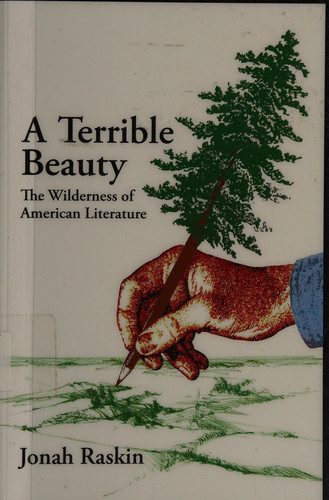
A terrible beauty: the wilderness of American literature

Raskin, Jonah
ABOUT THE BOOK Shortly before he published Walden; or Life in the Woods, Henry David Thoreau called ¿The library a wilderness of books.¿ He also noted that while Americans were ¿clearing the forest in our westward progress, we are accumulating a forest of books in our rear, as wild and unexplored as any of nature¿s primitive wildernesses.¿ In "A Terrible Beauty: the Wilderness of American Literature," Jonah Raskin takes a long close look at the forest of books that poets, novelists and essayists mapped and explored before and after Thoreau. The first work of cultural criticism to look back at writing in the United States from the perspective of the contemporary environmental crisis, Raskin offers insights for students, teachers and lovers of literature as well as for backpackers and hikers who have trekked across untrammeled forests, deserts and mountains. ABOUT THE AUTHOR Jonah Raskin, Phd, has taught American literature at Sonoma State University, the State University of New York at Stony Brook and as a Fulbright professor at the University of Antwerp and the University of Ghent in Belgium. The author of fifteen books, he earned his B.A. at Columbia College in New York, his M.A. at Columbia University and his Ph.D. at the University of Manchester, Manchester, England. He lives in northern California and has written for The San Francisco Chronicle, The L.A. Times, The Nation, The Redwood Coast Review and Catamaran.
Regent Press 2014 366 pages

In respect to egotism: studies in American Romantic writing

Porte, Joel
Joel Porte offers a timely reassessment of nineteenth century literature, focusing on the general question of the American Romantic ego and its varying modalities of self-creation, self-display, self-projection, and self-concealment. The book begins by exploring the status of the "text" in nineteenth-century American writing, the relationship of "rhetorical" reading to historical context, and the nature of "Romanticism" in an American setting. Porte then concentrates on the great authors of the period through a series of thematically linked but critically discrete essays on Brown, Irving, Parkman, Cooper, Poe, Emerson, Hawthorne, Thoreau, Melville, Frederick Douglass, Stowe, Whitman, and Dickinson. Throughout his important new study, Porte offers provocative reassessments of familiar texts while at the same time casting an illuminating critical eye on less well-known territory. Readers of this book will come away with increased respect for the achievement of American Romantic writers.
Cambridge University Press 1991-07-26 316 pages

Identity papers: contemporary narratives of American Jewishness

Meyers, Helene
Identity Papers argues that contemporary Jewish American literature revises our understanding of Jewishness and Jewish difference. Moving beyond the reductive labeling of texts and authors as “too Jewish” or “not Jewish enough,” and focusing instead on narratives that portray Jewish regeneration through feminist Orthodoxy, queerness, off-whiteness, and intermarriage, Helene Meyers resists a lachrymose view of contemporary Jewish American life. She argues that such gendered, sexed, and raced debates about Jewish identity become opportunities rather than crises, signs of creative potential rather than symptoms of assimilation and deracination. Thus, feminist debates within Orthodoxy are allied to Jewish continuity by Rebecca Goldstein, Allegra Goodman, and Tova Mirvis; the geography of Jewish identity is racialized by Alfred Uhry, Tony Kushner, and Philip Roth; and the works of Jyl Lynn Felman, Judith Katz, Lev Raphael, and Michael Lowenthal queer the Jewish family as they reveal homophobia to be an abomination. Even as Identity Papers expands Jewish literary horizons and offers much-needed alternatives to the culture wars between liberal and traditional Jews, it argues that Jewish difference productively troubles dominant narratives of feminist, queer, and whiteness studies. Meyers demonstrates that the evolving Jewish American literary renaissance is anything but provincial; rather, it is engaged with categories of difference central to contemporary academic discourses and our national life.
SUNY Press 2012-07-02 239 pages

To write like a woman: essays in feminism and science fiction

Russ, Joanna
"To Write Like a Woman is a rare example of a feminist tackling science fictuion using postmodern theory, which makes for a much more sophisticated and nuanced appraisal than the usual fare." ―Passion"Russ’ essays are witty and insightful. An excellent book for any writer or reader." ―Feminist Bookstore News"In her new book of essays... Russ continues to debunk and demand, edify and entertain.... Appreciative of surface aesthetics, she continually delves deeper than most critics, yet in terms so simple and accessible that her essays read like lively, angry, humorous dialogues conducted face-to-face with the author. Russ is the antithesis of the distant critic in her ivory tower." ―Paul Di Filippo, The Washington Post Book World"... 20 years of the author’s feisty reports from the front lines of literature." ―The San Francisco Review of Books"This is a book of imaginative and provoking essays, but you should read it for the sheer fun of it." ―The Women’s Review of Books"Collects more than two decades of criticism by Joanna Russ, one of the most perceptive, forthright and eloquent feminist commentators around." ―Feminist Bookstore News"... a super book....This is a book that, for once, really will appeal to readers of all kinds." ―Utopian Studies"If you enjoy science fiction, this is definitely a book that you’ll want to talk about. I found myself sneaking a few pages at times when I really didn’t have time to read." ―Jan Catano, AtlantisClassic essays on science fiction and feminism by Nebula and Hugo award-winning Joanna Russ. Here she ranges from a consideration of the aesthetic of science fiction to a reading of the lesbian identity of Willa Cather. To Write Like a Woman includes essays on horror stories and the supernatural, feminist utopias, popular literature for women (the "modern gothic"), and the feminist education of graduate students in English.
Indiana University Press 1995 181 pages

A critic's journey

Stavans, Ilan
Ilan Stavans has been a lightning rod for cultural discussion and criticism his entire career. In A Critic's Journey , he takes on his own Jewish and Hispanic upbringing with an autobiographical focus and his typical flair with words, exploring the relationship between the two cultures from his own and also from others' experiences. Stavans has been hailed as a voice for Latino culture thanks to his Hispanic upbringing, but as a Jew and a Caucasian, he's also an outsider to that culture---something that's sharpened his perspective (and some of his critics' swords). In this book of essays, he looks at the creative process from that point of view, exploring everything from the translation of Don Quixote to the Hispanic anti-Semitism and the Holocaust in Latin America. Ilan Stavans is Lewis-Sebring Professor in Latin American and Latino Culture and Five College Fortieth Anniversary Professor at Amherst College. A native of Mexico, he received his doctorate in Latin American Literature from Columbia University. Stavans's books include The Hispanic Condition, On Borrowed Words, Spanglish, Dictionary Days, The Disappearance, Love & Language (with Verónica Albin), Resurrecting Hebrew , and Mr. Spic Goes to Washington , and he has edited books including The Oxford Book of Jewish Stories and the upcoming Norton Anthology of Latino Literature . His story "Morirse está en Hebreo" was made into the award-winning movie My Mexican Shivah . Stavans has received numerous awards, among them a Guggenheim Fellowship, the National Jewish Book Award, an Emmy nomination, the Latino Book Award, Chile's Presidential Medal, the Rubén Darío Distinction, and the Cátedra Roberto Bolaño. His work has been translated into a dozen languages.
University of Michigan Press 2010 200 pages

The men in my life

Gornick, Vivian
Gornick on V. S. Naipaul, James Baldwin, George Gissing, Randall Jarrell, H. G. Wells, Loren Eiseley, Allen Ginsberg, Hayden Carruth, Saul Bellow, and Philip Roth and the intimate relationship between emotional damage and great literature. Vivian Gornick, one of our finest critics, tackled the theme of love and marriage in her last collection of essays, The End of the Novel of Love , a National Book Critics Circle Award finalist. In this new collection, she turns her attention to another large theme in literature: the struggle for the semblance of inner freedom. Great literature, she believes, is not the record of the achievement, but of the effort. Gornick, who emerged as a major writer during the second-wave feminist movement, came to realize that “ideology alone could not purge one of the pathological self-doubt that seemed every woman's bitter birthright.” Or, as Anton Chekhov put it so memorably: “Others made me a slave, but I must squeeze the slave out of myself, drop by drop.” Perhaps surprisingly, Gornick found particular inspiration for this challenge in the work of male writers—talented, but locked in perpetual rage, self-doubt, or social exile. From these men—who had infinitely more permission to do and be than women had ever known—she learned what it really meant to wrestle with demons. In the essays collected here, she explores the work of V. S. Naipaul, James Baldwin, George Gissing, Randall Jarrell, H. G. Wells, Loren Eiseley, Allen Ginsberg, Hayden Carruth, Saul Bellow, and Philip Roth. Throughout the book, Gornick is at her best: interpreting the intimate interrelationship of emotional damage, social history, and great literature.
MIT Press 2008-08-22 194 pages

Writing in America

John Fischer,Robert B. Silvers
"In the fall of 1959, Harper's Magazine published a special supplement on the state of writing and the American literary scene. The supplement was greeted with a broadside of commendation and a fusillade of cavil, and has since become recognized as the most useful brief survey of the contemporary state of the American writing arts and of their fellow travelers, the spoken word, the typescript word, the filmed and televised word, and the publishing memorandum. In this newly reissued volume in the Rutgers University Press Classics Imprint, Writing in America proves to be as stimulating as it was in 1960. Here, writers including Robert Brustein, Stanley Kunitz, and C.P. Snow examine the state of writing in American novels, films, and television candidly and critically. The result is a collection of essays that showcase a first-rate and highly entertaining piece of reporting on the American literary scene that resonate in 2017"--
Rutgers University Press 2018 153 pages

A Question of quality: popularity and value in modern creative writing

Filler, Louis
This collection of essays probes the values in a variety of authors who have had in common the fact of popularity and erstwhile reputation. Why were they esteemed? Who esteemed them? And what has become of their reputations, to readers, to the critic himself? No writer here has been asked to justify the work of his subject, and reports and conclusions about this wide variety of creative writers vary, sometimes emphasizing what the critic believes to be enduring qualities in the subject, in several cases finding limitations in what that writer has to offer us today.
Bowling Green University Popular Press 1976 193 pages