242 results for "History"

The Inextinguishable Symphony A True Story of Music and Love in Nazi Germany

Martin Goldsmith
NOW AN ACCLAIMED DOCUMENTARY, Winter Journey Set amid the growing tyranny of Germany's Third Reich, here is the riveting and emotional tale of Günther Goldschmidt and Rosemarie Gumpert, two courageous Jewish musicians who struggled to perform under unimaginable circumstances--and found themselves falling in love in a country bent on destroying them. In the spring of 1933, as the full weight of Germany's National Socialism was brought to bear against Germany's Jews, more than 8,000 Jewish musicians, actors, and other artists found themselves expelled from their positions with German orchestras, opera companies, and theater groups, and Jews were forbidden even to attend "Aryan" theaters. Later that year, the Jüdische Kulturbund, or Jewish Culture Association, was created under the auspices of Joseph Goebbels's Ministry of Public Enlightenment and Propaganda. Providing for Jewish artists to perform for Jewish audiences, the Kulturbund, which included an orchestra, an opera company, and an acting troupe, became an unlikely haven for Jewish artists and offered much-needed spiritual enrichment for a besieged people--while at the same time providing the Nazis with a powerful propaganda tool for showing the rest of the world how well Jews were ostensibly being treated under the Third Reich. It was during this period that twenty-two-year-old flutist Günther Goldschmidt was expelled from music school because of his Jewish roots. While preparing to flee the ever-tightening grip of Nazi Germany for Sweden, Günther was invited to fill in for an ailing flutist with the Frankfurt Kulturbund Orchestra. It was there, during rehearsals, that he met the dazzling nineteen-year-old violist Rosemarie Gumpert--a woman who would change the course of his life. Despite their strong attraction, Günther eventually embarked for the safety of Sweden as planned, only to risk his life six months later returning to the woman he could not forget--and to the perilous country where hatred and brutality had begun to flourish. Here is Günther and Rosemarie's story, a deeply moving tale of love and the remarkable resilience of the human spirit in the face of terror and persecution. Beautifully and simply told by their son, National Public Radio commentator Martin Goldsmith, The Inextinguishable Symphony takes us from the cafés of Frankfurt, where Rosemarie and Günther fell in love, to the concert halls that offered solace and hope for the beleaguered Jews, to the United States, where the two made a new life for themselves that would nevertheless remain shadowed by the fate of their families. Along with the fate of Günther and Rosemarie's families, this rare memoir also illuminates the Kulturbund and the lives of other fascinating figures associated with it, including Kubu director Kurt Singer--a man so committed to the organization that he objected to his artists' plans for flight, fearing that his productions would suffer. The Kubu, which included some of the most prominent artists of the day and young performers who would gain international fame after the war, became the sole source of culture and entertainment for Germany's Jews. A poignant testament to the enduring vitality of music and love even in the harshest times, The Inextinguishable Symphony gives us a compelling look at an important piece of Holocaust history that has heretofore gone largely untold.
John Wiley & Sons Canada, Limited 2001-08 354 pages

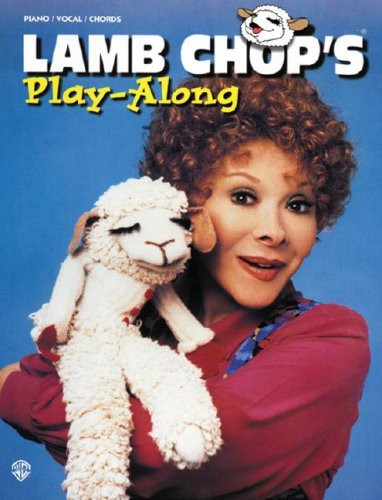
Shari Lewis -- Lamb Chop's Play-Along Piano/Vocal/Chords

Shari Lewis,Marty Gold
More than a sing-along, these selections present hop-alongs, turn-alongs, count- and spell-alongs, chime-ins and rhyme-alongs, in a lot of different ways. The 22 songs reinforce concepts from disciplines including math, grammar and foreign languages, and include: The Ants Go Marching * Big Ol' Cat * Head and Shoulders * Little Bunny Foo-Foo * Rosie Wrong Rhyme * Wiggle Your Finger.
Warner Bros. Publications 1996 120 pages

Swing to Bop: an oral history of the transition in jazz in the 1940s

Gitler, Ira
This book willserve as the basic work on the rise and development of bop in jazz. Engendered by Charlie Parker and Dizzy Gillespie, bebop, now known as bop, quickly became the most powerful musical force in modern jazz. Today it is still the main musical language of jazz musicians. Over a ten-year period, Ira Gitler interviewed more than 50 of the seminal figures in jazz history to preserve for posterity their recollections of how jazz moved from the big band era in the late '30s and '40s into the modern jazz period. The musicians interviewed recreate not only their own experiences but also evoke the legendary figures of bop who where so influential in its development but were never recorded, people like Clyde Hart and Freddie Webster. Swing to Bop shows how the music first established itself in jam sessions in Harlem and then spread to New York's famed 52nd Street and beyond. Separate chapters describe how young musicians in major cities such as Los Angeles, Chicago and Detroit became swept up in the movement. Along with the music and the personalities who made it, the book vividly recreates the atmosphere of the country in the '30s and '40s: traveling on the ballroom theather curcuit; racial attitudes and interaction; extra-musical pastimes; the relationship to World War II; and the influence of drugs. Thus Swing to Bop reveals not only how the music evolved but the environment in which it flourished and what effect in turn the music had on that environment and the music to follow. About the Author Ira Gitler is the author of Jazz Masters of the '40s and The Encyclopedia of Jazz in the Seventies. He was previously Professor of Jazz History at City College of New York and Associate Editor of Downbeat.
Oxford University Press 1985-11-07 331 pages

Freedom and the arts: essays on music and literature

Rosen, Charles
"Is there a moment in history when a work receives its ideal interpretation? Or is negotiation always required to preserve the past and accommodate the present? The freedom of interpretation, Charles Rosen suggests in these sparkling explorations of music and literature, exists in a delicate balance with fidelity to the identity of the original work. Rosen cautions us to avoid doctrinaire extremes when approaching art of the past. To understand Shakespeare only as an Elizabethan or Jacobean theatergoer would understand him, or to modernize his plays with no sense of what they bring from his age, deforms the work, making it less ambiguous and inherently less interesting. For a work to remain alive, it must change character over time while preserving a valid witness to its earliest state.
Harvard University Press 2012 438 pages

At the jazz band ball: sixty years on the jazz scene

Hentoff, Nat
“Nat Hentoff may very well be the foremost jazz historian in the world because he was there to witness firsthand the music’s evolution from big band and swing to fusion and bossa nova; and to dive into the souls of the men and women who created it from Ellington, Basie, Miles, Ray Charles, Ella Fitzgerald and Dinah Washington, among many others. At the Jazz Band Ball: Sixty Years on the Jazz Scene is an invaluable archive of not only the musical influence of America’s only indigenous music on the world, but its enormous impact as an engine for social change as well. It is a book that should be read by every young musician, music fan, and educator in America.”—Quincy Jones "The very best witnesses in the worlds of the law, aesthetic evaluation, social contexts of imposing significance, and artistic public performance are those who accurately understand what they have seen or what they are seeing. Nat Hentoff has been and continues to be a star witness in every one of those arenas. One of the greatest contributions of his jazz writing is that he has never felt the need to condescend to black people or to let the dictates of sociology diminish the universal significance of what they do when they do it well. Nat knows that so many jazz musicians have done what they do superbly, quite often expressing themselves beyond the narrows of color. As sensitive to the Americana of jazz as he is to its transcendent revelations about the sound of the human heart, Nat Hentoff is part of our American luck."—Stanley Crouch “ At the Jazz Band Ball is full of nuggets from Nat's rich lode of wit and wisdom, gleaned in a lifetime of fellowship with jazz and its makers.”—Dan Morgenstern, Director, Institute of Jazz Studies, Rutgers University; author of Living With Jazz: A Reader
University of California Press 2011 246 pages

Heavy Tales The Metal. The Music. The Madness. As Lived by Jon Zazula

Jon Zazula
Heavy Tales is the detailed, never before told story as lived by Jonny Zazula of how he founded Megaforce Records out of a flea market in New Jersey with his wife, Marsha and built a dynasty unmatched by others, forever changing the scope of Heavy Metal. The bands they worked with would go on to release some of the most prolific and important albums in heavy metal history, giving it its Golden Era. Jonny Zazula was a renegade youth who went from living on the New York City streets, to later working on Wall Street, and then moving unexpectedly towards the music business. In the winter of 1982, while working in a flea market, he received an unexpected demo tape from underground, unsigned band Metallica. Eager and determined to have the music heard by the entire world, Jonny Z and Marsha founded Megaforce Records in 1983, and soon after released Metallica's debut album, Kill 'Em All. Through this release Megaforce had cemented its position as the de-facto music label in America for Heavy Metal - but that's just the start. Heavy Tales details the stories of how Jonny Z worked miracles by managing and releasing albums by Metallica, Anthrax, Testament, Mercyful Fate, Raven, Overkill, Exciter, Stormtroopers of Death, Method of Destruction, Ace Frehley, King's X, Ministry, Mindfunk, Nudeswirl, Warren Haynes, Disco Biscuits and others, and how one night in 1984, he jokingly created Rap Metal before anyone else conceived the idea. With the foreword written by Chuck Billy, plus over 100 rare photographs unearthed from the MegaVault and photographer friends, Heavy Tales is the definitive American story of a family man with a dream, determined to prove to the world that heavy metal belonged on the stage, on the radio and in your living room.
Crazed Management LLC 2019-10-31 200 pages

Apple for the teacher: thirty songs for singing while you work

Yolen, Jane
This richly illustrated songbook from beloved children's book writer Jane Yolen celebrates the American way of work. From the railway workers who built our transcontinental train system to the astronauts who landed on the moon, the jobs that built and maintain our country are honored in this lively collection of folk tunes and new songs. Weathervanes, whirligigs, quilts, signs, and other folk art pieces are the perfect accompaniment for such classic and current favorites as "Barber, Spare Those Hairs," "Git Along, Little Dogies," "Casey Jones," and "Fire in the Sky." Great for family or classroom sing-alongs, these thirty songs, arranged for piano and guitar, give children and adults anthems to match their ambitions. Book jacket.
Harry N. Abrams, Publishers 2005-09-01 117 pages

Who by Fire War, Atonement, and the Resurrection of Leonard Cohen

Matti Friedman
"An expedition into the troubled soul of one of the world's greatest songwriters."-- Haaretz "A fascinating and intense account of Leonard Cohen's time in Israel during the 19-day Yom Kippur War of 1973. A must for any Leonard Cohen completist."--Suzanne Vega A Vanity Fair Best Book of 2022 * Mosaic Magazine Best Book of 2022 The untold story of Leonard Cohen's concert tour to the front lines of the Yom Kippur War, including never-before-seen selections from an unfinished manuscript by Cohen and rare photographs In October 1973, the poet and singer Leonard Cohen--thirty-nine years old, famous, unhappy, and at a creative dead end--traveled to the chaos and bloodshed of the Sinai desert when Egypt attacked Israel on the Jewish high holiday of Yom Kippur. Moving around the front with a group of local musicians, Cohen sang for hundreds of young soldiers, men and women at the worst moment of their lives. Those who survived never forgot the experience. And the war transformed Cohen, reigniting his creativity and inspiring him to compose some of his most memorable songs. Who by Fire provides a riveting account of those weeks in the Sinai, drawing on Cohen's previously unpublished writing and original reporting to create a kaleidoscopic depiction of a harrowing, existential moment for both a young country at war and a singer at a crossroads.
Spiegel & Grau 2024-09-03 224 pages

The Oxford history of Western music

Taruskin, Richard,Gibbs, Christopher Howard
The Oxford History of Western Music, College Edition, Second Edition, immerses students in the engaging story of the Western musical tradition. By emphasizing the connections among works, both within each cultural era and across time and place, the text goes beyond a basic retelling of the music's history to build students' ability to listen critically to key works. A full suite of instructor resources, a free open-access student Companion Website, a three-volume score anthology, and streaming audio recordings support the text, making The Oxford History of Western Music, College Edition, Second Edition, a complete program for building students' understanding and appreciation of the classical canon. --
Oxford University Press 2019 874 pages

Critical Entertainments Music Old and New

Charles Rosen
An extraordinarily gifted musician and writer, Charles Rosen is a peerless commentator on the history and performance of music. Critical Entertainments brings together many of the essays that have established him as one of the most influential and eloquent voices in the field of music in our time. These essays cover a broad range of musical forms, historical periods, and issues—from Bach through Brahms to Carter and Schoenberg, from contrapuntal keyboard music to opera, from performance practices to music history as a discipline. They revisit Rosen’s favorite subjects and pursue some less familiar paths. They court controversy (with strong opinions about performance on historical instruments, the so-called New Musicology, and the alleged “death” of classical music) and offer enlightenment on subjects as diverse as music dictionaries and the aesthetics of stage fright. All are unified by Rosen’s abiding concerns and incomparable style. In sum, Critical Entertainments is a treasury of the vast learning, wit, and insight that we have come to expect from this remarkable writer. It will delight all music lovers.
Harvard University Press 2001-11-30 328 pages

Voices of a people: the story of Yiddish folksong

Rubin, Ruth
The seminal work of Ruth Rubin, a pioneering collector, singer, folklorist, writer, and crusader for the vanishing legacy of the Yiddish world, "Voices of a People" remains the only general introduction to Yiddish folksong. A priceless collection of song texts in Yiddish and English, as well as a selection of tunes Rubin transcribed, this volume brings the Jews' ancient, itinerant culture alive through children's songs, dancing songs, and songs about love and courtship, poverty and work, crime and corruption, immigration, and the dream of a homeland. Rubin's notes and annotations weave each text into the larger story of the Jewish experience. Noted scholar Mark Slobin provides a new foreword that includes a biographical sketch of Rubin and an assessment of her contributions over a lifetime of collecting, absorbing, and disseminating Yiddish folksong.
McGraw-Hill 1973 558 pages

Schoenberg and His School

Rene Leibowitz
This book talks about music. It incorporates modal and tonal music. It talks about Arnold Schoenberg, the founder of contempoary music, Alban Berg and how the past plays on contemporary music and Anton Webern and the future of contemporary music. As well as the structure of contemporary musical speech. René Leibowitz was a French composer, conductor, music theorist and teacher born in Warsaw, Poland. During the early 1930s, Leibowitz studied composition and orchestration with Ravel in Paris, where he was introduced to Schoenberg's Twelve-note technique by the German pianist and composer Erich Itor Kahn. He subsequently studied with Schoenberg's pupil Webern. Many of the works of the Second Viennese School were first heard in France at the International Festival of Chamber Music established by Leibowitz in Paris in 1947. Leibowitz was highly influential in establishing the reputation of the Second Viennese School, both through activity as a teacher in Paris after WWII and through his book Schoenberg et son ecole, published in 1947 and translated by Dika Newlin as Schoenberg and his School (US and UK editions 1949). This was among the earliest theoretical treatises written on Schoenberg's 12-tone method of composition. Leibowitz's advocacy of the Schoenberg school was taken further by his two most gifted pupils, each taking different paths in promoting the musics of Schoenberg, Webern and the development of serialism, namely Pierre Boulez and Jacques-Louis Monod. His American students include the composers Will Ogdon, Janet Maguire, and the avant-garde film director-animator John Whitney. As conductor, Leibowitz was active in many recording projects. One of the most widely circulated and most notable is a set of the Beethoven symphonies made for Reader's Digest Recordings; it was apparently the first recording of the symphonies to follow Beethoven's original metronome markings. In choosing this approach, Leibowitz was influenced by his friend and colleague Rudolf Kolisch. Leibowitz likewise made many recordings for Reader's Digest in their various compilation albums. He also wrote for Les Temps modernes, applying existentialist ideas to musicology.
Philosophical Library, Incorporated 1949 332 pages

Music since 1900

Slonimsky, Nicolas
"This is the fifth edition of 'Music Since 1900', first published in 1937 and most recently updated in 1971. In the introduction to the first edition, Nicolas Slonimsky stated that the book, "is intended to be a sort of newsreel reflecting the 'inner headlines' of musical events" containing "elements of evolutionary power that subtly but surely influence the entire future of music." 'Music Since 1900' is just such a newsreel, following both stylistic trends in music and bringing to life the human element missing in so many biographical references. The book is divided into three parts. the Descriptive Chronology, 1900-1991, lists the dates, names, and places of the important musical events of the century. This section covers a great variety of subjects: exact dates of world premières of hundreds of operas, discussions on developments in popular music, entries that reveal the "passing sights and sounds of the general musicorama of the period." The second section, Letters and Documents, contains fascinating new material first published in a supplement to the book in 1986. Slonimsky searched for evidence connecting musical practices with political events. For example, he found a document previously classified by the Department of the Army that discusses the methods used to influence the policies of the Soviet Union by broadcasting Western music. This section also includes a reply to a query addressed to George Bernard Shaw, a radio broadcast by Alban Berg, manifestos of the Italian futurists issued early in the century, and a remarkable collection of letters from Charles Ives. The third section, a Dictionary of Terms, has been enlarged to include a detailed analysis of modern musical techniques. Written by one of the foremost musical authorities of our time, 'Music Since 1900' is a unique compilation that not only gives readers the facts, but also illustrates the styles, tastes, and epoch-making ideas that have marked this century's musical departure from the past."--
Schirmer 1994 1260 pages

The Complete Beatles Chronicle The Definitive Day-by-Day Guide to the Beatles' Entire Career

Mark Lewisohn
In 1979, Beatles expert Mark Lewisohn set about establishing a complete list of the group’s live appearances from 1957 through 1966, when they stopped giving concerts; the research took seven long years and was published as the book The Beatles Live! Shortly thereafter, EMI Records invited Lewisohn to be the only person outside of the Beatles and their production staff to go into Abbey Road and listen to the entire collection of Beatles session tapes and to interview practically everyone involved in their making. The result was published in 1988 as The Complete Beatles Recording Sessions, and sold over 150,000 copies. This book artfully combines and updates all the vital material in Lewisohn’s earlier two books with his definitive account of the Beatles’ work in radio, television, film, and video to create a complete day-by-day summary of the group’s entire oeuvre. First published in 1992, The Complete Beatles Chronicle has become the Beatles Bible, the one book no fan can live without, and a perfect companion to the bestselling Beatles Anthology, which recounted their story in their own words.
Chicago Review Press 2010 365 pages

Frank The True Story That Inspired the Movie

Jon Ronson
In the late 1980s Jon Ronson was the keyboard player in the Frank Sidebottom Band. Frank wore a big fake head. Nobody outside his inner circle knew his true identity. This became the subject of feverish speculation during his zenith years. Together, they rode relatively high. Then it all went wrong. 25 years later and Jon has co-written with Peter Straughan a film - Frank - inspired by those times. It's directed by Lenny Abrahamson and stars Michael Fassbender, Domhnall Gleeson, Maggie Gyllenhaal, Scoot McNairy, Carla Azar and Francois Civil. It isn't a biopic. It's fictional. Frank tells the true story that inspired the film.
Pan Macmillan 2015 69 pages

Tales of a Road Dog The Lowdown Along the Blues Highway

Ron Levy
"Wow, Ron Levy's book is AMAZING! Wonderful reading, entertaining, fun, educational and, well, AMAZING!" - Norman Darwen - Blues Matters! - UK "I want everyone to know, Ron Levy is one of the very best musicians I've ever played and worked with. Now, he's even written a great book! I'm so proud of my 'son'." B.B. King 4/13/13 "Ron Levy endures as an ingenious Blues keyboardist -- touring most notably with B.B. King for 7 years -- and he was there when B.B. played Muhammad Ali's private parties, as well as stadium shows in Africa and throughout the world. He was the ultimate road warrior, also tickling the ivories for Albert King, Roomful of Blues and his own Ron Levy's Wild Kingdom, while meeting everyone from Elvis Presley to Nina Simone. He distills it all in his lively, remarkably honest book (NOW IN PAPERBACK), 'Tales of a Road Dog.' Nearly everything is unique in these gritty and humorous stories of survival with some of music's great pioneers and the musicians who powered them on stage. If you thought you knew about music history, trust me that you'll know even more when you delve into Levy's rich and colorful text. This guy can write as well as he can play." - STEVE MORSE - Boston Globe, Billboard and Rolling Stone. A download link to Levy's critically acclaimed album "FUNKY FIESTA!" is included. - Also available as a Web-book & eBook!
CreateSpace Independent Publishing Platform 2013 512 pages

Annie Get Your Gun (the Applause Libretto Library)

Dorothy Fields,Herbert Fields
(Applause Libretto Library). Broadway's biggest musical comedy hit of the 1940s, this was one for the ages and built by a "dream team" songwriter Irving Berlin, librettists Dorothy and Herbert Fields, producers Rodgers & Hammerstein, and star Ethel Merman telling the improbable but true story of sharpshooter Annie Oakley. A staple of the touring and summer stock circuit for years, Annie Get Your Gun kept hitting bull's-eyes, with a film version, two television productions, and thousands of stage revivals over the years. This book presents, for the first time in print, the original libretto. Included are essays describing the fascinating history of the musical's productions, right up to the Tony Award-winning 1999 revival starring Bernadette Peters and then in 2001, in a star-blazing Broadway debut, Reba McEntire.
Applause Theatre & Cinema Book Publishers 2015 160 pages