100 results for "Human Biology"

The Prokaryotes: Prokaryotic Communities and Ecophysiology

Edward F. DeLong,Stephen Lory,Erko Stackebrandt,Fabiano Thompson,Eugene Rosenberg
Product Description The Prokaryotes is a comprehensive, multi-authored, peer reviewed reference work on Bacteria and Achaea. This fourth edition of The Prokaryotes is organized to cover all taxonomic diversity, using the family level to delineate chapters. Different from other resources, this new Springer product includes not only taxonomy, but also prokaryotic biology and technology of taxa in a broad context. Technological aspects highlight the usefulness of prokaryotes in processes and products, including biocontrol agents and as genetics tools. The content of the expanded fourth edition is divided into two parts: Part 1 contains review chapters dealing with the most important general concepts in molecular, applied and general prokaryote biology; Part 2 describes the known properties of specific taxonomic groups. Two completely new sections have been added to Part 1: bacterial communities and human bacteriology. The bacterial communities section reflects the growing realization that studies on pure cultures of bacteria have led to an incomplete picture of the microbial world for two fundamental reasons: the vast majority of bacteria in soil, water and associated with biological tissues are currently not culturable, and that an understanding of microbial ecology requires knowledge on how different bacterial species interact with each other in their natural environment. The new section on human microbiology deals with bacteria associated with healthy humans and bacterial pathogenesis. Each of the major human diseases caused by bacteria is reviewed, from identifying the pathogens by classical clinical and non-culturing techniques to the biochemical mechanisms of the disease process. The 4th edition of The Prokaryotes is the most complete resource on the biology of prokaryotes. Review From the book reviews:“This book … edited and written by great scientists covers essential contributions on different types of prokaryotic communities as well as on the prokaryotic functions in different environments. … This volume, as well as the whole series, should be available in every large scientific library.” (Ioan I. Ardelean, Bulletin of Micro and Nanoelectrotechnologies, Vol. 5 (3-4), December, 2014) About the Author Eugene Rosenberg, Professor of Microbiology at Tel Aviv University, Israel Edward F. DeLong, Professor at Department of Civil and Environmental Engineering & Department of Biological Engineering, Massachusetts Institute of Technology, Cambridge, MA, USA Stephen Lory, Professor at Department of Microbiology and Molecular Genetics, Harvard Medical School, Boston, MA, USA Erko Stackebrandt, German Collection of Microorganisms and Cell Cultures GmbH, DSMZ, Braunschweig, Germany Fabiano Thompson, Professor at Center of Health Sciences, Federal University of Rio de Janeiro, Brazil
Springer 2013 548 pages

The rise of scientific philosophy

Reichenbach, Hans
This book represents a new approach to philosophy. It treats philosophy as not a collection of systems, but as a study of problems. It recognizes in traditional philosophical systems the historical function of having asked questions rather than having given solutions. Professor Reichenbach traces the failures of the systems to psychological causes. Speculative philosophers offered answers at a time when science had not yet provided the means to give true answers. Their search for certainty and for moral directives led them to accept pseudo-solutions. Plato, Descartes, Spinoza, Kant, and many others are cited to illustrate the rationalist fallacy: reason, unaided by observation, was regarded as a source of knowledge, revealing the physical world and "moral truth." The empiricists could not disprove this thesis, for they could not give a valid account of mathematical knowledge. Mathematical discoveries in the early nineteenth century cleared the way for modern scientific philosophy. Its advance was furthered by discoveries in modern physics, chemistry, biology, and psychology. These findings have made possible a new conception of the universe and of the atom. The work of scientists thus altered philosophy completely and brought into being a philosopher with a new attitude and training. Instead of dictating so-called laws of reason to the scientist, this modern philosopher proceeds by analyzing scientific methods and results. He finds answers to the age-old questions of space, time, causality, and life; of the human observer and the external world. He tells us how to find our way through this world without resorting to unjustifiable beliefs or assuming a supernatural origin for moral standards. Philosophy thus is no longer a battleground of contradictory opinions, but a science discovering truth step by step. Professor Reichenbach, known for his many contributions to logic and the philosophy of science, addresses this book to a wider audience. He writes for those who do not have the leisure or preparation to read in the fields of mathematics, symbolic logic, or physics. Besides showing the principal foundations of the new philosophy, he has been careful to provide the necessary factual background. He has written a philosophical study, not a mere popularization. It contains within its chapters all the necessary scientific material in an understandable form—and, therefore, conveys all the information indispensable to a modern world-view. The late Hans Reichenbach was Professor of Philosophy at the University of California, Los Angeles. His previous books include
University of California Press 1951 333 pages

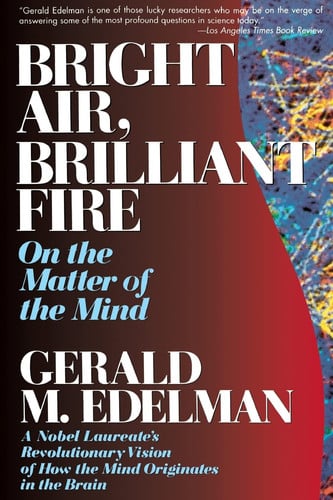
Bright air, brilliant fire: on the matter of the mind

Edelman, Gerald Maurice
We are on the brink of understanding ancient mysteries: how we know, what governs our nature, what makes a person different from a thing. In the last decade, more than twenty disciplines dealing with every aspect of the brain have contributed to a revolution in the neurosciences--a revolution as significant, in the view of many observers, as the Galilean and Copernican revolutions in mathematics and physics or the Darwinian revolution in biology. In this book, one of the world's foremost brain scientists gives us a glimpse into the workings of the human brain--the most complex material object in the universe. A match head's worth of the brain contains about a billion connections that can combine in ways which can only be described as hyperastronomical--on the order of ten followed by millions of zeros (there are only about ten followed by eighty zeros' worth of positively charged particles in the whole known universe).^
BasicBooks 1992 280 pages

The Hologenome Concept: Human, Animal and Plant Microbiota

Eugene Rosenberg,Ilana Zilber-Rosenberg
Groundbreaking research over the last 10 years has given rise to the hologenome concept of evolution. This concept posits that the holobiont (host plus all of its associated microorganisms) and its hologenome (sum of the genetic information of the host and its symbiotic microorganisms), acting in concert, function as a unique biological entity and therefore as a level of selection in evolution. All animals and plants harbor abundant and diverse microbiota, including viruses. Often the amount of symbiotic microorganisms and their combined genetic information far exceed that of their host. The microbiota with its microbiome, together with the host genome, can be transmitted from one generation to the next and thus propagate the unique properties of the holobiont. The microbial symbionts and the host interact in a cooperative way that affects the health of the holobiont within its environment. Beneficial microbiota protects against pathogens, provides essential nutrients, catabolizes complex polysaccharides, renders harmful chemicals inert, and contributes to the performance of the immune system. In humans and animals, the microbiota also plays a role in behavior. The sum of these cooperative interactions characterizes the holobiont as a unique biological entity. Genetic variation in the hologenome can be brought about by changes in either the host genome or the microbial population genomes (microbiome). Evolution by cooperation can occur by amplifying existing microbes, gaining novel microbiota and by acquiring microbial and viral genes. Under environmental stress, the microbiome can change more rapidly and in response to more processes than the host organism alone and thus influences the evolution of the holobiont. Prebiotics, probiotics, synbiotics and phage therapy are discussed as applied aspects of the hologenome concept.
Springer International Publishing 2016-08-27 178 pages

How We Live and why We Die The Secret Lives of Cells

Lewis Wolpert
Everything about our existence-movement and memory, imagination and reproduction, birth, and ultimately death-is governed by our cells. They are the basis of all life in the universe, from bacteria to the most complex animals. In the tradition of the classic Lives of a Cell, but with the benefit of the latest research, Lewis Wolpert demonstrates how human life grows from a single cell into a body, an incredibly complex society of billions of cells. Wolpert goes on to examine the science behind topics that are much discussed but rarely understood stem-cell research, cloning, DNA, cancer and explains how all life on earth evolved from just one cell. Lively and passionate, this is an accessible guide to understanding the human body and life itself."
W.W. Norton & Company 2011 240 pages

Slanted Truths: Essays on Gaia, Symbiosis and Evolution

Margulis, Lynn,Sagan, Dorion
This enticing collection is as devoted to the profound power of figures of speech as any oration of old Hellas. Metaphor reigns as we encounter the identification of our Earth as a Single, integrative organism, a tale told in image and passion. The discoveries and conjectures upon which this grand view rest are here as well. I have enjoyed these two dozen pieces hugely. No family tree of animal life but must somewhere disclose a cousinly infolding. We are compact of life past, and the looped handing down is more complex than the Mendel-Morgan dance of chromosomes and genes. That dance is essential, certainly, but it is the vital editing of an epic and many-rooted work, a book more like the Bible than like one great artists Remembrance of Things Past. We follow a few old shelves of bound DNA, not just a single book. Our major biochemical package for oxidative metabolism was de scribed in a small DNA manual, somehow engulfed to become an or ganelle within a lucky ancient ancestral anaerobe, and passed ever since viii FOREWORD from mother to offspring outside of the chromosome shuffie. The sperm do carry half the compact genetic message of the human DNA, but they are too small to transfer this equally essential symbiotic one that comes down from the mothers, within roomy egg after roomy egg.
Copernicus 2011-11-25 396 pages

Triumph of the Embryo

Wolpert, L.
An age old mystery, the development of the microscopic embryo into exceedingly complex plants and animals--into roses and cacti, elephants and blue whales, apes and human beings--stands as one of the most fundamental and important questions facing modern biologists. How does one cell give rise to so many millions of cells? How do they divide so as to form hearts, brains, eyes, and ears? Where in this pin-head-sized object is all this information encoded? Now, in The Triumph of the Embryo, biologist Lewis Wolpert answers these and other questions in a lucid tour of embryology, which offers the latest theories in this fascinating field. Filled with rich and unusual examples, metaphors, and descriptions, Wolpert moves beyond his overall narrative to discuss the many issues it raises, such as aging, cancer, regeneration, and evolution. Readers discover why all calico cats are female; encounter a fruit fly engineered to grow a leg out of its head; and find out why there seems to be a 110 year age barrier for the human body. Clearly written and illustrated with striking examples, The Triumph of the Embryo offers a dazzling look at the marvels of modern biology.
Oxf. U. P. 1993 211 pages

The triumph of the embryo

Wolpert, L.
Each of us begins our path in life as a single cell. Just thinking about this common process can fill us with a sense of wonder--and raise a host of questions. How does an egg cell multiply to develop into a human being, an animal, or a plant? How do cells form a brain, a face, a hand? And how does the pattern continue generation after generation? With great insight and unwavering enthusiasm, biology professor Lewis Wolpert presents this complex subject in a "clear and engagingly written book" (Nature) that even the layman can understand. Illuminating the subject with twelve remarkable full-page photographs and numerous informative illustrations, this landmark guide shows the separation, growth, and differentiation of various cells and body parts in the embryonic stage. Simple descriptions of Wolpert's experimental studies offer fascinating insights into topics such as aging, cancer, regeneration, and evolution. Addressing the mysteries that face modern biologists--and all of mankind-- The Triumph of the Embryo is a "fascinating read for anyone curious about the replication and development of life"-- (Science News) . A new preface has been provided by the author.
Dover Publications 2008-01-01 211 pages

Psychology and the Soul

Otto Rank
2011 Reprint of 1950 Translation by William Turner. Full facsimile of the original edition, not reproduced with Optical Recognition Software. Recommended, both as a fascinating and little-known document in the history of psychology and as a provocative reading of the history of psychology. (Religious Studies Review). Will interest many students of the history of psychoanalysis... Rank's conclusions contribute to present-day controversies about the status of psychoanalysis as a science. (Psychiatric Times ) The first complete English translation of a work that Rank published in 1930. It draws on anthropology, sociology, mythology, religion, philosophy, history, and literature to chart the development of the human psyche... The book's antimaterialistic passion makes it a compelling counterpoint to the stern biology of our own age, and the bounds it sets to what psychoanalysis can claim are justly drawn. (Wilson Quarterly ) Unquestionably Rank's most important work... This new translation is an effort to create a Rank for our millennium... [and it] reads elegantly and comfortably in English... The argument is complex and intricate, consisting of a long historical/ethnographic sweep that takes us from a 'primitive' state, via animism through the Christian or sexual era to the scientific era and modern development of psychology... Along the way we find traces of many of Rank's other brilliant psychological surveys -- the double, Don Juan, heroes' birth myths, the theme of incest -- woven into this massive canvas and viewed on the largest scale... Throughout this book, the grand tapestry is set with some remarkable gems of observation. (Naomi Segal Psychoanalysis and History ) This is the first complete translation of Otto Rank's fascinating text on the nature and history of the concept of the Soul and Will in the psychological history of humankind... a tour de force in vigour, scope and application to many contemporary issues such as sexual behaviors, the nature of dreaming, incest prohibitions and narcissism, to name but a few. (L.R. Edgar Journal of the Royal Anthropological Society ) In his last years, Otto Rank turned his lifetime of thought and learning toward two of the most difficult topics in human history: religion and the soul. The result was this now-classic work, available in this new, very accessible English translation. Unlike many other intellectuals of the twentieth century, Rank maintains a place for the soul rather than dismissing it as a fantasy. The soul and the beliefs about it, he argues, set forth the foundation for psychology, with its complex analyses of consciousness, self-consciousness, and personality. Rank's commentary is not limited to beliefs about individual souls but includes ideas about group souls, sometimes encompassing nations or generations. Rank suggests that it is in expression of group beliefs that the idea of the soul attains its greatest power. What is the soul? Otto Rank treats it as a universal and essential belief for individuals and their societies, constant in function but evolving in form through millennia. To borrow a post-Rankian metaphor, the soul was created in the big bang of irresistible psychological force colliding with immutable biological fact-our will to live forever against death. The collision creates a spark in our individual and social consciousness which through history has become both consolation and inspiration: the immortal soul. All ideologies reflect this phenomenon and modify its expression to suit the era. Otto Rank wrote before the atom bomb or television, both of which alter our perception of death without changing the fact. Rank's introduction of the soul as an essential part of contemporary psychology helps explain a number of perplexing, irrational phenomena in contemporary life.
Martino Fine Books 2011 206 pages

Beauty junkies: inside our $15 billion obsession with cosmetic surgery

Kuczynski, Alex
A star writer for the New York Times Styles section captures the follies, frauds, and fanaticism that fuel the American pursuit of youth and beauty in a wickedly revealing excursion into the burgeoning business of cosmetic enhancement. Americans are aging faster and getting fatter than any other population on the planet. At the same time, our popular notions of perfect beauty have become so strict it seems even Barbie wouldn't have a chance of making it into the local beauty pageant. Aging may be a natural fact of life, but for a growing number of Americans its hallmarks--wrinkles, love handles, jiggling flesh--are seen as obstacles to be conquered on the path to lasting, flawless beauty. In Beauty Junkies Alex Kuczynski, whose sly wit and fearless reporting in the Times has won her fans across the country, delivers a fresh and irresistible look at America's increasingly desperate pursuit of ultimate beauty by any means necessary. From a group of high-maintenance New York City women who devote themselves to preserving their looks twenty-four hours a day, to a surgery safari in South Africa complete with after photographs of magically rejuvenated patients posing with wild animals, to a podiatrist's office in Manhattan where a foot face-lift provides women with the right fit for their $700 Jimmy Choos, Kuczynski portrays the all-American quest for self-transformation in all its extremes. In New York, lawyers become Botox junkies in an effort to remain poker-faced. In Los Angeles, women of an uncertain age nip and tuck their most private areas, so that every inch of their bodies is as taut as their lifted faces. Across the country, young women graduating fromhigh school receive gifts of breast implants - from their parents. As medicine and technology stretch the boundaries of biology, Kuczynski asks whether cosmetic surgery might even be part of human evolution, a kind of cosmetic survival of the fittest - or firmest? With incomparable portraits of obsessive patients and the equally obsessed doctors who cater to their dreams, Beauty Junkies examines the hype, the hope, and the questionable ethics surrounding the advent of each new miraculous technique. Lively and entertaining, thought-provoking and disturbing, Beauty Junkies is destined to be one of the most talked-about books of the season.
Doubleday 2006 290 pages

Pharmaphobia: how the conflict of interest myth undermines American medical innovation

Stossel, Thomas P.
For millennia, human survival depended on our innate abilities to fight pathogens and repair injuries. Only recently has medical science prolonged longevity and improved quality of life. Physicians and academic researchers contribute to such progress, but the principal contributor is private industry that produces the tools – drugs and medical devices – enabling doctors to prevent and cure disease. Heavy regulation and biology’s complexity and unpredictability make medical innovation extremely difficult and expensive. Pharmaphobia describes how an ideological crusade, stretching over the last quarter century, has used distortion and flawed logic to make medical innovation even harder in a misguided pursuit of theoretical professional purity. Bureaucrats, reporters, politicians, and predatory lawyers have built careers attacking the medical products industry, belittling its critical contributions to medical innovation and accusing it of non-existent malfeasance: overselling product value, flaunting safety and corrupting physicians and academics who partner with it. The mania has imposed “conflict-of-interest” regulations limiting or banning valuable interactions between industry and physicians and researchers and diverting scarce resources from innovation to compliance. The victims are patients suffering from cancer, dementia, and other serious diseases for which new treatments are delayed, reduced, or eliminated as a result of these pointless regulations. With breathtaking detail, Thomas Stossel shows how this attack on doctors who work with industry limits medical innovation and inhibits the process of bringing new products into medical care.
Rowman & Littlefield Publishers 2017-11-17 352 pages

Wild Solutions How Biodiversity is Money in the Bank

Andrew James Beattie,Paul R. Ehrlich
Co-publication with Yale University Press (USA). Discussion of the biological diversity of the earth. Demonstrates how the natural systems that surround us play an essential role in protecting our basic life-support systems. Describes the millions of species providing ecosystem services and explains how biological diversity opens the way for new medicines, construction materials and designs, and manufactured goods. Urges us to protect the biological wealth of the earth from destructive human activity. Includes reccommended reading and index. Beattie is director of the Commonwealth Key Centre for Biodiversity and Bioresources at Macquarie University. Turnbull is a research associate at Macquarie. Erlich is Bing Professor of Population Studies at Stanford University.
Melbourne University Press 2001 239 pages

Pleasure: A Creative Approach to Life

Alexander Lowen
In Pleasure: A Creative Approach to Life , Alexander Lowen shows how the experience of pleasure or pain determines our emotions, thinking, and behavior. Examining the psychology and the biology of pleasure, Alexander Lowen explores its roots in the nature of the body and shows that emotional health means that we are in a state of pleasure - that is, we feel good in our bodies.
Alexander Lowen Foundation 2013-02-01 262 pages

Psychiatric genetics and genomics

Social Genetic and Developmental Psychiatry Centre Peter McGuffin, PH.D.,Peter McGuffin,Michael J. Owen,Irving I. Gottesman,Irving L Gottesman, PH.D.
Genetics promises to provide one of the most powerful approaches to understanding the functional pathology of the human brain. This book presents a critical review of the evidence for a genetic contribution to common psychiatric conditions and the rarer single-gene disorders that may have psychiatric presentations The first section of the book introduces the reader to molecular biology and the techniques of molecular genetics. The coverage then moves on to consider the genetics of normal and abnormal development, followed by a look at the genetics of abnormal behaviour in adults. This section includes, amongst others, consideration of personality disorders, schizophrenia and the dementias. The final section considers the applications of the work and covers issues such as counselling and ethics, closing with a look to the future. The editors are internationally renowned figures in this field and they have invited a team of equally eminent chapter authors. This will be essential reading for psychiatrists and geneticists and will be essential reading for psychiatrists and geneticists and will be of interest to neurologists, psychologists and neuroscientists.
Oxford University Press 2002 472 pages

Rules and representations

Chomsky, Noam
As Norbert Hornstein writes in his foreword, "it underestimates Chomsky's impact in linguistics, philosophy, and psychology to describe it as immense." In Rules and Representations , Noam Chomsky lays out many of the concepts that have made his approach to linguistics and human cognition so instrumental to our understanding of language. In this influential and controversial work Chomsky draws on philosophy, biology, and the study of the mind to consider the nature of human cognitive capacities, particularly as they are expressed in language. He arrives at his well-known position that there is a universal grammar, genetically determined, structured in the human mind, and common to all human languages. Aside from his examination of the various principles of the universal grammar--its "rules and representations"--Chomsky considers the biological basis of language capabilities and the possibility of studying mental structures and capacities in the manner of the natural sciences. Finally, he also explores whether there may be similar "grammars" of perception, art, human nature, scientific reasoning, and the unconscious. Based on Chomsky's lively 1978 Woodbridge Lectures, this edition, first published in 1980, contains revised versions of the original lectures and two new essays. It also includes an extensive foreword by Norbert Hornstein, discussing Chomsky's ideas and their wide-ranging impact.
Columbia University Press 2005 299 pages

The sixth extinction: journey among the lost and left behind

Glavin, Terry
The Sixth Extinction is a haunting account of the age in which we live. Ecologists are calling it the Sixth Great Extinction, and the world isn't losing just its ecological legacy; also vanishing is a vast human legacy of languages and our ways of living, seeing, and knowing. Terry Glavin confirms that we are in the midst of a nearly unprecedented, catastrophic vanishing of animals, plants, and human cultures. He argues that the language of environmentalism is inadequate in describing the unraveling of the vast system in which all these extinctions are actually related. And he writes that we're no longer gaining knowledge with every generation. We're losing it. In the face of what he describes as a dark and gathering sameness upon the Earth, Glavin embarks on a global journey to meet the very things we're losing (a distinct species every ten minutes, a unique vegetable variety every six hours, an entire language every two weeks) and on the way encounters some of the world's wonderful, rare things: a human-sized salmon in Russia; a mysterious Sino-Tibetan song-language; a Malayan tiger, the last of its kind; and a strange tomato that tastes just like black cherry ice cream. And he finds hope in the most unlikely places---a macaw roost in Costa Rica; a small village in Ireland; a relic community of Norse whalers in the North Atlantic; the vault beneath the Royal Botanical Garden at Kew; and the throne room of the Angh of Longwa in the eastern Himalayas. A fresh narrative take on the usual doom and gloom environmentalism, The Sixth Extinction draws upon zoology, biology, ecology, anthropology, and mythology to share the joys hidden within the long human struggle to conserve the world's living things. Here, we find hope in what's left: the absolute and stunning beauty in the Earth's last cultures and creatures.
Thomas Dunne Books/St. Martin's Press 2007-04-03 318 pages

Metamorphosis: a natural and human history

Harman, Oren Solomon
""How many creatures walking on this earth / Have their first being in another form?" the Roman poet Ovid asked two thousand years ago. He could not have known the full extent of the truth: Today, biologists estimate a stunning three-quarters of all animal species on earth undergo some form of metamorphosis. But why do tadpoles transform into frogs, caterpillars into butterflies, elvers into eels, immortal jellyfish from sea sprigs to medusae and back again, growing younger and younger in frigid ocean depths? Why must creatures go through massive destruction and remodeling to become who they are? Tracing a path from Aristotle--who rejected the possibility of metamorphosis--to Darwin to today, historian of science Oren Harman explores that central mystery. Metamorphosis, however, isn't just a biological puzzle: It takes us to the very heart of questions of being and identity, whatever kind of change we may undergo. Metamorphosis is a new classic of natural history: a book that, by unveiling a mystery of nature, causes us to relearn ourselves"--Publisher's description.
John Murray 2025-10-23 400 pages

Mixing races: from scientific racism to modern evolutionary ideas

Farber, Paul Lawrence
This book explores changing American views of race mixing in the twentieth century, showing how new scientific ideas transformed accepted notions of race and how those ideas played out on college campuses in the 1960s. In the 1930s, it was not unusual for medical experts to caution against miscegenation, or race mixing, espousing the common opinion that it would produce biologically dysfunctional offspring. By the 1960s the scientific community roundly refuted this theory. The author traces this revolutionary shift in scientific thought, explaining how developments in modern population biology, genetics, and anthropology proved that opposition to race mixing was a social prejudice with no justification in scientific knowledge. In the 1960s, this new knowledge helped to change attitudes towards race and discrimination, especially among college students. Their embrace of social integration caused tension on campuses across the country. Students rebelled against administrative interference in their private lives, and university regulations against interracial dating became a flashpoint in the campus revolts that revolutionized American educational institutions. The author's provocative study is a personal one, featuring interviews with mixed-race couples and stories from the author's student years at the University of Pittsburgh. As such, this book offers a unique perspective on how contentious debates taking place on college campuses reflected shifts in race relations in the larger society. -- from Back Cover
Johns Hopkins University Press 2011-02-01 120 pages

Science Is Golden

Karl Kruszelnicki
Gold, gold, gold for Australia's mega-selling scientist's 27th book... 'Nullius in verba', the Royal Society's motto, roughly translated, means 'take nobody's word for it'. Why not do the experiment for yourself and see the reality of nature. Don't trust authority - trust nature.Does cranberry juice cure urinary tract infections? Is the hookah really a safer way to smoke? Will the Large Hadron Collider destroy the Earth and the Universe? Is the purpose of the peacock's tail to attract females? And in the unlikely event of a plane crash, are some seats safer than others?the human hand has 27 bones; Uranus has 27 moons; 27 is a perfect cube, being 3 x 3 x 3; and in this, Dr Karl's 27th book, he takes us on another exploration of the dazzling world of science.
HarperCollins Publishers 2008 258 pages