1464 results for "Jewish History"

Survival in Auschwitz

Primo Levi
Survival in Auschwitz: If This Is a Man is a book written by the Italian author, Primo Levi. It describes his arrest as a member of the Italian anti-fascist resistance during the Second World War, and his incarceration in the Auschwitz concentration camp from February 1944 until the camp was liberated on 27 January 1945. Levi, then a 25-year-old chemist, spent 10 months in Auschwitz before the camp was liberated by the Red Army. Of the 650 Italian Jews in his shipment, Levi was one of only twenty who left the camps alive. The average life expectancy of a new entrant was three months. This truly amazing story offers a revealing glimpse into the realities of the Holocaust and its effects on our world.
Must Have Books 2021-02-27 136 pages

The messianic idea in Judaism and other essays on Jewish spirituality

Scholem, Gershom
An insightful collection of essays on the Kabbalah and Jewish spirituality—from the preeminent scholar of Jewish mysticism. Gershom Scholem was the master builder of historical studies of the Kabbalah. When he began to work on this neglected field, the few who studied these texts were either amateurs who were looking for occult wisdom, or old-style Kabbalists who were seeking guidance on their spiritual journeys. His work broke with the outlook of the scholars of the previous century in Judaica—die Wissenschaft des Judentums, the Science of Judaism—whose orientation he rejected, calling their “disregard for the most vital aspects of the Jewish people as a collective entity: a form of “censorship of the Jewish past.” The major founders of modern Jewish historical studies in the nineteenth century, Leopold Zunz and Abraham Geiger, had ignored the Kabbalah; it did not fit into their account of the Jewish religion as rational and worthy of respect by “enlightened” minds. The only exception was the historian Heinrich Graetz. He had paid substantial attention to its texts and to their most explosive exponent, the false Messiah Sabbatai Zevi, but Graetz had depicted the Kabbalah and all that flowed from it as an unworthy revolt from the underground of Jewish life against its reasonable, law-abiding, and learned mainstream. Scholem conducted a continuing polemic with Zunz, Geiger, and Graetz by bringing into view a Jewish past more varied, more vital, and more interesting than any idealized portrait could reveal. — from the Foreword by Arthur Hertzberg, 1995
Schocken Books 1995-05-10 376 pages

The Lost A Search for Six of Six Million

Daniel Mendelsohn
A New York Times Notable Book * Winner of the National Jewish Book Award * Winner of the National Book Critics Circle Award * A Los Angeles Times Book Prize Finalist "A gripping detective story, a stirring epic, a tale of ghosts and dark marvels, a thrilling display of scholarship, a meditation on the unfathomable mystery of good and evil, a testimony to the enduring power of the ancient archetypes that haunt one Jewish family and the greater human family, The Lost is as complex and rich with meaning and story as the past it seeks to illuminate. A beautiful book, beautifully written."--Michael Chabon In this rich and riveting narrative, a writer's search for the truth behind his family's tragic past in World War II becomes a remarkably original epic--part memoir, part reportage, part mystery, and part scholarly detective work--that brilliantly explores the nature of time and memory, family and history. The Lost begins as the story of a boy who grew up in a family haunted by the disappearance of six relatives during the Holocaust--an unmentionable subject that gripped his imagination from earliest childhood. Decades later, spurred by the discovery of a cache of desperate letters written to his grandfather in 1939 and tantalized by fragmentary tales of a terrible betrayal, Daniel Mendelsohn sets out to find the remaining eyewitnesses to his relatives' fates. That quest eventually takes him to a dozen countries on four continents and forces him to confront the wrenching discrepancies between the histories we live and the stories we tell. And it leads him, finally, back to the small Ukrainian town where his family's story began, and where the solution to a decades-old mystery awaits him. Deftly moving between past and present, interweaving a world-wandering odyssey with childhood memories of a now-lost generation of immigrant Jews and provocative ruminations on biblical texts and Jewish history, The Lost transforms the story of one family into a profound, morally searching meditation on our fragile hold on the past. Deeply personal, grippingly suspenseful, and beautifully written, this literary tour de force illuminates all that is lost, and found, in the passage of time.
HarperCollins Publishers 2022-08-02 688 pages

Anti-semitism in times of crisis

Sander L. Gilman,Steven T. Katz
A groundbreaking history of anti-Semitism, from the Roman Empire to the twentieth century The origins of anti-Semitism have been hotly contested. Some say that it is a transitory phenomenon, appearing randomly in Western history, while others argue that it reflects a deep-seated tradition inherent in Western culture. Anti-Semitism in Times of Crisis argues that anti-semitism is not an anomaly in Western culture, but a defining feature. In this collection of essays, 16 celebrated contributors trace representations of Jewish people over the past two thousand years. Their analysis shows how Jewish people have been consistently cast as outsiders, allowing Westerners to define themselves in contrast to the Jewish community. Even as the popular image of Jewish people changed, anti-semitism persisted. With essays on the religious, social, political, and economic origins of European and American anti- Semitism, as well as some Jewish responses, this volume is the most wide-ranging history of anti-Semitism ever compiled.
New York University Press 1991 406 pages

The burden of responsibility: Blum, Camus, Aron, and the French twentieth century

Judt, Tony
Using the lives of the three outstanding French intellectuals of the twentieth century, renowned historian Tony Judt offers a unique look at how intellectuals can ignore political pressures and demonstrate a heroic commitment to personal integrity and moral responsibility unfettered by the difficult political exigencies of their time. Through the prism of the lives of Leon Blum, Albert Camus, and Raymond Aron, Judt examines pivotal issues in the history of contemporary French society—antisemitism and the dilemma of Jewish identity, political and moral idealism in public life, the Marxist moment in French thought, the traumas of decolonization, the disaffection of the intelligentsia, and the insidious quarrels rending Right and Left. Judt focuses particularly on Blum's leadership of the Popular Front and his stern defiance of the Vichy governments, on Camus's part in the Resistance and Algerian War, and on Aron's cultural commentary and opposition to the facile acceptance by many French intellectuals of communism's utopian promise. Severely maligned by powerful critics and rivals, each of these exemplary figures stood fast in their principles and eventually won some measure of personal and public redemption. Judt constructs a compelling portrait of modern French intellectual life and politics. He challenges the conventional account of the role of intellectuals precisely because they mattered in France, because they could shape public opinion and influence policy. In Blum, Camus, and Aron, Judt finds three very different men who did not simply play the role, but evinced a courage and a responsibility in public life that far outshone their contemporaries. "An eloquent and instructive study of intellectual courage in the face of what the author persuasively describes as intellectual irresponsibility."—Richard Bernstein, New York Times
University of Chicago Press 1998-12-01 196 pages

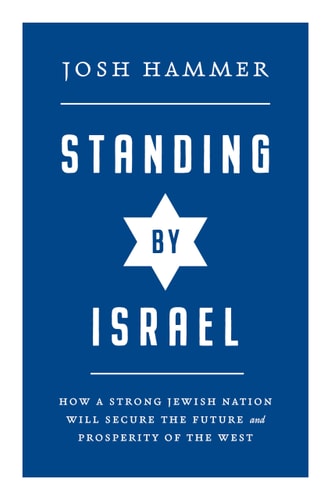
Israel and civilization: the fate of the Jewish nation and the destiny of the West

Hammer, Josh
"In Israel and Civilization, acclaimed journalist, legal expert, and pundit Josh Hammer makes a righteous case that the key to the prosperity of the West is the flourishing of the Jewish people and the Jewish State of Israel. Hammer's uplifting offense is our best defense against the enemies of the Jewish people's right to self-determination in their ancestral homeland. And as Hammer makes clear, manifesting the promise of Israel requires action by the United States and its allies. There can be no overstating the impact of the trauma of October 7, 2023, on the Jewish people. Yet the anti-Israel reactions the world over have been equally devastating. Rallies of hundreds of thousands explicitly or implicitly promoting Hamas violence; demonstrations of Ivy League professors celebrating the pogrom as awesome and exhilarating; so-called human rights organizations that refuse to unequivocally condemn the use of rape as a weapon of war; and a hydra of multiculturalism, postmodern relativism, and tolerance--it all threatens the physical and metaphysical survival of the West and our essential Jewish heritage. Preserving the best of what's been thought and said throughout history and ensuring that there will be centuries more requires a West that is proud of its Jewish heritage. In other words, the continued existence of the Jewish people is inextricably tied to the endurance of Western civilization. Israel is the center of the battle, and Israel and Civilization explains why and how the Jewish state must win."--
Radius Book Group 2025-03-18 293 pages

When the facts change: essays, 1995-2010

Judt, Tony
"In an age in which the lack of independent public intellectuals has often been sorely lamented, the historian Tony Judt played a rare and valuable role, bringing together history and current events, Europe and America, what was and what is with what should be. In When the Facts Change, Tony Judt's widow and fellow historian Jennifer Homans has assembled an essential collection of the most important and influential pieces written in the last fifteen years of Judt's life, the years in which he found his voice in the public sphere. Included are seminal essays on the full range of Judt's concerns, including Europe as an idea and in reality, before 1989 and thereafter; Israel, the Holocaust and the Jews; American hyperpower and the world after 9/11; and issues of social inclusion and social justice in an age of increasing inequality. Judt was at once most at home and in a state of what he called internal exile from his native England, from Europe, and from America, and he finally settled in New York--between them all. He was a historian of the twentieth century acutely aware of the dangers of ethnic exceptionalism, and if he was shaped by anything, it was the Jewish past and his own secularism. His essays on Israel ignited a firestorm debate for their forthright criticisms of Israeli government polices relating to the Palestinians and the occupied territories. Those crucial pieces are published here in book form for the first time, including an essay, never previously published, called 'What Is to Be Done?' These pieces are suffused with a deep compassion for the Israeli dilemma, a compassion that instilled in Judt a sense of responsibility to speak out and try to find a better path, away from what he saw as a road to ruin. When the Facts Change also contains Judt's homages to the culture heroes who were some of his greatest inspirations: Amos Elon, Francois Furet, Leszek Kolakowski, and perhaps above all Albert Camus, who never accepted the complacent view that the problem of evil couldn't lie within us as well as outside us. Included here too is a magnificent two-part essay on the social and political importance of railway travel to our modern conception of a good society; as well as the urgent text of 'What Is Living and What Is Dead in Social Democracy, ' the final public speech of his life, delivered from a wheelchair after he had been stricken with a terrible illness; and a tender and wise dialogue with his then-teenage son, Daniel, about the different outlooks and burdens of their two generations. To read When the Facts Change is to miss Tony Judt's voice terribly, but to cherish it for what it was, and still is: a wise, human, deeply informed view on our most pressing concerns, delivered in good faith."--
Penguin Press 2015 386 pages

Nazi Germany and the Jews

Friedländer, Saul
A history of the anti-Jewish policies of Nazi Germany, focusing on the victims' attitudes, reactions, and fate. Describes discrimination against Jews (and "Mischlinge") in the economic, social, cultural, and legal spheres, and the gradual process of segregation, isolation, and compulsory emigration. Gives examples of specific cases of persecution, and of the Jews' reactions. Discusses the extent to which the German elites - Churches, universities, leaders in the economic, political, and cultural spheres - shared in the Nazi antisemitic ideology and condoned Nazi policies. Among the traditional elites and the general populace, there were varying degrees of compliance with anti-Jewish attitudes, but they shied away from violence. Describes the development of German racial antisemitism from the 19th century, which emphasized the mythic dimensions of race and the sacredness of Aryan blood. This fused with a religious vision of a German (or Aryan) Christianity, and led to what can be called "redemptive antisemitism". Emphasizes Hitler's role and the function of his ideology in the genesis and implementation of the anti-Jewish measures. In his worldview, the Jew was dehistoricized and transposed into an abstract principle of evil. In the confrontation between an immutable evil (Jews) and an immutable good (Aryans), the outcome could only be envisioned in religious terms: perdition or redemption. For Hitler, the struggle against the Jews was the basis of his understanding of history, politics, and political action. Yet, his ideological fanaticism was tempered by pragmatic calculation. It is the relationship between the uncommon and the ordinary, the fusion of the widely-shared murderous potentialities in the world and the peculiar frenzy of the Nazi apocalyptic drive against the mortal enemy, the Jew, that give universal significance and historical distinctiveness to the "Final Solution of the Jewish Question".
HarperCollins 1998-03-10 439 pages

Antisemitism in America

Dinnerstein, Leonard
Traces the history of antisemitism in the USA from the colonial period to the present, emphasizing the role of the conception that "America is a Christian nation." Discusses the Jewish stereotypes embedded in the American public consciousness, social discrimination in the late 19th-early 20th centuries, the advent of racial antisemitism in the early 20th century, and the scapegoating of Jews in the interwar period. Shows that antisemitism in the USA reached its climax in 1933-45, and that while it declined drastically after the war, it did not disappear. Special attention is devoted to the American South and to Black antisemitism.
Oxford University Press 1994-05-19 369 pages

Sandy Koufax: a lefty's legacy

Leavy, Jane
In an era when too many heroes have been toppled from too many pedestals, Sandy Koufax stands apart and alone, a legend who declined his own celebrity. As a pitcher, he was sublime, the ace of baseball lore. As a human being, he aspired to be the one thing his talent and his fame wouldn't allow: a regular guy. A Brooklyn kid, he was the product of the sedate and modest fifties who came to define and dominate baseball in the sixties. In Sandy Koufax: A Lefty's Legacy, former award-winning Washington Post sportswriter Jane Leavy delivers an uncommon baseball book, vividly re-creating the Koufax era, when presidents were believed and pitchers aspired to go the distance. He was only a teenager when Dodgers owner Walter O'Malley proclaimed him "the Great Jewish Hope" of the franchise. But it wasn't until long after the team had abandoned Brooklyn that the man became the myth. Old-fashioned in his willingness to play when he was injured and in his acute sense of responsibility to his team, Koutax answered to an authority higher than manager Walter Alston. When he refused to pitch the opening game of the 1965 World Series because it fell on Yom Kippur, the holiest day of the Jewish calendar, he inadvertently made himself a religious icon and an irrevocably public figure. A year later, he was gone -- done with baseball at age thirty. No other sports hero had retired so young, so well, or so completely. Despite Sandy Koufax's best efforts to protect his privacy, his legend has grown larger ever since. Part biography, part cultural history, Sandy Koufax: A Lefty's Legacy gets as close to that legend as he will allow. Through meticulous reporting and interviews with five hundred of his friends, teammates, and opponents, Leavy penetrates the mythology to discover a man more than worthy of myth.
HarperCollins 2002-09-17 282 pages

Neighbors: the destruction of the Jewish community in Jedwabne, Poland

Gross, Jan Tomasz
One summer day in 1941, half of the Polish town of Jedwabne murdered the other half, 1,600 men, women, and children, all but seven of the town's Jews. Neighbors tells their story. Jan Gross pieces together eyewitness accounts and other evidence into a reconstruction of the horrific July day remembered well by locals but forgotten by history. His investigation reads like a detective story, and its unfolding yields wider truths about Jewish-Polish relations, the Holocaust, and human responses to occupation and totalitarianism. It is a story of surprises: The newly occupying German army did not compel the massacre, and Jedwabne's Jews and Christians had previously enjoyed cordial relations. After the war, the nearby family who saved Jedwabne's surviving Jews was derided and driven from the area. The single Jew offered mercy by the town declined it. Most arresting is the sinking realization that Jedwabne's Jews were clubbed, drowned, gutted, and burned not by faceless Nazis, but by people whose features and names they knew well: their former schoolmates and those who sold them food, bought their milk, and chatted with them in the street. As much as such a question can ever be answered, Neighbors tells us why.
Arrow Books 2003 271 pages

The Destruction of the European Jews 1961 First Edition Facsimile

Raul Hilberg
2019 Reprint of 1961 Edition. Full facsimile of the original edition, not reproduced with Optical Recognition software. Reprint of the First Edition published in 1961. The Destruction of the European Jews is widely considered the landmark study of the Holocaust. First published in 1961, Raul Hilberg's comprehensive account of how Germany annihilated the Jewish community of Europe spurred discussion, galvanized further research, and shaped the entire field of Holocaust studies. Spanning the twelve-year period of anti-Jewish actions from 1933 to 1945, Hilberg's study encompasses Germany and all the territories under German rule or influence. Its principal focus is on the large number of perpetrators―civil servants, military personnel, Nazi party functionaries, SS men, and representatives of private enterprises―in the machinery of death. Contents: Dismissals -- Aryanizations -- Property taxes -- Blocked money -- Forced labor and wage regulations -- Income taxes -- Starvation measures -- The reich-protektorat area -- Ghetto formation -- Confiscations -- Labor exploitation -- Food controls -- preparations -- The first sweep -- The killing of the prisoners of war -- The intermediary stage -- The second sweep -- The reich-protektorat area -- Poland -- The semicircular arc -- Origins of the killing centers -- Organization, personnel, and maintenance -- Labor utilization -- Medical experiments -- Confiscations -- Killing operations -- Liquidation of the killing centers and the end of the destruction process.
Martino Fine Books 2019-06-20 804 pages

Koshersoul: the faith and food journey of an African American Jew

Twitty, Michael
"The James Beard award-winning author of the acclaimed The Cooking Gene explores the cultural crossroads of Jewish and African diaspora cuisine and issues of memory, identity, and food. In Koshersoul, Michael W. Twitty considers the marriage of two of the most distinctive culinary cultures in the world today: the foods and traditions of the African Atlantic and the global Jewish diaspora. To Twitty, the creation of African-Jewish cooking is a conversation of migrations and a dialogue of diasporas offering a rich background for inventive recipes and the people who create them. The question that most intrigues him is not just who makes the food, but how the food makes the people. Jews of Color are not outliers, Twitty contends, but significant and meaningful cultural creators in both Black and Jewish civilizations. Koshersoul also explores how food has shaped the journeys of numerous cooks, including Twitty's own passage to and within Judaism. As intimate, thought-provoking, and profound as The Cooking Gene, this remarkable book teases the senses as it offers sustenance for the soul. Koshersoul includes 48-50 recipes"--
Amistad, an imprint of HarperCollins Publishers 2022 371 pages

Churchill and the Jews

Martin Gilbert
Visiting Israel in 1972, Gilbert discussed Winston Churchill’s influence on the evolution of the Zionist ideal with the Israeli leader, David Ben-Gurion, at whose last meeting with Churchill in 1960, Churchill declared: “You are a wise leader of a brave people.” Born into a British class and society that was far from well-disposed towards Jews, Churchill rejected anti-Semitic attitudes. In the early 1920s, as a senior member of the British government, Churchill took a lead in securing for the Jews a National Home in Palestine that would be open to Jewish immigration from all over the world. In 1948, Churchill urged immediate recognition of the State of Israel, and, in 1951, strongly supported Israel’s right — denied by Egypt — of free passage through the Suez Canal. The book also details acts of rescue initiated by Churchill on behalf of European Jewry during the Second World War. When Churchill was asked to bomb the railway lines leading to Auschwitz, his response was immediate: “Get anything out of the air force you can.” Gilbert follows this story to its unexpected conclusion, and the saving of more than 100,000 Jewish lives. Many times during fifty years of public life, Churchill was called upon by the Jews of Britain to intervene on their behalf both nationally and internationally. His responses made it clear to them that he was, as he once expressed it, “their friend.”
McClelland & Stewart 2007 359 pages