78 results for "Jewish History"

Sex and Character

Otto Weininger
This book has been considered by academicians and scholars of great significance and value to literature. This forms a part of the knowledge base for future generations. So that the book is never forgotten we have represented this book in a print format as the same form as it was originally first published. Hence any marks or annotations seen are left intentionally to preserve its true nature.
Alpha Editions 2020-03-25 386 pages

The Jewish past revisited: reflections on modern Jewish historians

David G. Myers,David N. Myers,Sady and Ludwig Kahn Professor of Jewish History David N Myers,David B. Ruderman,Rabbi David B Ruderman, PhD
In this new collection of essays, contemporary historians examine the ways earlier historians have framed, written, and "made" the Jewish past. Probing the ideology and methodology of their professional predecessors, American and Israeli historians offer new perspectives on some of the central figures of twentieth-century Jewish historiography, including Gershom Scholem, S. D. Goitein, Yitzhak Baer, Elias Bickerman, and Cecil Roth, as well as the Israeli "New Historians." Through their critical examinations of the construction of the Jewish past, the contributors to this volume develop important insights into current attitudes toward the dominant canons and ideals of historical scholarship and the future of historiography. They shine new light on the formation of a historical worldview and the "making" of history.
Yale University Press 1998 244 pages

Spinoza's Short Treatise on God, Man, and His Well-Being Translated and Edited, with an Introduction and Commentary and a Life of Spinoza (Classic Reprint)

Benedictus de Spinoza
Excerpt from Spinoza's Short Treatise on God, Man, and His Well-Being: Translated and Edited, With an Introduction and Commentary and a Life of Spinoza Jewish history and jewish life, and have devoted more attention to Manasseh ben Israel than he has so far received in this connection. It has not been thought necessary to give detailed references to authorities, because the earliest biographies and all the available documents relating to Spinoza have been edited by Prof. Freudenthal in a single volume under the title of Die Lebensgeschichte Spinozas, and the evidence can easily be found there. For the general history of the period I consulted Motley, Blok, and the Cambridge Modern History and Graetz, for the history of the Jews. About the Publisher Forgotten Books publishes hundreds of thousands of rare and classic books. Find more at www.forgottenbooks.com This book is a reproduction of an important historical work. Forgotten Books uses state-of-the-art technology to digitally reconstruct the work, preserving the original format whilst repairing imperfections present in the aged copy. In rare cases, an imperfection in the original, such as a blemish or missing page, may be replicated in our edition. We do, however, repair the vast majority of imperfections successfully; any imperfections that remain are intentionally left to preserve the state of such historical works.
FB&C Limited 2016-10-12 392 pages

Sharing the burden: Rabbi Simhah Zissel Ziv and the path of musar

Claussen, Geoffrey D.
"Sharing the Burden analyzes the rich moral traditions of the nineteenth-century Musar movement, an Eastern European Jewish movement focused on the development of moral character. Geoffrey D. Claussen focuses on that movement's leading moral theorist, Rabbi Simḥah Zissel Ziv (1824-1898), the founder of the first Musar movement yeshiva and the first traditionalist institution in Eastern Europe that included general studies in its curriculum. Simḥah Zissel offered a unique and compelling voice within the Musar movement, joining traditionalism with a program for contemplative practice and an interest in non-Jewish philosophy. His thought was also distinguished by its demanding moral vision, oriented around an ideal of compassionately loving one's fellow as oneself and an acknowledgment of the difficulties of moral change. Drawing on Simḥah Zissel's writings and bringing his approach into dialogue with other models of ethics, Claussen explores Simḥah Zissel's Jewish virtue ethics and evaluates its strengths and weaknesses. The result is a volume that will expose readers to a fascinating and important voice in the history of modern Jewish ethics and spirituality"--Back cover.
State University of New York Press 2015-09-11 245 pages

Optimism in politics: reflections on contemporary history

Laqueur, Walter
This new collection by Walter Laqueur, one of the most distinguished historians and political commentators of the twentieth and twenty-first centuries, vividly brings to life his perspective on fifty years of political life. The essays in this volume deal with events ranging from more than seventy years ago to some that have not yet happened, but may in years to come. Laqueur divides his writings into five main areas: optimism in politics, the topic that unites this volume; Europe; the Arab Spring; Israel and Jewish affairs; and recollections of the past. This volume addresses an increasingly important question: How much optimism do we need in politics? Some neuroscientists believe that many of our assessments rest on an excess of optimism amounting to a dangerous bias. Another school of cognitive scientists sees the main danger in being influenced too much by negative conclusions. Although these competing perspectives have been only rarely investigated, Laqueur argues that such psychological factors play a decisive role in the assessment of political trends, and they should. Laqueur also reminds readers that there is a connection between writing history and commenting on current affairs, but it is not remotely as close and simple as often thought. The idea that the historian is somehow better qualified than others to interpret the present, let alone predict the future, is certainly not borne out by the evidence. Some great historians have been good and reliable political commentators, others have been miserable failures. Laqueur definitely falls in the former camp, as these reflections attest.
Transaction Publishers 2014 251 pages

Athens and Jerusalem: god, humans, and nature

Novak, David
"What is the relation of philosophy and theology? This question has been a matter of perennial concern in the history of Western thought. Written by one of the premier philosophers in the areas of Jewish ethics and interfaith issues between Judaism and Christianity, Athens and Jerusalem contends that philosophy and theology are not mutually exclusive. Based on the Gifford Lectures David Novak delivered at the University of Aberdeen in 2017, this book explores the commonalities and common concerns that exist between philosophy and theology on metaphysical, epistemological, and ethical questions. Where are they different and where are they the same? And, how can they speak to one another?"--
University of Toronto Press 2019 373 pages

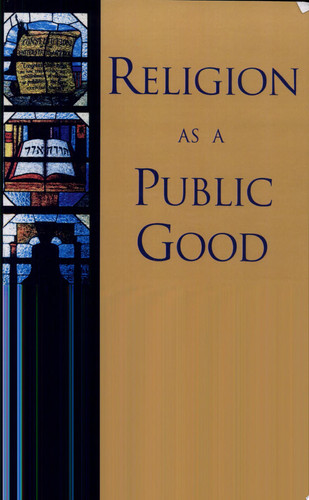
Religion as a public good: Jews and other Americans on religion in the public square

Alan Mittleman
Religion as a Public Good: Jews and Other Americans on Religion in the Public Square explores the often controversial topic of how religion ought to relate to American public life. The sixteen distinguished contributors, both Jewish and Christian, reflect on the topic out of their own disciplines-social ethics, political theory, philosophy, law, history, theology, and sociology. and take a stand based on their religious convictions and political beliefs. The volume is at once scholarly and committed, polemic and civil, reflective and activist. Written in the shadow of 9/11, it invites a new consideration of how religion enhances democratic public life with full awareness of the dangers that religion can sometimes pose. The volume is polemical, as befits the topic, but also civil, as befits a dialogue about an issue of profound significance for democratic citizenship.
Rowman & Littlefield 2003-12-09 336 pages

Scriptural vitality: rethinking philology and hermeneutics

Najman, Hindy
"Scriptural Vitality challenges the view that the Persian and Hellenistic periods constitute a time of decay, a period of 'late Judaism', languishing between an original, vibrant Judaism and the birth of Christianity. Instead, Hindy Najman argues that the Second Temple period was one of untethered creativity and poetic imagination, of dynamism exemplified through philosophical translation, poetic composition, and a convergence of ancient Mediterranean cultures that gave birth to hermeneutic innovation. Building on Nietzsche's critique of classical philology and drawing on new ways of reading the Dead Sea Scrolls, the author carries out a radical rethinking of biblical studies. Instead of seeking to reconstruct the original text and to find its original author or at least the original context of its production, Najman celebrates textual pluriformity and transformation, tracing ways in which texts and meanings proliferated within interpretive communities through new performances and fresh articulations of the past. Engaging with thinkers such as Friedrich Schlegel and Peter Szondi, whom biblicists have rarely considered, biblical philology is reimagined as the forward-moving study of the poetic processes by which Jewish communities re-created their past and revitalized their present. The Second Temple period emerges as a golden age of creativity, whose traces may still be discerned in Judaism and Christianity today." --
Oxford University Press 2025 193 pages

Land and Power: Zionist Resort to Force, 1881-1948

Shapira, Anita
Asserts that Zionism modified the self-image of the Jewish people, associating the national ethos with activism and power and abolishing its traditional emphasis on defense. Follows and interprets the impact of the modification from the end of the 19th century and up to 1948, mainly of the Zionists in Palestine. Pp. 433-462, "Holocaust and Power" (appeared also in "Massuah" 20, 1992), relate to the changes in the national ethos as observed in the reactions of the Yishuv to the Holocaust.
Oxf. U. P. (N. Y.) 1992-07-23 446 pages

The scepter shall not depart from Judah: perspectives on the persistence of the political in Judaism

Mittleman, Alan
The title of political theorist Alan L. Mittleman's captivating new book is drawn from the patriarch Jacob's blessing to his children and grandchildren. The blessing contains the promise that Judah will become a royal house, perhaps forever. Kings, of course, ceased in Israel, but politics did not. Regime replaced regime. National independence was compromised and lost, regained and lost again. Yet the attention to things political was never lost. Old texts were applied to new political realities. Political awareness and thought, constantly transformed and adapted to new historical exigencies, persisted among the Jews. In The Scepter Shall Not Depart from Judah , Mittleman looks at some of the central problems of political philosophy-such as fundamental rights and the common good-from the point of view of rabbinic Judaism. At the same time, he considers conceptual issues in Judaism-such as covenant and tradition-from the perspective of political philosophy. Mittleman's sources range from the ancient rabbis to contemporary political theorists, making this volume an important one for courses and research in both Jewish studies and political theory.
Lexington Books 2000-02-09 185 pages

"Nazi fantasy": Vilém Flusser and history as site of experiment

Morris-Reich, Amos
"This book brings together Vilém Flusser and intellectual Jewish history of the second half of the twentieth century. Flusser is viewed today by many scholars as the most original theoretician of media and photography in the second half of the twentieth century, and yet this is the first monograph about him in English. Combining elements of Flusser's biography with a rigorous study of his writing, this book shows that concepts of 'virtuality', 'medium', and 'embodiment' underpin not only Flusser's understanding of technological media, such as photography, but also his understanding of evolution and of real or imaginary biological organisms. This book argues that Flusser contended with Nazism in his writings on these biological and ecological themes. Two threads - and their relationship - are explored: the first bears on Nazism as undergirded by a biological perspective - an attempt to eradicate a population taken to be parasitic; in the second, Nazism is simply viewed as 'stupid'. Such a line of inquiry necessarily leads to and includes our dealing with the 'Nazi fantasy', because fantasy was fused into Nazism's own vision. This book will not only be an ideal resource for students and scholars of intellectual Jewish history but will interest anyone seeking an introduction to Flusser and the philosophy of science within the context of Nazism"--
Routledge 2025 138 pages

The philosophy of the Talmud

Maccoby, Hyam
This is a new presentation of the philosophy of the Talmud. The Talmud is not a work of formal philosophy, but much of what it says is relevant to philosophical enquiry, including issues explored in contemporary debates. In particular, the Talmud has original ideas about the relation between universal ethics and the ethics of a particular community. This leads into a discussion on the relation between morality and ritual, and also about the epistemological role of tradition. The book explains the paradoxes of Talmudic Judaism as arising from a philosophy of revolution, stemming from Jewish origins as a band of escaped slaves, determined not to reproduce the slave-society of Egypt. From this arises a daring humanism, and an emphasis on justice in this world rather than on other-worldly spirituality. A strong emphasis on education and the cultivation of rationality also stems from this. Governing the discussion is a theory of logic that differs significantly from Greek logic. Talmudic logic is one of analogy, not classification and is peculiarly suited to discussions of moral and legal human situations. This book will be of interest to those in the fields of philosophy, religion and the history of ideas, whether students, teachers and academics, or the interested general reader.
RoutledgeCurzon 2002 240 pages

Reinventing Maimonides in contemporary Jewish thought

Diamond, James Arthur,Kellner, Menachem Marc
Every work on Jewish thought and law since the twelfth century bears the imprint of Maimonides. A. N. Whitehead's famous dictum that the entire European philosophical tradition 'consists of a series of footnotes to Plato' could equally characterize Maimonides' place in the Jewish tradition. The critical studies in this volume explore how Orthodox rabbis of different orientations--Shlomo Aviner, Naftali Zvi Yehudah Berlin (Netziv), Kalonymus Kalman Shapira, Joseph Kafih, Abraham Isaac Kook, Aaron Kotler, Joseph Soloveitchik, and Elhanan Wasserman--have read and provided footnotes to Maimonides in the long twentieth century. How well did they really understand Maimonides? And where do their arguments fit in the mainstream debates about him and his works? Each of the seven core chapters examines a particular approach. Some rabbis have tried to liberate themselves from the influence of his ideas. Others have sought to build on those ideas or expand them in ways which Maimonides himself did not pursue, and which he may well not have agreed with. Still others advance patently non-Maimonidean positions, while attributing them to none other than Maimonides. Above all, the essays published here demonstrate that his legacy remains vibrantly alive today.
The Littman Library of Jewish Civilization 2025-01-03 248 pages

Changing the immutable: how Orthodox Judaism rewrites its history

Shapiro, Marc B.
"A consideration of how segments of Orthodox society rewrite the past by eliminating that which does not fit in with their contemporary world-view. This wide-ranging and original review of how this policy is applied in practice adds a new perspective to Jewish intellectual history and to the understanding of the contemporary Jewish world"--
Littman Library of Jewish Civilization 2015 347 pages

Moshe Idel: representing God

Idel, Mosheh
Moshe Idel, the Max Cooper Professor Emeritus at the Hebrew University of Jerusalem, and Senior Researcher at the Shalom Hartman Institute, is a world-renowned scholar of the Jewish mystical tradition. His historical and phenomenological studies of rabbinic, philosophic, kabbalistic, and Hasidic texts have transformed modern understanding of Jewish intellectual history and highlighted the close relationship between magic, mysticism, and liturgy. A recipient of two of the most prestigious awards in Israel, the Israel Prize for Jewish Thought (1999) and the Emmet Prize for Jewish Thought (2002), Idel's numerous studies have uncovered persistent patterns of Jewish religious thought that challenge conventional interpretations of Jewish monotheism, while offering a pluralistic understanding of Judaism. His explorations of the mythical, theurgical, mystical, and messianic dimensions of Judaism have been attentive to history, sociology, and anthropology, while rejecting a naïve historicist approach to Judaism.
Brill 2014 205 pages

Prophecy: the history of an idea in medieval Jewish philosophy

Kreisel, Howard Theodore
More than any other topic, prophecy represents the point at which the Divine meets the human, the Absolute meets the relative. How can a human being attain the Word of God? In what manner does God, when conceived as eternal and transcendent, address corporeal, transitory creatures? What happens to God's divine Truth when it is beheld by minds limited in their power to apprehend, and influenced by the intellectual currents of their time and place? How were these issues viewed by the great Jewish philosophers of the past, who took the divine communication and all it entails seriously, while at the same time desired to understand it as much as humanly possible in the course of dealing with a myriad of other issues that occupied their attention? This book offers an in-depth study of prophecy in the thought of seven of the leading medieval Jewish philosophers: R. Saadiah Gaon, R. Judah Halevi, Maimonides, Gersonides, R. Hasdai Crescas, R. Joseph Albo and Baruch Spinoza. It attempts to capture the `original voice' of these thinkers by looking at the intellectual milieus in which they developed their philosophies, and by carefully analyzing their views in their textual contexts. It also deals with the relation between the earlier approaches and the later ones. Overall, this book presents a significant model for narrating the history of an idea.
Kluwer 2001 669 pages