85 results for "Jewish History"

Judah Benjamin: counselor to the confederacy

Traub, James
Judah P. Benjamin (1811-1884) was a brilliant and successful lawyer in New Orleans, and one of the first Jewish members of the U.S. Senate. He then served in the Confederacy as secretary of war and secretary of state, becoming the confidant and alter ego of Jefferson Davis. In this new biography, author James Traub grapples with the difficult truth that Benjamin, who was considered one of the greatest legal minds in the United States, was a slave owner who deployed his oratorical skills in defense of slavery. How could a man as gifted as Benjamin, knowing that virtually all serious thinkers outside the American South regarded slavery as the most abhorrent of practices, not see that he was complicit with evil? This biography makes a serious moral argument both about Jews who assimilated to Southern society by embracing slave culture and about Benjamin himself, a man of great resourcefulness and resilience who would not, or could not, question the practice on which his own success, and that of the South, was founded.
Yale University Press 2021 185 pages

Decolonizing Israel, liberating Palestine: Zionism, settler colonialism, and the case for one democratic state

Halper, Jeff
Explores how the concept of settler colonialism provides a clearer understanding of the Zionist movement's project to establish a Jewish state in Palestine, displacing the Palestinian Arab population and marginalizing its cultural presence. Halper argues that the only way out of a colonial situation is decolonization: the dismantling of Zionist structures of domination and control and their replacement by a single democratic state, in which Palestinians and Israeli Jews forge a new civil society and a shared political community. To show how this can be done, Halper uses the 10-point program of the One Democratic State Campaign as a guide for thinking through the process of decolonization to its post-colonial conclusion. --From publisher description.
Pluto Press 2021 244 pages

1929: mapping the Jewish world

Hasia R. Diner,Gennady Estraikh
Winner of the 2013 National Jewish Book Award, Anthologies and Collections The year 1929 represents a major turning point in interwar Jewish society, proving to be a year when Jews, regardless of where they lived, saw themselves affected by developments that took place around the world, as the crises endured by other Jews became part of the transnational Jewish consciousness. In the United States, the stock market crash brought lasting economic, social, and ideological changes to the Jewish community and limited its ability to support humanitarian and nationalist projects in other countries. In Palestine, the anti-Jewish riots in Hebron and other towns underscored the vulnerability of the Zionist enterprise and ignited heated discussions among various Jewish political groups about the wisdom of establishing a Jewish state on its historical site. At the same time, in the Soviet Union, the consolidation of power in the hands of Stalin created a much more dogmatic climate in the international Communist movement, including its Jewish branches. Featuring a sparkling array of scholars of Jewish history, 1929 surveys the Jewish world in one year offering clear examples of the transnational connections which linked Jews to each other—from politics, diplomacy, and philanthropy to literature, culture, and the fate of Yiddish—regardless of where they lived. Taken together, the essays in 1929 argue that, whether American, Soviet, German, Polish, or Palestinian, Jews throughout the world lived in a global context.
New York University Press 2013-08-12 244 pages

Middle Eastern themes: papers in history and politics

Landau, Jacob M.
This volume, first published in 1973, brings together a wide range of Professor Landau's work on recent Middle Eastern history and politics, reflecting the breadth of the author's concern and research. The first section deals with aspects of political organisation in the Middle East, largely Egypt, towards the end of the nineteenth century. A little-known plan of the Islamic reformer al-Afghani is discussed, showing him in a rather more political light than the religious haze which normally surrounds this pan-Islamic campaigner. The role of the influential secret societies in modern Egypt is outlined, and the politics behind the fluctuations in the degree of responsibility allowed to Egyptian ministers is examined. This section is concluded by a chapter on two proposals for the establishment of a Jewish homeland in the Sudan in the early days of Zionism, throwing interesting light on the differing aims of early Zionists and alternative historical paths that might have been taken. The second section of the book contains studies on the Jewish situation in nineteenth-century Egypt, focusing on their position within the larger Muslim society and on socio-economic factors, as well as on the career of James Sanua ('Abu Naddara'), an Egyptian Jew who played a prominent part in nationalist agitation. The two final parts of the book turn to recent and contemporary electoral politics in the Middle East, with special attention being paid to the political leadership and voting behaviour of the Arabs in Israel. Other studies deal with elections in Lebanon and Turkey, and the final chapter analyses the militant right-wing elements in the Turkish political spectrum.
Routledge 2015-07-20 320 pages

Jews and the American public square: debating religion and republic

Mittleman, Alan
Jews and the American Public Square is a study of how Jews have grappled with the presence of religion, both their own and others, in American public life. It surveys historical Jewish approaches to church-state relations and analyzes Jewish responses to the religion clauses of the First Amendment. The book also explores how the contemporary sociological and political characteristics of American Jews bear on their understanding of the public dimensions of American religion. In addition to a descriptive and analytic approach. the volume is also critical and polemical. Its contributors attack and defend prevailing views, raise critical questions about the political and intellectual positions favored by American Jews, and propose new syntheses. This book captures the current mood of the Jewish community: both committed to the separation of church and state and perplexed about its scope and application. It provides the necessary background for a principled reconsideration of the problem of religion in the public square.
Rowman & Littlefield 2002 375 pages

Views in review: politics and culture in the state of the Jews

Margalit, Avishai
When Zionists first advocated a national home for the Jewish people, they also propounded a revolution in the values that Jews should live by, a whole new way of thinking about Jewish life and Jewish history. Has this revolution in fact occurred? And what the consequences been for Jews and their neighbors? Especially given the extraordinary circumstances that link the United States and Israel, Americans may find the answers to such questions vexing - but the remarkable work of Avishai Margalit goes far to clarify the issues and enlighten the debate. Over the past two decades, Margalit has written major essays for American readers about the political leaders, cultural crises, and historical background of the contemporary Israeli scene. In Views in Review these essays are brought together with new commentary and observations, and their publication in one volume clearly shows that the whole is much more that the sum of its parts. From Ben Gurion to Netanyahu, from "Israeli kitsch" to the meaning of the Holocaust for "the seventh million," Margalit's work traverses the terrain of Israeli life and history and brings a tragically conflicted country into sharp and memorable focus.
Farrar, Straus and Giroux 1998 336 pages

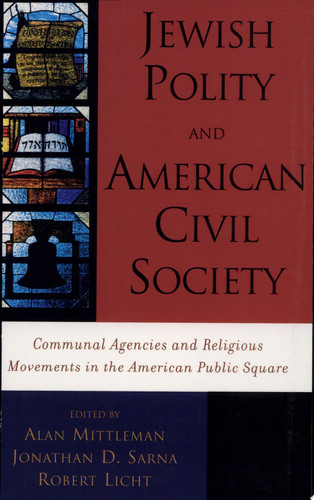
Jewish polity and American civil society: communal agencies and religious movements in the American public sphere

Alan Mittleman,Robert Licht,Jonathan D. Sarna
Jewish Polity and American Civil Society is a study of the civic and political engagements of American Jews as mediated by their communal and denominational institutions. The book explores how the various branches of the organized Jewish community seek to influence public affairs. Over the course of the last century, Jewish agencies and religious movements have tried to shape public debate and public policy on such issues as civil rights, church-state relations, and American foreign policy. The book sets the history of Jewish engagement in these areas into historical context; analyzes the motives, strategies, and tactics of various Jewish groups, and evaluates their successes and failures. The book also explores the underlying idea-the public philosophy-that informs American Jews' understanding of civic and political engagement.
Rowman & Littlefield 2002-07-23 420 pages

The dispersion of Egyptian Jewry: culture, politics, and the formation of a modern diaspora

Beinin, Joel
Egypt's indigenous Jewish population comprised Arabic-speaking Rabbanite and Karaite Jews, some of whom had been in the country since the early Islamic era. Jews expelled from Spain in 1492 took refuge in Egypt, and their numbers were augmented in the mid-nineteenth century by Sephardic immigrants. Originally welcomed elsewhere in the Ottoman Empire, these Spanish Jews came to Egypt seeking economic opportunity in the era of Suez Canal construction and the cotton boom. The late nineteenth century brought Ashkenazi Jews fleeing persecution in Eastern Europe. The different groups formed a heterogeneous community of cosmopolitan hybrids, which was both an element of strength and a factor in its eventual demise. The Dispersion of Egyptian Jewry examines the history of the Egyptian Jewish community after 1948, focusing on three major areas: the life of the majority of the community, which remained in Egypt from the1948 Arab-Israeli War until the aftermath of the 1956 Suez/Sinai War; the dispersion and reestablishment of Egyptian Jewish communities in the United states, France, and Israel; and contested memories of Jewish life in Egypt since President Anwar al-Sadat's visit to Jerusalem in 1977. Beinin argues that the experiences of Egyptian Jews cannot be adequately accounted for by either Egyptian nationalist or Zionist narratives. Fusing history, ethnography, literary analysis, and autobiography, Joel Beinin conducts an interdisciplinary investigation into identity, dispersion, and the retrieval of identity that is relevant for anyone interested in Egypt, the Jewish diaspora, or the formation of cultures and identities.
American University in Cairo Press 2005 329 pages

Jewish communities of the world

Avi Beker
More than just a guide to centers of Jewish populations throughout the world, this comprehensive work provides facts about the demography and history of these important communities, as well as a listing and description of community organizations, religious life, local Jewish culture, and educational facilities. Introductory sections include information on the founding of Israel, population statistics, and thoughts on topics ranging from the Diaspora to the founding of the Jewish state.
Lerner Publications 1998 256 pages

Between the lines: readings on Israel, the Palestinians, and the U.S. "war on terror"

Honig-Parnass, Tikva
This compilation of essays, edited by a Palestinian writer and an Israeli journalist, constitutes a challenge to critically rethink the Israeli-Palestinian conflict. Between the Lines presents a groundbreaking study that brings together insights from across the lines of conflict to put the latest chapter of Israeli apartheid and Palestinian resistance into context. Contributors include: Marwan Bargouti, Dr. Azmi Bishara, Dr. Sami Shalom Chetrit, Dr. Saleh Abdel Jawwad, Husam Khader, Eileen Kuttab, Dr. Yitzhak Laor, Dr. Adi Ophir, Dr. Ilan Pappe, Linda Tabar, Graham Usher and Dr. Jamal Zahalqa. "The destruction of a nation is not an everyday event in history. It is being carried out before our eyes, systematically and consciously, with cruelty and self-righteousness, and with the backing of the global superpower. These acute and informed essays develop a perspective on the background and unfolding of these events that is remote from anything likely to be heard in the West. They merit close attention and thoughtful consideration." --Noam Chomsky "This collection provides a lucid and critical analysis of the Israeli and American policies in the Middle East. The disastrous repercussions of this unholy alliance are presented in this collection through incisive and timely contributions. In the best tradition of [the journal] Between the Lines, readers will be rewarded by this collection that unmasks and exposes what the mainstream media refuses to report or admit." --Ilan Pappe, Israeli historian and author of A History of Modern Palestine Toufic Haddad is a Palestinian American activist who was formerly co-editor with Tikva Honig-Parnass of the Jerusalem-based magazine Between the Lines. Tikva Honig-Parnass is a Jewish Israeli active in radical anti-occupation movements.
Haymarket Books 2007 405 pages

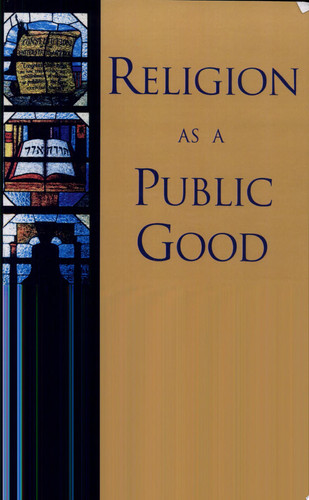
Religion as a public good: Jews and other Americans on religion in the public square

Alan Mittleman
Religion as a Public Good: Jews and Other Americans on Religion in the Public Square explores the often controversial topic of how religion ought to relate to American public life. The sixteen distinguished contributors, both Jewish and Christian, reflect on the topic out of their own disciplines-social ethics, political theory, philosophy, law, history, theology, and sociology. and take a stand based on their religious convictions and political beliefs. The volume is at once scholarly and committed, polemic and civil, reflective and activist. Written in the shadow of 9/11, it invites a new consideration of how religion enhances democratic public life with full awareness of the dangers that religion can sometimes pose. The volume is polemical, as befits the topic, but also civil, as befits a dialogue about an issue of profound significance for democratic citizenship.
Rowman & Littlefield 2003-12-09 336 pages

The Dreyfus affair: a trilogy

Whyte, George R.
The cause celebre of the 19th century, the Dreyfus Affair destabilized French society (1894-1906) and reverberated across the world. Its repercussions continue to this day. A deliberate miscarriage of justice, the public degradation of an innocent Jewish officer and his incarceration on Devil's Island, espionage, intrigue, media pressure, vehement antisemitism and political skulduggery--all these elements, based on historical records, are contained in George R. Whyte's trilogy of plays which also focuses on Emile Zola's letter to the President of France, J'Accuse, arguably history's most famous plea for human rights.
Oberon Books 2010 126 pages

God and politics in Esther

Hazony, Yoram
A political crisis erupts when the Persian government falls to fanatics, and a Jewish insider goes rogue, determined to save her people at all costs. God and Politics in Esther explores politics and faith. It is about an era in which the prophets have been silenced and miracles have ceased, and Jewish politics has come to depend not on commands from on high, but on the boldness and belief of each woman and man. Esther takes radical action to win friends and allies, reverse terrifying decrees, and bring God's justice into the world with her own hands. Hazony's The Dawn has long been a cult classic, read at Purim each year the world over. Twenty years on, this revised edition brings the book to much wider attention. Three controversial new chapters address the astonishingly radical theology that emerges from amid the political intrigues of the book.
Cambridge University Press 2016 262 pages

Antisemitism and the American far left

Norwood, Stephen H.
"Stephen H. Norwood has written the first systematic study of the American far left's role in both propagating and combating antisemitism. This book covers Communists from 1920 onward, Trotskyists, the New Left and its black nationalist allies, and the contemporary remnants of the New Left. Professor Norwood analyzes the deficiencies of the American far left's explanations of Nazism and the Holocaust. He explores far left approaches to militant Islam, from condemnation of its fierce antisemitism in the 1930s to recent apologies for jihad. Norwood discusses the far left's use of long-standing theological and economic antisemitic stereotypes that the far right also embraced. The study analyzes the far left's antipathy to Jewish culture, as well as its occasional efforts to promote it. He considers how early Marxist and Bolshevik paradigms continued to shape American far left views of Jewish identity, Zionism, Israel, and antisemitism"--
Cambridge University Press 2013-08-19 318 pages

A life with history

Blum, John Morton
The author of such classic works as The Republican Roosevelt, V Was for Victory, and Years of Discord, John Morton Blum is one of a small group of intellectuals who for more than a quarter of a century dominated the writing of American political history. Writing now of his own career, Blum provides a behind-the-scenes look at Ivy League education and political power from the 1940s to the 1980s. Blum insightfully recounts a long and distinguished journey that began at Phillips Academy, where he first realized he could make a career of teaching and writing history. He tells how young men were socialized to the values of the Northeastern establishment in those years before World War II, and how as a non-practicing Jew he learned to overcome bigotry both at Andover and at Harvard, which then had no Jewish professors. In 1957 Blum joined the faculty of Yale University's history department, widely regarded as the nation's best, where he became both influential and popular and where his students included one future U.S. president as well as others who aspired to the office. He reveals much about the inner workings of Ivy League education and tells of controversies over the Vietnam War and the Black Panthers, his role in Eugene McCarthy's presidential campaign, and how he searched for common ground between reactionary faculty and radical students. More than a recounting of a singular life, Blum's story explains how political history was researched and written during the second half of the twentieth century, describing how the discipline evolved, gained ascendancy, and was challenged as historical fashions changed. It also offers revealing glimpses of such prominent academics as Kingman Brewster, Arthur Schlesinger, Jr., C. Vann Woodward, and William Sloan Coffin. Over a distinguished career, Blum witnessed considerable change in elite educational institutions, where minorities and women were grossly underrepresented when he first entered academia. In a memoir brimming with insight and laced with humor, he looks back at the academy—"not a refuge from reality but an alternative reality"—as he reflects upon his intellectual journey and his contributions to the study and writing of twentieth-century American history.
University Press of Kansas 2004 283 pages

Left out: the politics of exclusion : essays, 1964-2002

Duberman, Martin B.
"One would be hard-pressed to name a more admirable contemporary American example of the intellectual engage than Martin Duberman. Historian, playwright, memoirist, biographer, social commentator, teacher, activist and assured podium performer, Duberman is an unapologetic, uncategorizable and nonsectarian radical whose constant questioning of conventional wisdoms - even on the left - has made him one of this country's pre-eminent participants in the political and cultural wars that have riven public life."â__In These Times"A marvelous collection of a lifetime of courageous writing by a deeply moral and reflective man who has engaged the greatest struggles of our times with an unflinching nerve, a wise heart and a brilliant intellect informed at all times by compassion."â__Jonathan KozolThe lives of â__outsidersâ__ have been the focus of Martin Duberman's work as a public intellectual for the past four decades. Best known for his biography of Paul Robeson, Duberman highlights the "banding together" of the excluded in Left Out. These identity-based movementsâ__black power, gay liberation, feminismâ__have created a vital and controversial change in American consciousness in recent decades. Duberman's collected essays trace this evolution of thought to the history of dissent from abolitionism through the New Left to today's organizing.Presenting summations of Duberman's views on such matters as race, foreign policy, gender and sexuality, Left Out offers incisive analyses of the split between class-based and identity-based politics on the Left. The "godfather" of the gay studies movement, Duberman has taken many brave and prescient stands. His writing shows why he is considered a deeply moral and wise man. For the first time available in paperback, this edition, updated through 2002, includes three new essays: "The State of Gay Studies," "Queer Economic Justice," and "Jewish Radicals, Effeminacy, and the Rise of Gay Chauvinism".
South End Press 2002 504 pages

Yankel's tavern: Jews, liquor, and life in the Kingdom of Poland

Dynner, Glenn
In nineteenth-century Eastern Europe, the Jewish-run tavern was often the center of leisure, hospitality, business, and even religious festivities. This unusual situation came about because the nobles who owned taverns throughout the formerly Polish lands believed that only Jews were sober enough to run taverns profitably, a belief so ingrained as to endure even the rise of Hasidisms robust drinking culture. As liquor became the regions boom industry, Jewish tavernkeepers became integral to both local economies and local social life, presiding over Christian celebrations and dispensing advice, medical remedies and loans. Nevertheless, reformers and government officials, blaming Jewish tavernkeepers for epidemic peasant drunkenness, sought to drive Jews out of the liquor trade. Their efforts were particularly intense and sustained in the Kingdom of Poland, a semi-autonomous province of the Russian empire that was often treated as a laboratory for social and political change. Historians have assumed that this spelled the end of the Polish Jewish liquor trade. However, newly discovered archival sources demonstrate that many nobles helped their Jewish tavernkeepers evade fees, bans and expulsions by installing Christians as fronts for their taverns. The resulta vast underground Jewish liquor tradereflects an impressive level of local Polish-Jewish co-existence that contrasts with the more familiar story of anti-Semitism and violence. By tapping into sources that reveal the lives of everyday Jews and Christians in the Kingdom of Poland, Yankels Tavern transforms our understanding of the region during the tumultuous period of Polish uprisings and Jewish mystical revival.
Oxford University Press 2014 249 pages