76 results for "Novel"

The end of the novel of love

Gornick, Vivian
In this book of new and collected critical essays, Vivian Gornick turns the searching intelligence and honesty of insight that mark her memoirs on the work - and the lives - of writers she admires, among them Jean Rhys, Willa Cather, Christina Stead, and George Meredith. In doing so, she examines a century of novels of love-in-the-Western-world and comes to see that, for most writers, it is the drama of our angry and frightened selves in the presence of love that is our modern preoccupation.
Beacon Press 1997 165 pages

The situation and the story: the art of personal narrative

Gornick, Vivian
A guide to the art of personal writing, by the author of" Fierce Attachments "and "The End of the Novel of Love"All narrative writing must pull from the raw material of life a tale that will shape experience, transform event, deliver a bit of wisdom. In a story or a novel the "I" who tells this tale can be, and often is, an unreliable narrator but in nonfiction the reader must always be persuaded that the narrator is speaking truth.How does one pull from one's own boring, agitated self the truth-speaker who will tell the story a personal narrative needs to tell? That is the question "The Situation and the Story" asks--and answers. Taking us on a reading tour of some of the best memoirs and essays of the past hundred years, Gornick traces the changing idea of self that has dominated the century, and demonstrates the enduring truth-speaker to be found in the work of writers as diverse as Edmund Gosse, Joan Didion, Oscar Wilde, James Baldwin, or Marguerite Duras.This book, which grew out of fifteen years teaching in MFA programs, is itself a model of the lucid inteligence that has made Gornick one of our most admired writers of ninfiction. In it, she teaches us to write by teaching us how to read: how to recognize truth when we hear it in the writing of others and in our own.
Farrar, Straus and Giroux 2001 165 pages

The affirming flame: a poetics of meaning

Friedman, Maurice S.
In a dialogue with modern literature, discusses the search for meaning through meeting with the particular. Ch. 10 (pp. 157-185), "The Shoah - Our Ultimate Confrontation, " analyzes works by Andre Schwarz-Bart, Primo Levi, Nelly Sachs, and Paul Celan on the Holocaust, which are "paradigmatic of the absurdity of our time." Schwarz-Bart's novel "The Last of the Just" portrays its protagonist as a "suffering servant" (Isaiah) who suffers voluntarily (including death in a gas chamber) for God, all Jews, and all humanity, during a period of the "eclipse of God." Levi found meaning after the Holocaust via his writing; in "Survival in Auschwitz" he wrote of an Italian civilian, Lorenzo, who represented humanity in a camp environment where there was mainly hunger, cold, and death. Sachs' poetry fused the horror of Holocaust death with a strange transcendence. Celan was torn between affirmation and negation, and "forever in exile"; in his poetry, God was both absurd and divine.
Prometheus Books 1999-03-01 252 pages

Barry Hannah

Charney, Mark J.
Born in Clinton, Mississippi, Barry Hannah has been a major force in southern literature since the 1970 publication of his first novel, Geronimo Rex, which won the Bellman Foundation Award in fiction. It was followed by his first collection of stories, Airships (1978), winner of the prestigious Arnold Gringrich Short Fiction Award, and the acclaimed novel Ray (1980). The honesty of Hannah's vision and his varied narrative voices have won him comparison to Walker Percy, William Faulkner, Eudora Welty, and Flannery O'Connor. One of the South's most original writers, Hannah explores the human psyche; he may write primarily about his experiences in the South, but his experiments with prose are not restricted to region. In this first full-length critical study of Hannah's works--six novels and two volumes of short stories--Mark Jay Charney deftly explores Hannah's connections with southern writers like Faulkner and Welty by examining both his progression as a fiction writer and his experiments with language, voice, and form. Expertly combining biographical information with critical analysis, Charney correlates Hannah's literary themes and techniques with the influences shaping his life. The book is organized chronologically to illustrate Hannah's growing preoccupation with unconventional narrative form and to delineate the thematic shift from violence and isolation to peaceful alternatives and community acceptance. This book is a most welcome introduction to the works of a writer who promises to remain one of South's most startling and iconoclastic voices.
Twayne Publishers 1992 115 pages

Master of adventure: the worlds of Edgar Rice Burroughs

Lupoff, Richard A.
So, just how was Tarzan created? Eager to know the inside story about the legendary John Carter and the amazing cities and peoples of Barsoom? Perhaps your taste is more suited to David Innes and the fantastic lost world at the Earth?s core? Or maybe wrong-way Napier and the bizarre civilizations of cloud-enshrouded Venus are more to your liking? These pages contain all that you will ever want to know about the wondrous worlds and unforgettable characters penned by the master storyteller Edgar Rice Burroughs. ø Richard A. Lupoff, the respected critic and writer who helped spark a Burroughs revival in the 1960s, reveals fascinating details about the stories written by the creator of Tarzan. Featured here are outlines of all of Burroughs?s major novels, with descriptions of how they were each written and their respective sources of inspiration. This Bison Books edition includes a new foreword by fantasy writer Michael Moorcock, a new introduction by the author, a final chapter by Phillip R. Burger, as well as corrected text and an updated bibliography.
University of Nebraska Press 2005-01-01 307 pages

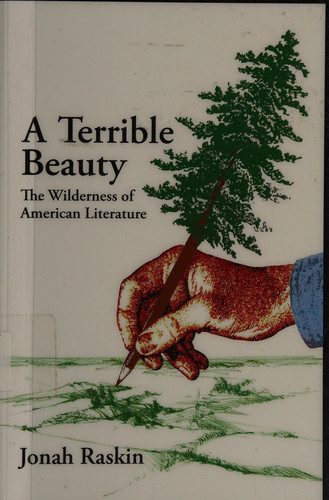
A terrible beauty: the wilderness of American literature

Raskin, Jonah
ABOUT THE BOOK Shortly before he published Walden; or Life in the Woods, Henry David Thoreau called ¿The library a wilderness of books.¿ He also noted that while Americans were ¿clearing the forest in our westward progress, we are accumulating a forest of books in our rear, as wild and unexplored as any of nature¿s primitive wildernesses.¿ In "A Terrible Beauty: the Wilderness of American Literature," Jonah Raskin takes a long close look at the forest of books that poets, novelists and essayists mapped and explored before and after Thoreau. The first work of cultural criticism to look back at writing in the United States from the perspective of the contemporary environmental crisis, Raskin offers insights for students, teachers and lovers of literature as well as for backpackers and hikers who have trekked across untrammeled forests, deserts and mountains. ABOUT THE AUTHOR Jonah Raskin, Phd, has taught American literature at Sonoma State University, the State University of New York at Stony Brook and as a Fulbright professor at the University of Antwerp and the University of Ghent in Belgium. The author of fifteen books, he earned his B.A. at Columbia College in New York, his M.A. at Columbia University and his Ph.D. at the University of Manchester, Manchester, England. He lives in northern California and has written for The San Francisco Chronicle, The L.A. Times, The Nation, The Redwood Coast Review and Catamaran.
Regent Press 2014 366 pages

Heritage and hellenism: the reinvention of Jewish tradition

Gruen, Erich S.
The interaction of Jew and Greek in antiquity intrigues the imagination. Both civilizations boasted great traditions, their roots stretching back to legendary ancestors and divine sanction. In the wake of Alexander the Great's triumphant successes, Greeks and Macedonians came as conquerors and settled as ruling classes in the lands of the eastern Mediterranean. Hellenic culture, the culture of the ascendant classes in many of the cities of the Near East, held widespread attraction and appeal. Jews were certainly not immune. In this thoroughly researched, lucidly written work, Erich Gruen draws on a wide variety of literary and historical texts of the period to explore a central question: How did the Jews accommodate themselves to the larger cultural world of the Mediterranean while at the same time reasserting the character of their own heritage within it? Erich Gruen's work highlights Jewish creativity, ingenuity, and inventiveness, as the Jews engaged actively with the traditions of Hellas, adapting genres and transforming legends to articulate their own legacy in modes congenial to a Hellenistic setting. Drawing on a diverse array of texts composed in Greek by Jews over a broad period of time, Gruen explores works by Jewish historians, epic poets, tragic dramatists, writers of romance and novels, exegetes, philosophers, apocalyptic visionaries, and composers of fanciful fables—not to mention pseudonymous forgers and fabricators. In these works, Jewish writers reinvented their own past, offering us the best insights into Jewish self-perception in that era.
University of California Press 2002-02-13 335 pages

Philippines

Cixous, Hélène
Philippines is Hélène Cixous's reverie or 'true dreaming' which intertwines Freud's uneasy views on telepathy, autobiographical memories conflating Algeria and Paris, childhood and adult life, shared with her brother 'Pete', and literary evocations from Proust and George du Maurier's forgotten novel Peter Ibbetson. Amid telepathic conversations, real or imagined, and life events uncannily answering one another from a distance, Cixous's dense evocative journey ceaselessly 'returns to its starting point' and, like the twin almonds in one shell evoked by the title, reveals intimate, secret bonds between scenes and beings, real and fictional. Its interpretive sharpness delivered with stylistic elegance and candour will make this study typical of Cixous's art, which plies between literature and criticism, appealing not only to scholars and critics interested in psychoanalysis, autobiography and the act of reading, but also to a broader readership captivated by the hallucinatory coincidences between life, dream and fiction, when 'Reality is the dream. The dream is the true reality'.
Polity 2011-02-07 82 pages

In spite of partition: Jews, Arabs, and the limits of separatist imagination

Hochberg, Gil Z.
Partition--the idea of separating Jews and Arabs along ethnic or national lines--is a legacy at least as old as the Zionist-Palestinian conflict. Challenging the widespread "separatist imagination" behind partition, Gil Hochberg demonstrates the ways in which works of contemporary Jewish and Arab literature reject simple notions of separatism and instead display complex configurations of identity that emphasize the presence of alterity within the self--the Jew within the Arab, and the Arab within the Jew. In Spite of Partition examines Hebrew, Arabic, and French works that are largely unknown to English readers to reveal how, far from being independent, the signifiers "Jew" and "Arab" are inseparable.In a series of original close readings, Hochberg analyzes fascinating examples of such inseparability. In the Palestinian writer Anton Shammas's Hebrew novel Arabesques, the Israeli and Palestinian protagonists are a "schizophrenic pair" who "have not yet decided who is the ventriloquist of whom." And in the Moroccan Jewish writer Albert Swissa's Hebrew novel Aqud, the Moroccan-Israeli main character's identity is uneasily located between the "Moroccan Muslim boy he could have been" and the "Jewish Israeli boy he has become." Other examples draw attention to the intricate linguistic proximity of Hebrew and Arabic, the historical link between the traumatic memories of the Jewish Holocaust and the Palestinian Nakbah, and the libidinal ties that bind Jews and Arabs despite, or even because of, their current animosity.
Princeton University Press 2007-08-19 192 pages

Vladimir's carrot

Peter, John
What is modern in modern drama? What defines it, unmistakably, as being of our time? This quality if the subject of John Peter's inquiry.For Peter, Beckett's Waiting for Godot makes such a radical break with dramatic tradition that it prompts the question: Is this play the single most important event in the theater since Aeschylus? Or is it the fulfillment of forces at work long before Beckett wrote it? Peter shows how Beckett's work represents a change in the very subject matter of drama, a fundamental revision of concepts of character, plot, and meaning, which in turn requires a new way of responding to drama. Where plays have traditionally engaged audiences in critical and moral dialogue, theater like Beckett's, according to Peter, is closed to questioning; it presents a vision of the world which can only be accepted or rejected. As such, it not only signals a new form of drama, but also posits a fundamentally changed audience.Peter views this change—essentially, a change of mind—in its wider context. The times and the thought that contribute to the modern imagination are represented here by novels, paintings, and music—works by Wagner, Kafka, Proust, Picasso, and Braque—as well as plays. Peter shows how the depiction of the world by these artists echoes—and is echoed by—the work of modern thinkers such as Schopenhauer, Nietzsche, and Freud.Vladimir's Carrot will provoke and stimulate readers who find themselves either lost or perfectly at home in "modern" culture.
Methuen 1988 372 pages

Haunted in the New World: Jewish American culture from Cahan to The Goldbergs

Weber, Donald
Discusses Jewish identity in America as reflected in the culture of immigrants and descendants of immigrants. Self-hatred or, at least, ambivalence about oneself in the face of native American values is one theme. Ch. 5 (pp. 98-125), "To Make 'a Jew': Projecting Antisemitism in Post-War America", analyzes two novels - Arthur Miller's "Focus" and Saul Bellow's "The Victim" - that explore the psychosocial dimensions of postwar antisemitism. They raise the question whether possibilities of Jewish-Gentile relations might lead to personal and social renovation. In "Focus", a crypto-fascist antisemite who has internalized racist stereotypes finally identifies symbolically as a Jew. In "The Victim", both Jew and Gentile partially overcome their mutual stereotyping. The main Jewish protagonist also overcomes some negative aspects of his self-image.
Indiana University Press 2005-06-08 250 pages

Upward mobility and the common good: toward a literary history of the welfare state

Robbins, Bruce
We think we know what upward mobility stories are about--virtuous striving justly rewarded, or unprincipled social climbing regrettably unpunished. Either way, these stories seem obviously concerned with the self-making of self-reliant individuals rather than with any collective interest. In Upward Mobility and the Common Good , Bruce Robbins completely overturns these assumptions to expose a hidden tradition of erotic social interdependence at the heart of the literary canon. Reinterpreting novels by figures such as Balzac, Stendhal, Charlotte Brontë, Dickens, Dreiser, Wells, Doctorow, and Ishiguro, along with a number of films, Robbins shows how deeply the material and erotic desires of upwardly mobile characters are intertwined with the aid they receive from some sort of benefactor or mentor. In his view, Hannibal Lecter of The Silence of the Lambs becomes a key figure of social mobility in our time. Robbins argues that passionate and ambiguous relationships (like that between Lecter and Clarice Starling) carry the upward mobility story far from anyone's simple self-interest, whether the protagonist's or the mentor's. Robbins concludes that upward mobility stories have paradoxically helped American and European society make the transition from an ethic of individual responsibility to one of collective accountability, a shift that made the welfare state possible, but that also helps account for society's fascination with cases of sexual abuse and harassment by figures of authority. -- "Modern Language Quarterly"
Princeton University Press 2007 304 pages

No room of their own: gender and nation in Israeli women's fiction

Feldman, Yael S.
Unlike the literary traditions of the United States, England, and France, the first century of Hebrew literature was lacking in women novelists; women tended to write poetry, while prose fiction was mainly the domain of male writers. Since the 1980s, however, there has been a virtual explosion of commercially successful Hebrew fiction by women that includes many traditionally male genres, such as the historical novel, fictional autobiography, and the mystery novel. No Room of Their Own is a comparative analysis of recent Israeli fiction by women and some of its Western models, from Virginia Woolf and Simone de Beauvoir to Marilyn French and Marie Cardinal. Feldman shows the richness and subtleties of Israeli women's fiction as she explores the themes of gender and nation, as well as the (non)representation of the "New Hebrew Woman" in five authors -- the "foremothers" of the contemporary boom in Israeli Women's fiction: Amalia Kahana-Carmon ( Up on Montifer, With Her on Her Way Home), Shulamith Hareven ( City of Many Days, Thirst, The Vocabulary of Peace), Netiva BenYehuda ( The Palmach Trilogy), Ruth Almog ( Women, The Story of a [Writer's] Block, Roots of Air), and Shulamit Lapid ( Gei Oni).
Columbia University Press 1999 337 pages

The men in my life

Gornick, Vivian
Gornick on V. S. Naipaul, James Baldwin, George Gissing, Randall Jarrell, H. G. Wells, Loren Eiseley, Allen Ginsberg, Hayden Carruth, Saul Bellow, and Philip Roth and the intimate relationship between emotional damage and great literature. Vivian Gornick, one of our finest critics, tackled the theme of love and marriage in her last collection of essays, The End of the Novel of Love , a National Book Critics Circle Award finalist. In this new collection, she turns her attention to another large theme in literature: the struggle for the semblance of inner freedom. Great literature, she believes, is not the record of the achievement, but of the effort. Gornick, who emerged as a major writer during the second-wave feminist movement, came to realize that “ideology alone could not purge one of the pathological self-doubt that seemed every woman's bitter birthright.” Or, as Anton Chekhov put it so memorably: “Others made me a slave, but I must squeeze the slave out of myself, drop by drop.” Perhaps surprisingly, Gornick found particular inspiration for this challenge in the work of male writers—talented, but locked in perpetual rage, self-doubt, or social exile. From these men—who had infinitely more permission to do and be than women had ever known—she learned what it really meant to wrestle with demons. In the essays collected here, she explores the work of V. S. Naipaul, James Baldwin, George Gissing, Randall Jarrell, H. G. Wells, Loren Eiseley, Allen Ginsberg, Hayden Carruth, Saul Bellow, and Philip Roth. Throughout the book, Gornick is at her best: interpreting the intimate interrelationship of emotional damage, social history, and great literature.
MIT Press 2008-08-22 194 pages

Another little piece of my heart: my life of rock and revolution in the '60s

Goldstein, Richard
"In 1966, at the ripe age of 22, Richard Goldstein approached The Village Voice with a novel idea. "I want to be a rock critic," he said. "What's that?" the editor replied. It was a logical question, since rock criticism didn't yet exist. In the weekly column he would produce for the Voice, Goldstein became the first person to write regularly in a major publication about the music that changed our lives. He believed deeply in the power of rock, and, long before it was acceptable, he championed the idea that this music was a serious art form. From his unique position in journalism, he saw the full arc of events that shaped culture and politics in the 1960s--and participated in them, too. He toured with Janis Joplin, spent a day at the Grateful Dead house in San Francisco, and dropped acid with Brian Wilson and the Beach Boys. He was present for Martin Luther King's "I Have a Dream" speech, the student uprising at Columbia, and the riots at the 1968 Democratic Convention. He was challenged to a boxing match by Norman Mailer, and took Susan Sontag to her first disco. Goldstein developed close relationships with several rock legends--Janis Joplin and Jim Morrison, to name two--and their early deaths came as a wrenching shock, fueling his disillusionment as he watched the music he loved rapidly evolve from a communal rite to a vast industry--and the sense of hope for radical social upheaval fade away. Another Little Piece of My Heart is the intimate memoir of the writer as a young man with profound ambition. It is also a sweeping personal account of a decade that no one else could provide--a deeply moving, unparalleled document of rock and revolution in America"--
Bloomsbury USA 2015-04-14 223 pages

Writing in America

John Fischer,Robert B. Silvers
"In the fall of 1959, Harper's Magazine published a special supplement on the state of writing and the American literary scene. The supplement was greeted with a broadside of commendation and a fusillade of cavil, and has since become recognized as the most useful brief survey of the contemporary state of the American writing arts and of their fellow travelers, the spoken word, the typescript word, the filmed and televised word, and the publishing memorandum. In this newly reissued volume in the Rutgers University Press Classics Imprint, Writing in America proves to be as stimulating as it was in 1960. Here, writers including Robert Brustein, Stanley Kunitz, and C.P. Snow examine the state of writing in American novels, films, and television candidly and critically. The result is a collection of essays that showcase a first-rate and highly entertaining piece of reporting on the American literary scene that resonate in 2017"--
Rutgers University Press 2018 153 pages

New stories for old: biblical patterns in the novel

Fisch, Harold
Harold Fisch explores the biblical influence on the style and the structure of landmark novels by Fielding, Defoe, Gearge Eliot, Kafka, Dostoevsky and others. These turn out, again and again, to be re-readings of biblical stories. This echoing is sometimes explicit as in Joseph Andrews , where Fielding offers us a comic revision of the career of the biblical Joseph. But it can be inexplicit and even unconscious as in Kafka's The Trial , which, without mentioning Job, reads (as Northop Frye has noted) like a midrashic commentary on that book. In a study remarkable for its range and subtlety, the author develops the notion of the novel as midrash but argues that while the great novelists were held in thrall by the biblical patterns and stories, they were also regularly compelled to throw off this thraldom. They could not manage without the Bible but at the same time "it would not do." Fisch discusses the adversial realation to the biblical text with reference to two archetypal narratives: the Job story and the Dinding of Isaac. Of particluar interest are the chapters devoted to the Israeli novelist S.Y. Agnon and A.B. Yehoshua.
Macmillan Press 1998 236 pages