67 results for "Physics"

The philosophy of biology: an episodic history

Grene, Marjorie
"Is life different from the non-living? If so, how? And how, in that case, does biology, as the study of living things, differ from other sciences? These questions lie at the heart of The Philosophy of Biology, and are traced through an exploration of episodes in the history of biology and philosophy. The book begins with Aristotle, then moves on to Descartes, comparing his position with that of Harvey. From the eighteenth century, the authors consider Buffon and Kant. From the nineteenth century, the authors examine the Cuvier-Geoffroy debate, pre-Darwinian geology and natural theology, Darwin, and the transition from Darwin to the revival of Mendelism. Two chapters on the twentieth century deal with the Modern Evolutionary Synthesis and such questions as the species problem, the reducibility or otherwise of biology to physics and chemistry, and the problem of biological explanation in terms of function and teleology. The final chapters reflect on the question of human nature and the implications of the philosophy of biology for the philosophy of science in general."--Jacket
Cambridge University Press 2004-08-02 416 pages

Science and Its History A Reassessment of the Historiography of Science

Joseph Agassi
Professor Joseph Agassi has published his Towards an Historiography of Science in 1963. It received many reviews by notable academics, including Maurice Finocchiaro, Charles Gillispie, Thomas S. Kuhn, Geroge Mora, Nicholas Rescher, and L. Pearce Williams. It is still in use in many courses in the philosophy and history of science. Here it appears in a revised and updated version with responses to these reviews and with many additional chapters, some already classic, others new. They are all paradigms of the author’s innovative way of writing fresh and engaging chapters in the history of the natural sciences.
Springer Netherlands 2010-11-22 514 pages

Rutherford and the nature of the atom

Andrade, E. N. da C.
Born in New Zealand in 1871, Rutherford came to Cambridge in 1895, where he did notable research on the electrical properties of gases. This lead to his appointment as Professor at McGill University in Montreal, where he carried out fundamental investigations on radioactivity, which he continued at the University of Manchester. Here he first put forward the nuclear structure of the atom with which his name is inseparably connected. At Cambridge, as head of the Cavendish Laboratory from 1919 to his death in 1937, he conducted and inspired work on the properties and disruption of the atomic nucleus which ushered in a new era in physics.
Heinemann 1965 218 pages

Miscellaneous Papers

Heinrich Hertz
This book has been considered by academicians and scholars of great significance and value to literature. This forms a part of the knowledge base for future generations. So that the book is never forgotten we have represented this book in a print format as the same form as it was originally first published. Hence any marks or annotations seen are left intentionally to preserve its true nature.
Alpha Editions 2019-09-10 370 pages

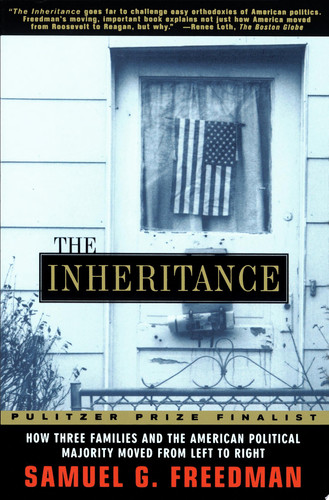
The inheritance: how three families and America moved from Roosevelt to Reagan and beyond

Freedman, Samuel G.
Orphan in the new world (Silvio Burigo) -- Liverpool on the Hudson (Lizzie Sanford Garrett) -- The dreamer and his son (Joseph Obrycki) -- The sewing room (Lizzie Garrett) -- The physics of cynicism (Joseph Obrycki) -- Worth two (Silvio Burigo) -- Voices from downstairs (Richie Garrett) -- Recessive genes (Silvio Burigo/Lorraine and Frank Trotta) -- Address as destiny (Vilma and Jack Maeby) -- Fence and basement (Silvio Burigo/Lorraine and Frank Trotta) -- Senator Clearwater (Richie Garrett) -- Uncle Paulie's Porch (Frank Trotta Jr.) -- The State Street Gang (Leslie Maeby) -- Poor snob (Tim Carey) -- Enchantment and its opposite (Frank Trotta Jr.) -- Incumbent protection (Leslie Maeby) -- Red suspenders (Tim Carey).
Simon & Schuster 1996 464 pages

Natural Philosophy Of Cause And Chance

Late Nobel Laureate Max Born,Max Born
This work has been selected by scholars as being culturally important, and is part of the knowledge base of civilization as we know it. This work was reproduced from the original artifact, and remains as true to the original work as possible. Therefore, you will see the original copyright references, library stamps (as most of these works have been housed in our most important libraries around the world), and other notations in the work. This work is in the public domain in the United States of America, and possibly other nations. Within the United States, you may freely copy and distribute this work, as no entity (individual or corporate) has a copyright on the body of the work. As a reproduction of a historical artifact, this work may contain missing or blurred pages, poor pictures, errant marks, etc. Scholars believe, and we concur, that this work is important enough to be preserved, reproduced, and made generally available to the public. We appreciate your support of the preservation process, and thank you for being an important part of keeping this knowledge alive and relevant.
Creative Media Partners, LLC 2017-08-24 232 pages

The Conquest of Space

David Lasser
David Lasser stands as one of the least-known but extraordinary pioneers of spaceflight. In 1930 he founded the American Interplanetary Society (AIAA) -- the same year he wrote this book -- the first book ever written in the English language to address the notion of spaceflight as a serious possibility. The book has not been in print since 1931 and yet it still stands up to scrutiny. The lucid style with which Lasser explains the basic concepts of rocketry make it a delight for anyone to read.
Collector's Guide Publishing, Incorporated 2002 191 pages

Learning about particles: 50 privileged years

Steinberger, J.
Embedded in an autobiographic framework, this book retraces vividly and in some depth the golden years of particle physics as witnessed by one of the scientists who made seminal contributions to the understanding of what is now known as the Standard Model of particle physics well beyond a survey of interest to historians of sciences and researchers in the field. This book is a must for all students and young researchers who have learned about the theoretical and experimental facts that make up the standard model through modern textbooks only. It will provide the interested reader with a first hand account and deeper understanding of the multilayered and sinuous development that finally led to the present architecture of this theory. TOC:Origins and Education.- Institute for Advanced Study, 1948-1949, Theory.- Berkeley, 1949-1950, Accelerator.- Properties of Pi Mesons.- Strange Particles and Bubble Chambers.- Neutrinos I.- CP Violation.- Neutrinos II.- Experiments With the LEP e+e- Collider.-
Springer 2004 181 pages

An anxious peace: a Cold War memoir

Mark, Hans
By any measure, Hans Mark was a warrior of the Cold War. Born in Mannheim, Germany, in 1929, he spent his early childhood in Vienna before escaping the Nazi Anschluss in 1938 and eventually emigrating to the United States, settling in New York. He graduated from high school in 1947, went west to attend the University of California, Berkeley, and later earned a PhD in physics from MIT. His work in nuclear engineering soon set him on a path that would be shaped by aeronautics, space exploration, and national defense. It was through advanced technology that Mark believed the United States could win the Cold War. In An Anxious Peace , Mark recounts in detail his life as a twentieth-century “rocket man.” Here is the inside story of one who—in a career spanning more than six decades—was on the technological front line, from long-range bombers to the space shuttle. Along the way, Mark reveals many never-before-told stories from life at NASA and more. Readers will revel in learning the background behind the decision to place a plaque on Pioneer 10 , a space probe that the NASA Ames Research Center designed to fly past the asteroid belt, Jupiter, and Saturn to collect data and images. Mark tells how he, Carl Sagan, and NASA insider John Naugle kept secret the addition of the now iconic 6x9-inch aluminum “message from humanity” until the probe had been launched. To this day Mark is pushing for a manned mission to Mars. One thing is sure: Hans Mark has left a major impact on academic and scientific communities that will be felt for decades to come.
Texas A&M University Press 2019-04-23 676 pages

The Law of Causality and Its Limits

Philipp Frank
The Law of Causality and its Limits was the principal philosophical work of the physicist turned philosopher, Philipp Frank. Born in Vienna on March 20, 1884, Frank died in Cambridge, Massachusetts on July 21, 1966. He received his doctorate in 1907 at the University of Vienna in theoretical physics, having studied under Ludwig Boltzmann; his sub sequent research in physics and mathematics was represented by more than 60 scientific papers. Moreover his great success as teacher and expositor was recognized throughout the scientific world with publication of his collaborative Die Differentialgleichungen der Mechanik und Physik, with Richard von Mises, in 1925-27. Frank was responsible for the second volume, on physics, and especially noted for his authoritative article on classical Hamiltonian mechanics and optics. Among his earliest papers were those, beginning in 1908, devoted to special relativity, which together with general relativity and physical cosmology occupied him throughout his life. Already in 1907, Frank published his seminal paper 'Kausalgesetz und Erfahrung' ('Experience and the Law of Causality'), much later collected with a splendid selection of his essays on philosophy of science, in English (1941c and 1949g, in our Bibliography). Joining the first 'Vienna Circle' in the first decade of the 20th century, with Hans Hahn, mathematician, and Otto Neurath, sociologist and economist, and deeply influenced by studies of Ernst Mach's critical conceptual histories of science and by the striking challenge of Poincare and Duhem, Frank continued his epistemological investigations.
Springer Netherlands 2011-09-29 302 pages

Resonance Radiation and Excited Atoms

Allan C G Mitchell,Mark W Zemansky
This groundbreaking work on atomic physics offers a comprehensive exploration of the principles of resonance, radiation, and excited atoms. Written by two leading experts in the field, this book is an essential resource for anyone seeking to understand the fundamental laws of the universe. This work has been selected by scholars as being culturally important, and is part of the knowledge base of civilization as we know it. This work is in the "public domain in the United States of America, and possibly other nations. Within the United States, you may freely copy and distribute this work, as no entity (individual or corporate) has a copyright on the body of the work. Scholars believe, and we concur, that this work is important enough to be preserved, reproduced, and made generally available to the public. We appreciate your support of the preservation process, and thank you for being an important part of keeping this knowledge alive and relevant.
LEGARE STREET Press 2023-07-18 356 pages

From the Atomic Bomb to the Landau Institute Autobiography. Top Non-Secret

Isaak M. Khalatnikov
The book is an expanded autobiography of the famous theoretical physicist Isaak Khalatnikov. He worked together with L.D. Landau at the Institute for Physical Problems lead by P.L. Kapitza. He is the co-author of L.D. Landau in a number of important works. They worked together in the frame of the so-called Nuclear Bomb Project. After the death of L.D. Landau, I.M. Khalatnikov initiated the establishment of the Institute for Theoretical Physics, named in honour of L.D. Landau, within the USSR Academy of Sciences. He headed this institute from the beginning as its Director. The institute inherited almost all traditions of the Landau scientific school and played a prominent role in the development of theoretical physics. So, this is a story about how the institute was created, how it worked, and about the life of the physicists in the "golden age" of the Soviet science. A separate chapter is devoted to today ́s life of the institute and the young generation of physicists working now in science. It is an historically interesting book on the development of Soviet and Russian science and presents the background of the Soviet nuclear bomb program in the cold war age. In war times, Khalatnikov was a chief of the military staff of nuclear research. He writes about the internal conditions of Soviet society, the way of operating of the Soviet authorities and ways for scientists to interact with them. It gives many interesting insights into the development of superconductivity and superfluidity. The book is written by the most experienced and best informed person among the few living Russian scientists in the environment of Landau. Many stories of the book were never published before and considered as "top secret".
Springer Berlin Heidelberg 2014-06-11 216 pages