463 results for "Science"

Language City The Fight to Preserve Endangered Mother Tongues in New York

Ross Perlin
From the co-director of the Endangered Language Alliance, a captivating portrait of contemporary New York City through six speakers of little-known and overlooked languages, diving into the incredible history of the most linguistically diverse place ever to have existed on the planet Half of all 7,000-plus human languages may disappear over the next century and--because many have never been recorded--when they're gone, it will be forever. Ross Perlin, a linguist and co-director of the Manhattan-based non-profit Endangered Language Alliance, is racing against time to map little-known languages across the most linguistically diverse city in history: contemporary New York. In Language City , Perlin recounts the unique history of immigration that shaped the city, and follows six remarkable yet ordinary speakers of endangered languages deep into their communities to learn how they are maintaining and reviving their languages against overwhelming odds. Perlin also dives deep into their languages, taking us on a fascinating tour of unusual grammars, rare sounds, and powerful cultural histories from all around the world. Seke is spoken by 700 people from five ancestral villages in Nepal, a hundred of whom have lived in a single Brooklyn apartment building. N'ko is a radical new West African writing system now going global in Harlem and the Bronx. After centuries of colonization and displacement, Lenape, the city's original Indigenous language and the source of the name Manhattan ("the place where we get bows"), has just one fluent native speaker, bolstered by a small band of revivalists. Also profiled in the book are speakers of the Indigenous Mexican language Nahuatl, the Central Asian minority language Wakhi, and the former lingua franca of the Lower East Side, Yiddish. A century after the anti-immigration Johnson-Reed Act closed America's doors for decades and on the 400th anniversary of New York's colonial founding, Perlin raises the alarm about growing political threats and the onslaught of "killer languages" like English and Spanish. Both remarkable social history and testament to the importance of linguistic diversity, Language City is a joyful and illuminating exploration of a city and the world that made it.
Grove/Atlantic, Incorporated 2025-02-11 432 pages

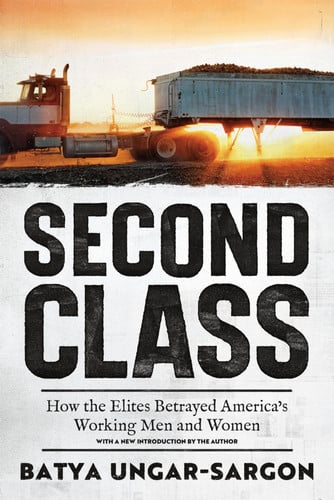
Second class: how the elite betrayed America's working men and women

Ungar-Sargon, Batya
A personal, journalistic ethnography of the modern American working class, based on the travels and interactions of the author through the American heartland. " Second Class is the most important book you will read all year. A political realignment is coming, and it's my hope that the end result will work in favor of our all-too-neglected American working class. When that realignment comes, Batya and her book will help lead the way." --Greg Lukianoff, CEO of the Foundation for Individual Rights in Education, and co-author of The Coddling of the American Mind Who is the American working class? Do they still have a fair shot at the American Dream? What do they think about their chances to secure the hallmarks of a middle-class life? While writing this book, Batya Ungar-Sargon visited states across the nation to speak with members of the American working class who are fighting tooth and nail to survive. In Second Class , working-class Americans of all races, political orientations, and occupations share their stories--cleaning ladies, health care aides, cops, truck drivers, fast food workers, electricians, and more. In their own words, these working-class Americans explain the struggles and triumphs of their increasingly precarious lives--as well as what policies they think would improve them. Second Class combines deep reporting with a look at the data and expert opinions on America's emergent class divide, in which the most basic elements of a secure and stable life are increasingly out of reach for those without a college education. America has broken its contract with its laboring class. So, how do we get back to the American Dream? How do we once again become the land of opportunity, the promised land, where hard work and commitment to family are enough to protect you from poverty? It's not that hard actually. All it would take, as this book illustrates, is for those in power to once again respect the dignity of work--and the American worker.
Encounter Books 2025 248 pages

Decolonising my body: a radical exploration of rituals and beauty

Hirsch, Afua
A 2023 POLITICAL BOOK OF THE YEAR (WATERSTONES) 'GROUND-BREAKING' Bernardine Evaristo ' UNIVERSAL AND TIMELY ' Elif Shafak ' IMPORTANT' Sathnam Sanghera ' A GENEROUS OFFERING ' Nana Darkoa Sekiyamah ' QUIETLY RADICAL' Evening Standard ' INTIMATE ' Guardian 'I LEARNT A LOT' Gillian Anderson What can ancestral practices teach us about how to live fuller lives today? Upon turning forty, Afua Hirsch had an encounter that forever altered her preconceived notions of ancestry and body image, making her question everything from body-modification rituals such as tattoos and piercings to the foundations of sexuality, as well as attitudes towards puberty, ageing and death. This book charts her year-long journey of radical unlearning. Bringing together global scholarship, on-the-ground reportage, personal anecdotes and interviews with beauty experts, practitioners and service users, she reassesses notions of body image beyond those of the colonial, patriarchal gaze. Decolonising My Body is a powerful excavation of the Eurocentric beauty standards that have long shaped how, in particular, those from the Global Majority are perceived and view themselves. Taking us from puberty to end-of-life, Hirsch shows us that the ways in which we adorn and present ourselves have spiritual implications and shape the possibilities we see for ourselves in the world. These insights and discoveries will empower you to reconnect with your own ancestry, better understand the link between beauty, history and (respectability) politics, and liberate yourself from mainstream standards and systems that aren't serving you. *Co-host of the LOYALTY podcast with Peter Frankopan*
Vintage 2025 240 pages

Last best hope: America in crisis and renewal

Packer, George
2020: A ruthless pandemic, an inept and malign government response, polarizing protests, and an election marred by conspiracy theories left many citizens in despair about their country and its democratic experiment. Packer explores four narratives that now dominate American life: Free America, which imagines a nation of separate individuals and serves the interests of corporations and the wealthy; Smart America, the world view of Silicon Valley and the professional elite; Real America, the white Christian nationalism of the heartland; and Just America, which sees citizens as members of identity groups that inflict or suffer oppression. He shows that none of these narratives can sustain a democracy: we must look for a common American identity and find it in the passion for equality that Americans of diverse persuasions have held for centuries. -- adapted from jacket
Farrar, Straus and Giroux 2021-06-15 226 pages

The Mass Psychology of Fascism

Reich, Wilhelm
New for 2026 — Authorized Fourth Edition. This newly typeset edition restores the original Theodore P. Wolfe 1946 translation, overseen and approved by Reich and out of print for decades, together with new supporting material: a foreword by Professor Håvard Friis Nilsen, a bibliographic introduction by Dr. Philip W. Bennett, and Reich's 1933 Foreword and 1934 Afterword appearing in English for the first time. Wilhelm Reich, M.D. (1897–1957), first published this landmark study of the psychological roots of fascism in Nazi Germany in 1933, at the beginning of Hitler’s regime. It was banned almost immediately. Drawing on his work as a psychoanalyst and sexologist, Reich examines why the fascist message appealed to broad masses of voters in a time of economic uncertainty. At the time of publication, this was the first analysis of Nazism from one of Freud’s pupils, and for many years, it remained the only one. In a new foreword, Professor Håvard Friis Nilsen situates the book in its historical context.
Orgonon Press 2026-06-01 383 pages

Critical models: interventions and catchwords

Adorno, Theodor W.
"Critical Models combines into a single volume two of Adorno's most important postwar works — Interventions: Nine Critical Models (1963) and Catchwords: Critical Models II (1969). Written after his return to Germany in 1949, the articles, essays, and radio talks included in this volume speak to the pressing political, cultural, and philosophical concerns of the postwar era. The pieces in Critical Models reflect the intellectually provocative as well as the practical Adorno as he addresses such issues as the dangers of ideological conformity, the fragility of democracy, educational reform, the influence of television and radio, and the aftermath of fascism. This new edition includes an introduction by Lydia Goehr, a renowned scholar in philosophy, aesthetic theory, and musicology. Goehr illuminates Adorno's ideas as well as the intellectual, historical, and critical contexts that shaped his postwar thinking"
Columbia University Press 2005 410 pages

Armed Madhouse

Palast, Greg
In his most provocative and caustically funny book yet, Greg Palast, author of the national bestseller The Best Democracy Money Can Buy, once again gives us the straight scoop on the stories that Big Media won?t report. Digging up reams of documents marked ?secret? and ?confidential,? Palast provides the latest lowdown on Bush?s secret plans to seize Iraq?s oil, the fix planned for the 2008 election, who drowned New Orleans, and the horror and the humor of the War on Terror. With diligent detective work, moral outrage, and a keen sense of the absurd, Palast takes on the ?armed and dangerous clowns that rule us? as only he can.
Dutton 2006 368 pages

Cries Unheard

Gitta Sereny
In 1968, at the age of eleven, Mary Bell was tried, and convicted, of manslaughter after the death of two small boys in Newcastle upon Tyne, England. Her friend, and neighbour, thirteen-year-old, Norma Bell, no relation, was acquitted. Gitta Sereny attended the trial, and spent the next two years researching, and writing, what has become a classic study, The Case of Mary Bell . Over the years, however, she came to realize that if we are ever to understand the pressures which bring a child to commit serious crimes, only they, when adult, can tell us.Twenty-seven years after her conviction, and her sentence of detention for life, after her mother's death, Mary Bell agreed to talk about her harrowing childhood, her two terrible acts nine weeks apart, her public trial, and her twelve years of detention - seven of them, beginning when she was sixteen, in a maximum security women's prison.Nothing she said in the five months of intensive talks with Gitta Sereny was intended, or can be taken, as an excuse for her she herself rejects all mitigation. But the story of her life forces the reader to ponder society's responsibility for children at breaking point. It challenges our willingness to commit ourselves to the prevention of violent acts such as Mary committed. It is a clarion call to review our system of justice, and punishment, as it applies to the most needy amongst us - our children at risk.Cries Unheard is a brilliant tour de force, meticulously piecing together the terribly damaged life of Mary Bell, who only as an adult, and loving parent herself, grew to realize the moral enormity of her crimes. But it is not an isolated tragedy. There are thousands of children in prison across Europe, and in America. And in Britain, where punitive justice for children is most formalized, recent cases such as the murder of James Bulger show the urgency for our attention, our compassion, and our action.
Pan Macmillan 1998

Mapping the moral domain

Gilligan, Carol, ed
In the fourteen articles collected in this volume, Carol Gilligan and her colleagues expand the theoretical base of In a Different Voice and apply their research methods to a variety of life situations. The contrasting voices of justice and care clarify different ways in which women and men speak about relationships and lend different meanings to connection, dependence, autonomy, responsibility loyalty, peer pressure, and violence. By examining the moral dilemmas and self-descriptions of children, high school students, urban youth, medical students, mothers, lawyers, and others, the authors chart a new terrain: a mapping of the moral domain that includes the voices of women. In this new terrain the authors trace far-reaching implications of the inclusion of women’s voices for developmental psychology, for education, for women, and for men.
Center for the Study of Gender, Education and Human Development, Harvard University Graduate School of Education 1988 324 pages

The postmodern turn: new perspectives on social theory

Steven Seidman
Counter The Postmodern Turn gathers together in one volume some of the most important statements of the postmodern approach to human studies. In addressing postmodern social theory and emphasising the social role of knowledge, this book abandons the disciplinary boundaries separating the sciences and the humanities. The first collection of its kind, it provides the classic essays of authors such as Lyotard, Haraway, Foucault and Rorty. Contributors include well-known theorists in the fields of sociology, anthropology, women's and gay studies, philosophy, and history.
Cambridge University Press 1994-11-25 312 pages

As a Jew: reclaiming our story from those who blame, shame, and try to erase us

Hurwitz, Sarah
"At thirty-six, Sarah Hurwitz was a typical lapsed Jew. On a whim, she attended an introduction to Judaism class and was astonished by what she discovered: thousands of years of wisdom from her ancestors about what it means to be human. That class sparked a journey of discovery that transformed her life. Years later, as Hurwitz wrestled with what it means to be Jewish at a time of rising antisemitism, she wondered: Where had the Judaism she discovered as an adult been all her life? Why hadn't she seen the beauty and depth of her tradition in those dull synagogue services and Hebrew school classes she'd endured as a kid? And why had her Jewish identity consisted of a series of caveats and apologies: I'm Jewish, but not that Jewish . . . I'm just a cultural Jew . . . I'm just like everyone else but with a fun ethnic twist-a dash of neurosis, a touch of gallows humor-a little different, but not in a way that would make anyone uncomfortable. Seeking answers, she went back through time to discover how hateful myths about Jewish power, depravity, and conspiracy have worn a neural groove deep into the world's psyche, shaping not just how others think about Jews, but how Jews think about themselves. She soon realized that the Jewish identity she'd thought was freely chosen was actually the result of thousands of years of antisemitism and two centuries of Jews erasing parts of themselves and their tradition in the hope of being accepted and safe. In As a Jew, Hurwitz documents her quest to take back her Jewish identity, how she stripped away the layers of antisemitic lies that made her recoil from her own birthright and unearthed the treasures of Jewish tradition. With antisemitism raging worldwide, Hurwitz's defiant account of reclaiming the Jewish story and learning to live as a Jew, without apology, has never been timelier or more necessary"-- Provided by publisher.
HarperOne, an imprint of HarperCollins Publishers 2025 308 pages

The Idealist Jeffrey Sachs and the Quest to End Poverty

Nina Munk
A powerful portrayal of Jeffrey Sachs's ambitious quest to end extreme global poverty, now a Signal paperback. "The poor you will always have with you," according to Matthew 26:11. But Jeffrey Sachs, economics superstar, special advisor to the Secretary General of the UN and the author of The End of Poverty , vehemently disagrees. In his view, poverty -- especially the extreme deprivation of sub-Saharan Africa -- can easily be eradicated. The vast sums spent in foreign aid over the decades has not come close to alleviating the dire subsistence problems of Africans. Sachs believed he knew the reason: the developed world simply hadn't spent enough. In 2006, Sachs, backed by tens of millions of donor dollars, launched the five-year Millennium Villages Project. Sachs would test his theories in villages in different African countries, then, with each success, scale up until until the program was continent-wide. His first village "make-over" was a small community in Sauri, Kenya, and the immediate effect was encouraging. With that first inkling of success achieved, Sachs rolled out a dozen model Millennium villages in ten countries. For the past six years, Nina Munk has reported deeply on the Project, following Sachs on official trips and listening in on conversations with heads of states, rival organisations and potential donors. And she has immersed herself in the lives of people in two of the remote villages: Ruhiira, in southwest Uganda, and Dertu, in the arid borderland between Kenya and Somalia. Accepting hospitality from these camel herders and smallhold farmers, and sharing in their struggles, Munk came to understand the on-the-ground issues challenging Sachs' one-size-fits-all approach to global poverty. The Idealist is the profound and moving story of what happened when the abstract theories of a brilliant, driven man met messy human reality.
McClelland & Stewart 2014-10-07 288 pages

Tokyo Noir In and Out of Japan's Underworld

Jake Adelstein
It's 2008, and it's been a while since Jake Adelstein was the only gaijin crime reporter for the Yomiuri Shimbun . The global economy is in shambles, Jake is off the police beat but still chain-smoking clove cigarettes, and Tadamasa Goto, the most powerful boss in the Japanese organised-crime world, has been banished from the yakuza, giving Adelstein one less enemy to worry about - for the time being. But as he puts his life back together, he discovers that he may be no match for his greatest enemy - himself. And Adelstein has a different gig these days- due-diligence work, or using his investigative skills to dig up information on entities whose bosses would prefer that some things stay hidden. The underworld isn't what it used to be. Underneath layers of paperwork, corporations are thinly veiled fronts for the yakuza. Pachinko parlours are a hidden battleground between disenfranchised Japanese Koreans and North Korean extortion plots. TEPCO, the electric power corporation keeping the lights on for all of Tokyo, scrambles to hide its willful oversights that ultimately led to the 2011 Fukushima meltdown. And the Japanese government shows levels of corruption that make the yakuza look like philanthropists in comparison. All this is punctuated by personal tragedies no one could have seen coming. In this ambitious and riveting work, Jake Adelstein explores what it's like when you're in too deep to distinguish the story you chase from the life you live. 'Journalist Adelstein follows up The Last Yakuza with another illuminating blend of memoir and reportage ... As always, the author's ability to boil down Japan's complex sociopolitical dynamics in sharp, often-humorous prose impresses ... For true crime fans, this is a treat.' - Publishers Weekly Praise for The Last Yakuza - 'Journalist Adelstein parlays decades of reporting on Japanese organised crime into a propulsive history of the yakuza. Drawing on interviews with both his yakuza and Japanese law enforcement contacts, he examines how yakuza groups obtained power ... He's especially good at tracing the yakuza's political influence in Japan, explaining how they bribed and blackmailed legislators into opposing bills that would have curbed their influence. Painstakingly reported and paced like a thriller, this is a must read for anyone interested in organised crime.' - Publishers Weekly Praise for Tokyo Vice - ' Tokyo Vice is about Japanese subculture. Adelstein instructs us in the vagaries of Japanese journalism and provides a gamy, colourful tour of the morally flexible areas of Japan, particularly in Tokyo. He also shows how Japanese police work and interact with journalists. Adelstein shares juicy, salty, and occasionally funny anecdotes, but many are frightening ... Adelstein doesn't lack for self-confidence ... but beneath the bravado are a big heart and a relentless drive for justice.' -Carlo Wolff, The Boston Globe
Scribe Publications 2024-05-14 320 pages