533 results for "World History"

Return from Siberia

John Shallman
** Wall Street Journal , Publishers Weekly , and USA Today Bestseller!** In the lead-up to the Bolshevik Revolution, one young revolutionary is condemned to exile in Siberia; a hundred years later, his ancestors discover his story and learn just how much history has repeated itself. In the midst of running a long-shot political campaign, Democratic political consultant John Simon discovers a 100-year-old manuscript written by his grandfather Joseph—a brilliant young revolutionary whose exile to Siberia by the last czar of Russia is just the beginning of an extraordinary tale of survival, romance, and revolution. Return From Siberia chronicles not only the Simon family's relationship to each other and the past, but also the remarkable story of a young man who sacrificed everything for his political ideals. As Joseph's manuscript is translated, chapter-by-chapter, the Simon family is pulled deep into their ancestor’s story— in particular, the bitter rivalry between two brothers, whose competing visions of the American Dream are played out on the campaign trail and in their lives. Return from Siberia is a timely appraisal of modern politics and society juxtaposed with an inside look into the machinations of a young political mind 100 years ago. The true story documents an extraordinary time of political upheaval in Russia and Europe just prior to World War I while also drawing parallels to current day American politics and the current philosophical and ideological debates about immigration, Democratic Socialism, and Capitalism. Beyond the deep social, political, and philosophical themes, there is romance, adventure, betrayal, suspense, and the struggles of families today and in yesteryear. Return from Siberia illustrates how one modern family's connection to the past helps them resolve their future.
Skyhorse 2020-08-18 256 pages

Survivor Café The Legacy of Trauma and the Labyrinth of Memory

Elizabeth Rosner
Named a Best Book of the Year by The San Francisco Chronicle "Survivor Café . . . feels like the book Rosner was born to write. Each page is imbued with urgency, with sincerity, with heartache, with heart.... Her words, alongside the words of other survivors of atrocity and their descendants across the globe, can help us build a more humane world." — San Francisco Chronicle As firsthand survivors of many of the twentieth century's most monumental events—the Holocaust, Hiroshima, the Killing Fields—begin to pass away, Survivor Café addresses urgent questions: How do we carry those stories forward? How do we collectively ensure that the horrors of the past are not forgotten? Elizabeth Rosner organizes her book around three trips with her father to Buchenwald concentration camp—in 1983, in 1995, and in 2015—each journey an experience in which personal history confronts both commemoration and memorialization. She explores the echoes of similar legacies among descendants of African American slaves, descendants of Cambodian survivors of the Killing Fields, descendants of survivors of the bombing of Hiroshima and Nagasaki, and the effects of 9/11 on the general population. Examining current brain research, Rosner depicts the efforts to understand the intergenerational inheritance of trauma, as well as the intricacies of remembrance in the aftermath of atrocity. Survivor Café becomes a lens for numerous constructs of memory—from museums and commemorative sites to national reconciliation projects to small–group cross–cultural encounters. Beyond preserving the firsthand testimonies of participants and witnesses, individuals and societies must continually take responsibility for learning the painful lessons of the past in order to offer hope for the future. Survivor Café offers a clear–eyed sense of the enormity of our twenty–first–century human inheritance—not only among direct descendants of the Holocaust but also in the shape of our collective responsibility to learn from tragedy, and to keep the ever–changing conversations alive between the past and the present.
Catapult 2018-09-04 288 pages

The Lost A Search for Six of Six Million

Daniel Mendelsohn
A New York Times Notable Book * Winner of the National Jewish Book Award * Winner of the National Book Critics Circle Award * A Los Angeles Times Book Prize Finalist "A gripping detective story, a stirring epic, a tale of ghosts and dark marvels, a thrilling display of scholarship, a meditation on the unfathomable mystery of good and evil, a testimony to the enduring power of the ancient archetypes that haunt one Jewish family and the greater human family, The Lost is as complex and rich with meaning and story as the past it seeks to illuminate. A beautiful book, beautifully written."--Michael Chabon In this rich and riveting narrative, a writer's search for the truth behind his family's tragic past in World War II becomes a remarkably original epic--part memoir, part reportage, part mystery, and part scholarly detective work--that brilliantly explores the nature of time and memory, family and history. The Lost begins as the story of a boy who grew up in a family haunted by the disappearance of six relatives during the Holocaust--an unmentionable subject that gripped his imagination from earliest childhood. Decades later, spurred by the discovery of a cache of desperate letters written to his grandfather in 1939 and tantalized by fragmentary tales of a terrible betrayal, Daniel Mendelsohn sets out to find the remaining eyewitnesses to his relatives' fates. That quest eventually takes him to a dozen countries on four continents and forces him to confront the wrenching discrepancies between the histories we live and the stories we tell. And it leads him, finally, back to the small Ukrainian town where his family's story began, and where the solution to a decades-old mystery awaits him. Deftly moving between past and present, interweaving a world-wandering odyssey with childhood memories of a now-lost generation of immigrant Jews and provocative ruminations on biblical texts and Jewish history, The Lost transforms the story of one family into a profound, morally searching meditation on our fragile hold on the past. Deeply personal, grippingly suspenseful, and beautifully written, this literary tour de force illuminates all that is lost, and found, in the passage of time.
HarperCollins Publishers 2022-08-02 688 pages

Exorbitant privilege: the rise and fall of the dollar

Eichengreen, Barry J.
Since the Second World War, the US dollar has been the world's sole international reserve currency, giving it, in the words of one critic, 'exorbitant privilege'. But in the wake of the worldwide financial crisis, will other currencies overtake it? And what impact would that have? Eichengreen explains the history and assesses what may come.
Oxford University Press 2011-02-24 215 pages

Great Society A New History

Amity Shlaes
The New York Times bestselling author of The Forgotten Man and Coolidge offers a stunning revision of our last great period of idealism, the 1960s, with burning relevance for our contemporary challenges. "Great Society is accurate history that reads like a novel, covering the high hopes and catastrophic missteps of our well-meaning leaders." --Alan Greenspan Today, a battle rages in our country. Many Americans are attracted to socialism and economic redistribution while opponents of those ideas argue for purer capitalism. In the 1960s, Americans sought the same goals many seek now: an end to poverty, higher standards of living for the middle class, a better environment and more access to health care and education. Then, too, we debated socialism and capitalism, public sector reform versus private sector advancement. Time and again, whether under John F. Kennedy, Lyndon Johnson, or Richard Nixon, the country chose the public sector. Yet the targets of our idealism proved elusive. What's more, Johnson's and Nixon's programs shackled millions of families in permanent government dependence. Ironically, Shlaes argues, the costs of entitlement commitments made a half century ago preclude the very reforms that Americans will need in coming decades. In Great Society, Shlaes offers a powerful companion to her legendary history of the 1930s, The Forgotten Man, and shows that in fact there was scant difference between two presidents we consider opposites: Johnson and Nixon. Just as technocratic military planning by "the Best and the Brightest" made failure in Vietnam inevitable, so planning by a team of the domestic best and brightest guaranteed fiasco at home. At once history and biography, Great Society sketches moving portraits of the characters in this transformative period, from U.S. Presidents to the visionary UAW leader Walter Reuther, the founders of Intel, and Federal Reserve chairmen William McChesney Martin and Arthur Burns. Great Society casts new light on other figures too, from Ronald Reagan, then governor of California, to the socialist Michael Harrington and the protest movement leader Tom Hayden. Drawing on her classic economic expertise and deep historical knowledge, Shlaes upends the traditional narrative of the era, providing a damning indictment of the consequences of thoughtless idealism with striking relevance for today. Great Society captures a dramatic contest with lessons both dark and bright for our own time.
HarperCollins Publishers 2020-11-24 528 pages

The forger's spell: a true story of Vermeer, Nazis, and the greatest art hoax of the twentieth century

Dolnick, Edward
As riveting as a World War II thriller, The Forger's Spell is the true story of Johannes Vermeer and the small-time Dutch painter, Han van Meegeren, who dared to impersonate Vermeer centuries later. The con man's mark was Hermann Goering, one of the most reviled leaders of Nazi Germany and a fanatic collector of art.
Harper 2008 349 pages

The Destruction of the European Jews 1961 First Edition Facsimile

Raul Hilberg
2019 Reprint of 1961 Edition. Full facsimile of the original edition, not reproduced with Optical Recognition software. Reprint of the First Edition published in 1961. The Destruction of the European Jews is widely considered the landmark study of the Holocaust. First published in 1961, Raul Hilberg's comprehensive account of how Germany annihilated the Jewish community of Europe spurred discussion, galvanized further research, and shaped the entire field of Holocaust studies. Spanning the twelve-year period of anti-Jewish actions from 1933 to 1945, Hilberg's study encompasses Germany and all the territories under German rule or influence. Its principal focus is on the large number of perpetrators―civil servants, military personnel, Nazi party functionaries, SS men, and representatives of private enterprises―in the machinery of death. Contents: Dismissals -- Aryanizations -- Property taxes -- Blocked money -- Forced labor and wage regulations -- Income taxes -- Starvation measures -- The reich-protektorat area -- Ghetto formation -- Confiscations -- Labor exploitation -- Food controls -- preparations -- The first sweep -- The killing of the prisoners of war -- The intermediary stage -- The second sweep -- The reich-protektorat area -- Poland -- The semicircular arc -- Origins of the killing centers -- Organization, personnel, and maintenance -- Labor utilization -- Medical experiments -- Confiscations -- Killing operations -- Liquidation of the killing centers and the end of the destruction process.
Martino Fine Books 2019-06-20 804 pages

Woman on fire

Barr, Lisa
"After talking her way into a job with Dan Mansfield, the leading investigative reporter in Chicago, rising young journalist Jules Roth is given an unusual--and very secret--assignment. Dan needs her to locate a painting stolen by the Nazis more than 75 years earlier: legendary Expressionist artist Ernst Engel's most famous work, Woman on Fire. World-renowned shoe designer Ellis Baum wants this portrait of a beautiful, mysterious woman for deeply personal reasons, and has enlisted Dan's help to find it. But Jules doesn't have much time; the famous designer is dying. Meanwhile, in Europe, provocative and powerful Margaux de Laurent also searches for the painting. Heir to her art collector family's millions, Margaux is a cunning gallerist who gets everything she wants. The only thing standing in her way is Jules. Yet the passionate and determined Jules has unexpected resources of her own, including Adam Baum, Ellis's grandson. A recovering addict and brilliant artist in his own right, Adam was once in Margaux's clutches. He knows how ruthless she is, and he'll do anything to help Jules locate the painting before Margaux gets to it first"--
Welbeck 2022 399 pages

Bismarck A Life

Jonathan Steinberg
This riveting, New York Times bestselling biography illuminates the life of Otto von Bismarck, the statesman who unified Germany but who also embodied everything brutal and ruthless about Prussian culture. Jonathan Steinberg draws heavily on contemporary writings, allowing Bismarck's friends and foes to tell the story. What rises from these pages is a complex giant of a man: a hypochondriac with the constitution of an ox, a brutal tyrant who could easily shed tears, a convert to an extreme form of evangelical Protestantism who secularized schools and introduced civil divorce. Bismarck may have been in sheer ability the most intelligent man to direct a great state in modern times. His brilliance and insight dazzled his contemporaries. But all agreed there was also something demonic, diabolical, and overwhelming in Bismarck's personality. He was a kind of malign genius who, behind the various postures, concealed an ice-cold contempt for his fellow human beings and a drive to control and rule them. As one contemporary noted: "the Bismarck regime was a constant orgy of scorn and abuse of mankind, collectively and individually." A brilliant study in power, this comprehensive biography brings Bismarck to life, revealing the stark contrast between the "Iron Chancellor's" unmatched political skills and his profoundly flawed human character.
Oxford University Press 2011 577 pages

Fear itself: the New Deal and the origins of our time

Katznelson, Ira
Redefining our traditional understanding of the New Deal, this book finally examines this pivotal American era through a sweeping international lens that juxtaposes a struggling democracy with enticing ideologies like Fascism and Communism. Historian Ira Katznelson asserts that, during the 1930s and 1940s, American democracy was rescued yet distorted by a unified band of southern lawmakers who safeguarded racial segregation as they built a new national state to manage capitalism and assert global power. --From publisher description
Liveright Publishing Corporation 2013-03 706 pages

The Nanjing Massacre in history and historiography

Joshua A. Fogel
The Rape of Nanjing was one of the worst atrocities committed during World War II. On December 13, 1937, the Japanese army captured the city of Nanjing, then the capital of wartime China. According to the International Military Tribunal, during the ensuing massacre 20,000 Chinese men of military age were killed and approximately 20,000 cases of rape occurred; in all, the total number of people killed in and around the city of Nanjing was about 200,000. This carefully researched, intelligent collection of original essays considers the post-World War II treatment in China of the Nanjing Massacre and Japan. The book examines how the issue has developed as a political and diplomatic controversy in the five decades since World War II. In his introduction, Joshua A. Fogel raises the significant moral and historiographical issues that frame the other essays. Mark Eykholt then provides an account of postwar Chinese responses to the massacre. Takashi Yoshida assesses the attempts to downplay the incident and its effects, providing a revealing analysis of Japanese debates over Japan's role in the world and the continuing ambivalence of many Japanese toward their defeat in World War II. In the concluding essay, Daqing Yang widens the scope of the discussion by comparing the Nanjing historiographic debates to similar debates in Germany over the nature of the Holocaust.
University of California Press 2000-03-05 248 pages

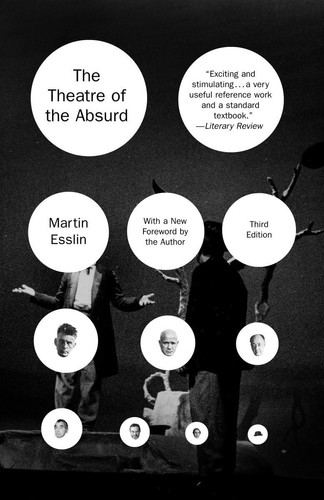
The theatre of the absurd

Esslin, Martin
In 1953, Samuel Beckett’s Waiting for Godot premiered at a tiny avant-garde theatre in Paris; within five years, it had been translated into more than twenty languages and seen by more than a million spectators. Its startling popularity marked the emergence of a new type of theatre whose proponents—Beckett, Ionesco, Genet, Pinter, and others—shattered dramatic conventions and paid scant attention to psychological realism, while highlighting their characters’ inability to understand one another. In 1961, Martin Esslin gave a name to the phenomenon in his groundbreaking study of these playwrights who dramatized the absurdity at the core of the human condition. Over four decades after its initial publication, Esslin’s landmark book has lost none of its freshness. The questions these dramatists raise about the struggle for meaning in a purposeless world are still as incisive and necessary today as they were when Beckett’s tramps first waited beneath a dying tree on a lonely country road for a mysterious benefactor who would never show. Authoritative, engaging, and eminently readable, The Theatre of the Absurd is nothing short of a classic: vital reading for anyone with an interest in the theatre.
Vintage Books 2004-01-06 480 pages

When Everybody Wore a Hat

William Steig
This is the story of when I was a boy, almost 100 years ago, when fire engines were pulled by horses, boys did not play with girls, kids went to libraries for books, there was no TV, you could see a movie for a nickel and everybody wore a hat. When Everybody Wore a Hat was one of celebrated author/artist William Steig's last gifts to the world of children's books: a portrait of the artist himself, told in Steig's signature quirky words and illustrations. Now in paperback, this funny, poignant, and revealing picture book has all the vitality and wit of a Steig classic. Ages 2+
HarperCollins 2005-04-26 40 pages

Leopoldstadt

Stoppard, Tom
"At the beginning of the 20th Century, Leopoldstadt was the old, crowded Jewish quarter of Vienna. But Hermann Merz, a manufacturer and baptised Jew married to Catholic Gretl, has moved up in the world. Gathered in the Merz apartment in a fashionable part of the city, Hermann's extended family are at the heart of Tom Stoppard's epic yet intimate drama. By the time we have taken leave of them, Austria has passed through the convulsions of war, revolution, impoverishment, annexation by Nazi Germany and - for Austrian Jews - the Holocaust in which 65,000 of them were murdered. It is for the survivors to pass on a story which hasn't ended yet"--Back cover
Faber & Faber 2020 105 pages

The death of the banker: the decline and fall of the great financial dynasties and the triumph of the small investor

Chernow, Ron
"For anyone interested in the world behind the business-page headlines, this is the book to read." --Publishers Weekly With the same breadth of vision and narrative élan he brought to his monumental biographies of the great financiers, Ron Chernow examines the forces that made dynasties like the Morgans, the Warburgs, and the Rothschilds the financial arbiters of the early twentieth century and then rendered them virtually obsolete by the century's end. As he traces the shifting balance of power among investors, borrowers, and bankers, Chernow evokes both the grand theater of capital and the personal dramas of its most fascinating protagonists. Here is Siegmund Warburg, who dropped a client in the heat of a takeover deal because the man wore monogrammed shirt cuffs, as well as the imperious J. P. Morgan, who, when faced with a federal antitrust suit, admonished Theodore Roosevelt to "send your man to my man and they can fix it up." And here are the men who usurped their power, from the go-getters of the 1920s to the masters of the universe of the 1980s. Glittering with perception and anecdote, The Death of the Banker is at once a panorama of twentieth-century finance and a guide to the new era of giant mutual funds on Wall Street. "Chernow . . . delivers a sound, accessible account of the forces shaping capital, credit, currency, and securities markets on the eve of a new millennium. " --Kirkus Reviews
Vintage Books 1997 130 pages

The death of the banker: the decline and fall of the great financial dynasties and the triumph of the small investor

Chernow, Ron
National Book Award winner Ron Chernow expertly traces the decline of the big bankers and the rise of small investors. The reader is taken on a fascinating tour of Anglo-American high finance over the past two centuries, with detours into Canadian, German and Japanese finance. As the point of departure for his colourful, panoramic survey, Mr. Chernow poses a historic riddle: Why did the great financial dynasties - the Rothschilds, Barings, Morgans and Warburgs - flare so brilliantly in the 19th and 20th centuries and then enter into a precipitous decline? Why did such heavyweights give way to more anonymous financial conglomerates? And, most curious of all, why have small investors, banded together in mutual funds, suddenly inherited the financial earth? The Death of the Banker shows how American reformers mounted a spirited campaign to pry captive companies loose from their traditional bankers and restored competition to financial markets. In a world criss-crossed by capital flows, the banker will never again exercise such spectacular but arbitrary rule over clients.
Vintage Canada 1997 147 pages

Churchill and the Jews

Martin Gilbert
Visiting Israel in 1972, Gilbert discussed Winston Churchill’s influence on the evolution of the Zionist ideal with the Israeli leader, David Ben-Gurion, at whose last meeting with Churchill in 1960, Churchill declared: “You are a wise leader of a brave people.” Born into a British class and society that was far from well-disposed towards Jews, Churchill rejected anti-Semitic attitudes. In the early 1920s, as a senior member of the British government, Churchill took a lead in securing for the Jews a National Home in Palestine that would be open to Jewish immigration from all over the world. In 1948, Churchill urged immediate recognition of the State of Israel, and, in 1951, strongly supported Israel’s right — denied by Egypt — of free passage through the Suez Canal. The book also details acts of rescue initiated by Churchill on behalf of European Jewry during the Second World War. When Churchill was asked to bomb the railway lines leading to Auschwitz, his response was immediate: “Get anything out of the air force you can.” Gilbert follows this story to its unexpected conclusion, and the saving of more than 100,000 Jewish lives. Many times during fifty years of public life, Churchill was called upon by the Jews of Britain to intervene on their behalf both nationally and internationally. His responses made it clear to them that he was, as he once expressed it, “their friend.”
McClelland & Stewart 2007 359 pages

Triumph: the untold story of Jesse Owens and Hitler's Olympics

Schaap, Jeremy
In 1936, against a backdrop of swastikas flying and storm troopers looming, an African-American son of sharecroppers set three world records and won an unprecedented four gold medals, single-handedly crushing Hitler's myth of Aryan supremacy. The story of Jesse Owens at the 1936 Olympic Games is that of a high-profile athlete giving a performance that transcends sports--but it is also the intimate and complex tale of the courage of one remarkable man. From the start, American participation in the games was controversial--a boycott attempt was thwarted by the president of the American Olympic Committee. Owens was befriended by a German rival, who helped Owens win the gold medal at his own expense; two Jewish sprinters were, at the last moment, denied the chance to compete for the United States out of misguided politeness to the Nazi hosts; and a myth was born that Hitler himself had snubbed Owens.--From publisher description
Houghton Mifflin 2007 272 pages