58,196 results in 0.08 seconds

Socialism: An Economic And Sociological Analysis (1951)

Mises, Ludwig Von
""Socialism: An Economic and Sociological Analysis"" is a seminal work by the Austrian economist and philosopher Ludwig von Mises. Originally published in 1922, this revised edition from 1951 offers a comprehensive critique of socialism, examining its economic and sociological implications. Mises argues that socialism, which seeks to eliminate private ownership of the means of production and replace it with collective ownership, is fundamentally flawed and cannot work in practice. He explores the reasons why socialist economies inevitably lead to inefficiency, misallocation of resources, and ultimately, economic collapse. Mises also examines the social and political implications of socialism, arguing that it leads to the destruction of individual freedom and the growth of authoritarianism. The book remains a classic in the field of economics and political philosophy, and is essential reading for anyone interested in understanding the strengths and weaknesses of socialist ideology.This scarce antiquarian book is a facsimile reprint of the old original and may contain some imperfections such as library marks and notations. Because we believe this work is culturally important, we have made it available as part of our commitment for protecting, preserving, and promoting the world's literature in affordable, high quality, modern editions, that are true to their original work.
Kessinger Publishing, LLC 2010-09-10 598 pages

Ask Me No Questions

Marina Budhos
A Muslim immigrant teen struggles to hold her family together in the wake of 9/11 in this poignant novel from acclaimed author Marina Budhos. You forget. You forget you don’t really exist here, that this isn’t your home. Since emigrating from Bangladesh, fourteen-year-old Nadira and her family have been living in New York City on expired visas, hoping to realize their dream of becoming legal US citizens. But after 9/11, everything changes. Suddenly being Muslim means you are dangerous, a suspected terrorist. When Nadira’s father is arrested and detained at the US-Canada border, Nadira and her older sister, Aisha, are told to carry on as if everything is the same. The teachers at Flushing High don’t ask any questions, but Aisha falls apart. Nothing matters to her anymore—not even college. It’s up to Nadira to be the strong one and bring her family back together again.
Atheneum Books for Young Readers 2007-09-11 192 pages

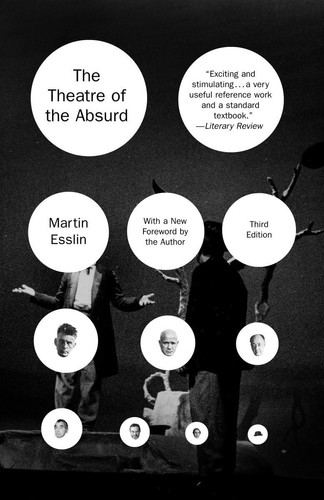
The theatre of the absurd

Esslin, Martin
In 1953, Samuel Beckett’s Waiting for Godot premiered at a tiny avant-garde theatre in Paris; within five years, it had been translated into more than twenty languages and seen by more than a million spectators. Its startling popularity marked the emergence of a new type of theatre whose proponents—Beckett, Ionesco, Genet, Pinter, and others—shattered dramatic conventions and paid scant attention to psychological realism, while highlighting their characters’ inability to understand one another. In 1961, Martin Esslin gave a name to the phenomenon in his groundbreaking study of these playwrights who dramatized the absurdity at the core of the human condition. Over four decades after its initial publication, Esslin’s landmark book has lost none of its freshness. The questions these dramatists raise about the struggle for meaning in a purposeless world are still as incisive and necessary today as they were when Beckett’s tramps first waited beneath a dying tree on a lonely country road for a mysterious benefactor who would never show. Authoritative, engaging, and eminently readable, The Theatre of the Absurd is nothing short of a classic: vital reading for anyone with an interest in the theatre.
Vintage Books 2004-01-06 480 pages

Kissinger

Marvin Kalb,Bernard Kalb
He is Sadat's brother, Golda's son, Chou's strolling partner. He is also a Nobel Laureate and a charming hieroglyphic whose skill, wit, and total aplomb have virtually eclipsed the presidency. The world is his stage - Peking, Moscow, Cairo, Tel Aviv - and to all these arenas of power, Marvin and Bernard Kalb have traveled with him. This is their portrait of Henry Kissinger, giant of the twentieth century. In this book the authors examine the method and meaning of Henry Kissinger's foreign policy.
Little Brown & Company 1974 577 pages

Miss Lonelyhearts

NATHANAEL. WEST
Miss Lonelyhearts is Nathanael West's second novel. He began writing it early in 1930 and completed the manuscript in November of 1932. Published in 1933, it is an Expressionist black comedy set in New York City during the Great Depression. In the story, Miss Lonelyhearts is an unnamed male newspaper columnist writing an advice column for the lovelorn and lonesome, a duty that the other newspaper staff considers a joke. As Miss Lonelyhearts reads letters from desperate New Yorkers, he feels terribly burdened and falls into a cycle of deep depression, accompanied by heavy drinking and occasional bar fights. He is also the victim of the pranks and cynical advice of Shrike, his feature editor at the newspaper. Miss Lonelyhearts tries several approaches to escape the terribly painful letters he has to read: religion, trips to the countryside with his fiancée Betty, and affairs with Shrike's wife and Mrs. Doyle, a reader of his column. However, Miss Lonelyheart's efforts do not seem to ameliorate his situation. After his sexual encounter with Mrs. Doyle, he meets her husband, a poor crippled man. The Doyles invite Miss Lonelyhearts to have dinner with them. When he arrives, Mrs. Doyle tries to seduce him again, but he responds by beating her. Mrs. Doyle tells her husband that Miss Lonelyhearts tried to rape her. In the last scene, Mr. Doyle hides a gun inside a rolled newspaper and decides to take revenge on Miss Lonelyhearts. Lonelyhearts, who has just experienced a religious enlightenment after three days of sickness, runs toward Mr. Doyle to embrace him. The gun "explodes", and the two men roll down a flight of stairs together. The general tone of the novel is one of extreme disillusionment with Depression-era American society, a consistent theme throughout West's novels. However, the novel is a black comedy, characterized by a dark sense of humor and irony. Justus Neiland, among others, has pointed out the use of Bergsonian laughter, in which "the attitudes, gestures, and movements of the human body are laughable in exact proportion as that body reminds us of a machine." The novel can be read through a Marxist lens as a condemnation of alienation and the colonization of social life by commodification, foreshadowing the stance of the Situationists and Guy Debord in particular. Miss Lonelyhearts is unable to fulfill his role as advice giver in a world in which both people and advice (in the form of newspaper ads, for example) are mass-produced. People are machines for the sole purpose of laboring as far as the rest of society is concerned (thus Miss Lonelyhearts' name), and any advice for them is as mass-produced as a manual for a machine. Lonelyhearts is unable to find a personal solution to his problems because they have systemic causes. West, who worked in the newspaper business before writing Miss Lonelyhearts, is also an advice giver of a sort as a novelist. Miss Lonelyhearts is similar to a détournement because it uses a form to critique the same form. The novel also condemns itself by condemning art, which is repeatedly derided by Shrike and compared to religion as an opiate of the masses. Many of the problems described in Miss Lonelyhearts describe actual economic conditions in New York City during the Great Depression, although the novel carefully avoids questions of national politics. Moreover, the novel is particularly important due to its existential import. The characters seem to be living in an amoral world. Hence, they resort to heavy drinking, sex, and parties. Miss Lonelyhearts has a "Christ complex", which stands for his belief in religion as a solution to a world devoid of values. (wikipedia.org)
Bibliotech Press 2025-03-08 94 pages

Oscar Wilde

Richard Ellmann
In this long-awaited bioraphy, Wilde the legendary Victorian - brilliant writer and conversationalist, reckless flouter of social and sexual conventions - is brought to life. More astute and forbearing, yet more fallible than legend has allowed, Wilde is given here the dimensions of a modern hero. Based on fresh material from many hitherto-untapped sources, Ellmann depicts Wilde's comet-like ascent on the Victorian scene and his equally dramatic sudden eclipse. His Irish background, the actresses to whom he paid court, his unfortunate wife and lovers, his clothes, coiffures, and the decor of his rooms - all are presented here in vivid detail. The saga of his 1882 American tour is recounted with a wealth of new details; also his later impact on the bastions of the French literary establishment. The London of the Nineties, of Whistler and the Pre-Raphaelites, Lillie Langtry and the Prince of Wales, is evoked alongside Paris of the "belle epoque" and the Greece, Italy and North Africa of Wilde'stravels. Ellmann's definitive critical account of Wilde's entire oeuvre shows him as the proponent of a radical new aesthetic who was perilously at odds with Victorian society. After his period of success and daring, the fatal love affair with Lord Alfred Douglas is followed by exposure, imprisonment, a few wretched years abroad and death in exile. The tragic end of Wilde's life leaves the reader with a sense of compassion and grief for the protagonist. This edition make the popular and best selling biography available in paperback for the first time.
Penguin Group (Canada) 1987 632 pages

The Civil War: Red River to Appomattox

Shelby Foote
Selected by the Modern Library as one of the 100 best nonfiction books of all time On the occasion of the 150th anniversary of the Civil War, the Modern Library publishes Shelby Foote's three-volume masterpiece in a new boxed set including three hardcovers and a new trade paperback, American Homer: Reflections on Shelby Foote and His Classic Civil War: A Narrative, edited by and with an introduction from Pulitzer Prize winner Jon Meacham and including essays by Michael Beschloss, Ken Burns, Annette Gordon-Reed, and others. Random House publisher Bennett Cerf commissioned southern novelist Shelby Foote to write a short, one-volume history of the American Civil War. Thirty years and a million and a half words later--every word having been written out longhand with nib pens dipped into ink--Foote published the third and final volume of what has become the classic narrative of that epic war. As he approached the end of the final volume, Foote recounted this scene in a letter to his friend, the novelist Walker Percy: "I killed Lincoln last week--Saturday, at noon. While I was doing it (he had his chest arched up, holding his last breath to let it out) some halfassed doctor came to the door with vols I and II under his arm, wanting me to autograph them for his son for Xmas. I was in such a state of shock, I not only let him in; I even signed the goddam books, a thing I seldom do. Then I turned back and killed him and had Stanton say, 'Now he belongs to the ages.' A strange feeling, though. I have another 70-odd pages to go, and I have a fear they'll be like Hamlet with Hamlet left out. Christ, what a man. It's been a great thing getting to know him as he was, rather than as he has come to be--a sort of TV image of himself, with a ghost alongside." When Percy read the final book, he wrote to Foote: "It's a noble work. I'm still staggered by the size of the achievement. . . . It is The Iliad ." A selection of these letters, along with essays by Jon Meacham, Michael Beschloss, Ken Burns, Annette Gordon-Reed, Michael Eric Dyson, Julia Reed, Robert Loomis, Donald Graham, John M. McCardell, Jr., and Jay Tolson, are included in American Homer, the bonus paperback book available only in the Modern Library boxed set of The Civil War. Shelby Foote's tremendous, sweeping narrative of the most fascinating conflict in our history--a war that lasted four long, bitter years, an experience more profound and meaningful than any other the American people have ever lived through--begins with Jefferson Davis's resignation from the United States Senate and Abraham Lincoln's departure from Springfield for the national capital. It is these two leaders, whose lives continually touch on the great chain of events throughout the story, who are only the first of scores of exciting personalities that in effect make The Civil War a multiple biography set against the crisis of an age. Four years later, Lincoln's second inaugural sets the seal, invoking "charity for all" on the Eve of Five Forks and the Grant-Lee race for Appomattox. Here is the dust and stench of war, a sort of Twilight of the Gods. The epilogue is Lincoln in his grave, and Davis in his postwar existence--"Lucifer in Starlight." So ends a unique achievement--already recognized as one of the finest histories ever fashioned by an American--a narrative that re-creates on a vast and brilliant canvas the events and personalities of an American epic: the Civil War.
Random House 2011 2984 pages

A stranger in the mirror

Sheldon, Sidney
From humble beginnings, Toby Temple becomes a superstar. He knows what he wants - and he always makes sure he gets what he wants. He is the world's funniest comedian, loved by presidents, lusted after by women. But, deep down, he yearns for love and stability. Jill Castle has always been an outsider, desperate to be accepted. Despite her great beauty, she finds breaking into Hollywood as an actress impossible without auditioning on the Directors' infamous casting couches. But, with one glance, Toby falls for Jill's beauty and sweeps her out of obscurity to stardom by his side. Now, she can get the revenge she has always longed for...
Fontana 1991 348 pages

If Tomorrow Comes

Sidney Sheldon
Lovely, idealistic Tracy Whitney is framed into a fifteen year sentence in an escape-proof penitentiary. With dazzling ingenuity she fights back to destroy the untouchable crime lords who put her there. With her intelligence and beauty as her only weapons, Tracy embarks on a series of extraordinary escapades that sweep her across the globe. In an explosive confrontation Tracy meets her equal in irresistible Jeff Stevens, whose past is as colorful as Tracy's.
Grand Central Publishing 1988-11-02 416 pages

Confederates in the attic: dispatches from the unfinished Civil War

Horwitz, Tony
Propelled by his boyhood passion for the Civil War, Horwitz embarks on a search for places and people still held in thrall by America's greatest conflict. The result is an adventure into the soul of the unvanquished South, where the ghosts of the Lost Cause are resurrected through ritual and remembrance. He joins "hardcore" reenactors; witnesses Klan rallies and calls for race war; finds that Andersonville Prison's commander, executed as a war criminal, is now exalted as a martyr and hero; and takes a marathon trek from Antietam to Gettysburg to Appomattox in the company of an eccentric pilgrim. Written with Horwitz's signature blend of humor, history, and hard-nosed journalism, this book brings alive old battlefields and new ones--classrooms, courts, country bars--where the past and the present collide, often in explosive ways.--From publisher description
Pantheon Books 1998-03-03 406 pages

Star Trek Movie Memories Star Trek Movie Memories

William Shatner
The sequel to the bestselling Star Trek Memories, documenting in deliciously lurid and candid detail all the behind-the-scenes shenanigans in the making of the six Star Trek movies, with on-the-scene reporting from the set of the seventh in which...Kirk dies! Star Trek Movie Memories recounts all the chaos, creative turmoil, backstage politics, power plays and production nightmares that permeated every one of the six Star Trek movies, including the accumulated grudges that haven't yet mellowed with the passage of time. And the stories... Nicholas Meyer writing the script for Star Trek II in twelve days... Kirstie Alley doing her Leonard Nimoy imitation in an audition... How Kirk's love interest in Star Trek IV began as a role for Eddie Murphy, and you can imagine the rest (or maybe not). With stories and quotes from the principles that have never before been uttered in public, this will deliver a truly unprecedented behind-the-scenes view of the Trek films that will amaze even the most avid Trekker. And on top of it all, the hardcover will be published in time for the seventh film, which will present the perfect opportunity to tie the old crew and stars including Robert Wise, Ricardo Montalban, Christopher Lloyd, Christopher Plummer, Christian Slater to Patrick Stewart and the cast of The Next Generation. The torch will be passed, and William Shatner will tell us all about how it feels as his character is killed off in the film's finale.
HarperCollins 1995-06-21 464 pages