833 results for "Environment"

Ferraris for all: in defence for economic progress

Ben-Ami, Daniel
The growth of the economy and the spread of prosperity are increasingly seen as problematic rather than positive - a trend Daniel Ben-Ami has termed 'growth scepticism'. Prosperity is accused of encourage greed, damaging the environment, causing unhappiness and widening social inequalities. Ferraris for all: A defence of economic progress is a rejoinder to the growth sceptics. Using examples from a range of countries, including the US, the author argues that society as a whole benefits from greater affluence. Action is needed - but to increase abundance and spread it worldwide, not to limit prosperity, as the sceptics would have it. The lively and provocative hardback edition was published to widespread coverage in 2010, and triggered debate and dissent in equal measure.
Policy 2010 282 pages

Reflections on Big Science

Alvin M. Weinberg
Alvin M. Weinberg has played a key role in scientific developments of the 20th century. In 1941 he joined the University of Chicago group that developed the first chain reactor. As a member of this team, he worked on the reactor that produced the plutonium that would ultimately be used for the bomb dropped on Nagasaki, Japan. He served as director of ORAU's Institute for Energy Analysis (IEA), which pioneered investigations of the greenhouse effect, alternate energy sources, and maximizing energy sources at minimum cost to the economy and the environment. Throughout his career, Weinberg has been a leading figure in the development of nuclear energy. Among his accomplishments was the proposal to use pressurized water for nuclear submarine propulsion. Weinberg has been recognized many times, winning the Atoms for Peace Award, the Harvey Prize, the Heinrich Award, and the Fermi Award. He is a member of the National Academy of Sciences, the National Academy of Engineering, the American Academy of Arts and Sciences, the American Philosophical Society, and a Foreign Member of the Royal Netherlands Academy of Sciences. In addition to his writings concerning scientific and administrative works, he is also a prolific writer on the interaction between modern technology and society. He has coined many phrases that have become part of our everyday language; "big science," "technological fix," and "faustian bargain" are just a few examples. May of his earlier essays are published in this book, Reflections on Big Science. These essays treat a number of acute or chronic problems and many prescribe remedies. Included are considerations of the population expansion and the concomitant expansion of energy and information, the new social structures built by the new technology, the effects of the organization and financing of Big Science on the nature of scientific inquiry, the potential contribution of the federal laboratories to science education, and the role of the scientist (which is distinct from, and as vital as, the role of the documentalist) is closing the Information Gap.
MIT Press 1967-03-15 192 pages

Life: the leading edge of evolutionary biology, genetics, anthropology, and environmental science

John Brockman
"The newest addition to John Brockman's Edge.org series explores life itself, bringing together the world's leading biologists, geneticists, and evolutionary theorists -- including Richard Dawkins, Edward O. Wilson, J. Craig Venter, and Freeman Dyson. Scientists' understanding of life is progressing more rapidly than at any point in human history, from the extraordinary decoding of DNA to the controversial emergence of biotechnology. Featuring pioneering biologists, geneticists, physicists, and science writers, Life explains just how far we've come -- and takes a brilliantly educated guess at where we're heading. Richard Dawkins and J. Craig Venter compare genes to digital information, and sketch the frontiers of genomic research. Edward O. Wilson reveals what ants can teach us about building a superorganism -- and, in turn, about how cells build an organism. Elsewhere, David Haig reports new findings on how mothers and fathers individually influence the human genome, while Kary Mullis covers cutting edge treatments for dangerous viruses. And there's much more in this fascinating volume. We may never have all the answers. But the thinkers collected in Life are asking questions that will keep us dreaming for generations."--provided by Amazon.com.
Harper Perennial 2016-04-19 367 pages

The militarization of Indian country

LaDuke, Winona
"When it became public that Osama bin Laden's death was announced with the phrase "Geronimo, EKIA!" many Native people, including Geronimo's descendants, were insulted to discover that the name of a Native patriot was used as a code name for a world-class terrorist. Geronimo descendant Harlyn Geronimo explained, "Obviously to equate Geronimo with Osama bin Laden is an unpardonable slander of Native America and its most famous leader." The Militarization of Indian Country illuminates the historical context of these negative stereotypes, the long political and economic relationship between the military and Native America, and the environmental and social consequences. This book addresses the impact that the U.S. military has had on Native peoples, lands, and cultures. From the use of Native names to the outright poisoning of Native peoples for testing, the U.S. military's exploitation of Indian country is unparalleled and ongoing."--Publisher's website.
Makwa Enewed 2012 92 pages

Polluted science: the EPA's campaign to expand clean air regulations

Fumento, Michael
In his book, Michael Fumento persuasively shows that the Environmental Protection Agency's (EPA) expansion of the Clean Air Act could burden Americans with major lifestyle changes and cost tens of billions of dollars-with no real benefit. The author looks at recent EPA proposals to tighten national air quality standards for particulate matter and ozone. He argues that the evidence supporting the health benefits of the new standards is extremely weak and ambiguous and has been distorted by the EPA. Furthermore, he says that proposing new regulations is absurd considering that the levels of these pollutants are already much lower than they used to be and are still dropping. By demanding pollution levels well below the level at which health effects are apparent, he says, the EPA labels all man-made emissions-even those that are harmless-as pollutants. He suggests that the clearest results of adopting the new standards would be to expand the agency's regulatory powers and set a precedent for making future revisions to air quality standards with little regard for demonstrated health effects. This book will appeal to environmental, energy and health policy makers and analysts, scientists, economists, legislators, and executives in utilities, chemical, transportation and manufacturing industries.
AEI Press 1997-01 141 pages

Transforming power: from the personal to the political

Rebick, Judy
In Transforming Power, veteran activist Judy Rebick champions new ways of achieving political goals by emphasizing co-operation and consensus over confrontation and partisanship. Rebick argues that today's combination of environmental crisis, globalization, and rapid technological innovation is producing profound new ideas about social and political life, and that this groundswell is truly the vanguard of a global movement to change the way we live our lives, from the ground up.
Penguin Canada 2009 277 pages

Field notes from a hidden city

Woolfson, Esther
Against the background of austere and beautiful Aberdeen, Woolfson observes the seasons, the streets and the quiet places of her city over the course of a year. She considers the geographic, atmospheric and environmental elements which bring diverse life forms together in close proximity, and in absorbing prose writes of the animals among us: the birds, the rats and squirrels, the spiders and the insects. Her close examination of the natural world leads her to question our prevailing attitudes to urban and non-urban wildlife, and to look again at the values we place on the lives of individual species.
Granta 2014 357 pages

Chernobyl: Law and Communication Transboundary Nuclear Air Pollution - The Legal Materials

Philippe J. Sands
The 1986 accident at the Chernobyl plant highlighted the need to examine and clarify the obligations imposed by international law on States engaged in nuclear and other ultra-hazardous activites. This volume brings together in full the texts of the most important materials necessary for a comprehensive examination of the international law and communication issues arising from nuclear and other accidents with transboundary effects. The texts reproduced include multilateral and bilateral treaties, non-binding acts of international organizations and private associations of scholars, and national legislation. Their chronological presentation reflects the development of the law up to and including the 1986 IAEA Conventions on Early Notification and Assistance and the 1987 Resolution of the Institut de Droit International on Transboundary Air Pollution. Each text is introduced by a Note summarizing its background and main provisions, and is accompanied by a select bibliography. The signatories and parties to the treaties are set out in full. This work is a publication of The Annenberg Washington Program in Communications Policy Studies of Northwestern University and the Research Centre for International Law, University of Cambridge.
Cambridge University Press 1988-04 346 pages

Climate Action A Campaign Manual for Greenhouse Solutions

Mark Diesendorf
In the USA, social movements succeeded in stopping 59 proposals to build new conventional (dirty) coal-fired power stations. In the UK, there was an extended campaign to stop the expansion of Heathrow airport, primarily on the grounds of the greenhouse gas emissions from increased flights. Responding to this global epidemic, Climate Action is a ...
ReadHowYouWant.com 2010-09-27 404 pages

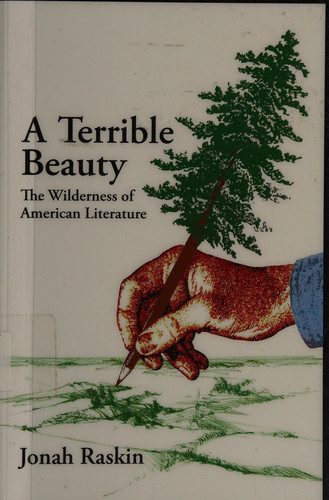
A terrible beauty: the wilderness of American literature

Raskin, Jonah
ABOUT THE BOOK Shortly before he published Walden; or Life in the Woods, Henry David Thoreau called ¿The library a wilderness of books.¿ He also noted that while Americans were ¿clearing the forest in our westward progress, we are accumulating a forest of books in our rear, as wild and unexplored as any of nature¿s primitive wildernesses.¿ In "A Terrible Beauty: the Wilderness of American Literature," Jonah Raskin takes a long close look at the forest of books that poets, novelists and essayists mapped and explored before and after Thoreau. The first work of cultural criticism to look back at writing in the United States from the perspective of the contemporary environmental crisis, Raskin offers insights for students, teachers and lovers of literature as well as for backpackers and hikers who have trekked across untrammeled forests, deserts and mountains. ABOUT THE AUTHOR Jonah Raskin, Phd, has taught American literature at Sonoma State University, the State University of New York at Stony Brook and as a Fulbright professor at the University of Antwerp and the University of Ghent in Belgium. The author of fifteen books, he earned his B.A. at Columbia College in New York, his M.A. at Columbia University and his Ph.D. at the University of Manchester, Manchester, England. He lives in northern California and has written for The San Francisco Chronicle, The L.A. Times, The Nation, The Redwood Coast Review and Catamaran.
Regent Press 2014 366 pages

Helping Young Refugees and Immigrants Succeed Public Policy, Aid, and Education

G. Holton
In a unique effort, this book brings together, for the first time, scholarly analyses by eminent researchers of the historical, social, legal, and cultural influences on the young newcomers' lives as well as reports by practitioners in major aid organizations about the concrete work that their organizations have been carrying out.
Palgrave Macmillan US 2010-10-18 316 pages