898 results for "Evolution"

Handbook of epistemology

Niiniluoto, Ilkka,Sintonen, Matti,Woleński, Jan
The twenty-eight essays in this Handbook, all by leading experts in the field, provide the most extensive treatment of various epistemological problems, supplemented by a historical account of this field. The entries are self-contained and substantial contributions to topics such as the sources of knowledge and belief, knowledge acquisition, and truth and justification. There are extensive essays on knowledge in specific fields: the sciences, mathematics, the humanities and the social sciences, religion, and language. Special attention is paid to current discussions on evolutionary epistemology, relativism, the relation between epistemology and cognitive science, sociology of knowledge, epistemic logic, knowledge and art, and feminist epistemology.
Kluwer Academic Publishers 2004 1052 pages

Of flies, mice, and men

Jacob, François
Who could have guessed that the lowly fruit fly might hold the key for decoding heredity? Or that the mouse might one day disclose astonishing evolutionary secrets? In a book infused with wisdom, wonder, and a healthy dose of wry skepticism, Nobel Prize-winning geneticist François Jacob walks us through the surprising ways of science, particularly the science of biology, in this century. Of Flies, Mice, and Men is at once a work of history, a social study of the role of scientists in the modern world, and a cautionary tale of the bumbling and brilliance, imagination and luck, that attend scientific discovery. A book about molecules, reproduction, and evolutionary tinkering, it is also about the way biologists work, and how they contemplate beauty and truth, good and evil. Animated with anecdotes from Greek mythology, literature, episodes from the history of science, and personal experience, Of Flies, Mice, and Men tells the story of how the marvelous discoveries of molecular and developmental biology are transforming our understanding of who we are and where we came from. In particular, Jacob scrutinizes the place of the scientist in society. Alternately cast as the soothsayer Tiresias, the conscienceless inventor Daedalus, or Prometheus, conveyer of dangerous knowledge, the scientist in our day must instead adopt the role of truthteller, Jacob suggests. And the crucial truth that molecular biology teaches is the one he elaborates with great clarity and grace in this book: that all animals are made of the same building blocks, by a combinatorial system that always rearranges the same elements according to new forms.
Harvard University Press 1998 158 pages

The international human rights movement: a history

Neier, Aryeh
A fascinating history of the international human rights movement as seen by one of its founders During the past several decades, the international human rights movement has had a crucial hand in the struggle against totalitarian regimes, cruelties in wars, and crimes against humanity. Today, it grapples with the war against terror and subsequent abuses of government power. In The International Human Rights Movement , Aryeh Neier—a leading figure and a founder of the contemporary movement—offers a comprehensive and authoritative account of this global force, from its beginnings in the seventeenth and eighteenth centuries to its essential place in world affairs today. Neier combines analysis with personal experience, and gives a unique insider's perspective on the movement's goals, the disputes about its mission, and its rise to international importance. Discussing the movement's origins, Neier looks at the dissenters who fought for religious freedoms in seventeenth-century England and the abolitionists who opposed slavery before the Civil War era. He pays special attention to the period from the 1970s onward, and he describes the growth of the human rights movement after the Helsinki Accords, the roles played by American presidential administrations, and the astonishing Arab revolutions of 2011. Neier argues that the contemporary human rights movement was, to a large extent, an outgrowth of the Cold War, and he demonstrates how it became the driving influence in international law, institutions, and rights. Throughout, Neier highlights key figures, controversies, and organizations, including Amnesty International and Human Rights Watch, and he considers the challenges to come. Illuminating and insightful, The International Human Rights Movement is a remarkable account of a significant world movement, told by a key figure in its evolution.
Princeton University Press 2013-08-04 379 pages

The Book of Words Talking Spiritual Life, Living Spiritual Talk

Lawrence Kushner
"According to the Hebrew Bible, God made the world with words. God just spoke and the world became reality. (The Aramaic for 'I create as I speak' is avara k'davara, or in magician's language, abracadabra.) ... This does not protect words from the numbing effects of overuse in any religious tradition.... We need to dust off the words, shake away the accretions, wonder again about what they originally might have meant and enable ourselves to live in the word." --from the Introduction With creativity and poetry (and occasional heresy) Kushner dusts off thirty classical Hebrew words, shakes them free of the effects of generations of overuse, "re-translates" them and liberates their ancient holy power. The result is a contemporary spiritual guide for your personal religious life. According to the Hebrew Bible, God made the world with words. God just spoke and the world came into being. Words therefore are not merely sounds signifying something else; they are instruments of creation, primary reality itself. They need only to be read, spoken and interpreted. And to know them is to know reality itself. Kushner has designed the book himself, seamlessly blending graphics and content. In doing so he evokes the aesthetics of an ancient manuscript and a vision of our power to shape the future. Each finely crafted chapter begins with a Hebrew word and Kushner's provocative English translation. At the bottom of the page is a transliteration of the Hebrew along with its more customary English rendering. In addition to his own intriguing definition, he includes a biblical citation anchoring the word, along with a more recent text showing the word's evolution. Finally, we are offered a personal, meditative exercise designed to enable you to "live in the word."
Jewish Lights Publishing 1993 142 pages

The Meaning of Dreams

Isador H. Coriat
THE new psychology of dreams, as elaborated by Freud, represents one of the greatest advances ever made in our knowledge pf the human mind and of human motives. For abnormal psychology, dream-analysis can be compared only in importance with the discovery of the origin of species and of the factors of organic evolution in the field of biology. The analysis of dreams is not only of great theoretical value in the understanding of the unconscious but has its practical side as well, in giving medicine the most potent instrument which it has ever possessed in the treatment of certain functional nervous disturbances.This volume is written along purely psycho-analytic lines, and every dream therein has been personally analyzed by the author. Its aim is to give the general reader an outline of the meaning of dreams as elaborated by the psycho-analytic school, with its applications to medical science, in particular to that method of psychotherapy known as psycho-analysis. Because of the great difficulties inherent in the subject of dream-analysis, only the basic principles have been given, the details being left for the special treatises and journals on the subject.ISADOR H. CORIAT.Boston, February, 1915.
CreateSpace Independent Publishing Platform 2017-09-06 78 pages

Key ideas for a contemporary psychoanalysis: misrecognition and recognition of the unconscious

Green, André
André Green attempts the complex task of identifying and examining the key ideas for a contemporary psychoanalytic practice. This undertaking is motivated both by the need for an outline of the evolution of psychoanalysis since Freud's death, and by the hope of tackling the fragmentation which has led to the current 'crisis of psychoanalysis'. In three sections covering the theoretical and practical aspects of psychoanalysis, and analysing the current state of the field, André Green provides a stimulating overview of the principal concepts that have guided his work. Subjects covered include: Transference and countertransference Psychoanalysis and Psychotherapy: modalities and results Language-speech-discourse in psychoanalysis Recognition of the unconscious This unique contemporary perspective on the psychoanalytic enterprise will fascinate all those with an interest in the problems that face the field and the opportunities for its future development.
Routledge 2005 321 pages

Play for today: the evolution of television drama

Shubik, Irene
Since it was published in 1975, Play for Today has become a leading introduction to writing and producing drama on television. Irene Shubik, in a unique survey of British television in its Golden Age, describes the role of the producer in the making of an original television play, from initial discussions with writers to broadcast. In tracing the rise of television drama in the context of her own career, she details the intellectual, financial and technical problems of productions, and includes a fascinating chapter on the effect of reactions from critics and viewers. In this new edition, Shubik adds a firsthand account of how the popular Rumpole of the Bailey series evolved and how she developed the critically and commercially successful The Jewel in the Crown.
Manchester University Press 2000 267 pages

Evolution of cardio-metabolic risk from birth to middle age: the Bogalusa Heart Study

Gerald S. Berenson
That precursors of adult coronary artery disease, hypertension, and type II diabetes begin in childhood have been clearly established by the Bogalusa Heart Study. This unique research program has been able to follow a biracial (black/white) population over 35 years from childhood through mid-adulthood to provide perspectives on the natural history of adult heart diseases. Not only do these observations describe trajectories of cardio-metabolic risk variables leading to these diseases but provide a rationale for the need to begin prevention beginning in childhood. The trajectories of the burden of cardio-metabolic risk variables in the context of their fetal origin and chromosome telomere dynamics provide some insight into the metabolic imprinting in utero and aging process. The observed racial contrasts on cardio-metabolic risk variables implicate various biologic pathways interacting with environment contributing to the high morbidity and mortality from related diseases in our population. To address the seriousness of the onset of cardiovascular disease in youth, approaches to primordial prevention are described focussing on childhood health education as an important aspect of Preventive Cardiology.
Springer 2011-07-09 210 pages

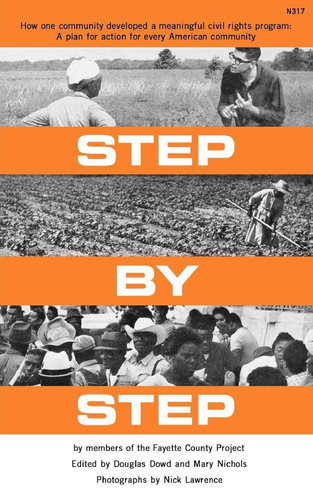
Step by Step Evolution and Operation of the Cornell Students' Civil-Rights Project in Tennessee, Summer, 1964

Douglas Dowd
The book arose out of the authors' experiences in a project which was itself unique: The Cornell-Tompkins Committee for Free and Fair Elections in Fayette County, Tennessee. The project entailed six to eight weeks of living in Fayette County by forty-five volunteers, mostly students from Cornell University, in the summer of 1964. The project was financed entirely, to an amount exceeding fifteen thousand dollars, by the contributions of students, faculty, and townspeople in and around Cornell University, and by contributions from more distant places solicited by those involved at Cornell.Of the many things learned from the Cornell project, one of the most important was how responsive a community can become when confronted with a concrete civil rights program, one with which it can identify, one small enough to be feasible and intelligible, but still compelling in terms of the needs involved.The authors believe that many thousands of Americans can find no good answer to the questions "What can I do." not because they are unwilling to do much, nor because there is little to be done, but because they lack the knowledge of what is needed where, and how and with whom one can go about responding to such needs. The book therefore undertakes, step by step, to describe and explain the development of the project at Cornell and its workings during the summer in Tennessee, and reasons that similar steps can be taken by others, with appropriate variations. It concludes with a detailed appendix listing civil rights projects and organizations desperately in need of help, whether in terms of money or volunteers or both.
W. W. Norton, Incorporated 1965-04 132 pages

Nation and history: Israeli historiography and identity between Zionism and post-Zionism

Gelber, Yoav
During the last 20 years, Israel has reached unprecedented prosperity, yet it is haunted by existential fears for its future, identity, and survival. Israel's legitimacy is under assault from within and without by a coalition of left-wing radicals, Palestinians and their sympathizers, and Muslim fundamentalists. All these groups deny the existence of a Jewish nation and argue that Jews do not need a nation state. Hence, Israel should either disappear completely or become 'a state of all its citizens' devoid of any Jewish symbol or identity. The origins of this campaign are twofold. One derives from the traditional opposition that has accompanied Zionism from its inception. The second is contemporary, articulating the post-ist fads that swamped the West since the 1980s. The past occupies a prominent place in this crusade that aims at the present and future. Traditional historiography, scientific and pseudo-scientific, and the new vogue of memory and narrative, that claims to be the true history of human experience, are equally abused to delegitimize Israel. This book follows these two paths, while avoiding disputes over current political issues. First, it portrays the disciplinary background - the evolution of the modern history discipline. Subsequently, it focuses on the conflicting approaches to the cardinal issue of Zionism's essence: Is it a national liberation movement of European origin that offered a solution to the modern Jewish Question in a world of nationalities? Or is it a colonial movement that oppressed equally Arabs and oriental Jews?
Vallentine Mitchell 2011 337 pages

Reforming the international monetary system: from Roosevelt to Reagan

Hormats, Robert D.
This book examines the changed, and changing, international monetary system. It describes how the system has evolved under nine Presidents, from Franklin D. Roosevelt to Ronald Reagan. It also discusses the broader evolution of the world economy during this period, including the trade and investment issues to which international monetary policy is closely linked. The subjects are predominantly international but have a major impact on domestic economies. These international effects are why they should be of concern to most people. The dollar is viewed as both a national and an international money. The International Monetary Fund (IMF) is viewed as one vehicle to support sound domestic economic policies, ease the developing nations debt problem, and maintain currency rates that facilitate the orderly flow of finance and trade. The table of contents lists the following chapters: (1) "The Bretton Woods System"; (2) "Cracks in the System"; (3) "The Camp David Bombshell and the Move Toward Floating Rates"; (4) "Floating Rates"; (5) "The Oil Crisis, the Debt Crisis and IMF Conditionality"; and (6) "Reform of the Monetary System." An appendix which contains a summary of proposals for improving or reforming the international monetary system, discussion questions, a reading list, and a glossary also are included. (EH)
Foreign Policy Association 1987 79 pages

Elizabethan architecture: its rise and fall, 1540-1640

Girouard, Mark
"Elizabethan and Jacobean architecture - not the friendly unassuming architecture of the vernacular but the uniquely strange and exciting buildings put up by the great and powerful, ranging from huge houses to gem-like pavilions and lodges designed for feasting and hunting - is a phenomenon as remarkable as the literature which accompanied it, the literature of Shakespeare, Spenser, Sidney, Marlow, Jonson, Campion and others. Forty years after adventuring into this world in his first book, 'Robert Smythson', in which he discussed one family of mason-architects and the great houses with which they were connected, Mark Girouard has returned to the subject to cover the whole rich field in detail. In this beautiful and fascinating book, Girouard discusses social structure and the way of life behind it, the evolution of the house plan, the ferment of excitement aroused in English patrons and craftsmen as they learnt about the classic Five Orders and the buildings of Ancient Rome from publications and engravings, the surprising wealth of architectural drawings which survive from the period, the inroads of foreign craftsmen who brought new fashions in ornament with them, but also the strength of the native tradition which was creatively integrated with the 'antique' style. Behind the book is a vivid consciousness of the European scene, and the different ways in which different countries reacted to new influences yet did not abandon their native traditions. Italy, France, central Europe and above all the Low Countries provide the background, and England was influenced by all of them. But the principal argument of the book is the individuality of the English achievement. Girouard's pioneering work on Elizabethan architecture, then an unfashionable period, has helped inspire an increasing number of architectural historians to venture into the field. His new book benefits from their researches and publications, but is essentially a product of new research and travel on his part. The results are displayed with his own unique sense of style, and are fired by the excitement which the architecture of the period still generates in him." -- from book jacket.
Yale University Press for The Paul Mellon Centre for Studies in British Art 2009 516 pages

Virginity or death! and other social and political issues of our time

Pollitt, Katha
“As this book, which is greater than the sum of its brilliant parts makes clear, Katha Pollitt, who is famously a feminist, is also a humorist, a moralist and a most hilarious, wise, and incisive observer.” –Victor Navasky, author of A Matter of Opinion Through presidential administrations Democratic and Republican, Katha Pollitt has observed and exposed the inconsistencies and illogic of those who stand in the way of progress solely to hold on to their power. In defense of human rights and equality, she assails the corrupt and educates the misguided with compassion, Swiftian wit, and complete literary authority. In this compelling collection, Pollitt skewers one hypocrite after another. She suggests, for example, that creationists be permitted to oppose the teaching of evolution only so long as they agree to forgo the benefits of the theory–such as flu vaccines. She gently wonders if those who denounced the decision to allow Terri Schiavo to die in peace would themselves be satisfied to be video-diagnosed by Senator Bill Frist. And in the title essay about fundamentalists’ antagonism toward sex education and STD prevention, she asks, “What is it with these right-wing Christians? Faced with a choice between sex and death, they choose death every time.” Pollitt is one of the most eloquent and persuasive voices in American political conversation of this or any other era, and Virginity or Death! Is a marvelous demonstration of her keen insight, mordant humor, and sense of justice. “Katha Pollitt has long and rightly been hailed for her brilliance, wit, and great insight into politics, social issues, and women’s rights. As with all of her work, I am enormously grateful for Virginity or Death!, and also deeply jealous.” –Anne Lamott, author of Traveling Mercies
Random House Trade Paperbacks 2006 265 pages

Culture and Cultural Entities - Toward a New Unity of Science

Joseph Margolis
Culture and Cultural Entities provides an original philosophical analysis of the nature and explanation of cultural phenomena, with special attention to ontology and methodology. It addresses in depth such topics as: the relation between physical and biological nature and cultural phenomena; the analysis of intentionality; the nature and explanation of action; causality; causal explanation and the unity of science; theories of language; historicity; animal and human intelligence; psychological and social phenomena; technology and evolution. Its approach features a form of non-reductive materialism, examines a wide range of views, and is highly readable, making it suitable for professionals, advanced undergraduate and graduate students, and an informed general audience. A new chapter was added to give a sense of pertinent trends since the appearance of the first edition, particularly with respect to the history of philosophy, pragmatism, the unity of science, and evolution. The unity, scope, and simplicity of the theory are well-regarded.
Springer Netherlands 2010-10-28 156 pages

Potency and act: studies toward a philosophy of being

Stein, Edith Saint
Potency and Act is the second of three works in which Edith Stein said she endeavored to fulfill her “proper mission’ in philosophy, her “life’s task”: relating the phenomenology of her teacher Edmund Husserl and the scholasticism of St. Thomas Aquinas. But more than “critically comparing” the two ways of thinking, she wished to “fuse” them into her own “philosophical system,” searching for that perennial philosophy lying “beyond ages and peoples, common to all who honestly seek truth.” More Information Edith Stein was a Jewish phenomenologist who became a Catholic after reading the autobiography of St. Teresa of Jesus and entered the order of Discalced Carmelites founded by the saint. Stein died in Auschwitz in 1942 and was herself canonized in 1998 as St. Teresa Benedicta of the Cross. Her philosophical thinking had been formed by Husserl, but she came to “find a home in Aquinas’s thought world.” In Potency and Act she “aimed to get from scholasticism to phenomenology and vice versa” and “allow the two ways of doing philosophy to come to resolution within herself.” The first of the three works in which she carried out her mission was a play where Husserl and Aquinas appear on stage to discuss their agreements and differences (in Knowledge and Faith , ICS Publications, Edith Stein’s Collected Works, vol. 8). The second, Potency and Act , was written in 1931 but published for the first time in 1998. The third was her major work, Finite and Eternal Being , written around 1935 and also published posthumously, in 1950 (Collected Works, vol. 9). Potency and Act is complementary to Finite and Eternal Being , for they are quite different in content. The approach to the study of being in Potency and Act is “modal” as the title implies; her treatment of possible worlds and of form prescribing possibilities relates to phenomenological themes and also to recent developments in logical semantics. Philosophy of religion, of course, is a central concern. We reach God not only through faith and contemplation, she says, but “by thinking,” using “logical reasoning” both from the world without (as in St. Thomas) and from the world within (“the way of St. Augustine”); indeed, God’s existence is also a “purely formal conclusion.” Her many searching analyses are suggestive in their own right: on human freedom, temporality, self-knowledge, individuality, evolution (which she “fits into the “scholastic world view”), atheism, eschatology.
ICS Publications 2009 518 pages

Dimensions of Darwinism: themes and counterthemes in twentieth century evolutionary theory

Marjorie Grene
Originally published in paperback in 1986, the essays in this book discuss questions about the growth and conceptual structure of the modern evolutionary synthesis, or 'neo-Darwinism'. Written by biologists, historians and philosophers, the collection provides a penetrating analysis of the development, meaning and problems of twentieth-century evolutionary theory. Part I includes discussion of the role of eugenics in shaping the biological interests of R. A. Fisher; the abandonment of Lamarckism; the influence of systematics and the concepts of adaptation and random drift in the development of Sewall Wright's theory; and explanation of how the synthesis 'hardened' in the decades following its original presentation. Part II examines the history of mimetic theory as a case study in evolutionary thought, while Part III introduces the reader to some aspects of the German tradition. Finally, Part IV addresses the debates that existed around the time of publication.
Cambridge University Press 1986-03-31 336 pages

Darwin in the Jewish imagination: Jews' engagement with evolutionary theory

Langton, Daniel R.
"The development of this project has taken many years and evolved in many unexpected directions as a result of the advice and feedback from many people. The subject is Darwin's Jews, that is, those Jewish thinkers in the late nineteenth- and early twentieth-centuries who have given Darwin a legacy within Jewish history beyond the tragic account of Nazi race theory and eugenics that all too often dominates the discussion of Jews and Darwin. For this reason, as much as any other, it seemed like a worthwhile endeavour. But the identification and selection of the different species of Darwin's Jews has proven to be difficult fieldwork, since there are so many ideological niches and environments for so many varieties of religious and non-religious Jews within the tangled bank of modern Jewish identity. Fortunately, I have not been working alone, and am grateful for the opportunity now to acknowledge the work of others"--
Oxford University Press 2026-02-04 310 pages

For Rulers Priming Political Leaders for Saving Humanity from Itself

Yehezkel Dror
In this striking book, Yehezkel Dror bravely goes where few authors dare, offering a big-picture view of the fateful choices facing the human species. He urges humankind to adopt unconventional survival and thriving strategies, including elevating the future of humanity above state interests, limiting the production and spread of dangerous knowledge and tools, and strengthening humanity's collective deliberative capacity. The author confronts the evolutionary trap of science and technology ensnaring unprepared humankind by providing it with awesome future-shaping power, which contemporary values and institutions are unable to handle. Dror warns that tribal and nationalist values, the inability to learn from history, and mediocre leadership will catastrophically endanger the future of human life, making radical, even painful, innovations essential. According to Dror, the prevailing form of politics is obsolete. Instead, he argues urgently for a new type of political leader - "Homo Sapiens Governors" - willing and able to fulfill the daunting mission to save humanity from itself. Recognizing that the tyrannical status quo will try to prevent essential transformations, Dror predicts new crises making what is still unthinkable clearly compelling - and that humankind will have to choose: learn rapidly to survive and thrive, or perish. YEHEZKEL DROR is professor emeritus at the Hebrew University of Jerusalem. Recognized as a founder of modern policy studies, he integrates multi-disciplinary scholarship with extensive personal experience as a global advisor into a novel paradigm on alternative evolutionary futures of humanity - as shaped by fateful choices humanity has never before faced.
Amazon Digital Services LLC - Kdp 2017-08-18 116 pages