

1166 results for "American History"

Breaking the line: the season in Black college football that transformed the sport and changed the course of civil rights
1967. Two rival football teams. Two legendary coaches. Two talented quarterbacks. Together they broke the color line, revolutionized college sports, and transformed the NFL. Freedman’s dramatic account, highly praised as a contributing part of the movement and a riveting sports story, is now available in paperback. In September 1967, after three years of landmark civil rights laws and three months of devastating urban riots, the football season began at Louisiana’s Grambling College and Florida A&M. The teams were led by two extraordinary coaches, Eddie Robinson and Jake Gaither, and they featured the best quarterbacks ever at each school, James Harris and Ken Riley. Breaking the Line brings to life the historic saga of the battle for the 1967 black college championship, culminating in a riveting, excruciatingly close contest. Samuel G. Freedman traces the rise of these four leaders and their teammates as they storm through the season. Together they helped compel the segregated colleges of the South to integrate their teams and redefined who could play quarterback in the NFL, who could be a head coach, and who could run a franchise as general manager. In Breaking the Line , Freedman brilliantly tells this suspenseful story of character and talent as he takes us from locker room to state capitol, from embattled campus to packed stadium. He captures a pivotal time in American sport and society, filling a missing and crucial chapter in the movement for civil rights.

The rites of assent: transformations in the symbolic construction of America
The Rites of Assent examines the cultural strategies through which "America" served as a vehicle simultaneously for diversity and cohesion, fusion and fragmentation. Taking an ethnographic, cross-cultural approach, The Rites of Assent traces the meanings and purposes of "America" back to the colonial typology of mission, and specifically (in chapters on Puritan rhetoric, Cotton Mather, Jonathan Edwards, and the movement from Revival to Revolution) to the legacy of early New England.

The Way of the World A Story of Truth and Hope in an Age of Extremism
National Bestseller Fully Updated Ron Suskind’s book promises to be a bracing international thriller – an ensemble of uranium merchants and panicked diplomats, stealthy Jihadist soldiers and CIA operatives, anxious Muslim children and angry world leaders – a diverse cast of players who will define the struggle between hope and fear in the modern era. Suskind will close the Bush years – a period he has helped to define – with a startling glimpse at what America actually faces across the roiling world. In the intelligence and military communities, the overwhelming concern is the uncontrolled spread of nuclear weapons and the ingredients from which weapons can be composed across a globe exploding with conflict and anti-American fervour. It is a failure of government that we are left with this overwhelming security issue – both domestically, where our security is deeply compromised, and internationally, where we face a host of seen and unseen threats. This book will explode in the middle of an election year with unparalleled disclosures and analysis. The book’s nature and timing will place it at the very centre of the election battle as it enters its final six months. It will be a must-read for anyone hoping to exercise truly informed consent.

The cause of Hitler's Germany
"'A truly revolutionary idea.... Clear, tight, disciplined, beautifully structured, and brilliantly reasoned.'--Ayn Rand. Self-sacrifice, oriental mysticism, racial 'truth,' the public good, doing one's duty -- these are among the seductive catchphrases that circulated in pre-Nazi Germany. Objectivist author and philosopher Leonard Peikoff was Ayn Rand's long-time associate. In The Cause of Hitler's Germany -- previously published in The Ominous Parallels -- Peikoff demonstrates how unreason and collectivism led the seemingly civilized German society to become a Nazi regime"--

And nothing but the truth
In the 1960s a shadow of religious persecution fell across America. Public schools became as hostile to religion as their counterparts in Communist countries. Christians were stunned and dismayed. And this persecution increased for decades after that -- and continues even today. The government threatens intervention if workers display Bibles on their desks or mention their faith to coworkers. Local zoning committees deny churches protection against zoning laws that allow bars in their vicinity. Local governments ban films by Christians like James Dobson in public facilities. In And Nothing But the Truth you will learn how you can be a part of the new revolution of religious freedom sweeping our country. And you will discover what you can do to reclaim your community and your own rights.

Territory of lies: the exclusive story of Jonathan Jay Pollard, the American who spied on his country for Israel and how he was betrayed
From Library Journal A penetrating expose of the case of Pollard, an American Jew who worked for U.S. Naval Intelligence and spied for Israel. Blitzer, the Washington correspondent for The Jerusalem Post , interviewed Pollard (now in federal prison) and also made use of many contacts in the Israeli government. The tale Blitzer tells is of a bright but unstable man, a dedicated Zionist but questionably loyal American, who offered his services to the Israelis, who in turn mounted a poorly organized intelligence operation in the United States. Blitzer raises many issues about the case that will be debated for years--the harsh sentence given to both Pollard and his wife, the question of dual loyalties, and the possibility of a third party involvement. A thoroughly provocative tale that needed to be told and was done so with a great deal of passion. - Sanford R. Silverburg, Catawba Coll. , Salisbury, N.C . Copyright 1989 Reed Business Information, Inc.

The next American frontier
Brings together economic, social, and political analyses to formulate a program for an American revival, in terms of the nation's economy and of a more equitable life for the American people.

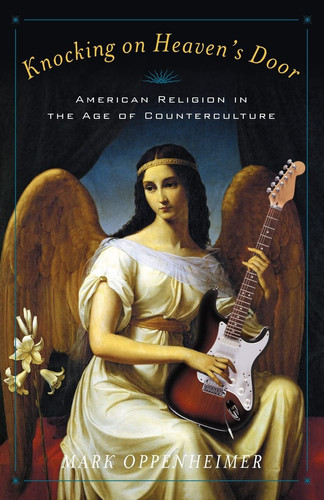
Knocking on Heaven's Door American Religion in the Age of Counterculture
A witty and provocative reappraisal of the impact of the cultural upheavals of the sixties on American religious life What happened to American religion during the cultural revolution of the 1960s and early 1970s? The era has long been associated with the ascendancy of Eastern religions and fringe cults. But in this provocative book, Mark Oppenheimer demonstrates that contrary to conventional wisdom, most Americans did not turn on, tune in, and drop out of mainstream religious groups during the Age of Aquarius. Instead, many Americans brought the counterculture with them to their churches and temples, changing the face of American religion. Introducing us to America's first gay ministers and first female priests, to hippie Jews and folk-singing Catholics, Oppenheimer demonstrates that this was an era of extraordinary religious vitality. Drawing on a rich range of archival material as well as interviews with many of the protagonists, Knocking on Heaven's Door offersa wry and iconoclastic reappraisal of the ways in which the upheavals of the sixties changed America's relationship with God.
A new republic: a history of the United States in the twentieth century
An eminent historian offers his views on American democracy In A New Republic, one of America's most respected historians offers a major statement on the nature of our political system and a critical look at the underpinnings of our society. American democracy, says John Lukacs, has been transformed from an exercise in individual freedom and opportunity to a bureaucratic system created by and for the dominance of special groups. His book, first published in 1984 as Outgrowing Democracy, is now reissued with a new introduction, in which Lukacs explains his methodology, and a new final chapter, which sums up Lukacs's thoughts on American democracy today. Reviews of the earlier edition "A rich, subtle, and often ingenious argument . . . an eloquent, provocative, but disturbing book."--Edwin M. Yoder, Jr., Washington Post Book World "Mr. Lukacs is an original and subtle historian, and [this book] is an engaging intellectual surprise party. . . . I was continuously enchanted by the play of his ideas--by the sharpness of his distinctions and the acuteness of his descriptions."--Naomi Bliven, New Yorker "It has been a long time since Americans were offered such a provocative interpretation of their historical predicament. . . . We would be foolish not to examine it closely."--Laurence Tool, Society

Madison's metronome: the Constitution, majority rule, and the tempo of American politics
In the wake of national crises and sharp shifts in the electorate, new members of Congress march off to Washington full of intense idealism and the desire for instant change—but often lacking in any sense of proportion or patience. This drive for instant political gratification concerned one of the key Founders, James Madison, who accepted the inevitability of majority rule but worried that an inflamed majority might not rule reasonably. Greg Weiner challenges longstanding suppositions that Madison harbored misgivings about majority rule, arguing instead that he viewed constitutional institutions as delaying mechanisms to postpone decisions until after public passions had cooled and reason took hold. In effect, Madison believed that one of the Constitution's primary functions is to act as a metronome, regulating the tempo of American politics. Weiner calls this implicit doctrine "temporal republicanism" to emphasize both its compatibility with and its contrast to other interpretations of the Founders' thought. Like civic republicanism, the "temporal" variety embodies a set of values—public-spiritedness, respect for the rights of others-broader than the technical device of majority rule. Exploring this fundamental idea of time-seasoned majority rule across the entire range of Madison's long career, Weiner shows that it did not substantially change over the course of his life. He presents Madison's understanding of internal constitutional checks and his famous "extended republic" argument as different and complementary mechanisms for improving majority rule by slowing it down, not blocking it. And he reveals that the changes we see in Madison's views of majority rule arise largely from his evolving beliefs about who, exactly, was behaving impulsively—whether abusive majorities in the 1780s, the Adams regime in the 1790s, the nullifiers in the 1820s. Yet there is no evidence that Madison's underlying beliefs about either majority rule or the distorting and transient nature of passions ever swayed. If patience was a fact of life in Madison's day—a time when communication and travel were slow—it surely is much harder to cultivate in the age of the Internet, 24-hour news, and politics based on instant gratification. While many of today's politicians seem to wed supreme impatience with an avowed devotion to original constitutional principles, Madison's Metronome suggests that one of our nation's great luminaries would likely view that marriage with caution.

Bike lust: women, Harleys, and American society
Bike Lust roars straight into the world of women bikers and offers us a ride. In this adventure story that is also an insider’s study of an American subculture, Barbara Joans enters as a passenger on the back of a bike, but soon learns to ride her own. As an anthropologist she untangles the rules, rituals, and rites of passage of the biker culture. As a new member of that culture, she struggles to overcome fear, physical weakness, and a tendency to shoot her mouth off—a tendency that very nearly gets her killed. Bike Lust travels a landscape of contradictions. Outlaws still chase freedom on the highway, but so do thousands of riders of all classes, races, and colors. Joans introduces us to the women who ride the rear—the biker chick, the calendar slut straddling the hot engine, the back-seat Betty at the latest rally, or the underage groupie at the local run. But she also gives us the first close look at women who ride in their own right, on their own bikes, as well as a new understanding of changing world of male bikers. These are ordinary women’s lives made extraordinary, adding a dimension of courage to the sport not experienced by males, risking life and limb for a glimpse of the very edge of existence. This community of riders exists as a primal tribute to humanity's lust for freedom.

Hail Babylon! NPR's Road Scholar Goes in Search of the American City
Andrei Codrescu takes us cross-country through the withered, yet alluring American urban landscape, visiting New York, Baltimore, New Orleans, Little Rock, San Antonio, Albuquerque, Las Vegas, and Portland, Oregon. He discovers that cities are at the very center of the forces determining our future, in this major work by one of America's most gifted social critics.

The shoemaker and the tea party: memory and the American Revolution
Award-winning historian Alfred F. Young unearths a rich story of the American Revolution with this account of George Robert Twelves Hewes, a Boston shoemaker who took part in such key events as the Boston Massacre and the Tea Party, and then served in the militia and as a seaman

The permanent war economy: American capitalism in decline

Going postal: school shootings, workplace massacres and the untold history of failed rebellions
American workers and children are rebelling violently all around us. Going Postal explores the rage-murder phenomenon that has both plagued and baffled America for the last three decades, offering provocative answers to the oft-asked question, "Why?" By juxtaposing the historical place of rage in America with the social climate that has existed since the 1980swhen Reaganomics began to widen the gap between executive and average-worker earningsAmes crafts a convincing argument that these schoolyard and office massacres can be seen as modern-day slave rebellions. He explores numerous fascinating and unexpected cases in detail, showing that as with slave rebellions, these massacres are doomed, gory, sometimes even inadvertently comic, and grossly misunderstood. Taking up where Bowling for Columbine left off, this book seeks to set these murders in their proper context, thereby revealing their true meaning. Ames updates this edition with an eye toward recent events, including several new essays taking on the violent episodes at Northern Illinois and Virginia Tech universities, as well as workplace outrages like that in Alabama in March 2009. With the economy slumping and shooting rampages seemingly on the rise, Ames’s wide-scoped explanations have never been more prudent.

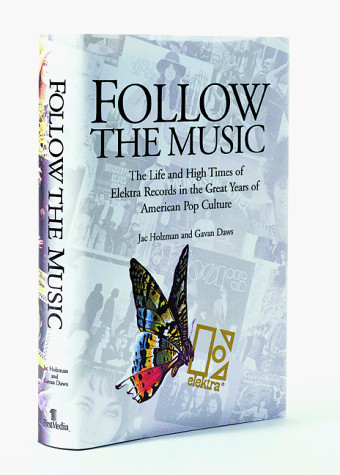
Follow the music: the life and high times of Elektra records in the great years of American pop culture
Chronicles the growth and success of Elektra Records during the 1960s
After Freedom: A Cultural Study in the Deep South
First published in 1939, After Freedom is the first complete ethnography of an African American community in the United States.

Paul Rand
Paul Rand (1914-1996) was a pioneering figure in American graphic design whose career spanned almost seven decades. Always enquiring and investigating, he explored the formal vocabulary of European avant-garde art movements and synthesised them to produce a distinctive graphic language. Rand was a major force in editorial design, advertising and corporate identity. He was art director at "Esquire" and "Apparel Arts" magazines, and he designed the ground-breaking covers for the cultural journal "Direction". He worked at the Weintraub Advertising Agency from 1941-1954 and, in 1955, established his own design studio, acting as consultant to companies such as IBM, Westinghouse and UPS. His logos for these companies are world-renowned design classics. This book comprises a definitive collection of Rand's works, through an exploration of his advertising, publishing and corporate identity work. Steven Heller's text, with a foreword by designer Armin Hofmann, introduction by advertising guru George Lois, and a concluding essay by designer and writer Jessica Helfand, offer an insight into Paul Rand's work.

All those mornings . . . at the Post The 20th Century in Sports from Famed Washington Post Columnist Shirley Povich
Shirley Povich was the Dean of American sportswriters. As a columnist for The Washington Post for more than seventyfive years, he was an eyewitness to the most thrilling moments in American sports, including: the legendary 1927 Dempsy-Tunney "long count"; the celebrated 1938 race between Seabiscuit and War Admiral; the 1946 signing of Jackie Robinson by the Brooklyn Dodgers; Don Larsen's perfect game in the 1956 World Series; the Ali-Frazier fight of 1971; and the murder of eleven Israeli athletes at the 1972 Munich Olympics. But Povich's columns were about more than sports; they reflected the dramatic changes in American society over the course of the 20th Century. Driven by a strong sense of social justice, Povich called for the integration of major league baseball in 1939, and twenty years later he was still at it, attacking Washington Redskins owner George Preston Marshall for having an all-white team. For the 100th anniversary of his birth, Povich's children— David, Maury, and Lynn — and his colleague at the Post, former sports editor George Solomon, have pulled together this panoramic collection of Povich's most beloved columns. The result is a front-row seat to the most awe-inspiring sports moments of our American Century.
